Why Your Commercial Lease is a Cornerstone of Your Business
A business real estate lease is a legally binding contract that defines the terms for occupying a commercial space. Unlike residential leases, these agreements offer fewer legal protections for tenants and are governed almost entirely by the written terms. The right lease can support your growth, while the wrong one can create serious financial problems.
Key elements of a commercial lease include:
- Lease Types: Gross, Net, and Modified Gross, which determine who pays for expenses.
- Financial Terms: Base rent, operating costs, security deposits, and annual increases.
- Legal Clauses: Permitted use, renewal options, and default remedies.
- Duration: Typically 3-10 years with negotiable renewal terms.
Why does this matter? Your lease directly impacts your financial health and operational flexibility. The stakes are high because commercial tenants have minimal legal protections compared to residential renters. There are no legal limits on rent increases or mandatory lease renewals, and fewer protections regarding property maintenance.
I’m Sam Zoldock, a commercial real estate professional specializing in Alabama markets. With deep experience in business real estate lease structures, I’ve helped many businesses steer commercial leasing to find spaces that support their goals.
Decoding the Jargon: The Main Types of Commercial Leases
Understanding the different types of business real estate lease agreements is critical for your bottom line. Each type handles rent, fees, and expenses differently, and the core of any negotiation comes down to one question: who pays for what? This determines whether your monthly costs are predictable or variable and how much your space will truly cost.

A Gross Lease is the simplest: you pay one price, and the landlord covers property taxes, building insurance, and common area maintenance. This offers predictability but often comes with a higher base rent.
A Modified Gross Lease is a hybrid. You pay base rent and typically your own utilities, while sharing some building expenses with the landlord, often those that increase after your first year.
Net Leases shift more responsibility to you. You pay base rent plus a portion of the building’s operating costs. The number of “nets” tells you how much you’re taking on.
Percentage Leases are common in retail, where a portion of your rent is tied to your gross sales, often after hitting a certain threshold.
Who Pays for What? Understanding Net Leases
Net leases specify exactly which operating expenses you’ll cover.
- Single Net Lease (N): You pay base rent plus property taxes. This is the least common type.
- Double Net Lease (NN): You pay base rent plus property taxes and building insurance.
- Triple Net Lease (NNN): This is one of the most popular structures. You pay base rent plus your share of property taxes, building insurance, and common area maintenance (CAM) fees. This offers transparency but means your monthly costs can fluctuate.
- Absolute Net Lease: You are responsible for everything, including structural repairs like a new roof. It’s the closest you can get to owning the property without buying it.
Comparing Common Commercial Lease Structures
Here’s how the most common lease structures stack up:
| Expense Category | Gross Lease | Modified Gross Lease | Triple Net (NNN) Lease |
|---|---|---|---|
| Base Rent | Tenant | Tenant | Tenant |
| Property Taxes | Landlord | Shared (Tenant pays increases over base year) | Tenant |
| Building Insurance | Landlord | Shared (Tenant pays increases over base year) | Tenant |
| Maintenance & Repairs (Structural) | Landlord | Landlord | Tenant (Absolute NNN) / Landlord (NNN) |
| Maintenance & Repairs (Non-Structural / CAM) | Landlord | Shared (Tenant pays some) | Tenant |
| Utilities (Tenant’s Unit) | Often Landlord | Tenant | Tenant |
| Janitorial (Tenant’s Unit) | Often Landlord | Tenant | Tenant |
Specialized Leases for Specific Needs
Some businesses require unique arrangements. A Ground Lease lets you rent land long-term (50-99 years) to construct your own building. A Build-to-Suit Lease involves the landlord building or renovating a space to your exact specifications, which you then lease, usually for a longer term.
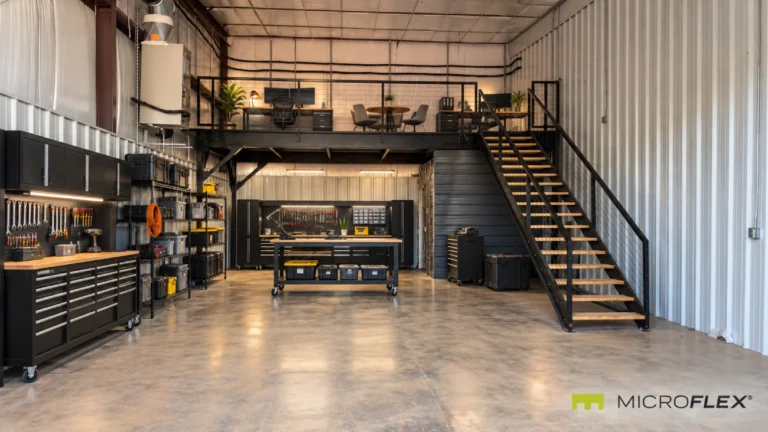
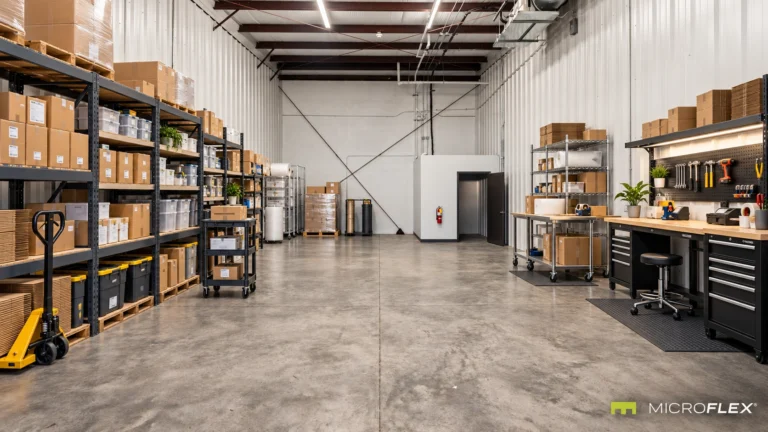
At MicroFlex™ LLC, we’ve seen how traditional leases don’t always fit. We specialize in Short-Term Business Lease solutions that offer flexibility. Our unique spaces combine warehouse, office, storage, and showroom features, perfect for businesses in Auburn Opelika, Birmingham Irondale, Huntsville, or Birmingham Hoover that need versatility without a long-term commitment.
The Anatomy of a Business Real Estate Lease: Rates, Costs, and Key Clauses
A business real estate lease is a complex legal document that dictates your financial obligations and rights. Understanding its anatomy can save you money and prevent future headaches.

How Commercial Lease Rates Are Calculated
Base rent is the foundation of your cost, usually quoted as a price per square foot on an annual basis. To find your monthly rent, multiply your total square footage by the annual rate, then divide by 12. For example, a 1,000 sq. ft. space at $20/sq. ft./year is $20,000 annually, or $1,667 per month. Rates are heavily influenced by market conditions, location, and property type (office, retail, industrial).
Beyond the Base Rent: Uncovering Additional Costs
Your base rent is just the start. A business real estate lease often includes additional costs:
- Operating Expenses/CAM Fees: In net leases, you’ll pay a share of costs for property taxes, insurance, and common area maintenance (CAM) like landscaping, parking lots, and lobbies. These can significantly increase your total rent.
- Utilities & Janitorial: You are typically responsible for utilities and cleaning services for your own unit.
- Property Insurance: You’ll need your own insurance to cover your business assets and liability.
- Security Deposit: Usually equal to one to three months’ rent.
- Rent Escalation Clauses: These clauses specify annual rent increases, often around 3% or tied to inflation.
Critical Lease Clauses You Can’t Afford to Ignore
The fine print determines the power dynamics of your lease. Pay close attention to these clauses:
- Permitted Use: Defines exactly what business activities are allowed in the space.
- Lease Term: The duration of your commitment, typically 3-10 years.
- Renewal Options: Gives you the right to extend your lease, often under pre-agreed conditions.
- Assignment and Subletting: Determines if you can transfer your lease or rent out part of your space to another party, usually requiring landlord consent.
- Tenant Improvements (TI): Outlines who pays for modifications to the space. Landlords may offer a TI allowance to help offset these costs. This is crucial for businesses needing specialized layouts like Office Space with Storage.
- SNDA Clause: Protects your lease in the event the landlord defaults on their mortgage and the property is foreclosed upon.
- Default and Remedies: Details the consequences if either party violates the lease terms.
At MicroFlex™ LLC, we create flexible Office Space with Storage solutions and arrangements that adapt to your needs, avoiding the rigid structures of traditional leases.
The Strategic Approach: Choosing and Negotiating Your Lease
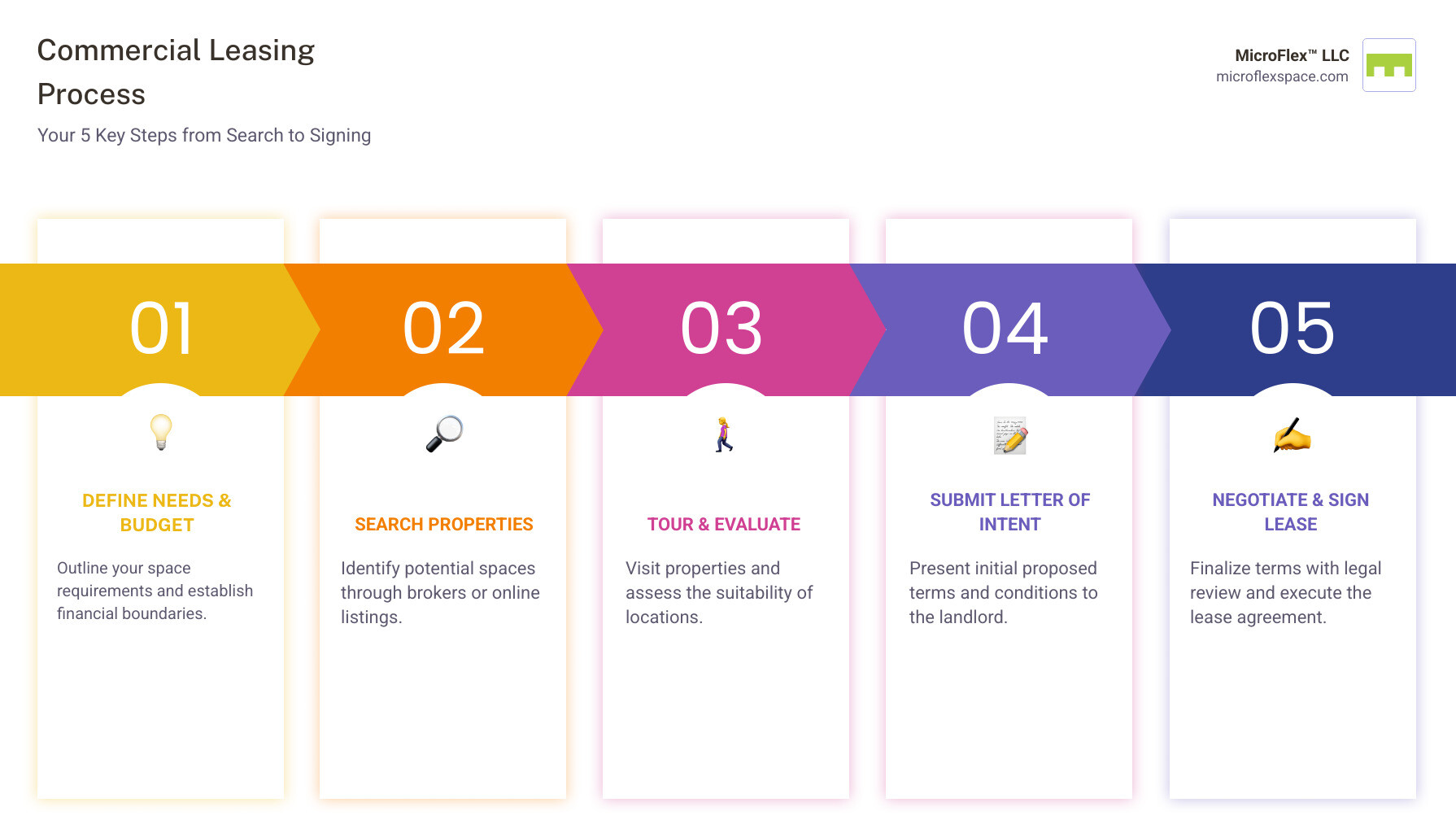
Finding the right business real estate lease is a strategic decision that will shape your company’s future. Proper preparation gives you a significant advantage during negotiations.

Factors to Consider Before Choosing a Business Real Estate Lease
Before you start your search, create a detailed plan. Key factors include:
- Business Needs: How much space do you need now and in the next 3-5 years? What layout do you require (office, retail, warehouse)?
- Budgeting: Factor in all costs, including base rent, CAM fees, utilities, insurance, and potential improvements. Set a clear budget for your total occupancy costs.
- Location Analysis: Consider customer and employee access, supplier proximity, foot traffic, and brand image.
- Space Layout & Accessibility: Does the current layout work, or will it need alterations? Is parking adequate and the building easily accessible?
- Zoning and Occupancy: Ensure your business type is permitted by local zoning laws and that the building has a valid Certificate of Occupancy (CO) for your intended use.
At MicroFlex™ LLC, our Flexible Leasing Spaces are designed for businesses that need adaptability, combining warehouse, office, storage, and showroom features to evolve with your company.
Key Strategies for a Successful Lease Negotiation
Almost everything in a business real estate lease is negotiable. The key is knowing what to ask for.
- Do Your Research: Understand current rental rates and vacancy trends in your target area to gain leverage.
- Know Your Priorities: Decide on your non-negotiables versus your “nice-to-haves” to focus your efforts.
- Negotiate Beyond Rent: Ask for free rent periods, caps on CAM charge increases, favorable renewal options, or clear signage rights.
- Seek an “Out” Clause: If possible, negotiate a clause that allows you to terminate the lease early under specific conditions, such as outgrowing the space.
- Consult a Professional: A commercial real estate attorney is your most valuable asset. They can review the lease, negotiate on your behalf, and protect your rights. For additional guidance, resources from the U.S. Small Business Administration (SBA) can be invaluable.
- Get It in Writing: Never rely on verbal agreements. All promises and concessions must be written into the final lease document.
Exploring Alternative Paths: Flexible Lease Solutions for Growing Businesses
Traditional long-term business real estate lease agreements can be too rigid for modern businesses. Flexible lease solutions offer an alternative that supports growth and evolution.
At MicroFlex™ LLC, we’ve built our entire approach around providing dynamic space solutions that match the pace of modern business.
How Flexible Leasing Works: Options for Modern Businesses
Flexible leasing offers agility and variety.
- Short-Term Leases: Instead of a 5-10 year commitment, you can opt for terms of 1-3 years or even month-to-month. This helps manage cash flow and allows you to test a location.
- Expansion Options: These clauses allow you to grow into adjacent spaces at pre-negotiated rates, providing a clear path for expansion.
- Lease-to-Own Agreements: A portion of your monthly rent (often 15-25%) can be credited toward a pre-determined purchase price, allowing you to build equity while you lease. Your purchase price is locked in, protecting you from rising property values.
At MicroFlex™ LLC, we specialize in customizable lease periods that fit your timeline, with spaces designed to evolve with you.
Benefits and Drawbacks of Flexible Business Real Estate Leases
Flexible leasing has its trade-offs. Here’s an honest look:
Benefits:
- Agility: Scale your space up or down as your business needs change.
- Reduced Upfront Capital: Less money is tied up in long-term commitments, improving cash flow.
- Test a Location: Assess a market or location without a major commitment.
- Path to Ownership: Lease-to-own options provide a structured way to eventually own your property.
Drawbacks:
- Potentially Higher Rates: Very short-term leases may have a higher per-square-foot cost.
- Limited Customization: Some flexible spaces may have restrictions on major alterations.
- Non-Refundable Fees: In lease-to-own deals, the upfront option fee is lost if you decide not to buy.
For Small Business Office Solutions, MicroFlex™ LLC offers the best of both worlds: flexible terms with multi-purpose functionality. Our spaces adapt to your needs, not the other way around.
Frequently Asked Questions about Commercial Leases
Commercial leases can be complex. Here are answers to the most common questions business owners ask.
What is the main difference between a commercial and a residential lease?
The biggest difference is tenant protection. A business real estate lease offers minimal legal protections, treating the agreement as a contract between two sophisticated parties. Terms are highly negotiable, and what’s in the written contract is what governs the relationship. Residential leases, by contrast, are covered by extensive consumer protection laws regarding rent, repairs, and eviction.
Who is responsible for repairs in a commercial property?
This depends entirely on your business real estate lease type. In a Gross Lease, the landlord typically handles most major building repairs. In a Triple Net (NNN) Lease, the tenant is responsible for almost all repairs and maintenance, including their share of common area upkeep. Always ensure these responsibilities are clearly defined in your lease to avoid unexpected costs.
Can I get out of a commercial lease early?
Exiting a commercial lease early is difficult and often expensive. Your options are limited:
- Negotiate a Buyout: You may be able to pay your landlord a lump sum (often several months’ rent) to terminate the lease.
- Use an “Out” Clause: If you negotiated one, this clause allows you to terminate early under specific conditions, usually with a penalty and advance notice.
- Assign or Sublet: If your lease allows it (with landlord consent), you can transfer your lease to a new tenant (assignment) or rent the space to someone else while remaining responsible for the rent (subletting).
This is why MicroFlex™ LLC focuses on flexible lease solutions. We understand businesses need to adapt without being locked into punishing long-term contracts.
Conclusion: Finding the Right Space to Grow Your Business
Choosing the right business real estate lease is a foundational decision for your company’s success. It’s about finding a space that supports your growth.
Here are the key takeaways:
- Understand Lease Types: Knowing the difference between Gross and Net leases helps you budget accurately.
- Perform Due Diligence: As a commercial tenant, you have few legal protections. The lease document is your primary safeguard, so have an attorney review it.
- Negotiate Everything: From rent to renewal options, almost every term is negotiable. Don’t be afraid to ask for what your business needs.
- Consider Flexible Solutions: Traditional long-term leases don’t work for every business. Flexible options can provide the agility modern companies require.
At MicroFlex™ LLC, we’ve built our business around this reality. Our adaptable multi-function spaces combine warehouse, office, storage, and showroom features to meet diverse business needs. We serve businesses throughout Alabama, from Huntsville to Auburn-Opelika, with flexible lease terms that let you focus on what you do best: running your business.
Your business deserves a space that works as hard as you do. Let’s find it together.
Flexible Office Space Birmingham
Find your flexible workspace in Auburn-Opelika