Why Scalable Business Solutions Are Critical for Survival and Growth
Scalable business solutions are systems and strategies that let businesses increase revenue without proportionally increasing costs. A scalable business is defined by:
- Low incremental costs: Adding customers doesn’t significantly raise expenses.
- Automation: Technology handles repetitive tasks.
- Strong infrastructure: Cloud-based systems support growth.
- Repeatable processes: Systems work without depending on specific individuals.
- High profit margins: Revenue grows faster than costs.
The stakes are high. Nearly 49.4% of small businesses fail within the first five years, often due to issues with cash flow and operational efficiency. Even more startling, 78% of startups never see their products through to full scale-up.
The difference between thriving and struggling often comes down to scalability.
Consider a local bakery that can only bake a limited number of loaves. That business has a ceiling. But if that same bakery creates online bread-making courses, it can scale. One recording can reach thousands of students without needing more ovens or staff.
This is the power of building scalable business solutions from day one. It’s about creating systems that multiply your impact without multiplying your costs.
I’m Chase Carroll, and in my 12+ years of scaling companies, I’ve seen how the right infrastructure makes the difference between plateauing and exponential growth. Understanding scalability is essential for any entrepreneur.
Glossary for Scalable business solutions:
Understanding Scalability: What Are Scalable Business Solutions?
Scalability is the ability to handle massive growth without breaking the bank. It’s not just about getting bigger; it’s about getting bigger smarter. A truly scalable business can grow without being hampered by its structure when faced with increased demand. It can maintain quality, improve customer experience, and expand into new markets without hitting a ceiling.
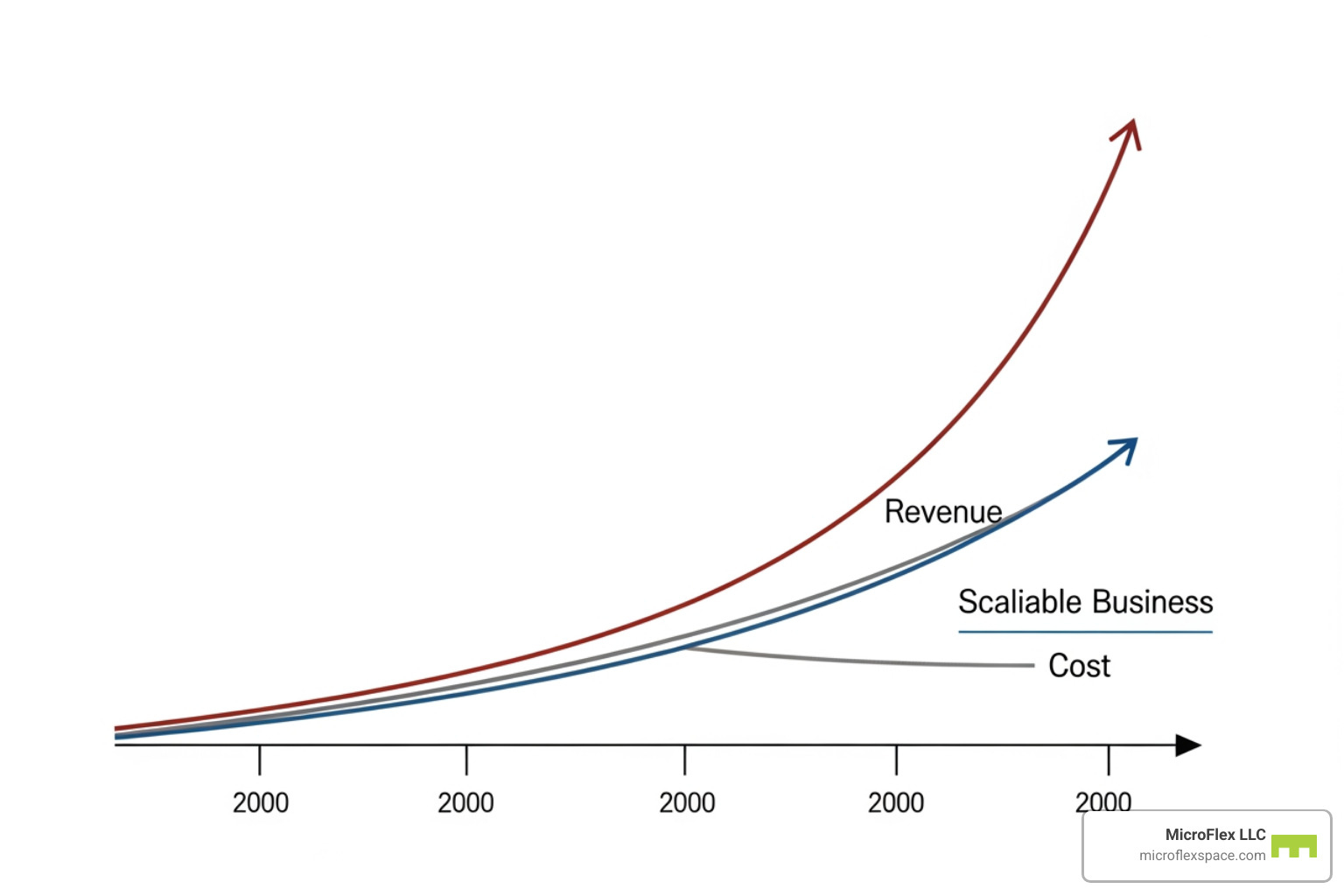
The magic happens when your revenue increases faster than your costs. This growth must happen without compromising quality. This concept is rooted in what economist Alfred Marshall called “economies of scale”: the more you produce something, the cheaper it gets to produce each unit.
For example, building one chair is expensive because the cost of tools is spread over a single item. Building a thousand chairs distributes those tool costs, making each chair cheaper. This principle allows businesses that operate at scale to significantly reduce per-unit costs.
Small Business vs. Scalable Business
It’s easy to confuse a small business with a scalable one, but their approaches to growth are different.
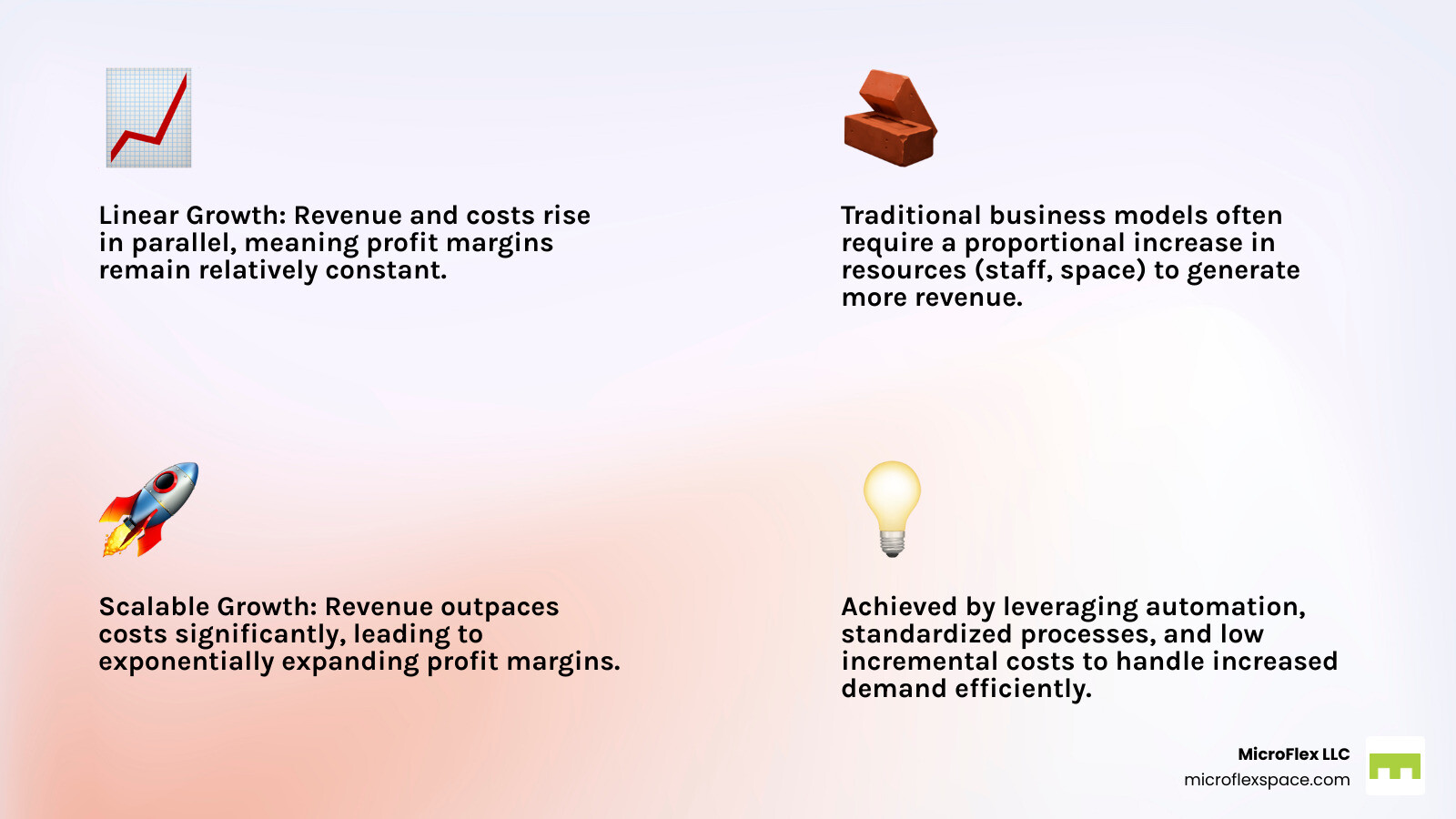
A traditional small business often sees revenue and costs grow linearly. To serve twice as many customers, you might need twice the staff and space. This leads to steady but capped growth. Our Small Office Solutions: Ultimate Guide explores how these businesses can optimize their footprint.
A scalable business is designed for exponential growth using scalable business solutions. Revenue grows much faster than costs because processes are automated and optimized. A software company, for instance, can serve a million users at a marginally higher cost than serving a thousand. The core development is done; each new customer adds revenue with minimal additional expense.
How to Determine if Your Business Idea is Scalable
Before launching a new venture, you must honestly assess its scalability. The key question is: can your business expand its revenue without a proportionate increase in costs?
Examine your revenue versus cost growth, process efficiency, and market potential. A hyperlocal market might be limiting, while a national or international one offers vast possibilities. Your business must also be adaptable to market changes and have a repeatable sales model.
Ask these critical questions about your business idea:
- Can your product be easily replicated or licensed without significant new investment per unit?
- Do your per-unit costs decrease as production volume increases?
- Is your offering digital or information-based, making it easy to distribute?
- Are you targeting a large and growing market?
- Can you engineer network effects, where the product becomes more valuable as more people use it?
- Does your business model allow for high margins and customer retention?
- Can your core processes be systematized and automated?
Answering “yes” to most of these questions indicates you’re on the path to a scalable business. Even if your current model isn’t inherently scalable, you can often build in scalability through smart infrastructure, automation, and flexible resources.
The Core Components: Characteristics and Drivers of a Scalable Business
A scalable business is built differently, possessing specific characteristics that allow it to expand profitably.

The foundation of a scalable business solution is low incremental costs. Adding new customers shouldn’t cause a proportional spike in expenses. Other key characteristics include:
- Automation: Using technology for repetitive tasks frees up your team for strategic growth initiatives.
- Strong Infrastructure: This includes cloud hosting, integrated software, and robust databases that can handle surges in traffic or sales.
- Flexibility: Scalable businesses pivot quickly in response to market trends. This includes having flexible commercial space in Birmingham that can grow with your needs, rather than being locked into a rigid lease.
- High Profitability Potential: When revenue grows faster than costs, the expanding margins can be reinvested into innovation and market expansion.
- Global Reach: E-commerce platforms and digital marketing tools enable international expansion affordably.
Key Drivers of Scalable Business Solutions
Certain drivers actively propel a business toward scalability:
- Technology and Digitization: Digitizing information and processes allows for near-instant replication and distribution. Automation tools like Zapier connect different applications, eliminating manual tasks.
- Standardization of Processes: Creating consistent, repeatable workflows reduces errors, speeds up operations, and simplifies training.
- Productization of Services: This involves converting bespoke services into repeatable, packaged products, like a standardized workshop or a group coaching program.
- Intellectual Property: Patents, trademarks, and copyrights allow for growth through licensing or franchising, extending your brand without direct operational expansion.
- Network Effects: This makes a product more valuable as more people use it, as seen with social media platforms.
Common Models for Achieving Business Scalability
Many successful businesses use models designed for scale:
- Software-as-a-Service (SaaS): Delivers software over the internet on a subscription basis. The cost to add new users is minimal.
- E-commerce Platforms: Selling products online allows businesses to reach a global audience with low overhead. These businesses still need physical infrastructure like warehouse and fulfillment space.
- Digital Products and Courses: Packaging knowledge into a digital format allows it to be sold to thousands with almost no additional cost per student.
- Platform and Marketplace Models: These businesses connect buyers and sellers, creating value through network effects and transaction fees without owning the assets themselves.
- Subscription Services: Provide predictable, recurring revenue with low incremental costs per subscriber.
- Online Communities: Thrive on user-generated content and membership fees, with the community itself becoming the product.
- Content Creation: While challenging to monetize, content can reach millions, creating an audience that can be leveraged through courses, products, or services.
For any of these models, having Adaptable Business Solutions is critical. A rigid, expensive lease can strangle a scalable business. Flexible commercial space that grows with you—rather than locking you into unaffordable commitments—is the key to scaling successfully.
Building for Growth: Strategies to Improve Scalability
Building a scalable business is an ongoing journey of strategic thinking and adaptation. Success requires robust processes, the right technology, a strong team, and smart financial decisions.

Developing Scalable Business Processes
Your processes are the backbone of your business. To create scalable business solutions, you must build processes that can handle increased volume without breaking.
- Process Mapping: Start by mapping every step of your core operations to identify bottlenecks and inefficiencies.
- Automation: Use tools like Zapier to automate repetitive tasks like invoicing, data entry, and follow-up emails. This frees your team to focus on high-value work.
- Standardization: Document your processes in clear, step-by-step formats. As Michael Gerber’s The E-Myth explains, businesses that rely on systems, not just individual talent, are the ones that can truly scale.
- Continuous Improvement: Regularly review and refine your processes based on performance data. Your operations must evolve with your business.
Enhancing Internal Scalability with Flexible Infrastructure
Internal scalability includes all resources, from software to your physical environment.
- Leverage External Resources: Outsource specialized functions or use shared services to reduce overhead and stay nimble.
- Digitize Workflows: Move documents and communications into digital formats to eliminate friction and support remote work.
- Invest in Cloud Infrastructure: Use providers like AWS or Microsoft to access computing power and storage that scales with your needs, paying only for what you use.
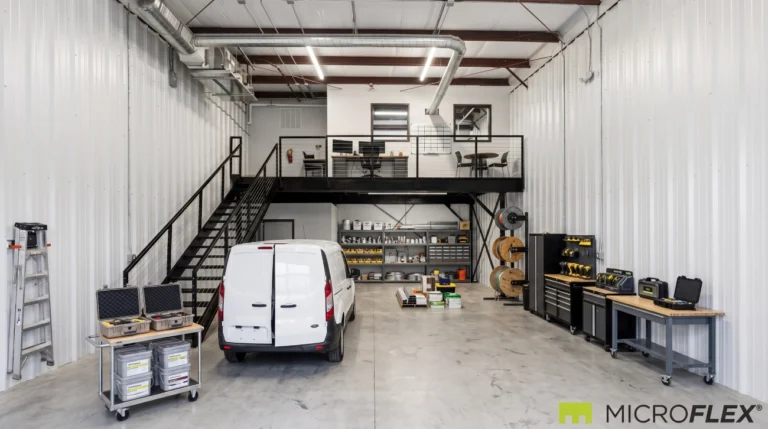
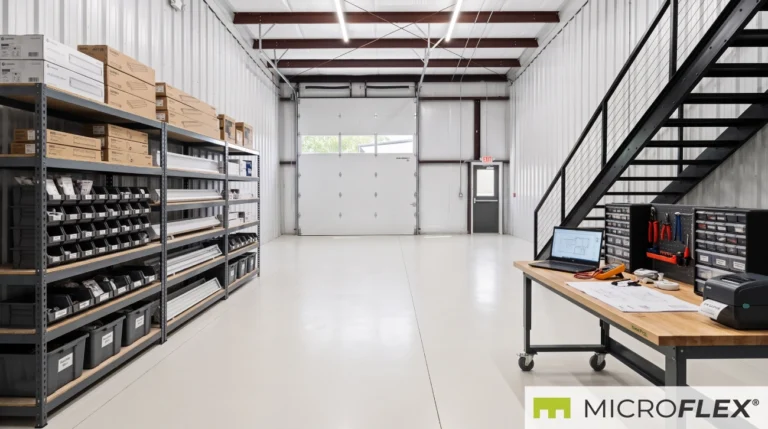
Physical space is a critical but often overlooked part of infrastructure. Traditional commercial leases are inflexible and can hinder growth. This is why MicroFlex™ LLC offers adaptable multi-function spaces in Auburn Opelika, Birmingham Irondale, Huntsville, and Birmingham Hoover. Our scalable business solutions adapt to your needs, whether you require more warehouse space, additional offices, or a new configuration entirely.
With flexible lease terms, you only pay for the space you need, when you need it. Our spaces can function as a warehouse, office, showroom, or any combination. Explore this concept in our Flexible Commercial Space: The Ultimate Guide or see our Flexible Leasing Spaces.
How to Effectively Scale Your Team and Leadership
Scaling a team requires a deliberate strategy to maintain culture and efficiency.
- Hire for Specific Gaps: Identify the exact skills and roles that will solve your biggest bottlenecks.
- Prioritize Culture Fit: Hire people who align with your values. Skills can be taught, but a positive attitude is essential.
- Create Scalable Onboarding: Develop a structured onboarding process to get new hires productive quickly.
- Empower Managers: Invest in developing strong managers and give them the authority to lead their teams effectively.
- Avoid Founder Bottlenecks: As a founder, you must transition from “doer” to “strategist,” delegating tasks and trusting your team.
As your team grows, your workspace must adapt. Our Dynamic Workplace Solutions in Auburn Opelika, Birmingham, and Huntsville ensure your physical space evolves with your team’s needs.
Navigating the Challenges and Financials of Scaling
Scaling a business is thrilling, but growth brings its own set of challenges. Many promising businesses hit unexpected walls.
One of the biggest mistakes is scaling too fast. A sudden surge in orders can lead to a scramble to hire and expand, but if the infrastructure can’t support it, quality drops and customer service suffers. Other growth constraints include internal bottlenecks, technology that can’t handle the load, or a poor market fit in new territories.
The statistics are sobering. A McKinsey report on scale-up challenges found that 78% of startups never fully scale up. Combined with the fact that nearly 49.4% of small businesses fail within five years, it’s clear that managing growth is make-or-break.
A major challenge is maintaining quality and customer experience. The personalized touch you offer five customers is harder to maintain with five hundred. The key is building systems and scalable business solutions that preserve your unique value as you grow.
Crucial Financial Considerations When Scaling a Business
Money fuels growth, but it’s also the resource most likely to run out. Here are the key financial areas to manage:
- Cash Flow Management: Growth often requires spending money before you see returns. You need clear projections and a financial cushion to bridge the gap between spending and earning.
- Funding Options: Decide whether to bootstrap, take out loans, or seek venture capital. Each option has its own trade-offs regarding control, debt, and equity.
- Managing Operating Costs: The goal is to ensure expenses don’t rise as fast as revenue. This is where scalable solutions that reduce overhead are critical.
- Pricing and Profit Margins: Regularly review your pricing to ensure your margins can fund growth while remaining competitive.
- Strong Financial Processes: Implement robust systems for billing, invoicing, and expense tracking to prevent cash flow gaps and accounting errors.
Your physical space is a significant financial consideration. Traditional leases lock you into expensive, long-term commitments. Our Business Expansion Space solutions at MicroFlex LLC in Auburn Opelika, Birmingham Irondale, Huntsville, and Birmingham Hoover offer an alternative. Flexible lease terms mean you can scale your footprint as your budget evolves, avoiding heavy financial burdens.
Identifying and Overcoming Constraints to Growth
Growth constraints are the invisible ceilings that limit your potential. Identifying and addressing them is crucial.
- Internal Bottlenecks: These are inefficiencies like manual approvals or siloed data. Map your processes, find the choke points, and eliminate them through automation and delegation.
- Technology Limitations: A website that crashes or an inventory system that can’t keep up will halt growth. Investing in robust, cloud-based technology is foundational.
- Market Fit: What works in one market may not work in another. Be willing to adapt your offering based on research and feedback.
- Supply Chain Dependencies: Relying on a single supplier is risky. Diversify your supplier base to build resilience against disruption.
- Regulatory Problems: Expanding into new territories can introduce new compliance or zoning issues. Do your homework and consult experts when needed.
Physical space is a common and tangible barrier. Running out of warehouse space or cramping your team into an inadequate office can stop growth. Our Business Rental Solutions at MicroFlex address this directly. Our flexible, multi-functional units in Birmingham, Auburn Opelika, and Huntsville can be configured to your exact needs, ensuring your physical space is never the constraint that holds you back.
Frequently Asked Questions about Scalable Business Solutions
What’s the difference between ‘growing’ and ‘scaling’ a business?
This is a critical distinction. Growing a business means adding resources in direct proportion to revenue. To double your revenue, you might double your costs and staff. It’s a linear relationship with inherent limitations.
Scaling, on the other hand, means increasing revenue without a proportional increase in costs. You achieve more output with relatively stable input. A software company serving millions with a small team is scaling. Growth is about addition; scaling is about multiplication.
How does technology like automation and cloud computing contribute to scalability?
Technology is the engine of modern scalable business solutions.
Automation tools like Zapier handle repetitive tasks like data entry and invoicing 24/7. This frees your team to focus on complex, high-value work that requires a human touch.
Cloud computing (e.g., AWS, Microsoft Azure) provides on-demand access to powerful servers, storage, and software. Instead of buying expensive hardware, you get an infrastructure that scales up or down with your needs, handling traffic spikes seamlessly. You only pay for what you use.
Together, these technologies create a foundation that allows you to serve more customers and handle growth without proportionally increasing staff or overhead.
What are the first steps to make a traditional business more scalable?
Making a traditional business more scalable doesn’t require a complete overhaul. Start with these strategic steps:
- Document Your Processes: Map out how you acquire customers, fulfill orders, and handle service. This will reveal bottlenecks and manual tasks.
- Find Automation Opportunities: Identify repetitive tasks that software can handle. Start with one or two processes that consume the most time to see immediate benefits.
- Standardize and Productize: If you’re a service business, create standardized packages or tiers. Turn your expertise into repeatable products like courses or templates to serve more clients without reinventing the wheel each time.
- Move to the Cloud: Adopt cloud-based tools for CRM, accounting, and project management. This makes your business accessible from anywhere and improves collaboration.
- Rethink Your Physical Space: A rigid commercial lease can be a major constraint. You’re either paying for space you don’t need or have no room to grow. This is where MicroFlex LLC helps. Our flexible spaces in Auburn Opelika, Birmingham Irondale, Huntsville, and Birmingham Hoover allow you to scale your physical footprint as you grow.
Whether you need more warehouse space, a flexible office, or a showroom, our adaptable units mean you only pay for what you need. This flexibility prevents your physical infrastructure from limiting your growth. Check out our short-term storage options to see how we can support your journey.
Conclusion
In today’s business landscape, building scalable business solutions is a necessity for survival and success. Scalability allows you to increase revenue faster than costs, maintain quality during growth, and leverage technology to multiply your impact. By automating, standardizing processes, and strategically scaling your team, you can build a more resilient and profitable enterprise.
The path to scalability has its challenges, but by embracing flexibility and investing wisely, you can turn those obstacles into opportunities. The goal is to create a business that is not just bigger, but smarter and more efficient.
As you grow, your physical infrastructure must be as agile as your digital solutions. MicroFlex™ LLC is proud to support businesses in Auburn Opelika, Birmingham Irondale, Huntsville, and Birmingham Hoover with adaptable multi-function spaces that provide the ultimate flexible foundation for your ambitions.
Ready to ensure your physical space scales with your business? Explore short-term storage options to support your growth and find how MicroFlex LLC can be your partner in building a truly scalable enterprise.