


Why Auburn’s Distribution Center Network Matters for Your Business
Auburn distribution center facilities serve as critical logistics hubs connecting East Alabama and West Georgia to regional and national supply chains. Whether you’re searching for warehouse space, exploring logistics opportunities, or researching Auburn’s industrial landscape, here’s what you need to know:
Key Auburn Distribution Centers and Facilities:
- Multiple modern distribution buildings with spaces commonly divisible from roughly 20,000 to 60,000 sq ft
- Recently built Class A properties (2016–2019 era) offering features like 32′ clear heights and numerous dock doors
- Well-planned industrial parks in Auburn that host a concentration of contemporary distribution facilities
- New and expanding sales, warehouse, and logistics operations that are bringing jobs and investment to the area
Auburn’s position just 2 miles from I-85 (Exits 50-51) makes it a natural logistics hub. The city has attracted significant investment in distribution infrastructure, with facilities built between 2016 and 2019 offering modern features like ESFR sprinkler systems, extensive trailer parking, and climate-controlled environments.
But here’s the reality: while these large-scale facilities serve major corporations well, they often leave small business owners facing a difficult choice. You either commit to 20,000+ square feet with restrictive long-term leases, or you struggle to find adequate space that fits your actual needs.
I’m Chase Carroll, and over my 12+ years developing industrial and mixed-use real estate projects, I’ve seen how the traditional Auburn distribution center model doesn’t serve small businesses, e-commerce startups, or service-based companies that need flexible, scalable solutions. That’s exactly why we created MicroFlex as a better alternative for Auburn’s growing entrepreneurial community.
The Economic Engine: Auburns Distribution Hubs
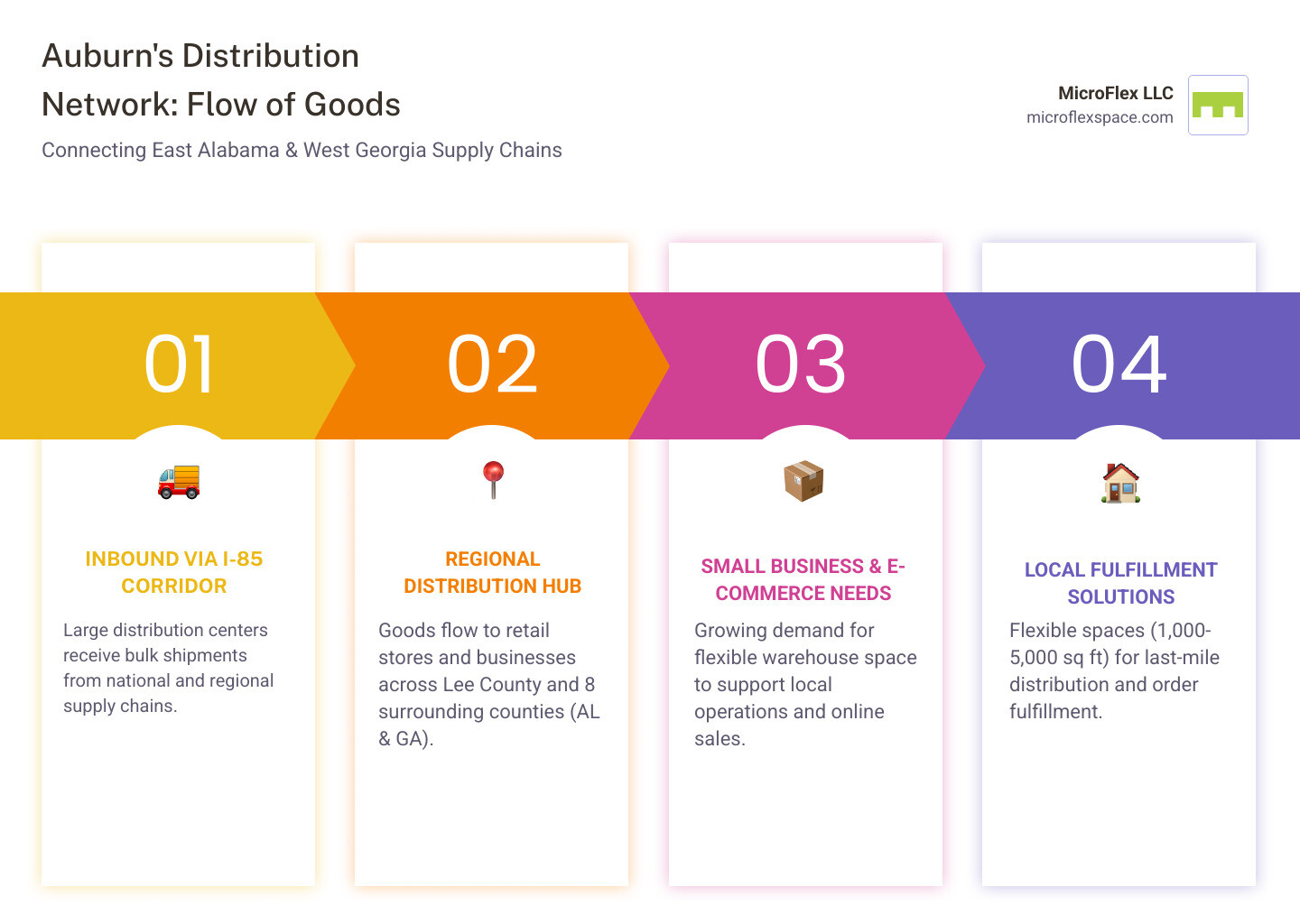
Auburn, Alabama, has firmly established itself as a pivotal economic engine in the region, largely driven by its robust distribution and logistics sector. The presence of sophisticated Auburn distribution center facilities plays a crucial role in this growth, fostering job creation, attracting significant investment, and bolstering the local economy. These centers are not just buildings; they are strategic hubs that connect producers to consumers, ensuring the smooth flow of goods across East Alabama and beyond.
A prime example of this economic dynamism is the recent $18 million investment by a major beverage company in a new sales center, warehouse, and office space on the west side of Auburn. This state-of-the-art 24,000-square-foot facility, expected to be completed in 2025, is projected to bring 75 full-time jobs to the area. This substantial investment highlights Auburns appeal as a strategic location for large corporate operations and its role in serving surrounding counties across East Alabama and West Georgia.
The decision to build the new facility was partly spurred by storm damage at a nearby operation in 2023. Relocating employees to Auburn underscores the city’s capacity to absorb and support significant operational shifts. The quick response and support from the City of Auburn in helping secure a temporary facility further demonstrate the community’s commitment to fostering business growth and stability.
Beyond this, the expansion of logistics infrastructure in Auburn is evident in the development of modern distribution spaces. Recently delivered facilities (including those built in 2016 and 2019) signify a clear trend toward accommodating large-scale operations. These developments contribute substantially to the local tax base, create direct and indirect employment opportunities, and stimulate growth for ancillary businesses, from transportation services to maintenance providers. Our growing industrial sector reflects Auburn’s strategic importance in the broader supply chain network.
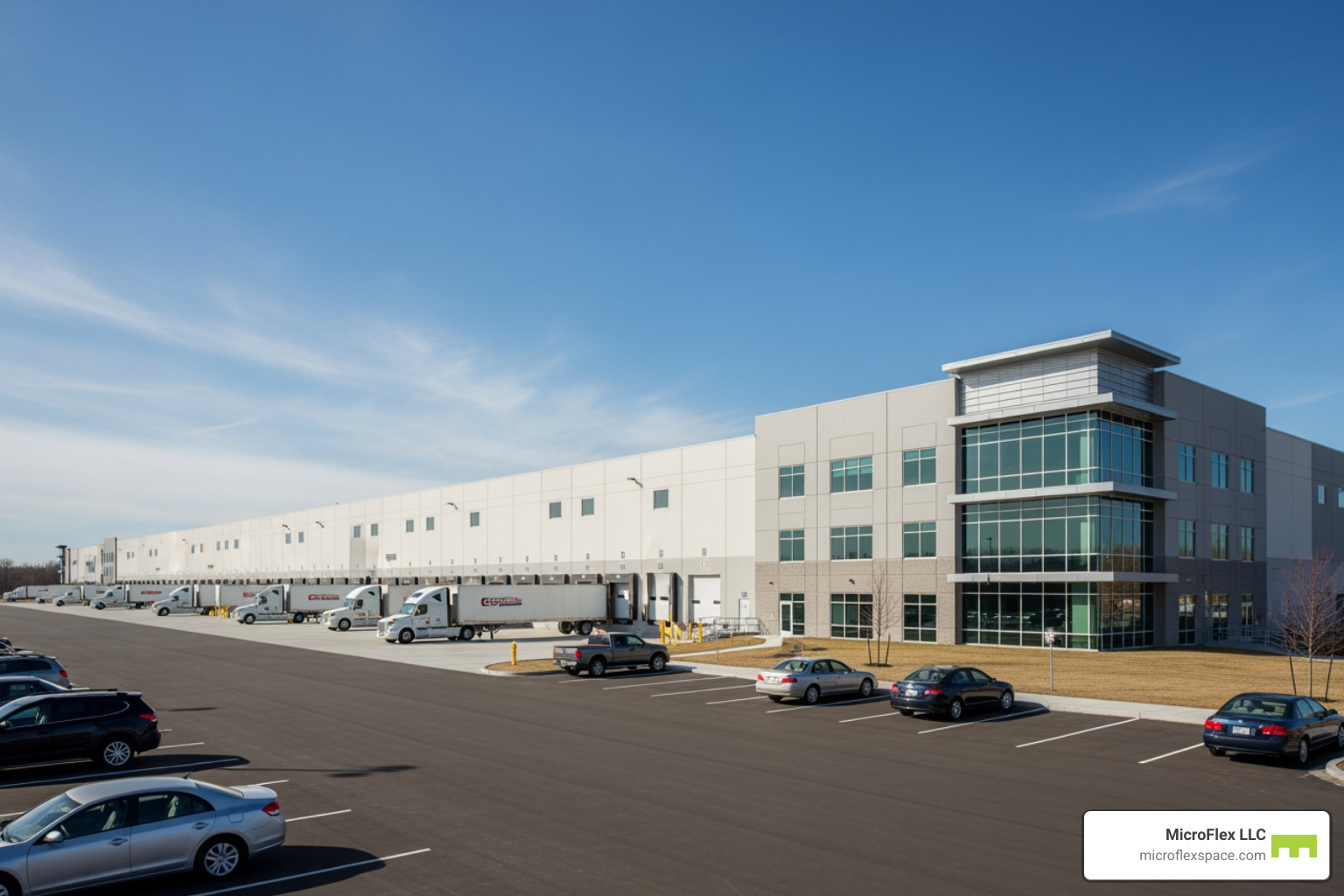
Key Features of a Modern Auburn Distribution Center
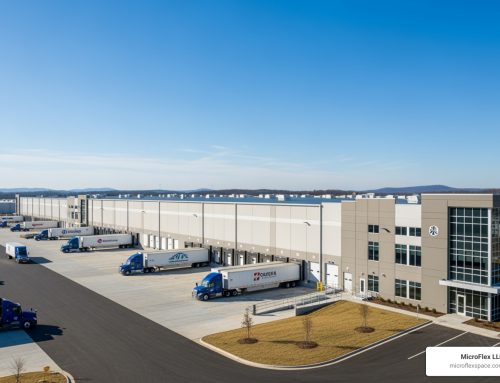
When we talk about a modern Auburn distribution center, we’re referring to facilities designed for peak efficiency, massive storage capacity, and seamless logistics operations. These aren’t just big sheds; they are sophisticated buildings equipped with features that cater to the demands of today’s supply chains.
Here are typical features seen locally:
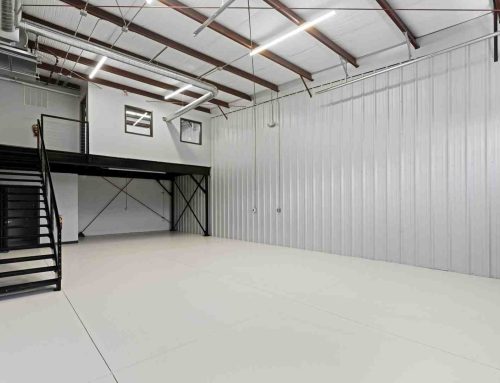
- High ceilings (clear heights often around 32 feet), enabling multi-level racking and higher storage density.
- Multiple dock-high doors (for example, a 20,000 sq ft bay may include about 6 docks, while a 40,000 sq ft bay can have up to 12), plus occasional drive-in doors for varied vehicle access.
- Large truck courts with ample auto and trailer parking to ensure smooth maneuvering and staging.
- ESFR fire suppression systems for safety in high-piled storage environments.
- Proximity to major transportation routes many sites are approximately 2 miles from I-85 (Exits 50 and 51), providing rapid regional and national access.
- Modern infrastructure: LED lighting, existing IT backbone, and controlled access for security and efficiency.
- Efficient column spacing (e.g., 50′ x 54′ with a 70′ speed bay in some facilities) to support flexible layouts and forklift flow.
These features collectively ensure that goods can be received, stored, sorted, and dispatched with speed, safety, and precision, making Auburn a highly desirable location for logistics operations.
Locating Commercial Distribution Facilities
Finding the right commercial distribution facility in Auburn is about understanding where the citys key industrial hubs are concentrated. Auburns strategic location and proactive development have led to clusters of modern logistics properties in its technology and industrial parks.
On the west side of Auburn, thoughtfully planned parks host many of the citys most modern distribution facilities. Youll find properties with top-tier specifications and quick access to I-85, as well as nearby parks across other parts of the city. For businesses looking slightly beyond Auburn but still within the interconnected regional economy, the nearby city of Opelika also offers industrial properties, further expanding the regions capacity.
When considering these locations, businesses will encounter various leasing opportunities, often structured under an NNN (Triple Net) lease type. This means the tenant is responsible for property taxes, insurance, and maintenance costs in addition to rent. While this might seem like a lot, it’s a common and transparent structure for industrial real estate, allowing for potentially lower base rents and greater control over property expenses for the tenant.
For those interested in exploring available spaces, many properties are listed on commercial real estate websites, providing details on size, features, and contact information for leasing brokers.

Beyond the Big Box: Flexible Solutions for Your Business Needs
While Auburn’s large-scale distribution centers are essential for major corporations, they often present significant challenges for small businesses, e-commerce startups, and service-based companies. The traditional model of a massive warehouse comes with inherent limitations that can stifle growth and tie up crucial capital.
Consider these common problems:
- High Costs: Leasing tens of thousands of square feet can be prohibitively expensive, especially for businesses with fluctuating inventory or seasonal demand.
- Long-Term Leases: Most large industrial spaces demand multi-year commitments, which can be risky for businesses that need agility and the ability to scale up or down quickly.
- Wasted Space: Many small businesses simply don’t need 20,000+ square feet. Paying for unused space is a drain on resources and inefficient.
- Lack of Integrated Office Space: Traditional warehouses are often just that – warehouses. They rarely offer the integrated office and administrative space that many modern businesses require for their teams.
The needs of small businesses are fundamentally different. An e-commerce entrepreneur might need dedicated space for inventory, packing, and shipping, but also a professional area for administrative tasks and customer service. A service-based business, such as an HVAC professional or a plumber, needs secure storage for tools, equipment, and parts, along with a base of operations for scheduling and dispatch. These businesses thrive on efficiency, cost-effectiveness, and the ability to adapt.
This is where the rise of flexible workspaces comes into play. We’ve seen a growing demand for adaptable solutions that bridge the gap between traditional office space and large industrial warehouses. Small and medium-sized enterprises (SMEs) need spaces that can accommodate their diverse functions – from inventory management and light assembly to administrative work and customer interactions – all under one roof, and without the burden of excessive long-term commitments.
This is precisely the market gap we at MicroFlex™ set out to fill in Auburn. We understand that not every business needs a sprawling 100,000 sq ft facility, but every business deserves a functional, affordable, and flexible space to operate effectively. Our approach caters to the modern business owner who values adaptability and efficiency.
For more information on how we’re reshaping warehouse solutions in the area, you can explore More info about warehouse space in Auburn.
Why MicroFlex™ is the Best Choice for Auburn Distribution Space
When we evaluate the landscape of commercial real estate in Auburn, it becomes clear that traditional Auburn distribution center options often fall short for the dynamic needs of small to medium-sized businesses. This is where MicroFlex™ truly shines, offering a superior alternative that aligns with the realities of modern entrepreneurship.
Here’s why MicroFlex™ is the best choice for your Auburn distribution space needs:
- Best Scalability: Unlike fixed, large-scale warehouses, MicroFlex™ spaces are designed to grow with your business. You can easily expand or reduce your footprint as your needs change, without being locked into a rigid, long-term lease for more space than you need. This flexibility is invaluable for e-commerce businesses experiencing seasonal peaks or startups in their growth phase.
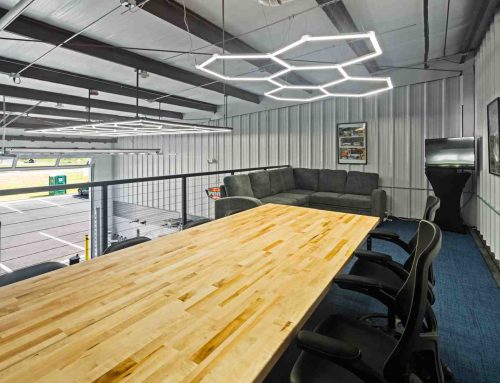
- True Multi-functionality: Our spaces seamlessly combine warehouse, office, storage, and even showroom features. This means you don’t need to lease separate facilities for different aspects of your operation. Imagine having your inventory, a dedicated packing station, and a professional office for client meetings all in one convenient location.
- Office and Warehouse Combo: This integrated design is a game-changer. For many businesses, the need for both functional warehouse space and a professional office environment is paramount. MicroFlex™ provides this synergy, allowing for streamlined operations and a cohesive work environment.
- Shorter, Flexible Lease Terms: We understand that long-term commitments can be daunting. Our flexible lease terms provide the agility that modern businesses demand, reducing risk and allowing you to adapt to market changes without penalty.
- Cost-Effectiveness: By offering efficient, right-sized spaces, we help businesses avoid paying for unused square footage. This translates into significant cost savings that can be reinvested into growth. Our model ensures you get exactly what you need, nothing more, nothing less.
- Ideal for Diverse Businesses: Whether you’re an HVAC professional needing organized storage for equipment and a dispatch office, a plumber requiring a secure base for tools and parts, or an e-commerce entrepreneur fulfilling orders, MicroFlex™ spaces are custom to your unique operational workflow. We’ve seen how Discover why HVAC professionals in Auburn, Alabama thrive in MicroFlex spaces.
To illustrate the stark differences, let’s look at a comparison:
| Feature | Traditional Warehouse Lease | MicroFlex Flexible Workspace |
|---|---|---|
| Size | Typically 20,000+ sq ft, often much larger | Right-sized units, often 1,000-5,000 sq ft |
| Lease Term | Long-term (3-5+ years) | Flexible, shorter terms |
| Cost Efficiency | High initial investment, potential wasted space | Pay only for what you need, lower overhead |
| Functionality | Primarily warehouse, separate office often required | Integrated warehouse, office, storage, showroom |
| Scalability | Difficult to scale up/down quickly | Easy to expand or contract as business needs evolve |
| Suitability for SMEs | Often too large, too expensive, too rigid | Designed specifically for small to medium businesses |
| Operational Control | Full tenant responsibility for entire large facility | Shared amenities, focus on your core business |
We believe that every business, regardless of its size, deserves a professional and efficient space to operate. MicroFlex™ provides that solution, empowering Auburn’s entrepreneurs to focus on what they do best, without the burden of unsuitable real estate.
Frequently Asked Questions about Auburn Distribution Centers
We often hear similar questions from business owners and entrepreneurs curious about the logistics landscape in our region. Let’s address some of the most common inquiries about Auburn distribution center facilities.
What types of goods are handled by distribution centers in Auburn?
The range of goods handled by distribution centers in Auburn is quite diverse, reflecting the varied economic activities in the region. Based on the presence of major players and the general needs of the area, we can identify several key categories:
- Beverages: With significant investment in a new sales and distribution center, beverages are a prominent category serving numerous counties in East Alabama and West Georgia.
- Consumer Products: General consumer goods, from household items to electronics and apparel, flow through Auburn’s distribution network to reach retail stores and individual customers.
- Automotive Parts: Given Alabama’s strong automotive manufacturing presence, distribution centers in the Auburn-Opelika area handle a substantial volume of automotive components and aftermarket parts.
- E-commerce Goods: The rise of online shopping means a significant portion of goods passing through distribution centers are destined for direct-to-consumer delivery. These centers act as fulfillment hubs for various online retailers.
- Building Materials and Industrial Supplies: With ongoing construction and industrial activity in the region, distribution centers also manage the flow of building materials, tools, and other industrial supplies.
The specific type of goods handled depends heavily on the nature of the business operating the distribution center, but collectively, they cover a broad spectrum of products essential for both businesses and consumers.
How do distribution centers contribute to the local economy?
The impact of Auburn distribution center facilities on the local economy is substantial and multi-faceted. They are genuine economic drivers that create a ripple effect throughout the community:
- Job Creation: This is perhaps the most direct and visible contribution. A new facility alone can bring dozens of full-time jobs to Auburn, spanning warehouse operations, logistics management, administrative support, and sales.
- Property Tax Revenue: Large distribution centers represent significant commercial property investments. The property taxes generated from these facilities contribute directly to local government budgets, funding essential public services like schools, infrastructure, and emergency services.
- Support for Local Businesses: Distribution centers often rely on a network of local suppliers and service providers. This includes construction companies during their development, maintenance services, security firms, cleaning crews, and even local eateries catering to their employees. This creates a robust ecosystem that supports other small and medium-sized enterprises.
- Attracting Further Investment: The presence of modern, efficient distribution infrastructure signals to other companies that Auburn is a viable and attractive location for business. This can lead to a virtuous cycle, drawing in more businesses and further diversifying the local economy.
- Infrastructure Development: To support these large-scale operations, local governments and private developers often invest in improving roads, utilities, and other essential infrastructure, which benefits all residents and businesses in the area.
Distribution centers are not just logistical nodes; they are cornerstones of economic prosperity, providing employment, revenue, and a magnet for future growth.
What should I consider when choosing a distribution space in Auburn?
Choosing the right distribution space is a critical decision that can significantly impact your business’s efficiency and bottom line. Here are key factors we encourage you to consider when looking for an Auburn distribution center or flexible warehouse space:
- Location and Accessibility:
- Proximity to Major Highways: How close is the facility to I-85? Quick access to major transportation routes is paramount for efficient inbound and outbound logistics. Many Auburn facilities boast being just 2 miles from I-85 Exits 50/51.
- Access to Your Customer Base: Is the location convenient for serving your target markets in East Alabama and West Georgia?
- Proximity to Labor Pool: Is there easy access for your employees, or is it near public transport routes if applicable?
- Industrial Parks: Locations within established industrial parks often come with better infrastructure and a business-friendly environment.
- Size and Scalability:
- Current Needs: How much square footage do you truly need right now for storage, operations, and administrative functions?
- Future Growth: Can the space accommodate your projected growth? Can you easily expand or contract your footprint without relocating? This is where flexible solutions like MicroFlex offer a significant advantage, providing adaptability that large, fixed warehouses often lack.
- Lease Terms and Cost:
- Lease Duration: Are you comfortable with a long-term commitment (e.g., 3-5+ years) often required for large facilities, or do you need the flexibility of shorter, more adaptable lease terms?
- Lease Type: Understand the implications of different lease types, such as NNN (Triple Net) leases, where you cover taxes, insurance, and maintenance.
- Total Cost: Beyond base rent, factor in utilities, common area maintenance (CAM) charges, and any build-out costs.
- Facility Features (and your specific needs):
- Clear Height: For maximizing vertical storage, higher clear heights (e.g., 30-32 feet) are ideal.
- Dock Doors and Drive-in Doors: How many loading docks do you need? Do you require drive-in access for smaller vehicles?
- Office Space: Do you need integrated office space for administrative tasks, or will a separate office be sufficient?
- Sprinkler Systems: For safety and insurance, an ESFR (Early Suppression Fast Response) system is a modern standard.
- Parking: Ensure adequate parking for both employees and truck/trailer staging.
- Security: Look for features like controlled access and surveillance.
- Climate Control: If you handle temperature-sensitive goods, ensure the facility offers appropriate climate control.
- Zoning Regulations: Confirm that the property’s zoning permits your specific business operations, including storage, manufacturing, or distribution activities.
By carefully evaluating these factors, you can make an informed decision that supports your business’s operational efficiency, financial health, and long-term success in Auburn.
Conclusion
Auburn, Alabama, stands as a dynamic and growing hub for logistics and distribution, playing a critical role in the broader supply chain for East Alabama and West Georgia. We’ve explored the diverse landscape of Auburn distribution center facilities, from the sprawling, modern complexes serving major corporations like Coca-Cola UNITED to the more flexible, adaptable spaces that cater to the unique demands of small and medium-sized businesses.
The city’s strategic location, coupled with significant investments in infrastructure and a supportive business environment, has fostered a robust ecosystem for goods movement. These distribution centers are not merely points on a map; they are vital economic engines, creating jobs, generating tax revenue, and attracting further investment that fuels our community’s prosperity.
However, we’ve also highlighted a crucial gap in the traditional distribution center model: the challenge it poses for small businesses. The high costs, long-term leases, and often excessive size of conventional warehouses can be prohibitive, forcing entrepreneurs to compromise on their operational needs.
This is precisely why MicroFlex™ is committed to empowering Auburn’s entrepreneurial spirit with adaptable solutions. We believe that every business, regardless of its size, deserves a professional, efficient, and flexible space to thrive. Our multi-functional units, combining warehouse, office, and storage capabilities with flexible lease terms, are designed to eliminate the compromises and provide the perfect environment for growth.
As the future of logistics continues to evolve, with an increasing emphasis on agility and efficiency, the demand for flexible workspaces will only grow. We are proud to offer solutions that enable businesses to scale, innovate, and contribute to the vibrant economy of Auburn.
If you’re a small business owner, an e-commerce entrepreneur, or a service professional in the Auburn-Opelika area looking for a space that truly fits your needs, we invite you to find the MicroFlex™ difference. Find your perfect flexible workspace in the Auburn-Opelika area and join the growing community of businesses empowered by smarter real estate solutions.