

Why Your Business Needs a Warehouse: The Basics
Why Rent? The Strategic Benefits of Leasing a Warehouse
When you’re hunting for a business warehouse for rent, square footage is only half the story. Leasing keeps cash free, lets you react quickly to market shifts, and removes property headaches that can bog down a growing company.
Cost-Effectiveness
- Avoid upfront capital – skip the down payment, closing costs, and property taxes. Put that money into marketing, inventory, or payroll instead.
- Lower maintenance costs – landlords handle roofs, parking lots, and major repairs.
- Predictable budgeting – one monthly payment means fewer surprise expenses.
Scalability & Growth
- Adapt to demand – expand or contract space as seasons or sales change.
- Expansion without debt – move to a larger unit without selling a building first.
- Startup friendly – short terms (some as brief as 90 days) let young firms test ideas without long commitments.
Operational Efficiency
- Focus on core business – spend time on customers, not property management.
- Built-in amenities – many rentals include forklifts, pallet jacks, secure Wi-Fi, and shared offices.
- Simplified logistics – on-site management and daily carrier pick-ups keep goods moving.
- Fast pivots – exiting or adjusting a lease is far easier than off-loading owned real estate.
Choosing a business warehouse for rent keeps you nimble, protects cash flow, and frees you to do what you do best.
Decoding Industrial Spaces: From Warehouses to Multi-Use Solutions
Industrial real estate comes in many flavors. A quick scan of the Warehouse entry on Wikipedia can be helpful, but the guide below will zero in on what matters most when you’re comparing options.
Traditional Warehouse / Distribution Center
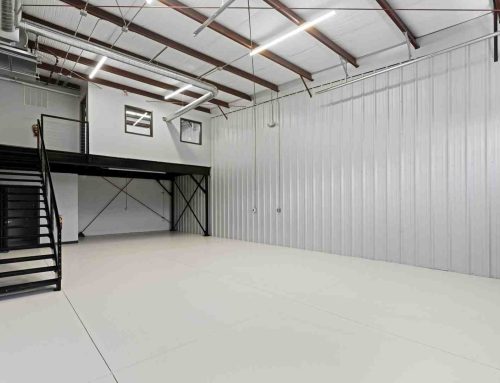
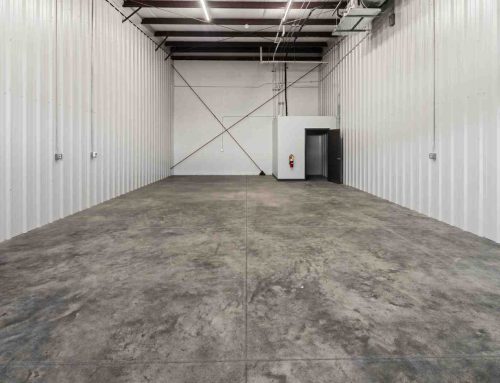
High clear heights (20–30 ft+), multiple loading docks, and wide floor plates make these the workhorses of storage and fulfillment. They shine as inventory hubs, regional logistics centers, and e-commerce pick-pack-ship bases.
Manufacturing Space
Built for production rather than storage, these facilities feature 3-phase power, reinforced floors, and specialized ventilation to support heavy machinery, assembly lines, and detailed fabrication work.
Flex Space & Multi-Use Commercial Property
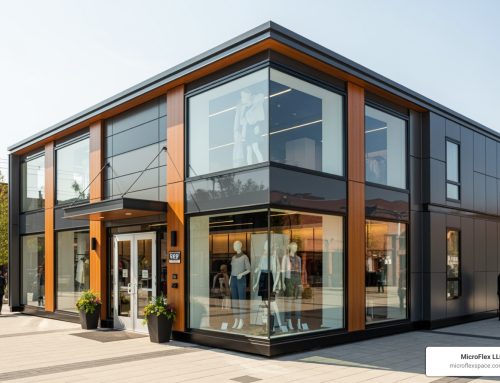
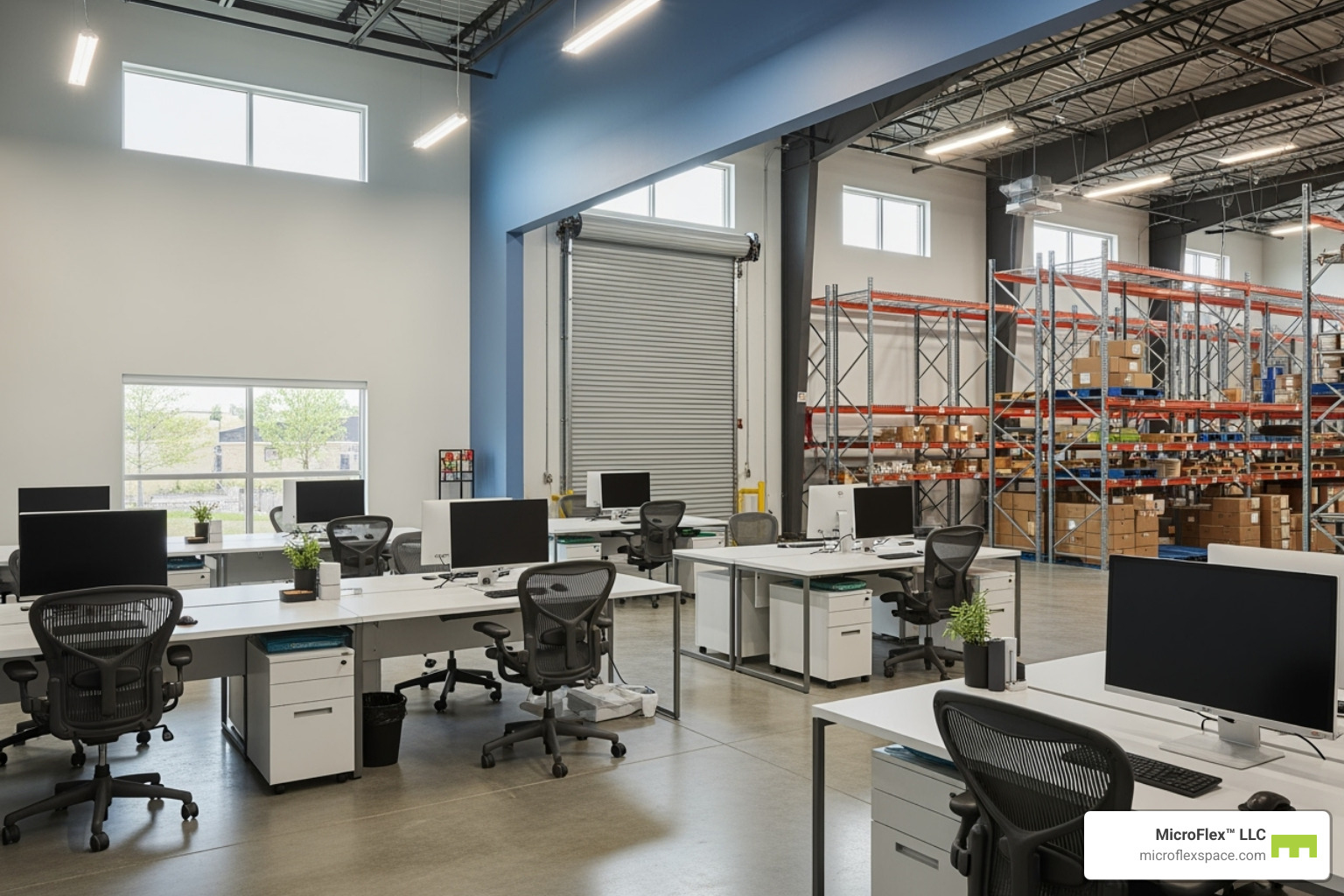
An office/warehouse combo that blends front-of-house offices or showrooms with a rear industrial bay. Modular walls and utilities allow layouts to pivot as fast as your business model, making them ideal for service companies and product demos.
Micro Warehouse & Shared Amenities
Smaller units (250–5,000 sq ft) inside a managed facility. You rent only what you need but share expensive extras—forklifts, docks, conference rooms, and high-speed Wi-Fi—with neighboring tenants. Co-warehousing keeps overhead low and community high, a perfect match for startups and seasonal sellers.
Knowing which of these categories fits your workflow will narrow the search for a business warehouse for rent that truly supports your growth plans.
Your Checklist: Essential Features in a Business Warehouse for Rent
Once you’ve identified the type of industrial space that best suits your business, it’s time to get into the nitty-gritty details. Think of this as your warehouse shopping list – the features that will make or break your daily operations. We’ve all been there: you fall in love with a space, only to find it doesn’t have the power capacity for your equipment or the ceiling height for your storage needs. Let’s avoid that heartbreak!
Size and Layout
Square footage is just the starting point. What really matters is how that space works for your specific needs. Start by calculating your current inventory requirements, equipment footprint, and any operational areas like packing stations or assembly lines. But here’s the key: don’t just think about today.
Ceiling height (also called clear height) is your secret weapon for maximizing storage capacity. Those extra feet upward can mean the difference between cramped operations and efficient multi-level racking systems. Many warehouses offer 14-foot clear heights, though some soar much higher. If you’re planning to stack inventory or install tall equipment, this measurement becomes crucial.
Column spacing might seem like a technical detail, but it directly impacts your layout flexibility. Wider spacing between support columns gives you more freedom to arrange racking, equipment, and workflow paths efficiently. Tightly spaced columns can turn into expensive obstacles that limit your operational flow.
Don’t forget to factor in usable floor space – that’s the area you can actually use after accounting for columns, office build-outs, or irregular shapes. And here’s our golden rule: always plan for future growth. We recommend looking for a space that can accommodate your needs for at least the next 1-3 years, with a buffer of 15-25% for unexpected expansion. Trust us, growing out of your space too quickly is a headache you want to avoid.
Accessibility and Logistics
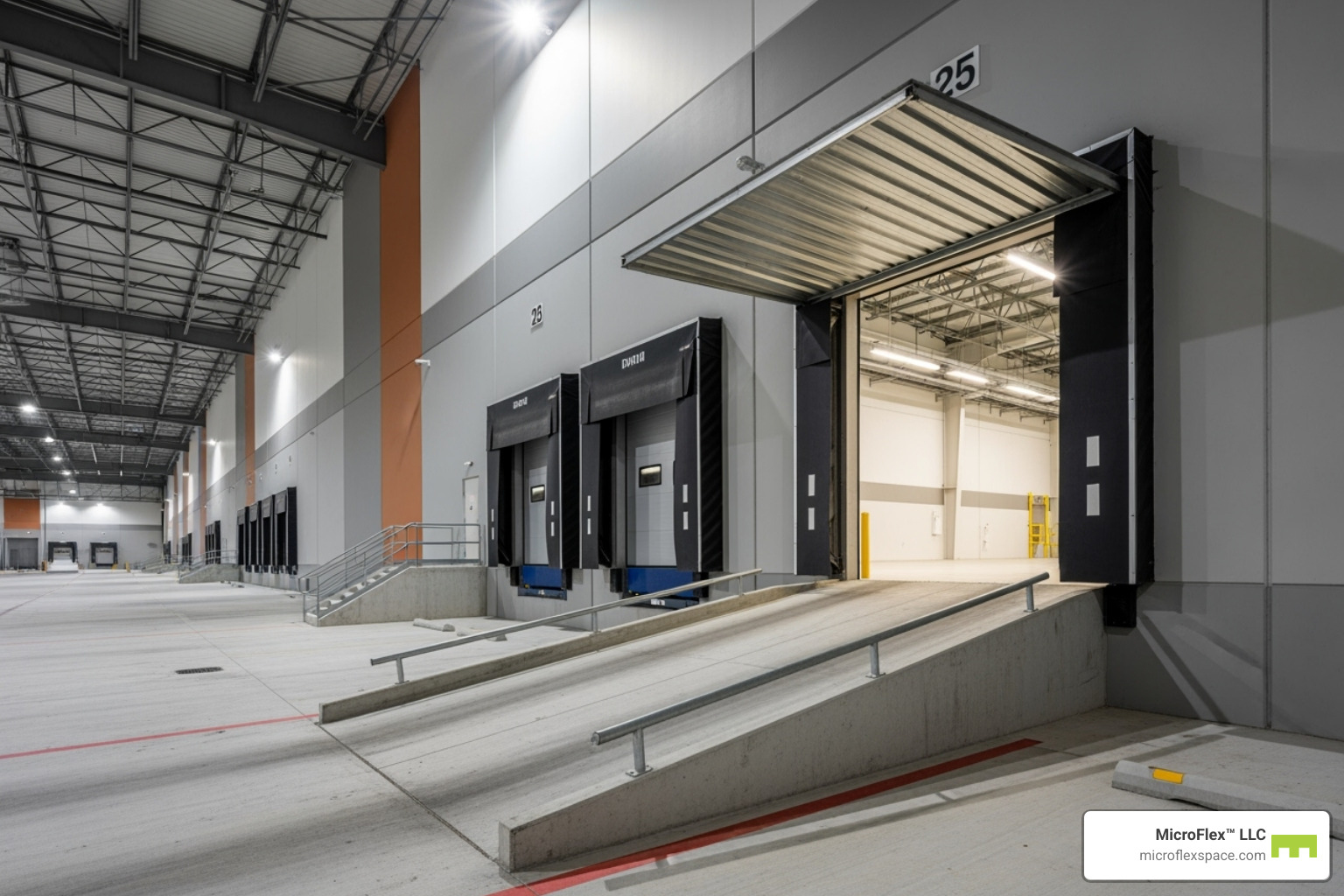
The smooth flow of goods in and out of your warehouse can make or break your efficiency. Loading docks are essential if you’re receiving or shipping goods via large trucks. Pay attention to the number of docks, their height (dock-high versus ground-level), and whether they include levelers for seamless loading.
Drive-in doors (sometimes called grade-level doors) are fantastic for smaller operations. They allow vans, small trucks, or forklifts to drive directly into the warehouse – perfect for businesses that don’t need full-sized loading docks but still want efficient access.
The truck court or apron – that paved area outside the loading docks – deserves more attention than it usually gets. Adequate space here prevents bottlenecks and allows trucks to maneuver safely. Nothing slows down operations like trucks backing up because they can’t turn around properly.
Parking for employees and visitors is often overlooked but vital for smooth daily operations. And when it comes to proximity to major highways, location truly matters. Easy access to major transportation arteries can significantly impact your bottom line through reduced transportation costs and improved delivery times. Picture a business warehouse for rent that’s less than 5 minutes from major interstates, an international airport, and key commercial hubs – that’s the kind of location that maximizes logistical efficiency.
Amenities and Utilities
Beyond the basic structure, certain amenities and utility capacities can transform your operational efficiency and daily comfort. Many businesses need dedicated office space within their warehouse for administrative tasks, customer service, or management functions. Consider whether existing office space meets your needs or if you’ll need to invest in a build-out.
Restrooms might seem obvious, but accessible and well-maintained facilities are essential for employees and visitors. If you’re storing sensitive goods like electronics, food, pharmaceuticals, or certain textiles, climate controlled storage becomes non-negotiable to prevent costly damage.
Power capacity, particularly 3-phase power, is crucial for industrial operations. Many machines and equipment require this type of electrical service, so ensure the property has the necessary amperage and phasing to support your operations. Don’t get caught needing expensive electrical upgrades after you’ve already signed the lease.
Internet connectivity isn’t just nice to have – it’s essential for modern businesses managing inventory, communicating with customers, and processing orders. Look for reliable, high-speed internet access throughout the facility.
Security systems protect your valuable inventory and equipment. Features like 24/7 CCTV monitoring, access control systems, and adequate lighting provide peace of mind. Some properties even include on-site security personnel for added protection.
By carefully evaluating these features, you’ll find a business warehouse for rent that not only meets your current needs but also supports your future growth ambitions.
Navigating the Lease: Understanding Costs, Location, and Terms
Securing a business warehouse for rent boils down to three questions: Where is it, how much will it really cost, and what does the lease say?
How Location Impacts Your Business
- Customer proximity – faster delivery and lower shipping spend.
- Labor access – a shorter commute helps you attract and keep talent.
- Transportation network – being near Interstates I-65, I-20, or the Birmingham-Shuttlesworth airport keeps trucks moving.
- Zoning – confirm the site is approved for your type of operation before signing.
Understanding the Costs of a business warehouse for rent
- Base rent (PSF) – the headline number on every listing.
- Triple Net (NNN) charges – your share of taxes, insurance, and CAM. See an overview on Wikipedia.
- Utilities & insurance – usually metered directly to you; budget realistically.
- Building class & size – newer Class A space costs more per square foot than an older Class C shell.
Decoding Lease Terms for a business warehouse for rent
- Lease length & renewal – traditional 3–5 year terms exist, but MicroFlex™ also offers 30- to 90-day options for agile teams.
- Tenant improvement (TI) allowance – negotiated funds that let you tailor the space.
- Move-in timeline & security deposit – know cash requirements before you sign.
When location, cost, and language align, you’ll have a lease that supports—not stifles—your next stage of growth.
Frequently Asked Questions about Renting a Business Warehouse
We know you’ve got questions, and we’re here to help you get clear on the ins and outs of securing your next business warehouse for rent. Let’s explore some of the most common inquiries we hear!
What types of businesses typically rent a warehouse?
You might be surprised by the sheer variety of businesses that find their perfect fit in a warehouse space! At its heart, if your business deals with physical goods, equipment, or just needs a dedicated operational hub beyond a traditional office or retail store, a business warehouse for rent is probably on your radar.
Think about our friends in the digital world: E-commerce companies absolutely rely on warehouses. It’s where their inventory lives, where orders are picked and packed, and where everything gets shipped right to your doorstep. Similarly, retailers, whether they have physical stores or not, use these spaces for overflow inventory, seasonal stock, or as a central spot to distribute products to multiple locations.
Then there are the classic heavy-hitters: Wholesalers and Distributors are the backbone of supply chains, and they need vast spaces to manage huge inventories and keep goods flowing. Light Manufacturers also call warehouses home, using them for raw materials, assembly lines, packaging, and storing their finished goods. And don’t forget Logistics Companies (the 3PLs!) who rent warehouses to offer storage, fulfillment, and transportation services to other businesses – they’re the pros at making things move.
But it’s not just about products! Many hands-on service businesses find warehouses indispensable. Contractors and Service-Based Businesses like plumbers, electricians, landscapers, and HVAC technicians use these spaces to store their tools, equipment, vehicles, and all those essential materials. It keeps their vans lighter and their operations organized. We’ve even seen some creative folks repurpose warehouses for things like film shoots or event spaces, though that’s usually for short, flexible rentals.
So, whether you’re shipping widgets, storing tools, or building something incredible, there’s a good chance a business warehouse for rent is exactly what your business needs to thrive.
How much space do I actually need?
Ah, the million-dollar question! Figuring out the right amount of space is a bit like Goldilocks finding her perfect bed – you don’t want too much (paying for empty air) or too little (feeling cramped and unable to grow). Our goal is to help you find a space that’s “just right.”
Here’s how we break it down:
First, let’s look at your current inventory volume. How much stuff do you have right now? Think about it in terms of cubic feet or how many pallets you need. And remember, it’s not just about stacking things to the ceiling! You also need room for aisles, access points, and easy movement.
Next, consider your equipment and machinery. Do you have forklifts, racking systems, packing stations, or any production machines? Make a list of everything, and don’t forget to factor in the space they occupy and the area needed for them to operate safely.
If your team will be working inside the warehouse, you’ll need to allocate workspace for employees. This includes clear areas for picking, packing, assembly, or any other tasks. And, of course, if you need an integrated office space within the warehouse, determine the square footage for desks, meeting rooms, and any necessary restrooms.
Finally, and this is a big one: always, always, always factor in a future growth buffer. We strongly recommend adding an extra 15-25% to your current needs. Why? Because businesses that don’t plan for growth often find themselves needing to move again far sooner than expected. That means extra costs, downtime, and a whole lot of hassle. Think about potential new product lines, an increase in sales, or expanding your team. Finding a business warehouse for rent that gives you a little breathing room now can save you a lot of headaches later!
It’s a balancing act, for sure, but with a bit of careful planning, you can find a space that perfectly supports your current operations while giving you plenty of room to stretch your wings.
What is the difference between a gross lease and a net lease?
Understanding lease structures is super important – it’s how you know exactly what you’ll be paying for each month. Let’s explain the difference between gross and net leases.
Think of a Gross Lease (sometimes called a Full-Service Lease) as an all-inclusive resort. You pay one flat rental rate, and your landlord covers almost all the property expenses. This typically includes things like property taxes, building insurance, and common area maintenance (CAM). Sometimes, utilities are even rolled into this. For you, the tenant, this offers wonderful simplicity and predictability in your budgeting. You know your monthly rent bill, and that’s pretty much it!
Now, a Net Lease is a bit different. With this structure, you’ll pay a lower base rent, but then you also pay a proportionate share of the property’s operating expenses. These expenses are “netted” out of the base rent and passed on to you. There are a few flavors of net leases:
- Single Net (N Lease): Here, you pay the base rent plus your share of the property taxes.
- Double Net (NN Lease): This steps it up a notch. You pay base rent, property taxes, AND building insurance.
- Triple Net (NNN Lease): This is the most common type you’ll encounter when looking for a business warehouse for rent. With an NNN lease, you pay a lower base rent, but you’re also responsible for your pro-rata share of property taxes, building insurance, and common area maintenance (CAM) charges. Plus, you’ll typically handle your own utilities and any interior repairs or maintenance.
The key takeaway? A gross lease means a higher, fixed rent where the landlord handles most operating costs. A net lease (especially NNN) means a lower base rent, but you take on more of the property’s variable operational expenses. We always, always encourage our clients to understand exactly what’s included (and excluded!) in their lease agreement. That way, there are no “surprise charges” down the road, and you can budget with total confidence.
Conclusion: Making the Right Move for Your Business

Finding the right business warehouse for rent isn’t just about checking boxes on a property listing. It’s about making a strategic decision that can transform how your business operates and grows. Think of it as choosing a business partner—one that needs to support your daily operations while giving you room to dream bigger.
Throughout this guide, we’ve walked through the essential steps together. Assessing your needs helps you understand exactly what you’re looking for, from square footage to specialized features. Understanding different space types ensures you’re not settling for a traditional warehouse when a flex space might be perfect for your unique operations. Inspecting key features like loading docks, power capacity, and security systems protects you from costly surprises down the road.
The beauty of renting lies in its flexibility and adaptability. You’re not tied down by massive upfront investments or locked into a space that might not fit your needs in two years. Instead, you get the freedom to scale up during busy seasons or pivot when your business strategy evolves. This flexibility is especially valuable for growing companies that need space solutions as dynamic as their ambitions.
Reviewing lease terms carefully might not be the most exciting part of the process, but it’s what protects your business interests. Whether you’re navigating NNN leases, understanding CAM charges, or negotiating renewal options, knowledge is your best tool for making smart decisions.
For businesses seeking truly adaptable solutions, MicroFlex™ LLC offers multi-functional spaces that combine warehouse, office, and storage features with the flexible terms modern companies require. Whether you’re a startup in Auburn Opelika, an e-commerce brand in Birmingham Irondale, a growing distribution company in Huntsville, or a contractor in Birmingham Hoover, we understand that your space should work as hard as you do.
The right business warehouse for rent becomes more than just four walls and a roof—it becomes the foundation that supports your growth, streamlines your operations, and gives you the confidence to take on bigger challenges.
Find the perfect space to grow your business by exploring our mini warehouse storage options today.