

Why a Creative Workspace Changes Everything for Your Business
A creative workspace is more than a place to work; it’s a designed environment that boosts innovation, productivity, and well-being through thoughtful layout, decor, and flexible functionality.
What makes a workspace creative:
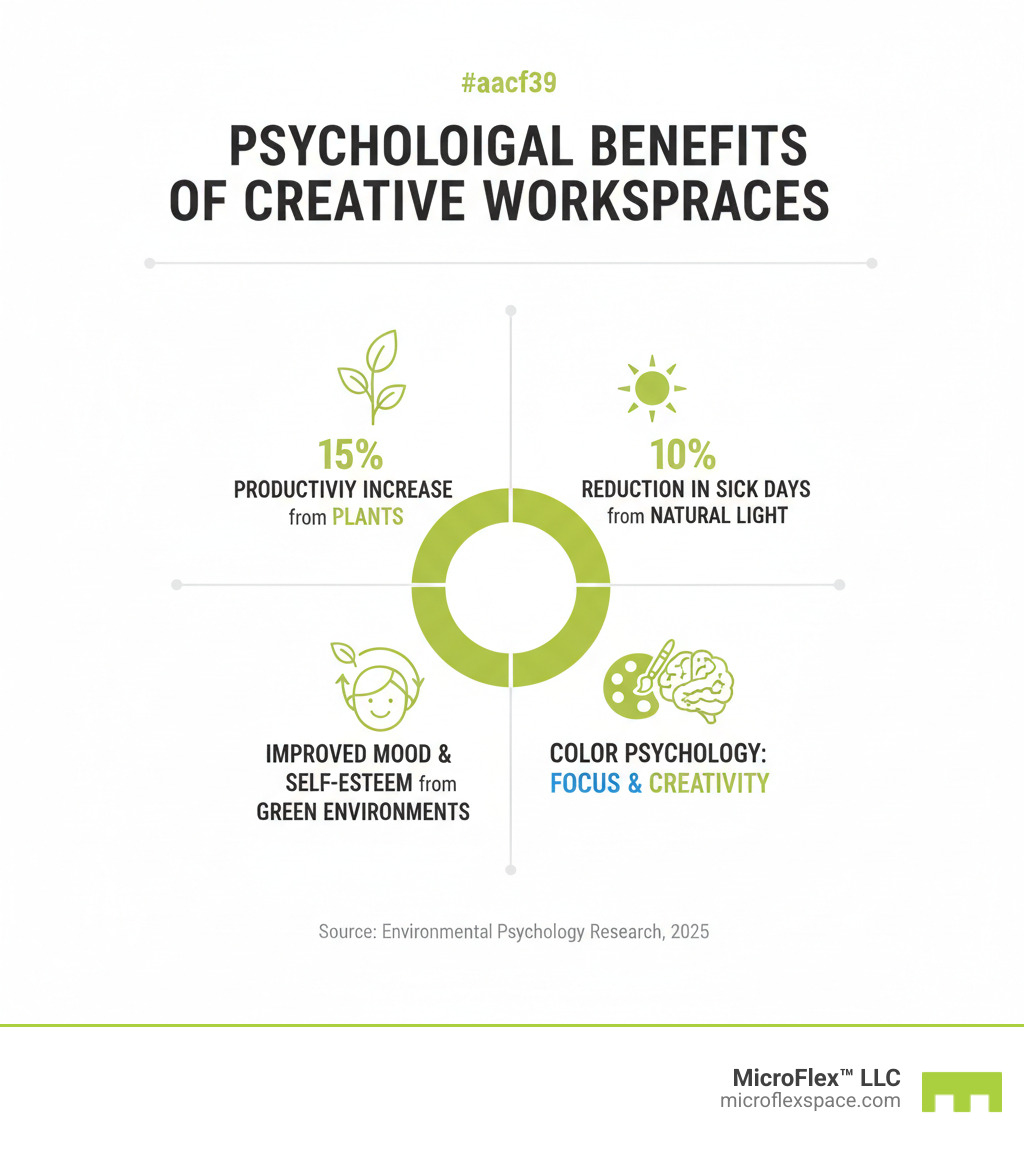
- Natural elements – Plants can boost productivity by 15% and reduce sick days.
- Flexible layout – Furniture that adapts to different work styles.
- Personal touches – Art and objects that reflect your personality.
- Smart organization – Systems that reduce clutter and distractions.
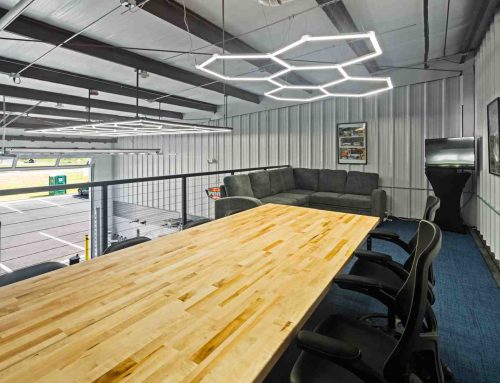
- Quality lighting – Natural light supplemented by adjustable fixtures.
Your workspace directly impacts your ability to think clearly and innovate. Research shows that nature and natural light improve mood and reduce sick days.
However, most entrepreneurs struggle with rigid lease terms and limited property options that don’t adapt to their changing needs. You might need a meeting room one week, inventory storage the next, and a quiet space for deep work the week after.
As Sam Zoldock, founder of OWN Alabama and a commercial real estate investment professional, I’ve seen how the right creative workspace can transform a business. Today’s entrepreneurs need spaces as adaptable as their ambitions.
The Core Four: Layout, Light, Organization, and Personalization
1. Master Your Layout for Creative Flow
Think of your creative workspace layout as its foundation. Does it work with you or against you? Furniture arrangement is about creating a flow that supports how you think.
Flexibility is key. Your space needs to adapt to different moods and projects. Create distinct zones even in small areas: a quiet corner for concentration, a collaborative area, and a spot to step away from your desk.
The main question is: can you move easily between tasks? Don’t block natural light or cram your space. An Instagram-perfect design is useless if it doesn’t match how you work.
Ergonomics matter. Your feet should be flat on the floor, your screen at eye level, and your arms comfortable. An ergonomic chair and adjustable desk can transform how you feel after a long session.
The biggest mistake is a rigid setup. Your creative workspace should evolve with your projects. Explore our Dynamic Workplace Solutions to see how flexible spaces can grow with you.
2. Let There Be Light (and Nature!)
Brainstorming in a dim, windowless room isn’t inspiring. Natural light and nature are productivity powerhouses that change how your brain works.
Research shows that plants can boost productivity by 15% and greenery reduces sick days by 10%. This has a measurable impact on your bottom line.
Natural light keeps our internal clocks happy, lifts our mood, and helps us think clearly. Position your main work area near a window if possible. Artists know that morning sunlight can flip a switch for creativity.
No perfect windows? Bring nature inside. A few well-placed plants can transform a room’s energy. Some creatives even work outside when weather permits.
The key is making your creative workspace feel connected to the world, not cut off from it. Seeing a tree or tending to a plant provides a mental reset. See how artists use natural light in their studios for more inspiration.
3. Conquer Clutter with Smart Organization
A messy workspace creates a messy mind. When your desk is covered in clutter, your brain works overtime to filter out the visual noise, causing stress before you even start.
Organization isn’t about perfection; it’s about creating mental clarity so your best ideas can surface. The magic happens when everything has a home. Your pens, files, and cables all need designated spots. Putting things away becomes automatic.
Vertical space is your secret weapon, especially in smaller areas. Wall-mounted organizers, shelves, and pegboards free up your desk while keeping items accessible. Think up, not out.
Consider a “fun stuff drawer” with things that spark joy—chocolate, photos, or a small toy. A tiny creative break can help solve a big problem.
Don’t forget your digital space. A cluttered desktop is just as distracting. Clean files and an organized inbox contribute to clarity and control. The goal is a creative workspace that supports your thinking. Find Small Business Office Solutions to maximize your organizational potential.
4. Curate an Inspiring Atmosphere with Art and Color
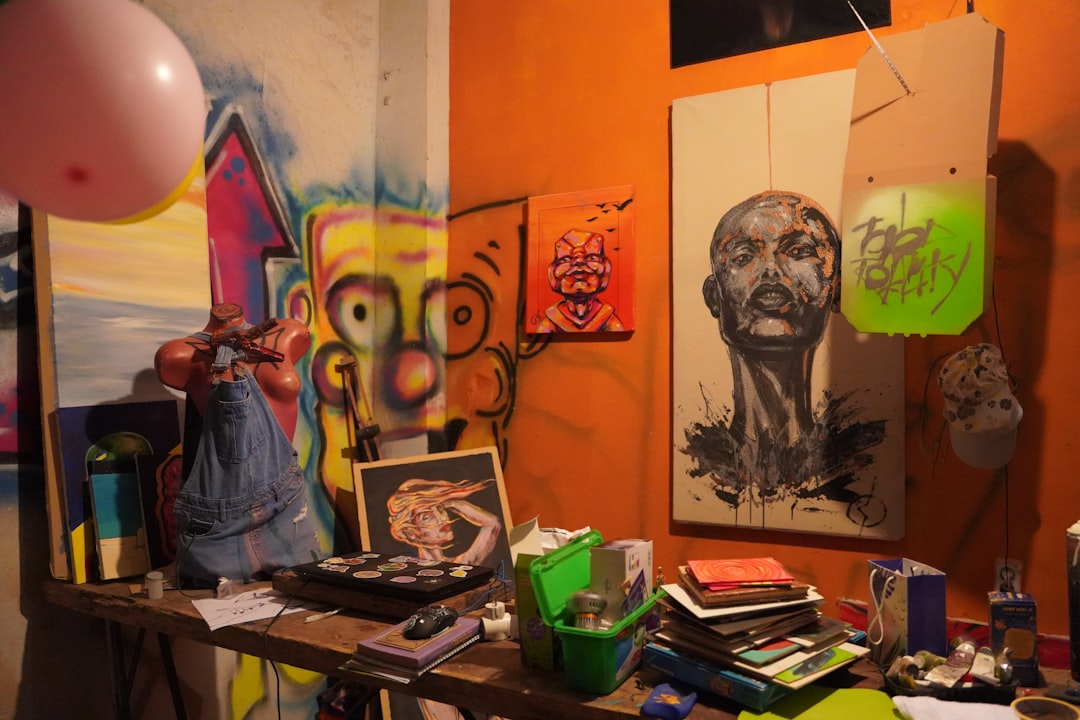
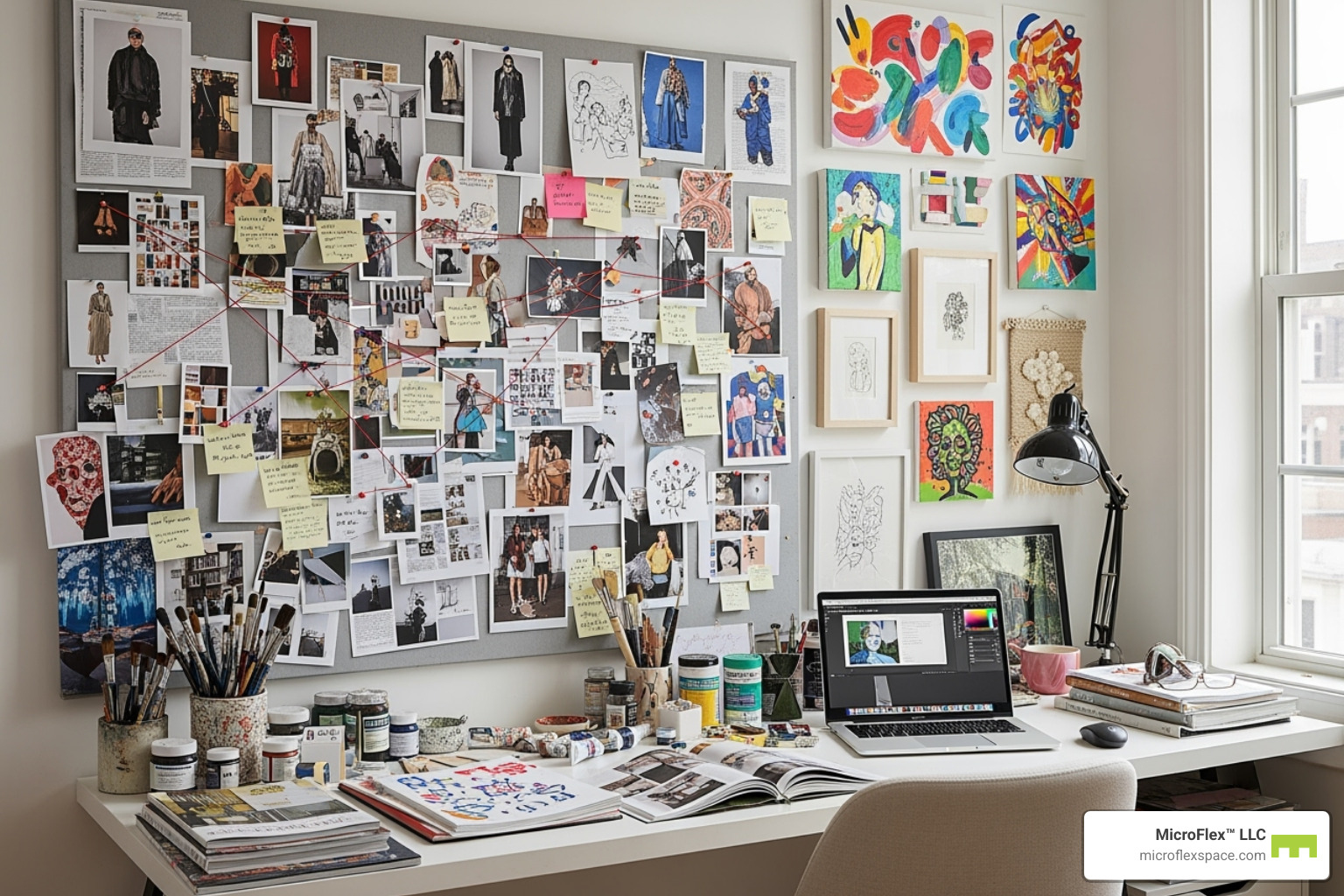
Your creative workspace should tell your story. It should reflect your interests, journey, and dreams. This isn’t about expensive art; it’s about surrounding yourself with things that energize and inspire you.
Art is deeply personal. Choose pieces that resonate with you, whether it’s bold abstract paintings, family photos, or favorite quotes. Showcase products you’ve created or hope to create.
Color psychology is real. Blue helps with focus. Green brings balance and reduces eye strain. Yellow sparks energy and optimism (best as an accent). Orange encourages enthusiasm and communication.
An inspiration board is a visual conversation with your future self. Pin up images, quotes, or sketches that excite you. It can evolve with your projects, keeping ideas fresh.
Your workspace is an extension of you. When clients visit, they should get a sense of your personality and passion. That authentic energy transforms an office into a true creative workspace where breakthrough ideas feel natural.
Level Up Your Space: Nature, DIY, and Tech Integration
5. Go Green with Plants and Natural Elements
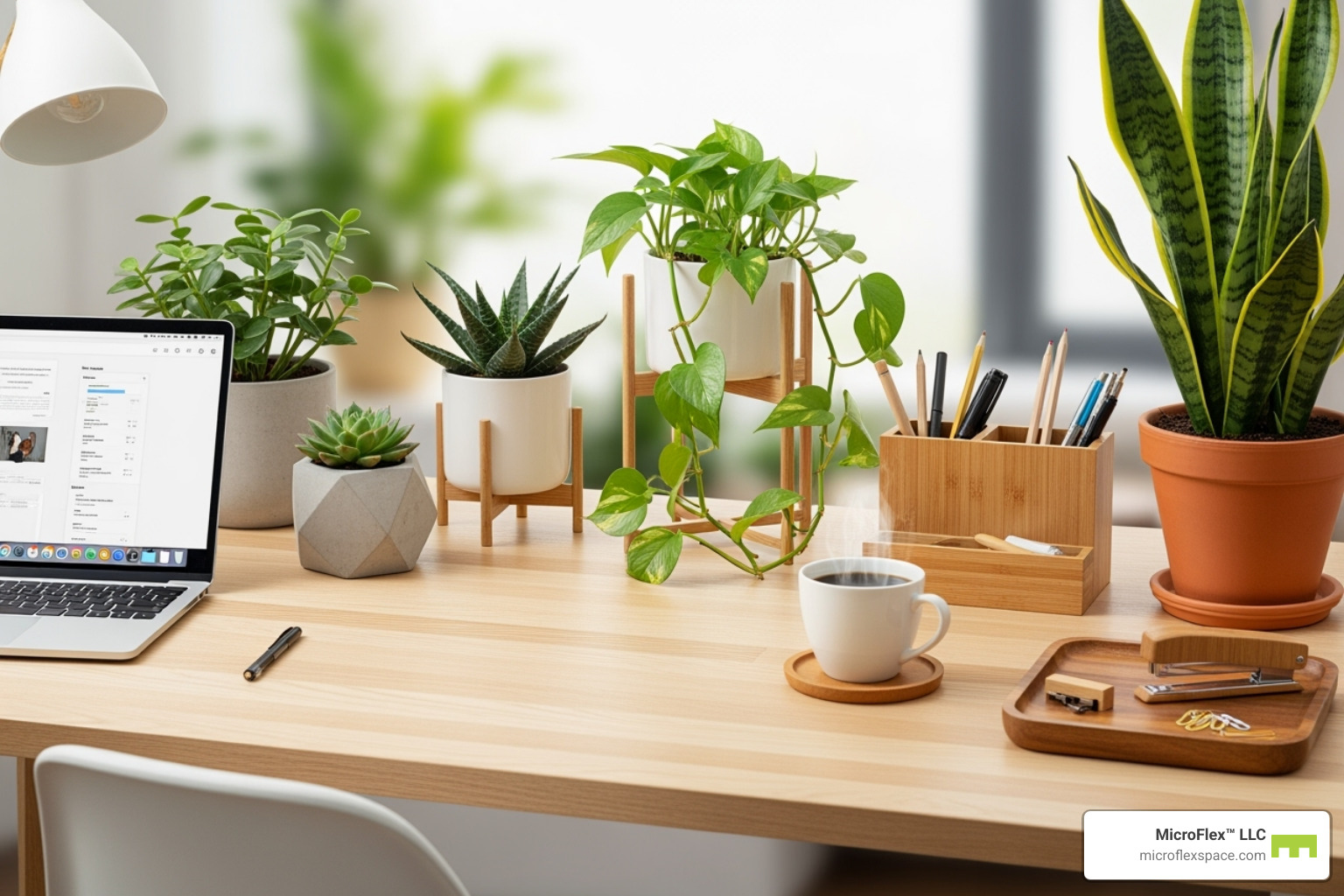
That 15% productivity boost from plants? It’s time to make it a reality in your creative workspace. You don’t need to be a master gardener; a few green friends can transform your space.
The Plant-Friendly Approach:
Start small. The snake plant is nearly indestructible and handles low light. For more personality, try a ZZ plant or trailing pothos. For a low-maintenance option, succulents and cacti are your best friends. Strategic placement is key—put a small plant on your desk for a constant visual connection to nature.
Beyond the Green Stuff:
Nature’s influence extends beyond plants. A small desktop water fountain can aid concentration with its gentle trickling sound. Natural materials like wood, stone, or bamboo bring an organic feel without any watering. These textures create a more inviting workspace.
An essential oil diffuser with lavender for calm or peppermint for focus can also improve the natural vibe. Your creative workspace becomes a multi-sensory experience that supports your best thinking.
6. Get Crafty with DIY and Low-Cost Solutions
The most inspiring creative workspace often comes from imagination, not a big budget. Some of the best offices are crafted by people who see potential in what others see as junk.
Making Magic on a Shoestring:
A simple coat of paint can transform an old desk. I’ve seen stunning custom desktops made from reclaimed wood or decorative contact paper. The key is making it uniquely yours.
Upcycling is where creativity shines. An old bookshelf, painted a bold color, becomes a stylish display unit. An antique trunk can be both storage and a conversation piece. Thrift stores are treasure troves.
Custom lighting doesn’t have to be expensive. String lights create ambiance, and paper lanterns add artistic flair.
Don’t forget bulletin boards and whiteboards. Create a large one with cork tiles or use whiteboard paint for a giant idea canvas.
The beauty of DIY is that every piece tells a story. Your creative workspace becomes truly yours. For businesses wanting adaptable spaces for their projects, Learn about our adaptable Modular Office Space.
7. Integrate Technology to Boost Creativity
Technology should be a creative partner, not an obstacle. A good tech setup in your creative workspace disappears into the background, helping you do your best work.
The Game-Changing Basics:
Dual monitors are perhaps the best upgrade you can make, allowing you to keep references open without constantly switching windows. Of course, high-speed internet is non-negotiable; slow connections kill creativity. Smart boards and digital collaboration tools like Miro or Mural take brainstorming to the next level, especially with remote teams.
Supporting Your Creative Flow:
A tablet like an iPad can be a reference library and digital sketchpad, keeping your momentum going from sketch to digital design. A good battery pack ensures power outages don’t interrupt your flow.
Don’t overlook cable management. A tangle of wires is creativity kryptonite. Use cable ties, sleeves, and trays to keep your tech setup clean and your mind clear. The best technology gets out of your way. For tech-ready environments, Find the perfect Office Space for Remote Workers.
The Bigger Picture: A Creative Workspace for Collaboration and Growth
8. Design an Adaptable and Collaborative Creative Workspace
Modern creativity rarely happens in isolation. The best ideas often emerge from collaboration, so designing your creative workspace for both adaptability and teamwork is essential for growth.
Why Flexibility is Your Secret Weapon
Your work changes weekly. One day you need focus, the next you’re hosting a brainstorm. An effective workspace rolls with these changes. The magic is in transformable spaces: furniture that moves, walls that open or close, and multi-functional zones. Simply rearranging furniture can spark fresh thinking.
Creating Spaces That Welcome Everyone
Different creative disciplines have different needs. A graphic designer needs monitors and good lighting; a product developer needs room for prototypes. The key is building flexible zones with ample power outlets and adjustable surfaces.
Design for collaboration also means planning for unplanned “collision moments”—bumping into someone at the coffee station or overhearing an interesting conversation.
The Tools That Make It Work
Simple tools are often the most powerful. Movable furniture on wheels lets you reconfigure your space in real-time. Whiteboard walls turn any surface into a brainstorming canvas. These are game-changers that support both introverted focus and extroverted collaboration. Your space becomes an extension of how you actually work.
For businesses in Birmingham needing adaptable, collaborative spaces, Check out our Flexible Office options in Birmingham.
9. The Great Debate: Separate Studio vs. Working from Home
Every creative faces this choice: set up shop at home or get a separate creative workspace? The decision is about more than money; it’s about understanding your work habits, distractions, and boundaries.
The Home Office Reality Check
Working from home is convenient and cost-effective, especially when starting out. But distractions are everywhere: pets, laundry, and other household chores. The bigger challenge is the psychological blur between work and life. It’s hard to “leave work at work” when your desk is just a few feet away, leading to burnout.
The Case for a Separate Space
A dedicated workspace signals to your brain that it’s time to focus. The mental boundaries are invaluable. It also boosts your professional image for client meetings and allows you to leave projects undisturbed. Plus, the community aspect of a separate building or district creates opportunities for networking and collaboration.
Making the Right Choice for You
Track your productivity and distractions for a few weeks. If you’re constantly interrupted at home or struggle with work-life balance, a separate space might be a worthy investment.
| Home Office | Separate Workspace |
|---|---|
| Low cost | Higher cost |
| High flexibility | Structured hours |
| Many distractions | Fewer interruptions |
| Blurred boundaries | Clear work-life separation |
| Limited networking | Built-in community |
| Space constraints | Room to grow |
This isn’t a permanent decision. Many creatives start at home and transition later. If you’re in Birmingham and want to test a dedicated workspace, Need a Temporary Office Space in Birmingham?.
10. Find Your Tribe: Shared Spaces and Roommate Harmony
Creating alongside others can be magical. The people around your creative workspace can either fuel or drain your inspiration, whether in a shared home or a coworking space.
The Roommate Creative Dynamic
Living with other creatives can be like having a built-in think tank, leading to unexpected collaborations. However, shared living isn’t always easy. Different schedules and habits can cause stress. The key is being honest about your needs upfront. When looking for roommates, be your authentic self in listings. Share your quirks, schedule, and needs to find people who complement your lifestyle.
The Coworking Revolution
If shared living is too complex, coworking spaces offer community without the domestic complications. They are community hubs designed for cross-pollination of ideas. The diversity of perspectives is a major benefit; you might overhear a conversation that sparks an idea or find a new client. Coworking spaces also offer practical perks like high-speed internet, meeting rooms, and printing services.
Setting Boundaries That Work
Whether in a shared home or coworking space, clear boundaries are crucial. Establish quiet hours, discuss guest policies, and be upfront about your work style. The goal isn’t to find people exactly like you, but those who respect and complement your creative process.
For Birmingham creatives seeking flexible shared workspaces, Explore Birmingham Shared Office Space. For tips on creative living situations, Learn how to find creative-friendly living situations.
Frequently Asked Questions about Creative Workspaces
What are some common pitfalls to avoid when setting up a creative workspace?
Setting up your creative workspace is exciting, but common mistakes can sabotage productivity. The biggest pitfall is poor lighting. Harsh overhead lights cause eye strain and dampen mood. Prioritize natural light and add warm, adjustable task lighting.
Bad ergonomics is another creativity killer. Poor posture from the wrong chair or desk height drains your energy and focus.
A sterile, generic space won’t inspire you; ignoring personalization is a mistake. Your creative workspace should reflect your personality and passions.
We’ve said it before, but too much clutter creates mental noise, forcing your brain to work harder to filter out distractions.
Finally, not adapting the space to your actual workflow is a major pitfall. A beautiful office is useless if it doesn’t support how you really work.
How do I make a small office space more creative?
Small spaces can be incredibly inspiring with smart thinking. The key is maximizing every inch without creating clutter.
Using vertical space is your best friend in a small creative workspace. Shelves, wall-mounted organizers, and pegboards draw the eye upward and free up desk space.
Multi-purpose furniture is a game-changer. Think folding desks, storage ottomans that double as seating, or a daybed for a reading nook.
Mirrors can make a small office feel twice as large while bouncing natural light around the room.
The golden rule for small spaces is to keep your desk clear. Use drawer organizers and give everything a designated home. Even in a tiny space, you can add plants and inspiring artwork to reflect your creative vision.
How does color affect creativity in an office?
Color is psychology in action. The hues in your creative workspace can influence your mood, energy, and thinking.
- Blue is for focus. It promotes calmness and concentration, perfect for analytical work.
- Green brings balance. Associated with nature, it can reduce eye strain and help you feel centered.
- Yellow is a creative catalyst. It boosts energy and optimism but is best used as an accent.
- Orange encourages communication and motivation, ideal for collaborative areas.
- Warm neutrals like beige and gray provide a calming backdrop that lets your creative elements shine.
The secret is using color strategically in accents to energize your creative workspace without overwhelming it.
Conclusion: Build the Space Where Your Best Ideas Are Born
We’ve covered ten strategies to create a creative workspace that goes beyond aesthetics, from layout and light to art and tech. Together, these elements build an environment where innovation thrives.
Research shows well-designed creative spaces boost productivity by 15%, reduce sick days by 10%, and improve mood. Beyond the numbers, a space that fits how you work feels magical.
Your creative workspace should evolve with you, adapting to your changing needs for focus, collaboration, or client meetings. The best spaces are flexible, not constraining.
This is about creating a tool for success. Every element, from plants to organization, helps you solve problems faster, generate ideas more freely, and reduce stress. Your environment plays a crucial role in your success.
At MicroFlex™ LLC, we design our spaces with these principles in mind. Our adaptable configurations in Birmingham, Auburn Opelika, Huntsville, and Hoover transform to meet your needs—from solo work to team collaboration. We offer the flexibility modern entrepreneurs need, without rigid leases.
Your best ideas are waiting for the right environment. Find your ideal creative workspace for rent today!