

Why Mobile Offices Are Revolutionizing the Modern Workplace
Mobile offices are temporary, transportable workspace solutions that can be moved from location to location to meet your business needs. Here’s what you need to know:
What They Are:
- Prefabricated office structures designed for easy relocation
- Available as trailers, containers, or modular buildings
- Fully equipped with HVAC, electrical, and office amenities
Common Uses:
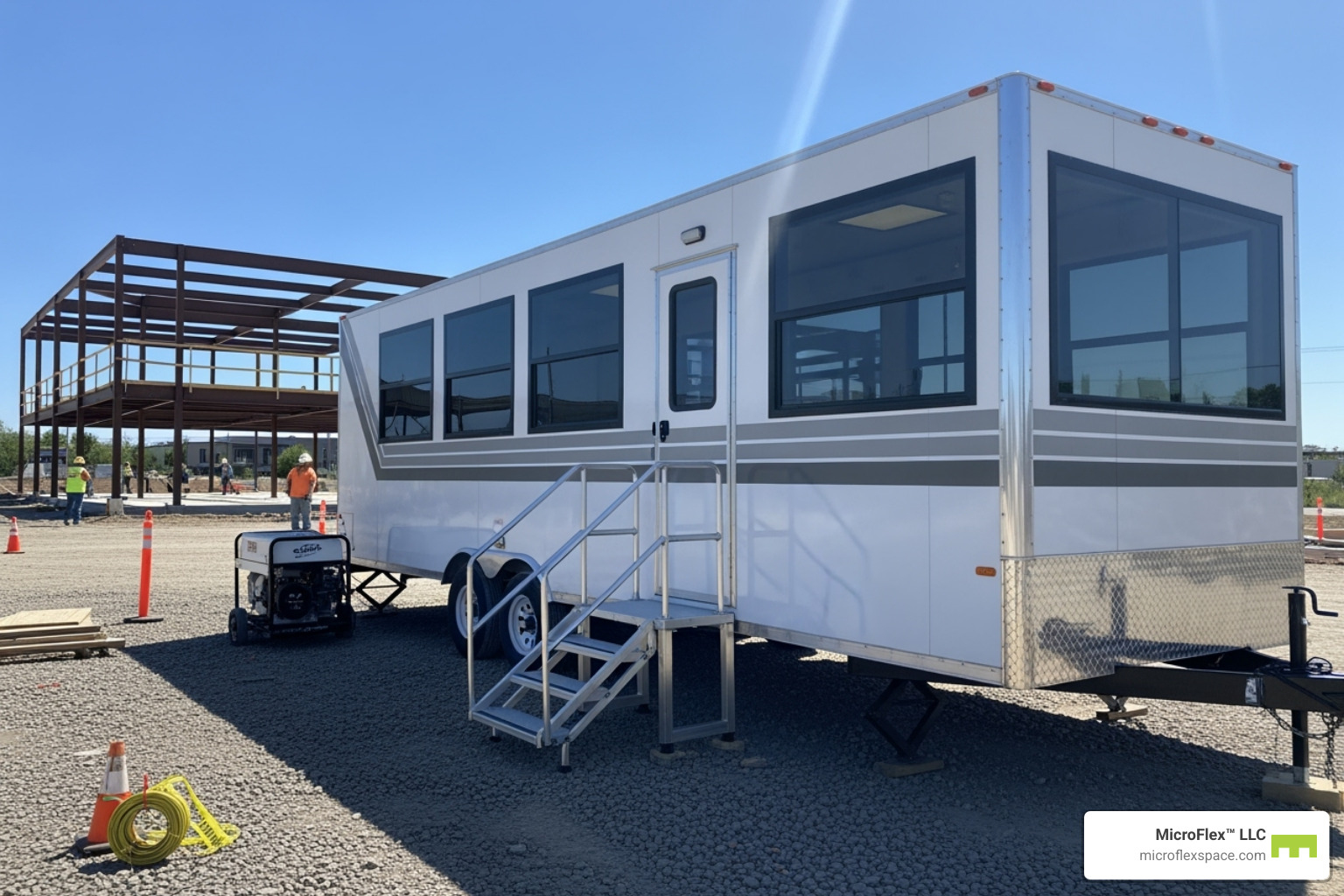
- Construction site offices and administrative spaces
- Temporary workspace during renovations or moves
- Sales offices for real estate and retail
- Emergency response command centers
- Remote work hubs and satellite offices
Key Benefits:
- Cost-effective – significantly cheaper than traditional leases
- Fast deployment – can be delivered and set up in one day
- Flexible – easily relocated as your needs change
- Customizable – custom layouts and features available
The mobile office market has exploded as businesses realize these portable solutions offer something traditional real estate can’t: true flexibility. Whether you need space for a year-long construction project or want to test a new market location, mobile offices let you work anywhere without the headaches of long-term leases or permanent construction.
As a commercial real estate professional with deep expertise in Alabama markets, I’m Sam Zoldock, and I’ve helped countless businesses find the right workspace solutions, including mobile offices that adapt to their changing needs. Through my work with flexible space solutions, I’ve seen how mobile offices can transform how businesses operate and grow.
What is a Mobile Office and Why is it Trending?
When traditional office leasing feels too rigid, the mobile office offers a flexible solution that brings the workspace to you. A mobile office is a fully functional, transportable workspace—often called a job site trailer or modular office—that packs all the essentials into a portable package. It provides the professionalism of a traditional office with the freedom to relocate as your projects or business needs change.
The trend is driven by the needs of modern business. Projects change locations, teams scale up or down, and long-term leases are often impractical. Mobile offices also align with sustainability goals by creating less construction waste and allowing for reuse across multiple projects. This focus on efficiency extends to employee well-being and productivity, providing a comfortable, dedicated workspace on-site. Finally, speed is a major factor. A mobile office can be delivered and operational in days, a stark contrast to the months required for traditional construction, offering agility that is invaluable in today’s market.
For more detailed information on various types of flexible office spaces, check out our guide on Mobile Office Spaces.
The Core Benefits of Going Mobile
When businesses find mobile offices, the benefits go far beyond just “having a place to work.”
Cost savings: Mobile offices eliminate the long-term commitments and hidden costs of traditional leases, offering predictable pricing.
Speed of deployment: In-stock units can be delivered and set up in as little as one business day, allowing your team to become productive almost immediately, avoiding months of traditional construction delays.
Location flexibility: Easily relocate to new project sites or test new markets without being tied to a fixed property. This adaptability allows businesses to seize opportunities quickly.
Scalability: As your team grows, mobile offices can be connected or stacked to expand your workspace, providing a solution that grows with your business.
Reduced overhead: Avoid the costs of extensive build-outs, long-term maintenance, and utilities for underused space that come with traditional leases.
Business continuity: Ensure operations continue without disruption during renovations, relocations, or emergencies by having an office that can move with you.
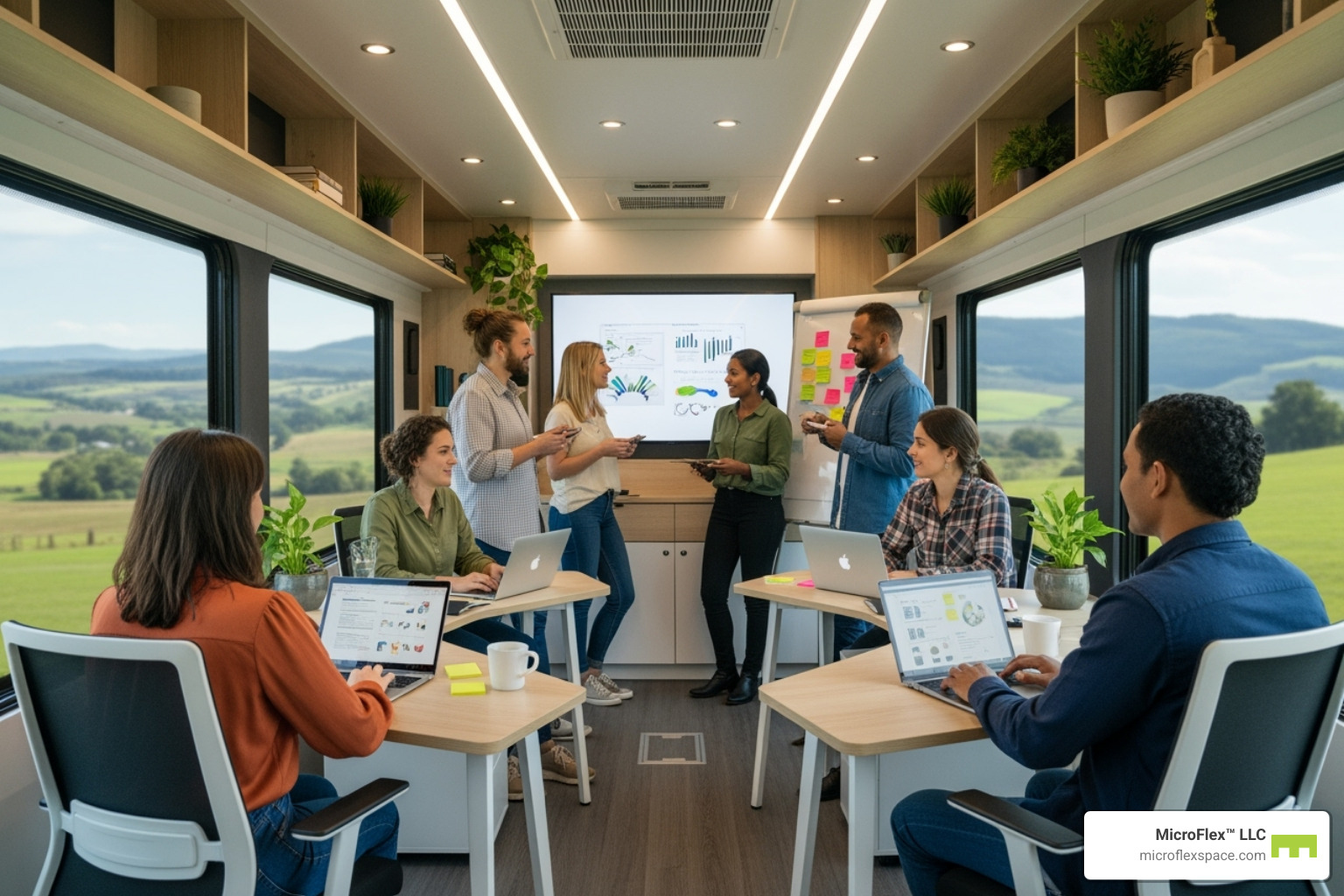
Professional image: Modern mobile offices are well-designed, comfortable workspaces that project a professional image, which is essential for morale and productivity during long-term projects.
Mobile vs. Traditional Office Space
Choosing between mobile and traditional offices means matching your workspace to your actual needs. Traditional offices offer permanence but come with long-term leases, high upfront costs, and inflexibility. Changing your space often involves expensive renovations or breaking a lease.
Mobile offices offer a different approach. Designed for portability and temporary use (often a year or more), they are built off-site and arrive ready for work, drastically reducing both setup time and costs. They can be configured with private offices, conference rooms, or open layouts before delivery. Quality mobile offices are also built to meet the same building codes and safety standards as traditional structures, ensuring a safe environment. The key advantage is adaptability—mobile offices let you respond to your business needs as they evolve, rather than forcing you to predict them years in advance.
The Ultimate in Versatility: Common Uses for Mobile Offices
Mobile offices are the Swiss Army knife of workspace solutions, with impressive versatility. Beyond their common use as command centers on construction sites, they serve as temporary administrative buildings, swing space during renovations, and disaster relief command centers. They also function as ticketing booths for special events, retail pop-ups, remote healthcare clinics, and temporary classrooms. For businesses scaling up quickly, they make excellent hiring and onboarding offices, helping to maintain a professional image.
Industry-Specific Applications
Every industry finds clever ways to put mobile offices to work.
In construction, they are essential as field offices and multi-unit headquarters, keeping administrative hubs on-site for smooth project management.
The energy and industrial sectors use them on remote sites like drilling operations and power plants as command centers or administrative hubs, boosting productivity and morale.
Healthcare uses them for expansions, and the entertainment industry for on-location production offices. Government and education deploy them as interim offices or portable classrooms to manage population growth.
Sales and service businesses use them as remote sales centers or dispatch offices. They also serve as scale houses for transportation and logistics operations.
You can explore more specialized applications on our temporary modular office buildings page, where we dive deeper into industry-specific solutions.
Creative and Unconventional Uses
Here’s where things get really interesting. The beauty of mobile offices is that they can become whatever your imagination and business needs require.
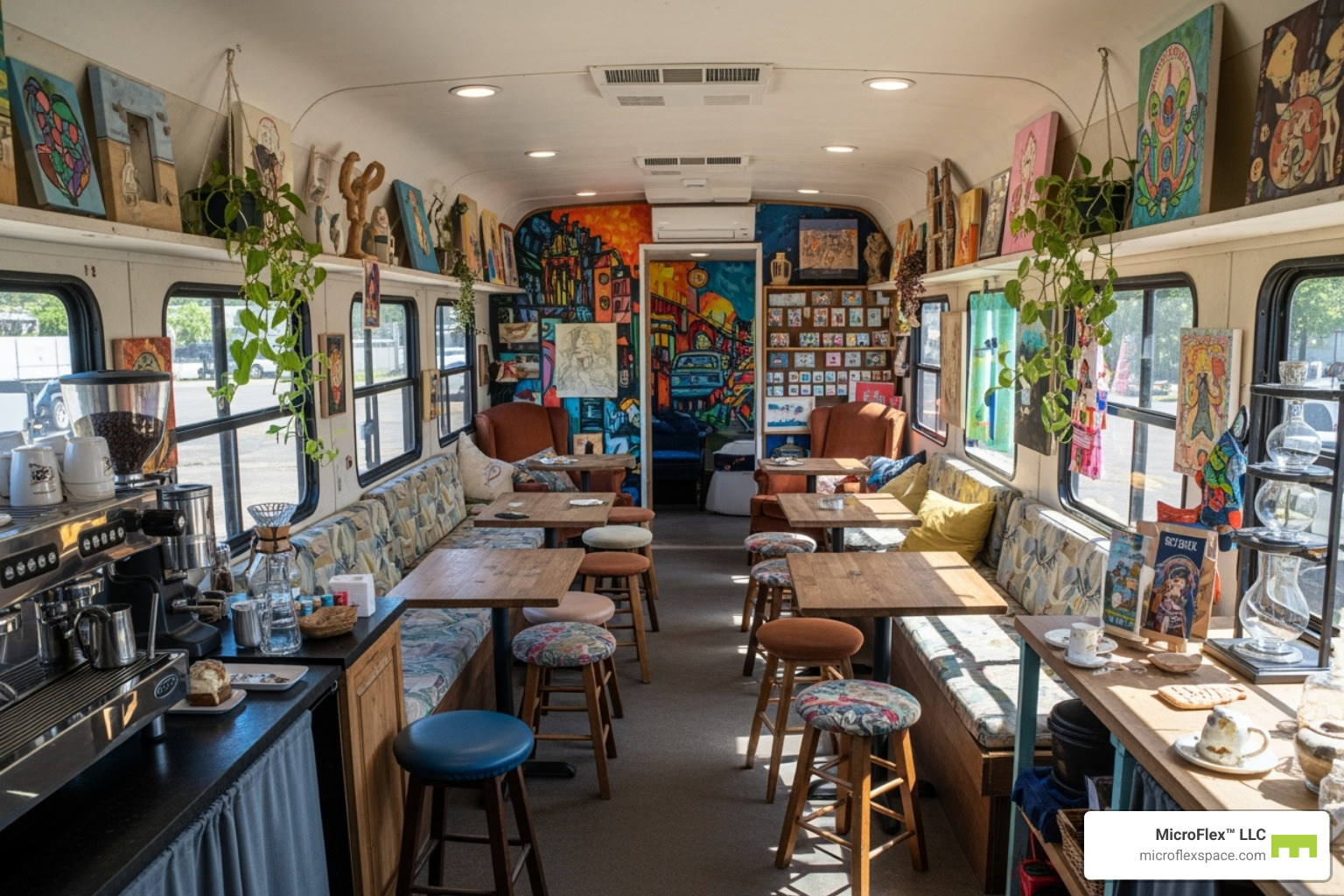
They can be transformed into home offices or backyard studios, providing a separate, professional workspace at home—a perfect solution for maintaining work-life boundaries.
For event hospitality, they become VIP lounges or media centers. As mobile showrooms, they take products directly to customers in high-traffic areas. They can also be configured as pop-up training facilities, cafes, or art studios, offering unique experiences and a way to test new business concepts.
At MicroFlex™ LLC, we specialize in adaptable multi-function spaces that accept this versatility. We help clients open up the full potential of flexible workspaces by combining features like warehouses, offices, and showrooms to support both traditional and creative applications.
Finding Your Fit: Sizes, Layouts, and Standard Features
Choosing the right mobile office requires considering your team size, project duration, and site conditions. Key factors include accessibility needs (ramps), security, and furniture. Site preparation, such as leveling and utility hookups, is also crucial, as is ensuring ADA compliance for team members with disabilities. A quick conversation with your provider can help sort out these details.
Common Sizes and Configurations
Mobile offices come in several standard widths to suit different needs.
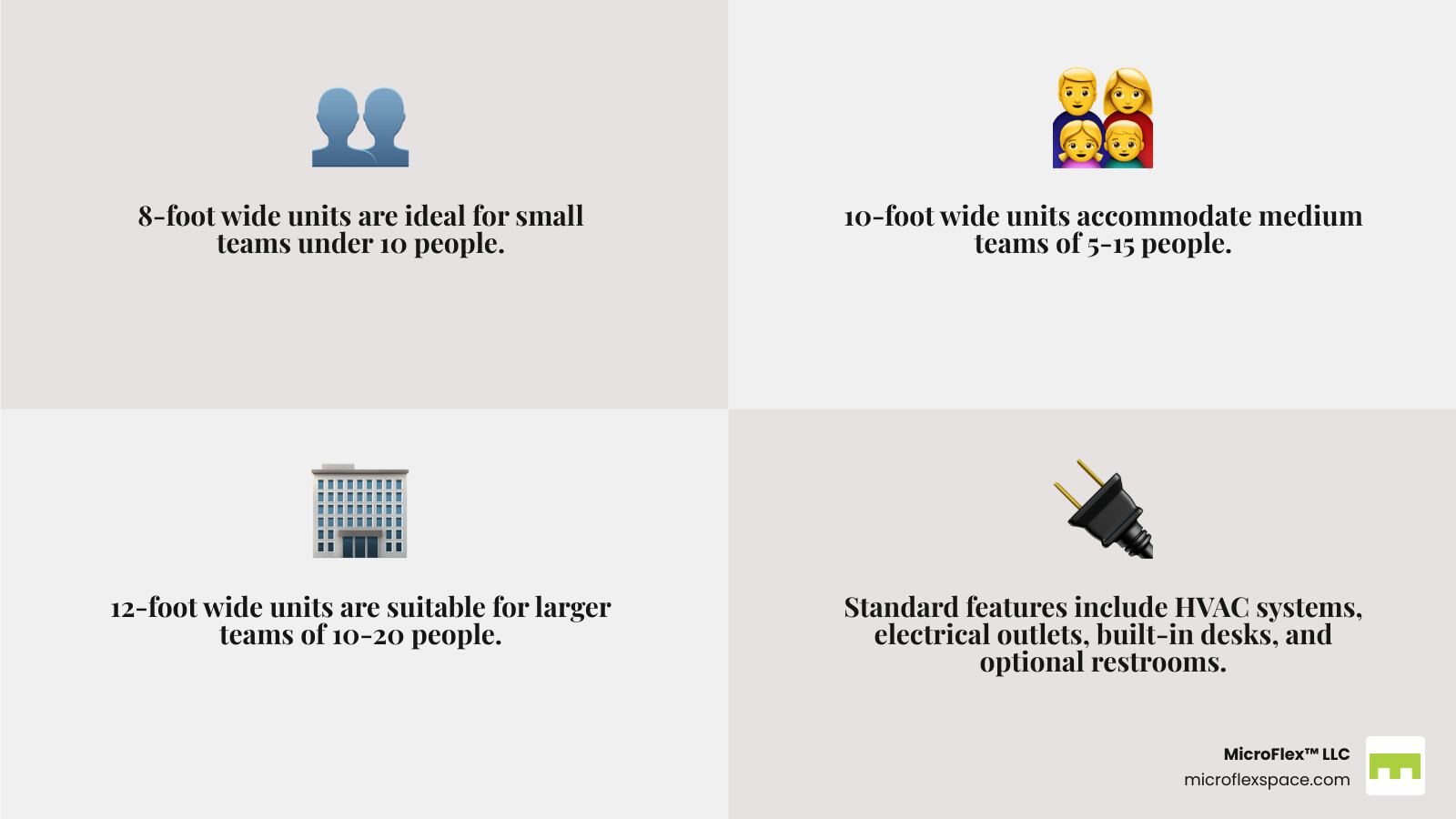
- 8-foot wide offices: Ideal for single-person use, security booths, or small teams under 10 people.
- 10-foot wide offices: A popular choice for teams of 5-15, often with space for a small meeting area or private office.
- 12-foot wide offices: Spacious enough for teams of 10-20, accommodating multiple private offices and larger conference areas.
Units typically range from 20 to 40 feet in length. Single-wide units offer a straightforward, easy-to-move workspace. For more room, double-wide units join two sections to double the square footage. Other popular configurations include office-storage combo units, which provide both workspace and secure storage in one package, and ground-level container offices, which offer easy, ramp-free access.
Standard Features Included in Mobile Offices
Mobile offices come ready to use with standard features that allow your team to be productive immediately. Most units include:
- Built-in desks and workspaces
- Private offices or conference areas, depending on the size
- HVAC systems with heating and air conditioning for year-round comfort
- Electrical outlets and lighting to power equipment
- Optional restrooms, including ADA-compliant versions
Quality units are also built with durable materials, featuring excellent insulation and weatherproofing to withstand harsh conditions, from summer heat to winter storms.
Customization: Tailoring Your Space
While standard features cover the basics, customization creates a workspace custom to your team.
- Furniture packages: Options range from basic desks and chairs to complete break room and conference setups.
- Security and data: Improve security with window bars and heavy-duty locks. Ensure connectivity with pre-wired internet ports and electrical hookups.
- Branding and exterior finishes: Custom colors, logos, and signage create a professional appearance that reflects your brand.
- Interior flexibility: Adjustable partition walls allow for easy reconfiguration, while adding a kitchenette can boost team morale on long-term projects.
With options like 3D visualization tools, you can design a personalized space that is more than just temporary—it’s an efficient, comfortable environment for your team.
For more ideas on how flexible design can work for your specific needs, check out our More info about Modular Office Space page.
Acquiring Your Workspace: Rent vs. Buy
Deciding whether to rent or buy a mobile office depends on your project duration, budget, long-term plans, and customization needs. Both are valid options, and the right choice depends on your specific business situation.
Key Considerations for Renting or Buying Mobile Offices
When weighing your options, consider these real-world implications:
- Upfront costs: Renting requires a small deposit and the first month’s payment, while buying involves a significant capital investment.
- Monthly expenses: Renting involves a predictable monthly fee, often including maintenance. Buying includes mortgage payments, taxes, insurance, and repair costs.
- Maintenance responsibility: With rentals, the provider handles maintenance and repairs. If you buy, you are responsible for all upkeep.
- Modification freedom: Buying allows for complete customization, while renting typically has restrictions on major structural changes.
- Length of project: Renting is usually best for projects under two years. Buying becomes more economical for longer commitments or repeated use. Renting offers flexibility for projects with uncertain timelines.
- Asset ownership: Buying gives you an asset you can resell, though it depreciates. Renting involves no asset ownership, allowing you to walk away cleanly after use.
Sourcing Your Unit: New vs. Used
After deciding to rent or buy, you must choose between a new or used unit.
New units offer the latest features, full customization, and warranties. They are ideal for businesses needing specialized configurations or wanting to project a strong professional image.
Used mobile offices offer excellent value. The secondary market is robust, with many well-maintained units available for immediate delivery at a significant cost savings. Because mobile offices are built to be durable and withstand relocation, a well-maintained used unit can be a smart, economical choice for many businesses.
At MicroFlex™ LLC, we recognize every business is unique. We offer flexible lease terms and diverse configurations to fit your timeline and budget, simplifying the acquisition process whether you rent or buy.
Frequently Asked Questions about Portable Offices
When businesses start exploring mobile offices, a few common questions always come up. Here are the answers to the most frequent inquiries.
Do I need a permit for a mobile office?
Permit requirements vary significantly by location and intended use. If your mobile office is part of an already-permitted project (like a construction site), you may not need an additional permit. However, if it’s a standalone structure, you will likely need one. Local zoning laws are the deciding factor. Always check with your local building or planning department before committing to a unit to avoid compliance issues.
What kind of power and setup does a mobile office require?
Most mobile offices require a standard electrical hookup to power HVAC, lighting, and outlets. The site must be level and accessible for the delivery truck. Setup is fast, typically taking only a few hours. Units with restrooms or kitchenettes will need water and sewage connections, though holding tanks are an option for remote sites. The process is designed to be turnkey, allowing you to get to work quickly.
How long do mobile offices last?
Quality mobile offices are built to last. Constructed with durable construction materials like reinforced steel, they are engineered to withstand relocation and harsh weather. While often used for temporary projects, many businesses use them for a year or more. With regular maintenance, a mobile office can provide a reliable workspace for many years, making it a smart, long-term investment, not just a temporary fix.
Conclusion: Your Flexible Future is Mobile
Mobile offices are more than temporary fixes; they are smart, versatile business solutions. Offering significant cost savings, speed of deployment, and location flexibility, they are game-changers for any business needing to stay nimble. This is the future of workspace: no more long-term leases or lengthy buildouts, just professional, adaptable space that moves and grows with your business.
At MicroFlex™ LLC, we champion this flexibility. Our adaptable multi-function spaces embody the same core principles, combining warehouse, office, storage, and showroom features to simplify your workspace needs and let you focus on growth. Your business deserves a workspace that works as hard as you do, and the mobile revolution provides that solution.
Ready to find how flexible, responsive workspace can transform your operations?