

The Rise of Flexible Commercial Space
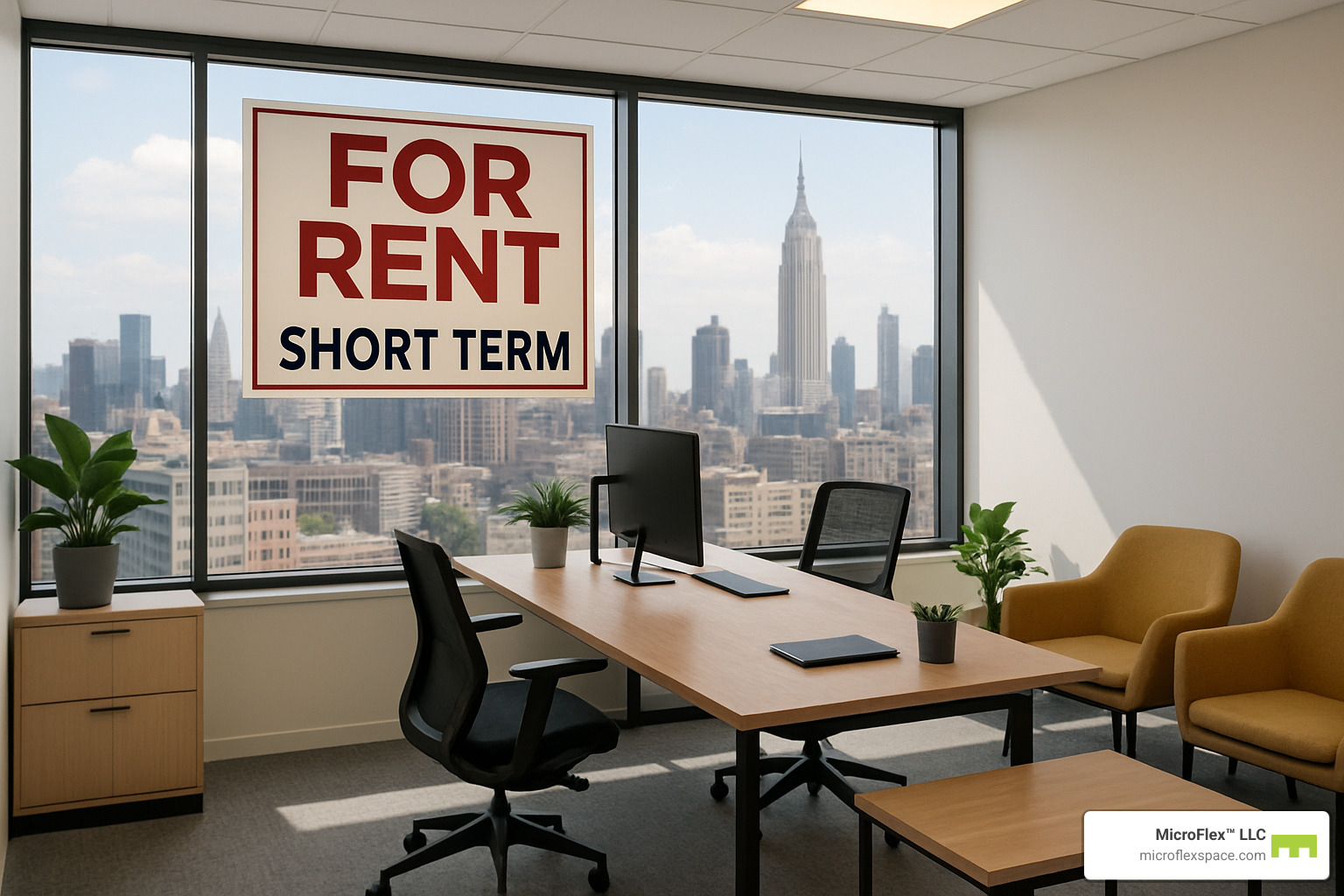
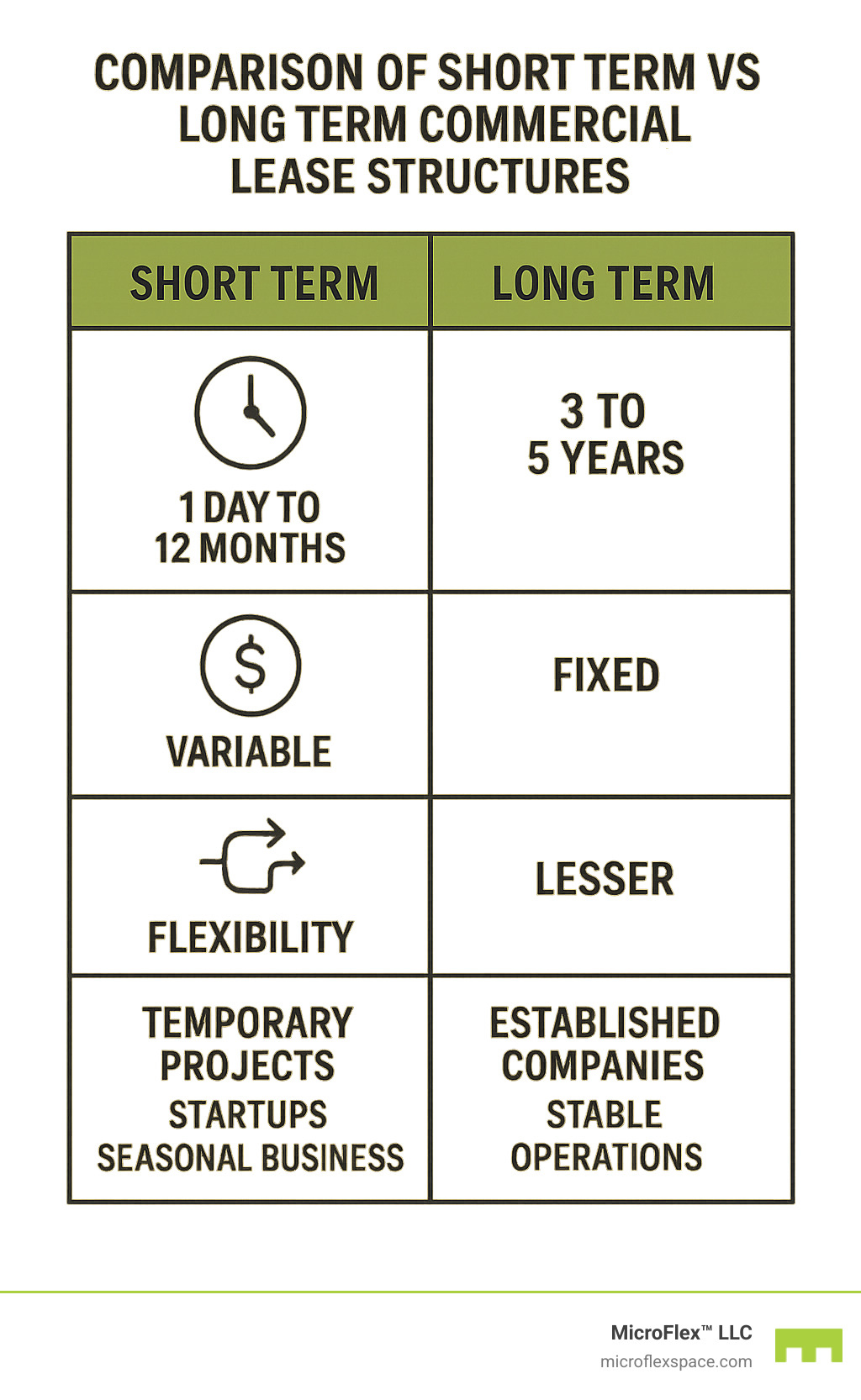
Short term commercial rentals are temporary leasing arrangements for business spaces that typically last from one day to one year. These flexible options offer businesses alternative solutions to traditional 3-5 year commercial leases.
| Short Term Commercial Rental Essentials |
|---|
| Duration: 1 day to 12 months |
| Property Types: Office, retail, warehouse, event space, pop-up shops |
| Pricing: Hourly ($80-$240/hr for events), monthly, or by square foot |
| Key Benefit: Flexibility without long-term commitment |
| Best For: Startups, seasonal businesses, events, testing locations |
Short term commercial spaces have surged in popularity following the pandemic as businesses seek more agile solutions that accommodate changing work patterns and market conditions.
Unlike traditional long-term leases that lock tenants into rigid terms, short-term arrangements provide the freedom to test locations, scale operations quickly, or host temporary events without significant financial commitment.
For landlords, these arrangements offer a way to fill vacancies and generate income while searching for long-term tenants, creating a win-win scenario in today’s dynamic commercial real estate market.
Property owners can list spaces on various online marketplaces and platforms dedicated to flexible commercial space rentals, connecting businesses with hourly venue rentals and offering pop-up retail opportunities.
I’m Sam Zoldock, a commercial real estate investment professional who has analyzed and facilitated numerous short term commercial rentals across Alabama markets, helping businesses find flexible solutions while maximizing property owners’ returns through strategic short-term leasing arrangements.
1. What Are Short Term Commercial Rentals?
Ever walked past an empty storefront one week, only to see it transformed into a busy holiday pop-up shop the next? That’s the magic of short term commercial rentals in action. These flexible spaces offer businesses a temporary home, typically lasting anywhere from a single day up to 12 months, rather than committing to traditional three-to-five-year commercial leases.
Since the pandemic shifted how businesses operate, we’ve seen an explosion in demand for these adaptable solutions. Here at MicroFlex™ LLC, our Birmingham, Huntsville, and Auburn-Opelika locations have become hubs for businesses seeking nimble space arrangements that can evolve with their needs.
The beauty of short term commercial rentals lies in their mutual benefit. Property owners enjoy consistent income streams despite higher tenant turnover, while businesses gain the freedom to test new markets or expand temporarily without the weight of long-term commitments hanging over their heads.
Key Features of Short Term Commercial Rentals
What makes these flexible spaces so appealing? First, there’s the lease agility – terms that flex with your business needs and often include options to extend if things go well. No more feeling trapped in a space you’ve outgrown or can no longer afford.
Then there’s the plug-and-play advantage. Most short-term rentals come ready to roll with furniture and essential infrastructure already in place. As one satisfied Birmingham entrepreneur told us after using our space: “We were operational within 48 hours of signing. No waiting weeks for furniture delivery or internet installation.”
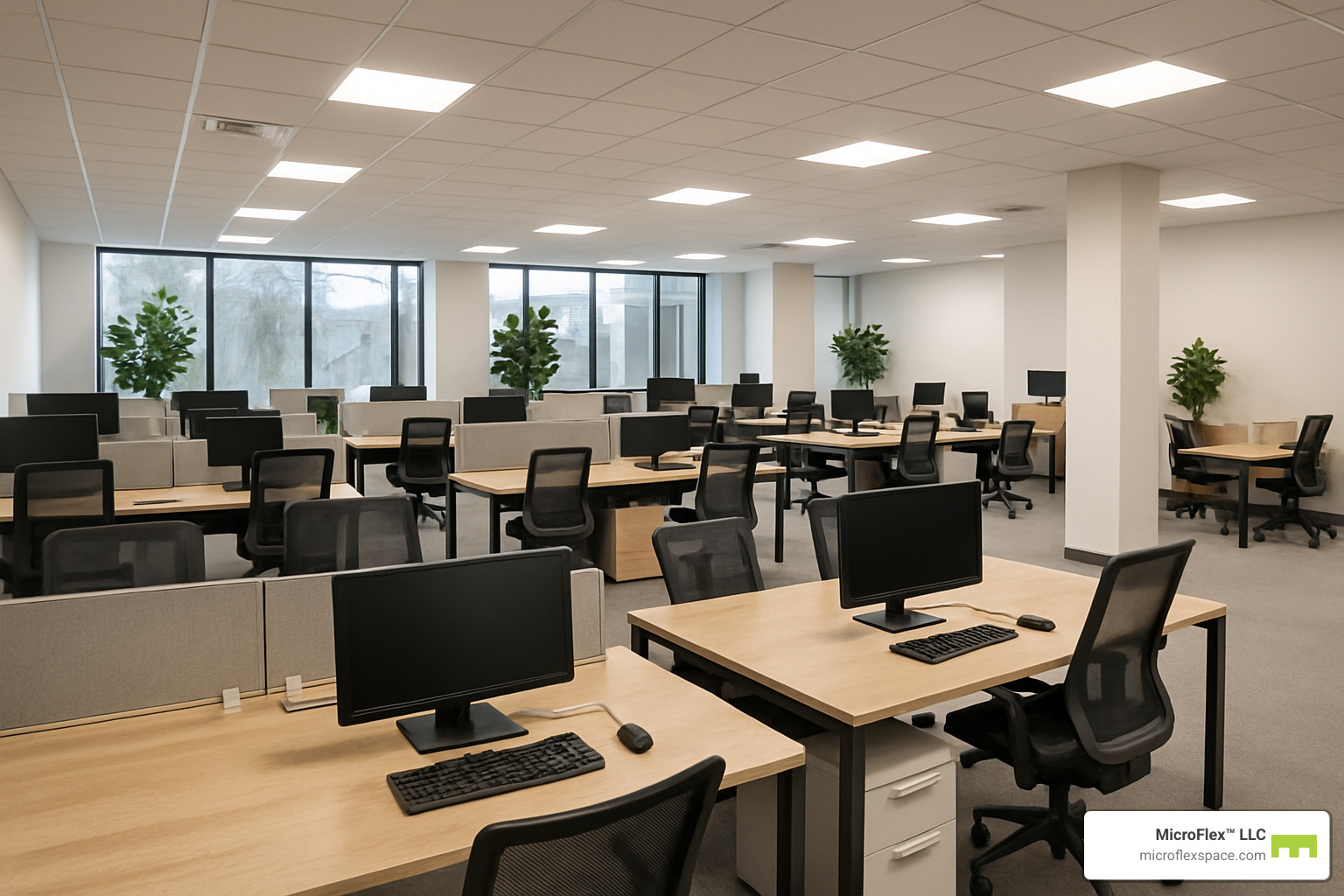
Finally, there’s minimal fit-out required. Unlike traditional leases where you might spend thousands customizing the space, short-term rentals typically need minimal modifications. This dramatically reduces your upfront costs and the time between signing a lease and opening your doors.
Popular Misconceptions About Short Term Commercial Rentals
Despite their growing popularity, some persistent myths about short term commercial rentals continue to circulate.
Many assume these rentals are always more expensive, looking only at the higher monthly rate compared to long-term leases. But this narrow view misses the bigger financial picture. When you factor in avoided costs like extensive build-outs, long-term maintenance commitments, and the flexibility to scale up or down as needed, short-term rentals often provide superior overall value – especially for businesses in transition phases or testing new markets.
Another common misconception is that only certain types of properties are available short-term. While offices and retail pop-ups might come to mind first, the reality is far more diverse. From spacious warehouses and industrial facilities to event venues and specialty spaces, the short-term rental market offers remarkable variety. At MicroFlex™ LLC, we’ve designed our spaces specifically to combine warehouse, office, storage, and showroom features – giving businesses multifunctional environments that adapt to their unique needs.
The pandemic pivot toward flexibility isn’t just a temporary trend; it represents a fundamental shift in how businesses approach their space needs. As more companies accept hybrid work models and agile operations, short term commercial rentals have evolved from emergency solutions to strategic business tools.
2. Lease Lengths & Structures Explained
When diving into short term commercial rentals, it helps to understand the variety of lease options available. Think of it as a menu of choices custom to fit your specific business needs – from a quick few hours to nearly a year.
Most short-term arrangements fall somewhere on this timeline:
- A few hours for a client meeting or photo shoot
- A day or weekend for a pop-up event
- A week or month for a seasonal business
- Several months for testing a new location
- Up to a year for businesses in transition
At MicroFlex™ LLC, we’ve seen Birmingham entrepreneurs use our spaces for everything from three-hour workshops to nine-month retail experiments. The beauty lies in the flexibility.
“Having the option to rent for just three months let us test the waters in a new neighborhood without betting the farm,” shared one local business owner who used our Auburn-Opelika location.
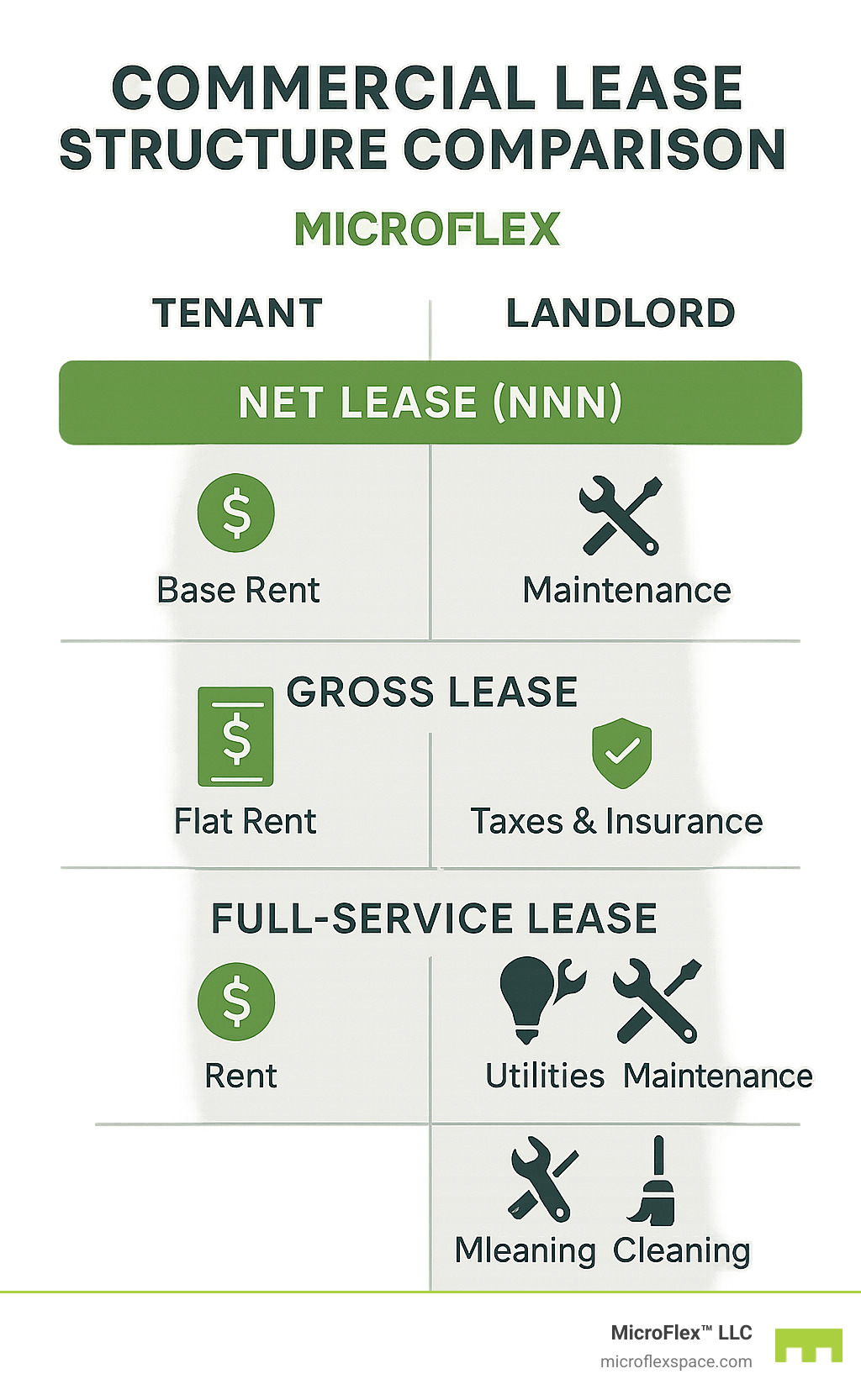
Short Term Commercial Rentals vs. Long Term Leases
The difference between short and long-term leases goes far beyond just time commitment. Think of short-term leases as dating and long-term leases as marriage – both have their place, but they come with very different levels of commitment!
With short term commercial rentals, you’re gaining significant freedom. The risk factor drops dramatically since you’re not locked into a 5-year commitment that might outlast your business plan. If your company pivots or grows faster than expected, you won’t be stuck with an unsuitable space.
Long-term leases typically require substantial upfront investment in buildouts and improvements. With short-term spaces, you’re usually walking into a ready-to-use environment. As one Huntsville client told us: “We saved nearly $35,000 in build-out costs by choosing a short-term space that already had the conference room and office setup we needed.”
Termination options also differ dramatically. While breaking a long-term lease might require finding a subletter or paying a hefty buyout fee, most short term commercial rentals can be wrapped up with minimal notice and no penalties.
Tax & Legal Nuances for Short Term Commercial Rentals
The tax landscape for short term commercial rentals has some interesting quirks worth knowing about. Unlike residential rentals, commercial spaces often trigger sales tax requirements.
For example, Florida recently made headlines by reducing its commercial rental tax from 4.5% to 2% (effective June 1, 2024). While we’re based in Alabama, many of our clients operate across multiple states, so staying informed about these changes helps their bottom line. For the latest information, you can check the latest guidance on Florida commercial lease tax.
Each location may require its own tax certificate – something we help our Birmingham, Huntsville, and Auburn-Opelika clients steer. Very short rentals (under six months) sometimes fall under different classifications, potentially affecting tax rates and reporting requirements.
Even with the shorter timeframe, proper documentation remains crucial. Every short term commercial rental should have clear terms covering:
Liability protections – who’s responsible if something breaks?
Insurance requirements – what coverage do you need while occupying the space?
Termination conditions – how much notice is needed to end the arrangement?
At MicroFlex™ LLC, we’ve streamlined our paperwork to protect both parties without the mountain of legalese typical of traditional commercial leases. Our clients appreciate the straightforward approach – all the protection without the headache.
3. Space Types & Real-World Use Cases
Short term commercial rentals come in all shapes and sizes, each designed to solve unique business challenges. Let’s explore how real businesses are putting these flexible spaces to work:
Offices & Co-working
The world of work has changed dramatically, and flexible office space has become the cornerstone of this revolution. These adaptable workspaces serve all kinds of business needs:
Remote teams often need a physical home base for those important face-to-face meetings that Zoom just can’t replace. Project teams find temporary headquarters that last exactly as long as their assignment. Forward-thinking businesses test new markets without betting the farm on a five-year lease.
For startups watching every penny, these spaces offer professional surroundings without the financial commitment. And seasonal businesses can expand during busy periods without carrying expensive empty space the rest of the year.
Our short-term office rent options at MicroFlex™ LLC provide Birmingham businesses with everything they need – high-speed internet, meeting rooms, and professional amenities – all without the long-term commitment.
As one satisfied client, a local consulting firm, told us after using our Birmingham space: “Having a professional environment for client meetings without signing a long lease was invaluable for our project’s success.”
Warehouses & Flex Space
In today’s “I want it yesterday” economy, flexible warehouse space has become essential for businesses managing inventory and distribution. Short term commercial rentals in this category serve multiple purposes:
E-commerce businesses grab extra space during holiday rushes. Manufacturers secure temporary production areas when orders spike. Last-mile delivery operations lock down strategic urban locations to speed deliveries. Companies in transition find breathing room between permanent facilities, and product launches get the staging space they need for a successful rollout.
Our short-term warehouse rental solutions have proven particularly popular at our Huntsville and Birmingham Irondale locations, where we combine storage, distribution, and office space in one flexible package.

Retail & Pop-Up Shops
The retail landscape has been transformed by the pop-up revolution, giving brands new ways to connect with customers without traditional retail commitments:
Seasonal retailers like Halloween stores and holiday markets find homes for just the weeks they need. Online brands dip their toes into physical retail without diving into deep financial waters. Product launches get showcased in real-world environments. Brands create immersive activation experiences that wouldn’t be financially viable as permanent installations.
Most importantly, these temporary spaces let businesses test markets before making bigger commitments. The ability to create buzz, test products, and engage with customers without the overhead of traditional retail leases has made pop-ups an essential strategy for modern brands.
Event, Filming & Specialty Venues
Some of the most creative uses of short term commercial rentals happen in the events and entertainment world:
Filmmakers transform raw spaces into whatever their scripts demand. Corporate teams find fresh environments for conferences and training that break the hotel ballroom mold. Artists secure gallery space for exhibitions that last days, not years. Marketers create product demonstrations and experiential activations that wouldn’t work in conventional settings.
These specialty venues typically rent by the hour, with costs ranging from $80 to $240 depending on location, size, and amenities.
A Birmingham filmmaker recently shared this with us: “Finding a flexible industrial space through MicroFlex™ for our three-day shoot saved us thousands compared to building a set. The warehouse aesthetic was exactly what our script called for.”
The beauty of short term commercial rentals is their versatility – the same space that hosts a corporate training on Tuesday might become a film set on Wednesday and a pop-up shop on the weekend. This adaptability is at the heart of what we offer at MicroFlex™ LLC across our Birmingham, Huntsville, and Auburn-Opelika locations.
4. Money Matters: Pricing, Costs & ROI
Let’s talk dollars and cents – because when it comes to short term commercial rentals, understanding the financial picture helps both tenants and landlords make smart decisions.
How to Calculate Short Term Commercial Rental Rates
Figuring out what you’ll pay (or charge) isn’t rocket science, but it does help to know the formula. Here’s the simple breakdown:
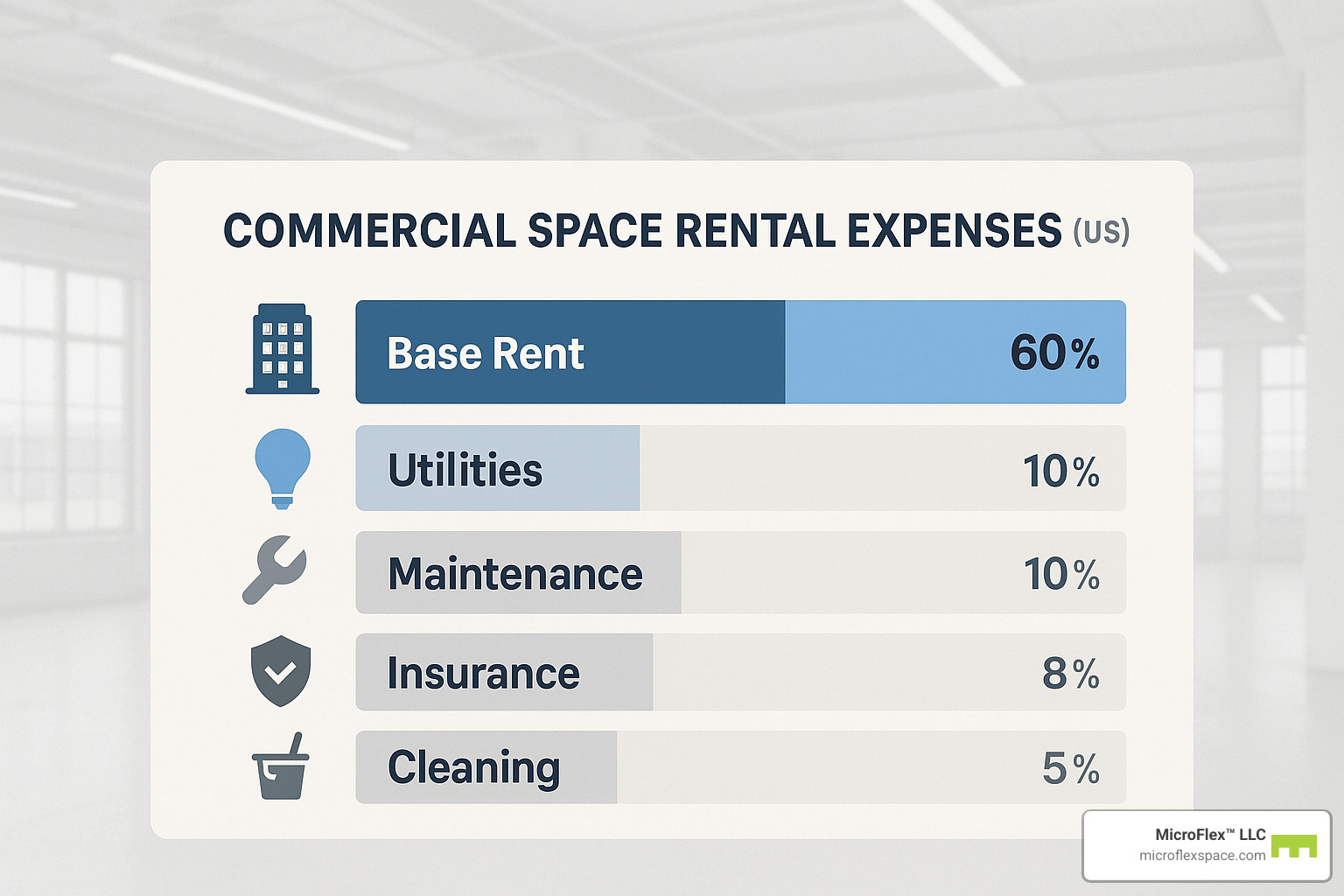
Your monthly base rent equals your total square footage multiplied by the annual cost per square foot, divided by 12. So if you’re eyeing a 2,000 square foot office space at $21.50 per square foot annually, your monthly base would be about $3,583.
But remember, that’s just the starting point. You’ll likely need to factor in some extras like Common Area Maintenance fees (CAM), utilities (if they’re not included), insurance, and perhaps cleaning or tech services.
The pricing landscape varies quite a bit depending on what kind of space you’re after. Office space typically hovers around $21.50 per square foot annually, while industrial space is more budget-friendly at about $8 per square foot. Need an event venue? Expect to pay between $80 and $240 per hour. And if you’re launching a retail pop-up during the holiday rush, be prepared for premium daily or weekly rates.
At MicroFlex™ LLC, we believe in transparency – that’s why most of our short-term arrangements across Birmingham, Huntsville, and Auburn-Opelika include utilities and maintenance in the quoted price. No surprise bills at the end of the month!
Funding & Tax Breaks That Boost Returns
One of the beautiful things about short term commercial rentals is their financial efficiency. They come with several wallet-friendly advantages:
First, you’ll enjoy lower capital expenditure since most spaces come ready to use. No need to spend thousands on build-outs or renovations – just move in and get to work. As one of our Birmingham tenants put it, “We saved over $20,000 in build-out costs by choosing a ready-to-go space.”
The tax advantages can be substantial too. In many cases, short-term rental expenses may be fully deductible as business expenses rather than having to be capitalized over time. That’s immediate tax relief versus years of depreciation.
Regional incentives can make a big difference as well. For example, Florida just reduced its commercial rental sales tax from 4.5% to 2%, making short-term arrangements even more attractive in the Sunshine State. The latest guidance on this tax reduction can be found in the Florida Department of Revenue’s documentation.
For property owners, the return on investment often outshines traditional leasing. You’ll typically command higher per-square-foot revenue with short-term arrangements. Plus, you can fill spaces with short-term tenants while seeking long-term occupants, minimizing those painful vacancy costs.
The diversified income streams create a nice safety net too – with multiple short-term tenants, you’re not devastated if one tenant hits hard times. And perhaps best of all, frequent tenant turnover lets you adjust rates to match current market conditions.
Scientific research supports the ROI benefits of flexible workspace models. According to studies shared on LoopNet, property owners who incorporate short-term rental strategies into their portfolios typically see 15-30% higher annual returns compared to traditional leasing alone.
Whether you’re a business owner looking to conserve capital or a property owner seeking to maximize returns, short term commercial rentals offer a financial flexibility that traditional leases simply can’t match. It’s why we’ve built our entire business model around this concept at MicroFlex™ LLC – we’ve seen how it helps both sides of the equation thrive.
5. Pros & Cons for Tenants and Landlords
When considering short term commercial rentals, it’s important to weigh the benefits and challenges from both perspectives. I’ve worked with hundreds of businesses and property owners across Alabama, and I’ve seen how these arrangements can be either perfect matches or problematic, depending on your situation.
For Tenants
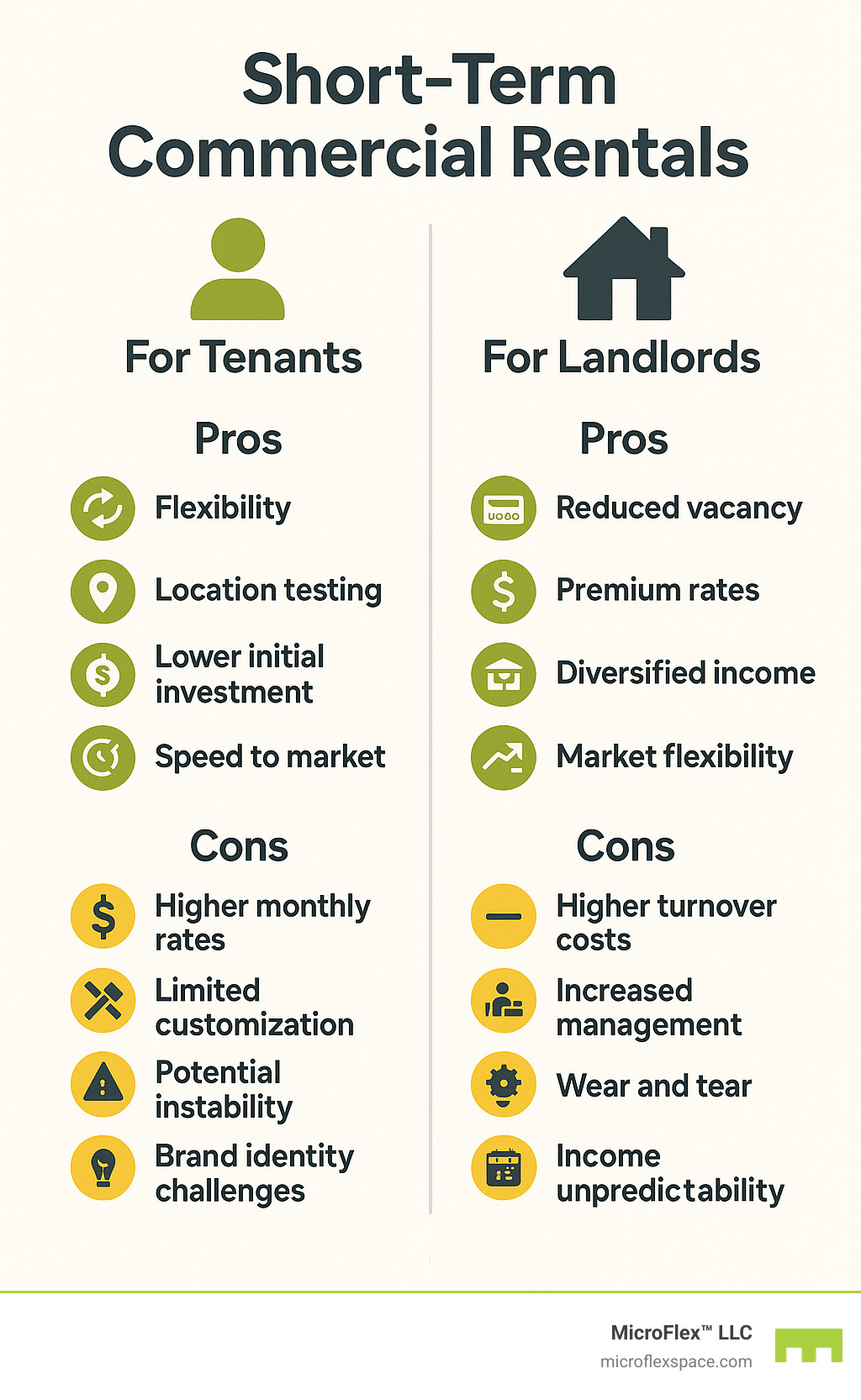
The flexibility of short term commercial rentals often proves invaluable for growing businesses. You can adapt your space needs as your company evolves without being locked into years of financial commitment. One Birmingham startup founder told me, “We were able to test three different neighborhoods before finding our perfect location—something that would have been financially impossible with traditional leases.”
Testing locations is just the beginning. These arrangements also require substantially lower initial investment since you avoid costly build-outs. Plus, you can get operational quickly in fully-equipped spaces, giving you that crucial speed-to-market advantage when launching new initiatives.
The simplified budgeting is another benefit my clients frequently mention. With many short term commercial rentals offering all-inclusive pricing, expense forecasting becomes much more straightforward than juggling variable costs in traditional leases.
Of course, these advantages come with tradeoffs. You’ll typically pay higher monthly rates compared to long-term commitments. Customization options are usually limited, which can be challenging if your brand requires specific environmental elements. There’s also the potential instability of knowing your lease renewal isn’t guaranteed if the landlord finds a long-term tenant, and creating consistent brand experiences in temporary spaces requires extra creativity.
For Landlords
Property owners often turn to short term commercial rentals to reduce vacancy periods. As one of our Birmingham landlords put it, “Generating even 70% of potential income is infinitely better than collecting 0% while waiting for the perfect tenant.”
These arrangements typically command premium rates on a per-square-foot basis compared to traditional leases. Having multiple short-term tenants also spreads your default risk across several businesses rather than putting all your eggs in one tenant’s basket.
The ability to adjust rates more frequently allows you to stay aligned with current market conditions, rather than being locked into rates that might become unfavorable over a long term. Perhaps most interestingly, short-term tenants can effectively showcase a space’s potential to future long-term prospects, demonstrating the versatility and functionality of your property.
The downsides for property owners include higher turnover costs, as more frequent tenant changes mean more cleaning, marketing, and administrative work. The increased management burden of negotiating more leases and managing more tenant relationships can be significant. Properties may experience accelerated wear and tear from frequent use changes, and income can be less predictable as occupancy rates fluctuate.
Amenities Most in Demand
When businesses shop for short term commercial rentals, certain features consistently top their wish lists. High-speed internet has become non-negotiable—I’ve seen deals fall through over insufficient connectivity. Flexible access systems that allow 24/7 entry are particularly valuable for businesses with non-traditional hours or international clients.
Meeting spaces remain crucial even in our Zoom-heavy world, as clients still appreciate face-to-face interactions for important discussions. Furnished options save tenants significant upfront costs and setup time, while loading facilities are essential for warehouse and retail operations that regularly receive shipments.
Comfortable break areas might seem like a small detail, but they significantly impact employee satisfaction. Professional reception services create that polished first impression that helps businesses win clients, while proper climate control ensures comfortable working environments year-round, particularly important in Alabama’s hot summers.
Robust security systems provide peace of mind for equipment and inventory protection, and adequate parking availability remains a top concern, especially in urban settings like downtown Birmingham.
At MicroFlex™ LLC, our flexible leasing spaces across Birmingham, Huntsville, and Auburn-Opelika include most of these amenities as standard, making the transition to short-term space truly seamless for our tenants.
Preparing Your Property for Short Term Commercial Rentals
If you’re considering offering your property as a short term commercial rental, proper preparation will maximize your returns and minimize headaches. Start with a thorough deep clean and maintenance check to ensure all systems are functioning perfectly—first impressions matter tremendously in this market.
Review your insurance coverage to confirm it properly covers short-term commercial use, as standard policies often have gaps for this arrangement. Installing flexible access systems like smart locks or keypad entry simplifies tenant transitions and reduces key management hassles.
Creating standardized lease documents streamlines your rental process and ensures consistency in your terms. Invest in professional photography—I’ve seen identical spaces rent 30% faster when listed with high-quality images versus amateur photos.
Consider providing basic furnishing options for truly turnkey solutions that command premium rates. Set up efficient utility management systems to easily transfer or include utilities in your rental agreements. Develop a clear marketing strategy for listing your property on relevant platforms where your ideal tenants are searching.
Establish transparent pricing structures with clear rate cards for different durations and uses to simplify negotiations. Finally, create comprehensive house rules that establish clear guidelines for space use and shared amenities to prevent conflicts before they arise.
Our experience with multi-use commercial property has consistently shown that spaces designed with flexibility in mind command premium rates in today’s dynamic commercial real estate market.
6. How to Find, Book & List Short Term Commercial Rentals
Finding the perfect temporary business space—or listing your property for short-term use—doesn’t have to be complicated. Let me walk you through the practical steps for both sides of these increasingly popular arrangements.
Step-by-Step Tenant Journey
Looking for short term commercial rentals can feel overwhelming at first, but breaking it down into manageable steps makes the process much smoother:
Start by getting crystal clear about what you need—how much space, for how long, and what features are absolute must-haves versus nice-to-haves. This clarity will save you countless hours of browsing spaces that won’t work for your business.
When you’re ready to start your search, cast a wide net by checking specialized commercial rental platforms, talking to local brokers, and visiting property management websites directly. Most online platforms offer helpful filters to narrow down options by location, size, price range, and available amenities.
Once you’ve identified promising spaces, schedule in-person viewings. Photos can be deceiving—both positively and negatively—so seeing the space with your own eyes is crucial. During your visit, don’t be shy about asking questions! Good landlords expect inquiries about everything from after-hours access to potential lease extensions.
“When we toured MicroFlex’s Birmingham space, we brought a checklist of questions,” shared one local business owner. “They were so patient explaining everything from internet speeds to the building’s security system. That thoroughness gave us confidence to move forward.”
After finding your ideal space, review the lease agreement carefully (or have your attorney review it), negotiate any terms that need adjustment, and document the condition of the space before moving in. Taking date-stamped photos of any existing wear and tear can prevent misunderstandings later.
At MicroFlex™ LLC, we’ve simplified this journey through our business rental solutions that guide tenants from initial inquiry to comfortable move-in across our Birmingham, Huntsville, and Auburn-Opelika locations.
Becoming a Host & Maximizing Exposure
Property owners considering entering the short term commercial rentals market can set themselves up for success with thoughtful preparation.
Your space’s presentation matters tremendously in this competitive market. Investing in professional photography isn’t an extravagance—it’s essential marketing that showcases your property’s best features and helps potential tenants envision their business thriving there. Clean, well-lit images highlighting unique features will make your listing stand out among the competition.
Pricing strategy deserves careful consideration too. Research comparable spaces in your area to establish baseline rates, then consider offering flexible packages—hourly, daily, weekly, and monthly options that can accommodate different business needs. Many successful hosts implement dynamic pricing that adjusts based on seasonal demand, length of commitment, and market conditions.
Creating clear house rules and streamlined booking processes reduces headaches for everyone involved. When tenants know exactly what to expect—from internet passwords to trash disposal procedures—they’re more likely to have a positive experience and leave glowing reviews.
Speaking of reviews, testimonials from satisfied tenants are marketing gold. Consider offering small incentives for feedback, then showcase these testimonials prominently in your listings. Nothing persuades potential renters like hearing from others who’ve had great experiences in your space.
Property owners who master these strategies typically see returns 15-30% higher than traditional long-term leasing—making the extra effort well worth it.
Local Spotlight: Temporary Office Space in Birmingham
Birmingham’s commercial real estate landscape offers particularly fertile ground for short term commercial rentals, especially in the office sector.
The Magic City has experienced notable growth in demand for flexible workspace solutions in recent years. Downtown, Homewood, and the Highway 280 corridor have emerged as hotspots for businesses seeking temporary professional environments without long-term commitments.
One significant advantage Birmingham offers is affordability. While major metropolitan areas might charge premium rates for short-term arrangements, Birmingham provides professional office space at more reasonable rates—typically $15-25 per square foot annually. This price point makes testing new markets or establishing temporary project headquarters financially feasible for businesses of various sizes.
Birmingham’s central location in the Southeast makes it strategically valuable for regional businesses. As one recent tenant told us, “Being able to set up a three-month project office in Birmingham gave us easy access to clients across Alabama, Tennessee, and Georgia without committing to permanent space in any single location.”
The city’s commercial options span from character-rich historic buildings to sleek, tech-forward modern spaces, giving businesses choices that align with their brand aesthetics and functional needs.
Our temporary office space in Birmingham at MicroFlex™ LLC capitalizes on these advantages, providing businesses with centrally-located, professionally-equipped environments that offer the perfect balance of polish and flexibility.
Frequently Asked Questions about Short Term Commercial Rentals
How short can a “short-term” lease be?
When it comes to short term commercial rentals, flexibility truly is the name of the game. You might be surprised to learn that some spaces can be rented for as little as a single hour – perfect for that important client meeting or quick photo shoot.
For businesses needing event venues or conference rooms, these ultra-short hourly rentals are quite common. More traditional spaces like offices or retail locations typically start with daily or weekly minimums, though most property owners (ourselves included!) prefer at least a month for these more complex setups.
Here at MicroFlex™ LLC, we understand that different projects have different timelines. That’s why we’ve designed our Birmingham and Huntsville properties to accommodate various rental periods – some spaces are available for as little as one week for those special short-term projects that need a professional home.
Do landlords require security deposits for short stays?
Yes, you’ll typically need to provide some form of security even for brief stays, though the approach is often more flexible than with traditional leases.
For those ultra-short hourly or daily rentals, most spaces simply place a hold on your credit card rather than collecting a formal deposit. If you’re looking at weekly or monthly arrangements, you can generally expect to provide a deposit equivalent to 1-2 months’ rent. Interestingly, quarterly rentals sometimes come with slightly lower deposit requirements than their month-to-month counterparts.
We’re also seeing some creative solutions emerging in the short term commercial rental market. Some forward-thinking landlords now partner with third-party services offering security bond financing – essentially allowing you to reduce your upfront cash commitment while still providing property owners with the protection they need.
Can I extend my short-term agreement into a long-term lease?
Absolutely! In fact, most property owners are delighted when short-term tenants want to stick around longer. It’s a win-win that saves everyone the hassle of turnover.
Many short term commercial rental agreements include helpful provisions to make this transition smooth:
- First Right of Refusal clauses give you the first opportunity to match any competing long-term offers
- Conversion options with predetermined terms for transitioning to longer leases
- Some arrangements even apply a portion of your short-term payments toward long-term costs
- Graduated terms that let you step up from short-term to multi-year commitments in phases
This try-before-you-buy approach is quite popular. At MicroFlex™ LLC, we’ve found that about 30% of our short-term tenants eventually transition to longer arrangements once they’ve established their business or confirmed that the location meets their needs.
It’s one of the things I love most about our business model – watching companies start with a flexible space and grow into more permanent homes as they succeed. There’s something deeply satisfying about being part of that journey from tentative first step to established operation.
Conclusion
The world of short term commercial rentals has truly transformed how businesses approach their space needs. Throughout this guide, we’ve seen how these flexible arrangements offer something traditional leases simply can’t – the freedom to adapt quickly in an ever-changing business landscape.
From pop-up shops that operate for just a weekend to project offices that run for a few months, these spaces provide incredible versatility. What makes them so valuable isn’t just their shorter timeframes, but the complete ecosystem they create for both tenants and landlords.
Flexibility stands at the heart of what makes these arrangements work so well. Whether you’re testing a new market, scaling your operations, or managing seasonal demands, short-term spaces give you room to breathe and adjust without the weight of a multi-year commitment hanging over your head.
The financial accessibility can’t be overlooked either. Without massive upfront investments in leasehold improvements or lengthy commitments, businesses of all sizes can access professional spaces that might otherwise be out of reach. As one of our Birmingham clients recently told us, “It was the difference between launching now or waiting another year to save up.”
Ready-to-use spaces eliminate the delays and headaches of traditional setups. When you can walk in on Monday and start serving customers by Tuesday, your business gains precious momentum that can make all the difference in today’s market.
At MicroFlex™ LLC, we’ve acceptd this revolution across Alabama. Our spaces blend warehouse functionality, office professionalism, ample storage, and showroom visibility – all with the lease flexibility modern businesses demand. We’re proud to serve entrepreneurs and established companies alike across our Birmingham, Huntsville, and Auburn-Opelika locations.
The beauty of what we offer isn’t just in the physical spaces themselves, but in the possibilities they create. A six-month warehouse rental might be the stepping stone that helps your e-commerce business scale to the point where you’re ready for permanent space. A temporary office might be where your team finds they work best in a hybrid arrangement.
Curious about how short term commercial rentals could work for your specific situation? I’d love to show you around our spaces and discuss how we might support your business goals. Visit our locations page to find MicroFlex™ properties near you and see our current availability.
The commercial real estate world is evolving, and flexibility is no longer just a nice-to-have – it’s becoming essential. Whether you’re looking to grow, experiment, or simply work more efficiently, short-term spaces offer a path forward without the traditional constraints.
Let’s find the perfect flexible space for your journey.