


Understanding Your Storage Timeline Options
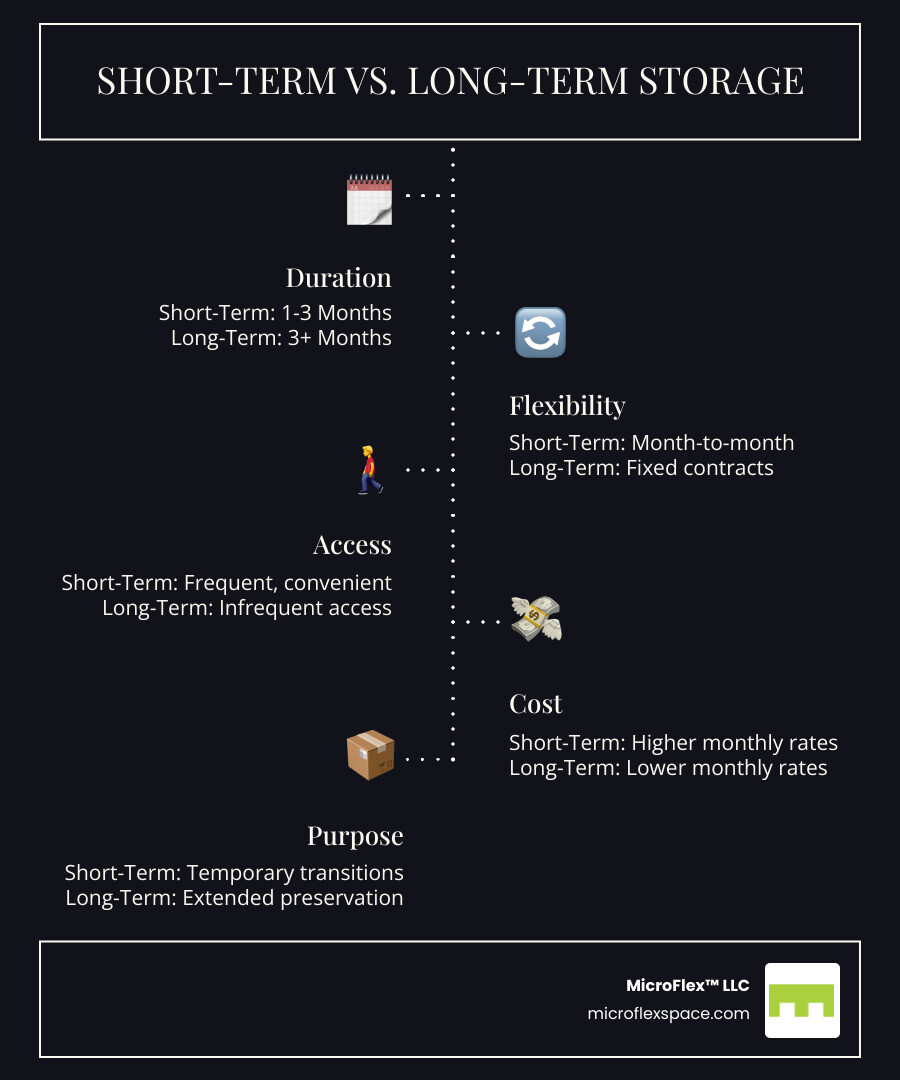
What is short term storage is a flexible storage solution designed for periods of three months or less, offering month-to-month rental agreements without long-term commitments. Here’s what defines short-term storage:
- Duration: Typically 1-3 months maximum
- Flexibility: Month-to-month leases with easy cancellation
- Access: Frequent, convenient access to your belongings
- Cost: Higher monthly rates but no long-term contracts
- Purpose: Temporary transitions like moves, renovations, or seasonal needs
Sometimes life throws curveballs that require quick storage solutions. Whether you’re between homes, renovating your workspace, or managing seasonal business inventory, the question isn’t if you’ll need storage – it’s what type fits your timeline.
Short-term storage serves immediate, temporary needs while long-term storage handles extended preservation requirements. The choice between them affects your budget, access frequency, and contract flexibility in significant ways.
Most people assume all storage is the same, but the differences between short-term and long-term options can save you hundreds of dollars and countless headaches when matched correctly to your situation.
I’m Sam Zoldock, and through my commercial real estate investment work across Alabama since 2018, I’ve seen how understanding what is short term storage versus long-term options helps businesses and individuals make smarter space decisions. My experience with various property types has shown me that the right storage choice often determines project success.
What is Short-Term Storage and When Do You Need It?
Picture this: you’re juggling a move, a renovation, or maybe your business just received that seasonal inventory shipment three weeks early. Where do you put everything? This is exactly when short-term storage becomes your best friend – offering a flexible solution that adapts to life’s unexpected timing.
Defining Short-Term Storage
What is short term storage exactly? Think of it as your temporary storage safety net, designed for situations lasting three months or less. Unlike traditional storage that locks you into lengthy contracts, short-term storage accepts flexibility with month-to-month leases that let you adjust as your plans change.
The beauty lies in its accessibility. When you’re storing items temporarily, you often need to grab things frequently. Short-term storage recognizes this reality, making it easy to visit your unit whenever needed without jumping through hoops.
This temporary solution serves as a practical buffer during life’s transitions. Whether you need to clear space quickly or manage belongings during an in-between period, it provides security without the permanence of long-term commitments. For businesses and individuals in Birmingham who value adaptability, our Short-Term Self Storage options offer the flexibility you need.
Common Scenarios for Short-Term Use
Short-term storage shines brightest during life’s transitional moments. Moving or relocating tops the list of common uses – especially when there’s a gap between your old and new space. Instead of cramming everything into a friend’s garage or paying movers twice, Temporary storage between moves gives you breathing room to transition smoothly.
Home renovations create another perfect scenario. Nobody wants their grandmother’s antique dresser covered in drywall dust or paint splatters. Moving furniture and belongings to a clean, secure unit protects your valuables while giving contractors space to work efficiently.

Business owners often find short-term storage during seasonal inventory fluctuations or promotional events. When your retail space suddenly needs to accommodate holiday merchandise or equipment for a trade show, Short-Term Business Storage prevents your workspace from becoming a maze of boxes.
Student summer storage solves the annual dilemma of dorm room belongings. Rather than hauling everything home for three months, students can store their essentials nearby, making fall move-in much simpler.
Finally, storing seasonal items helps reclaim your living space. Those patio umbrellas don’t need to crowd your garage all winter, and your snow blower certainly doesn’t belong in the basement come July. Short-term storage keeps seasonal items safe and accessible when their time comes around again.
Each scenario highlights how short-term storage adapts to your timeline, not the other way around.
Understanding Long-Term Storage Solutions
When you think about what is short term storage versus its longer counterpart, the key difference becomes clear: long-term storage is all about the long game. It’s designed for items you want to keep safe and secure for months or years, not just a few weeks during a hectic move.
Defining Long-Term Storage
Long-term storage means keeping your belongings in a secure facility for more than three months – sometimes stretching into years. Unlike short-term solutions that focus on quick access and flexibility, long-term storage prioritizes preservation and security over everything else.
Think of it as a safe haven for items that matter to you but don’t need to be within arm’s reach. The monthly rates are typically more cost-effective than short-term options, especially when facilities offer pre-payment discounts for extended commitments.
The real beauty of long-term storage lies in its stability. Your belongings stay put in a controlled environment, protected from the elements, dust, and potential damage that could happen in your garage, attic, or basement. Climate-controlled units become especially valuable here, maintaining steady temperature and humidity levels that keep sensitive items in pristine condition. These protective features represent some of the 5 benefits of using long-term storage units.
Common Scenarios for Long-Term Use
Life has a way of accumulating meaningful possessions faster than our living spaces can handle them. Long-term storage steps in when you need a reliable home for items that hold value but don’t fit your current lifestyle.
Downsizing represents one of the most common reasons people turn to long-term storage. Whether you’re empty nesters moving to a smaller home or city dwellers embracing minimalist living, you don’t have to say goodbye to cherished furniture, family photos, or seasonal decorations that simply won’t fit in your new space.
Storing heirlooms and collectibles requires special care that long-term facilities excel at providing. That antique dining set from your grandmother or your carefully curated coin collection deserves better than a damp basement. Climate-controlled long-term storage maintains the stable conditions these precious items need to stay beautiful for future generations.
Extended travel or military deployment creates unique storage challenges that long-term solutions handle perfectly. When you’re spending a year abroad or serving overseas, you need the peace of mind that comes from knowing your belongings are secure and waiting for your return.
For businesses, document archiving becomes a practical necessity. Tax records, contracts, and other important papers must be retained for legal reasons but don’t need daily access. Long-term storage provides an organized, secure alternative to cramming filing cabinets into valuable office space.
Storing collectibles like vintage cars, boats, or recreational vehicles also benefits from long-term storage’s protective environment. These valuable items often sit unused for months at a time, making climate-controlled long-term storage a smart investment in their preservation.

The common thread in all these scenarios is time and preservation. Long-term storage gives you the luxury of keeping meaningful possessions safe without the pressure of frequent access or short-term deadlines.
Key Differences: A Head-to-Head Comparison
Choosing between short-term and long-term storage isn’t just about how long you’ll need the space. The differences run deeper than duration, affecting everything from your monthly budget to how you organize your belongings.
Cost and Contracts
The money side of storage reveals some interesting trade-offs that might surprise you.
Short-term storage comes with higher monthly rates, but here’s the thing – you’re paying for flexibility, not just space. Those month-to-month leases mean you can walk away anytime without penalty. No long-term commitment means no stress about changing plans.
Think about it this way: paying $150 per month for three months beats getting locked into a year-long contract at $100 per month if you only need storage temporarily. The math works in your favor when your timeline is uncertain. Our Short-Term Storage Costs page breaks down exactly what you can expect to pay.
Long-term storage flips this equation completely. Monthly rates drop significantly because facilities love predictable, extended commitments. You’ll often find pre-payment discounts or special rates for six-month or yearly contracts. The catch? Less flexibility if life throws you a curveball.
Don’t forget about the extras that add up regardless of your timeline. Insurance protects your belongings (and your peace of mind), while quality locks and packing supplies are essential investments. Some facilities offer tempting “first month free” deals, but always read the fine print about what happens in month two.
Accessibility and Organization
How often you plan to visit your unit completely changes your storage strategy.
Short-term storage is all about easy access. During a move or renovation, you might visit several times per week. Ground-floor units become worth their weight in gold when you’re hauling boxes in and out regularly.
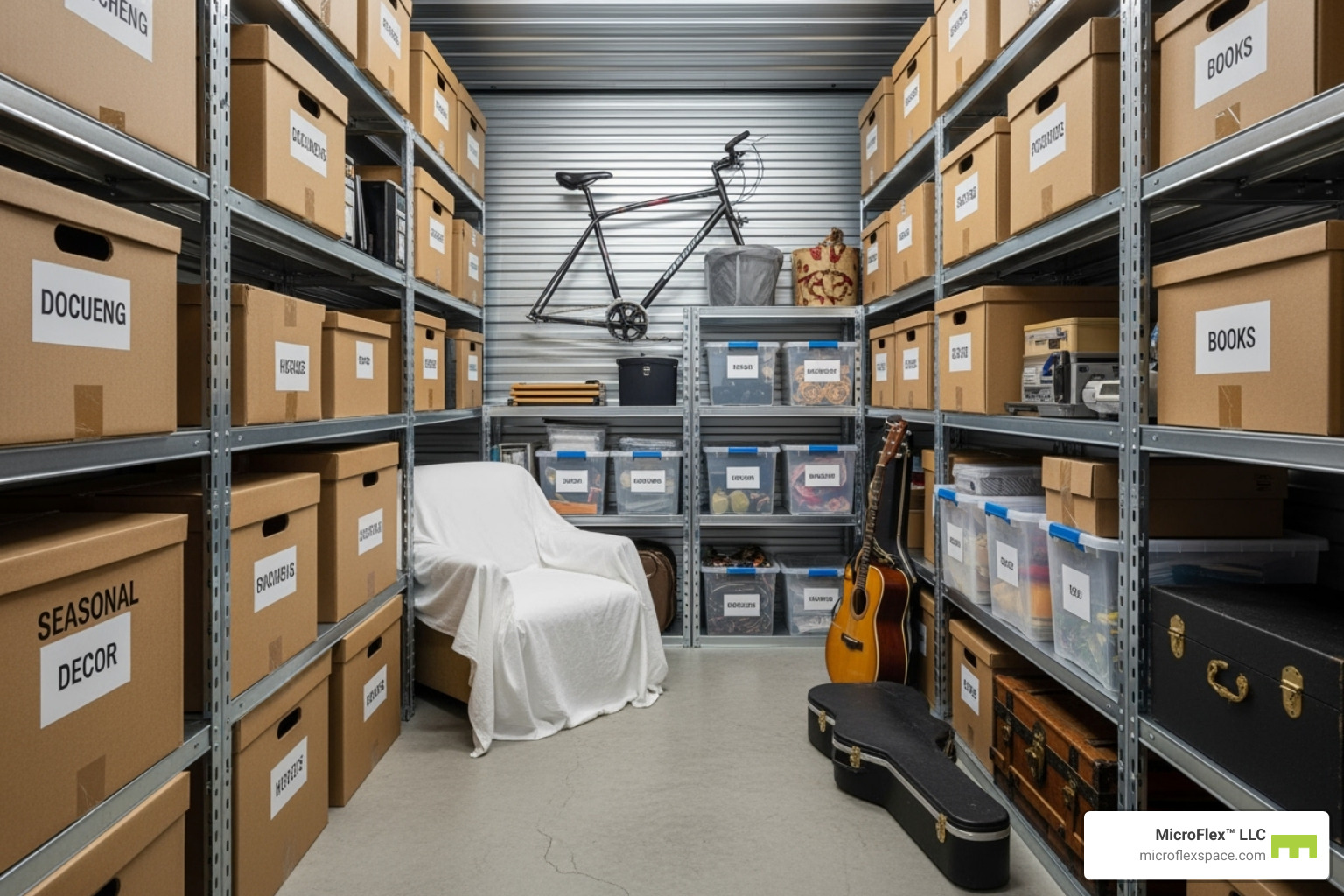
When organizing for frequent access, place your most-needed items near the front. Label everything clearly – trust me, your future self will thank you when you’re searching for that one specific box at 8 PM. Clear plastic bins work wonders for quickly spotting contents without opening everything.
Long-term storage operates on a completely different rhythm. Monthly visits become the norm, or even less frequent. This opens up options for units with stricter access policies that might not work for short-term needs.
Organization shifts from accessibility to preservation and space maximization. Stack boxes from heaviest to lightest, use pallets to keep everything off the floor, and invest in protective coverings for furniture. Items you won’t touch for months can go toward the back, while seasonal items might stay more accessible for periodic rotation.
Choosing the Right Unit Type
The type of unit you choose can make or break your storage experience, regardless of duration.
Standard units work perfectly for hardy items that don’t mind temperature swings. Tools, outdoor equipment, and non-perishable household goods typically handle these conditions without issue. They’re also easier on your budget, especially for short-term needs.
Climate-controlled units become essential when you’re storing anything sensitive. Electronics like computers and TVs need stable conditions to avoid damage. Artwork and wooden furniture can warp, crack, or develop mold in fluctuating temperatures. Important documents and photographs fade or yellow when exposed to humidity extremes.
Musical instruments are particularly finicky – guitars and violins can develop cracks from temperature changes, while pianos can go completely out of tune. Leather goods and high-end clothing need protection from mildew and deterioration too.
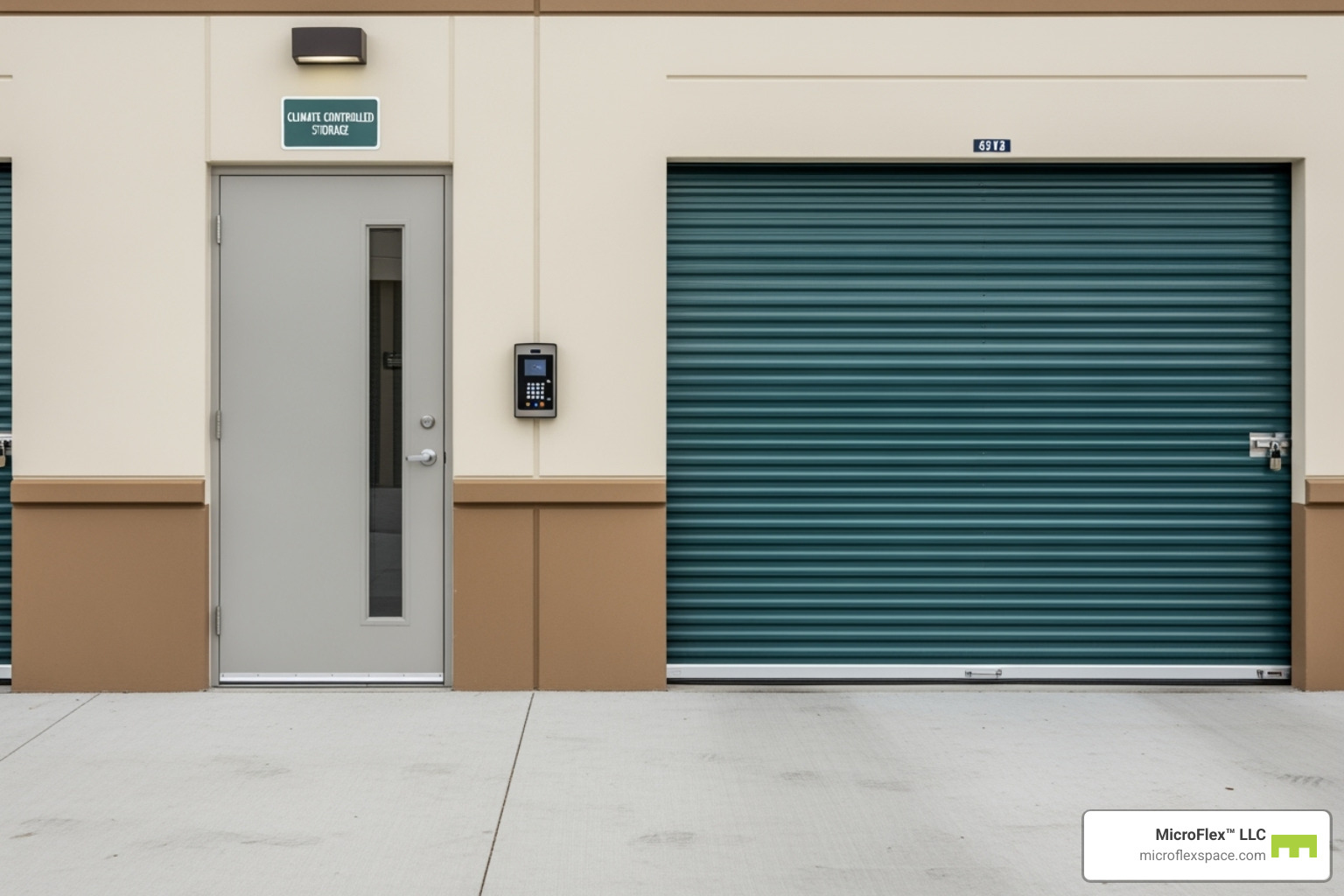
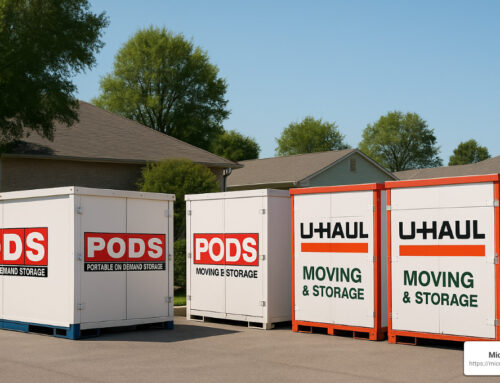
The extra cost of climate control pays for itself when you consider replacing damaged belongings. For maximum convenience, especially with short-term needs, Short-Term Portable Storage Units bring the storage solution directly to you, eliminating multiple trips to a facility.
Understanding what is short term storage means recognizing these key differences help you match your specific situation to the right solution, saving both money and headaches down the road.
Frequently Asked Questions about Storage Options
When helping people figure out their storage needs, I notice the same questions come up again and again. Let’s walk through the most common ones to help you feel confident about your choice.
What is short term storage best for?
What is short term storage really perfect for? Think of it as your reliable friend during life’s messy in-between moments. It shines brightest when you need immediate help but know the situation won’t last forever.
Transitional periods are where short-term storage truly earns its keep. Maybe you’re caught between selling your old home and moving into your new one. Or perhaps you’re relocating for work but your new place isn’t ready yet. Short-term storage becomes that crucial bridge, giving your belongings a safe place to wait while you sort everything out. For folks navigating these changes, Moving and Short-Term Storage offers the flexibility you need.
Home renovations create their own special brand of chaos. Nobody wants their grandmother’s antique dining table covered in drywall dust or their electronics damaged by construction debris. Short-term storage keeps your treasures safe while contractors do their thing. Plus, it gives workers more room to maneuver, which usually means faster project completion.
Seasonal needs make perfect sense for short-term solutions too. Why let holiday decorations take over your closet year-round? Or keep that patio furniture cluttering your garage all winter? A few months in storage frees up your living space when you need it most.
For businesses, inventory fluctuations during busy seasons or temporary equipment storage during office moves are natural fits. Short-Term Business Storage helps companies stay organized without committing to long-term contracts they might not need.
Can I rent a storage unit for just one month?
Yes, absolutely! This is one of the beautiful things about short-term storage – month-to-month leases are standard practice. You can literally rent a unit for 30 days and walk away when you’re done.
This flexibility becomes a lifesaver when life throws you curveballs. Maybe your house closing gets delayed by a week, or your renovation project hits an unexpected snag. With no long-term commitment, you can extend your rental month by month until everything falls into place. No penalties, no hassles.
The key is checking your facility’s notice requirements for moving out. Most places need a few days’ heads up to avoid charging you for another month. But overall, the ability to Rent Short-Term Storage for exactly the time you need makes planning so much easier, especially when your timeline feels uncertain.
What is short term storage vs. long term storage cost difference?
Here’s where the math gets interesting, and it’s not always what people expect. Monthly rate comparison shows short-term storage costs more per month, but the value of flexibility often makes it the smarter financial choice.
Short-term storage charges higher monthly rates because you’re essentially paying a premium for convenience. Think of it like staying in a hotel versus signing an apartment lease. The hotel costs more per night, but you only pay for exactly what you use. No wasted months, no early termination fees if your plans change.
Long-term storage offers long-term discounts through reduced monthly rates, but these come with commitment strings attached. If you sign a six-month contract but only need three months, you might end up paying more overall than the flexible short-term option.
The smart approach? Calculate your overall budget considerations based on your realistic timeline, not just the monthly rate. If you’re genuinely unsure how long you’ll need storage, the higher monthly rate for short-term often pays for itself through peace of mind and financial flexibility.
Conclusion: Making the Right Choice for Your Needs
Understanding what is short term storage versus long-term options comes down to matching your timeline with the right solution. After exploring both approaches, the path forward becomes much clearer when you focus on three key factors: duration, access needs, and item sensitivity.
Short-term storage shines when life throws you those inevitable curveballs. Whether you’re caught between moving dates, knee-deep in a kitchen renovation, or managing seasonal business inventory, its flexibility and month-to-month terms provide exactly what you need without the commitment headaches. You pay a bit more monthly, but you’re buying freedom and convenience.
Long-term storage takes a different approach, focusing on preservation and security for items you won’t need regularly. It’s your reliable partner for downsizing transitions, protecting family heirlooms, or archiving business documents. The lower monthly rates reward your longer commitment, making it cost-effective for extended storage needs.
The beauty lies in recognizing that there’s no universal “right” choice – only the right choice for your specific situation. A college student storing dorm furniture over summer break has completely different needs than a military family preparing for a two-year deployment overseas.
For businesses and hobbyists in Birmingham, AL, seeking versatile spaces with flexible lease terms, MicroFlex™ offers adaptable solutions that combine warehouse, office, and storage functions. We understand that modern storage needs aren’t always black and white, which is why our spaces are designed to evolve with your changing requirements.
The secret to smart storage decisions? Start with your timeline, consider your access needs, and factor in what you’re actually storing. From there, everything else falls into place naturally.
Ready to find the storage solution that fits your timeline perfectly? Explore our short-term storage solutions today and find how flexible storage can simplify your next transition.