Why Flexible Retail Space Matters More Than Ever
Temporary retail buildings are modular, demountable structures that provide fast, cost-effective retail space without the long timelines or permanent commitments of traditional buildings. They offer businesses rapid deployment, significant cost savings, and the flexibility to scale, relocate, or reconfigure as needs change.
Key characteristics of temporary retail buildings:
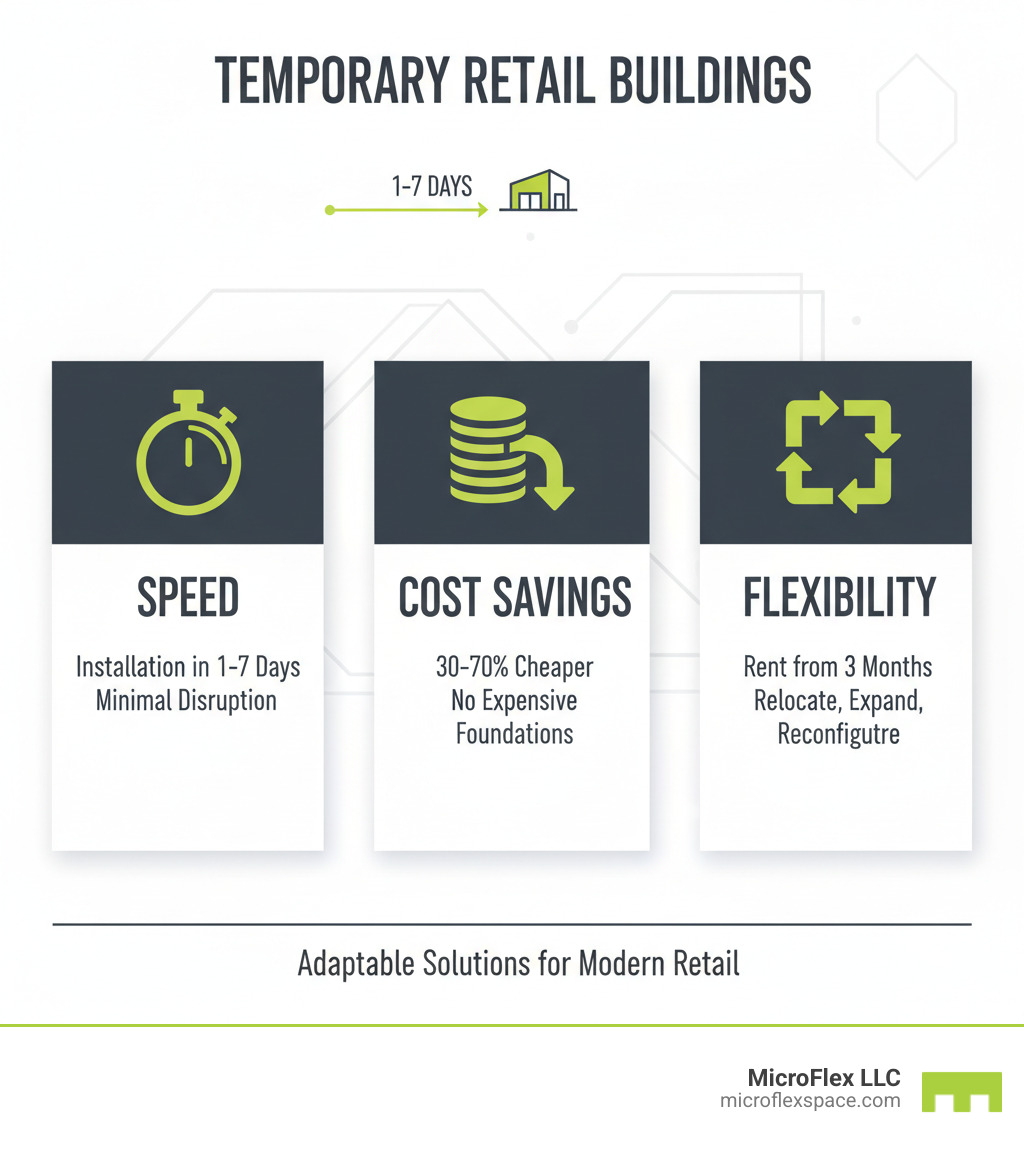
- Speed: Installed in 1-7 days vs. months for traditional construction
- Cost: 30-70% cheaper than permanent buildings
- Flexibility: Can be rented (from 3 months), purchased, expanded, or relocated
- Durability: Built to last 20+ years with proper maintenance
- Variety: Available as insulated buildings, industrial structures, or open canopies
- Minimal site impact: Often require no traditional foundations
The retail landscape has changed. With consumer expectations shifting rapidly and online competition intensifying, traditional long-term leases are too inflexible. Modern retailers need agility—the ability to test new markets, respond to seasonal demand, or pivot their physical presence without the risk of a five-year lease.
Speed and cost-effectiveness are competitive necessities. Traditional construction takes months and ties up significant capital, while temporary retail buildings can be operational in as little as 3-5 days and cost up to 70% less. This allows a shift from “build and hope” to a smarter “test and adapt” approach to physical space.
I’m Chase Carroll, and my work with MicroFlex spaces has shown me how flexible solutions empower entrepreneurs to grow without the constraints of traditional commercial leases. The right space can mean the difference between seizing an opportunity and watching it pass by.
What is a Temporary Retail Building and Why Use One?
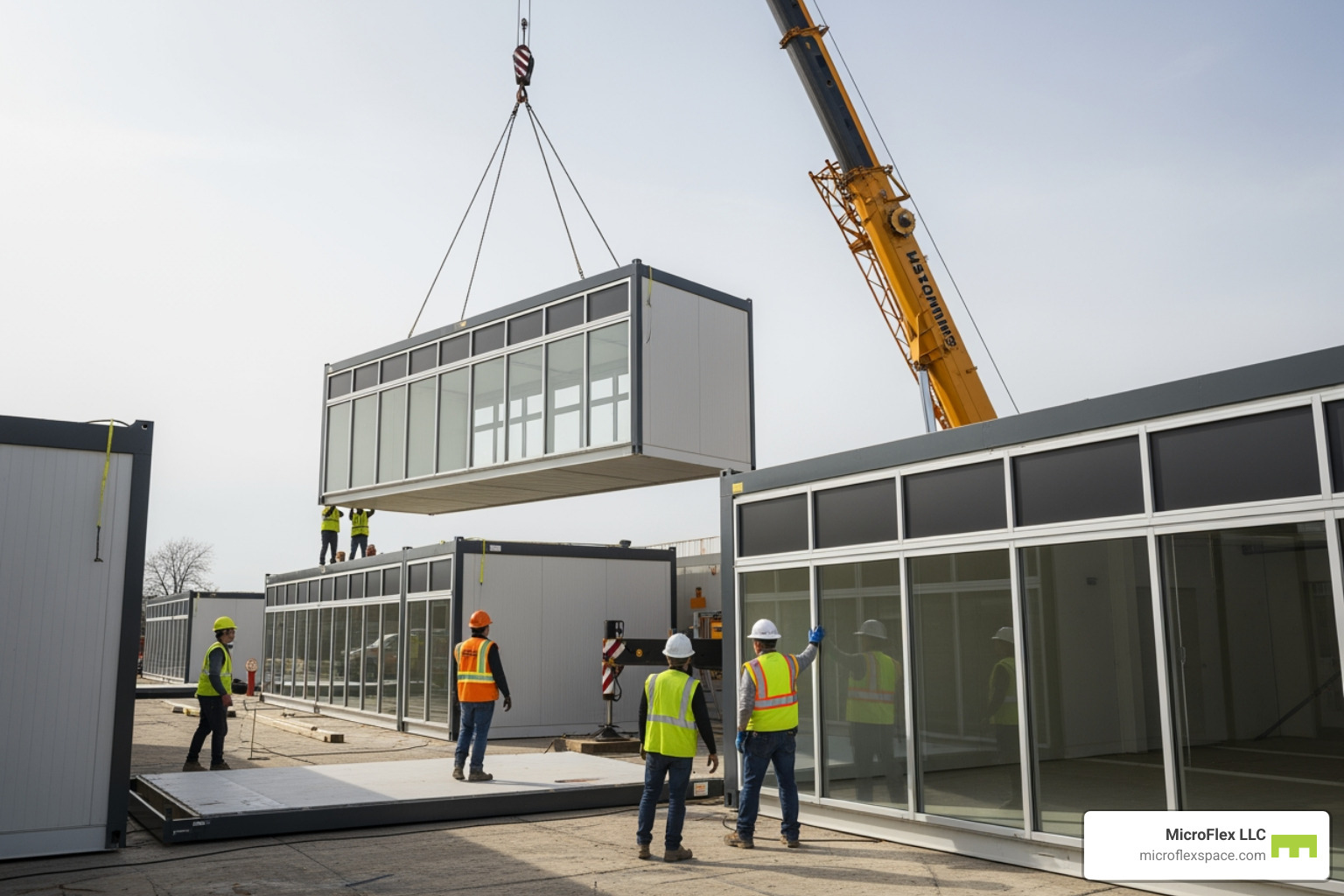
A temporary retail building is a prefabricated, modular structure built off-site and assembled at your location with remarkable speed. Unlike traditional construction, these demountable buildings arrive ready to occupy, often in just a few days. Though temporary, they are engineered to last 20+ years with proper maintenance and can be expanded, reconfigured, or relocated as your business evolves.
The numbers tell a compelling story. A temporary retail building can be operational in 1-7 days, while conventional construction takes months. This speed means you start generating revenue sooner. Cost savings are equally dramatic, with businesses saving 30-70% compared to conventional construction due to faster labor, less material waste, and minimal foundation work.
Perhaps most valuable is the flexibility these structures provide. In an unpredictable retail market, a temporary building allows you to scale up for holidays, test a new market, or pivot your strategy without being locked into an inflexible lease. Our Flexible Commercial Space Ultimate Guide explores how this adaptability transforms business operations.
The Core Advantages for Modern Retail
- Speed to Market: Establish a physical presence in weeks, not months, to capitalize on emerging trends and opportunities in locations like Birmingham, Huntsville, or Auburn Opelika.
- Seasonal Flexibility: Match your retail footprint to actual demand. Ideal for garden centers, holiday shops, and pop-up retailers who don’t need year-round space.
- Reduced Financial Risk: Test a new location or business model with short-term rental options starting from three months. This lets you validate ideas without the heavy capital commitment of a permanent build or long-term lease. Learn more about Short-Term Commercial Rentals.
How Temporary Structures Improve Customer Experience
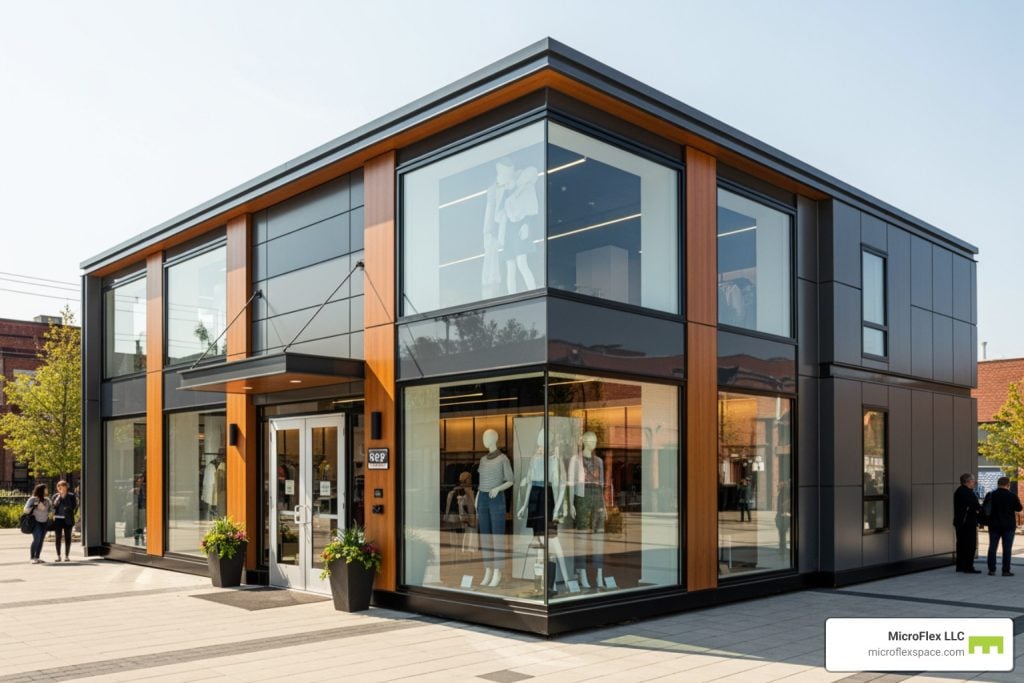
Modern temporary retail buildings can be customized to create stunning brand environments. With custom facades, dramatic lighting, and floor-to-ceiling windows, you can design a sleek showroom or a boutique atmosphere. You control the layout, lighting, and finishes to optimize customer flow and product displays. This brand integration creates a memorable experience, turning a functional space into a powerful asset. That’s the power of Adaptable Business Solutions—spaces that work as hard as you do.
Types and Customization Options for Your Business
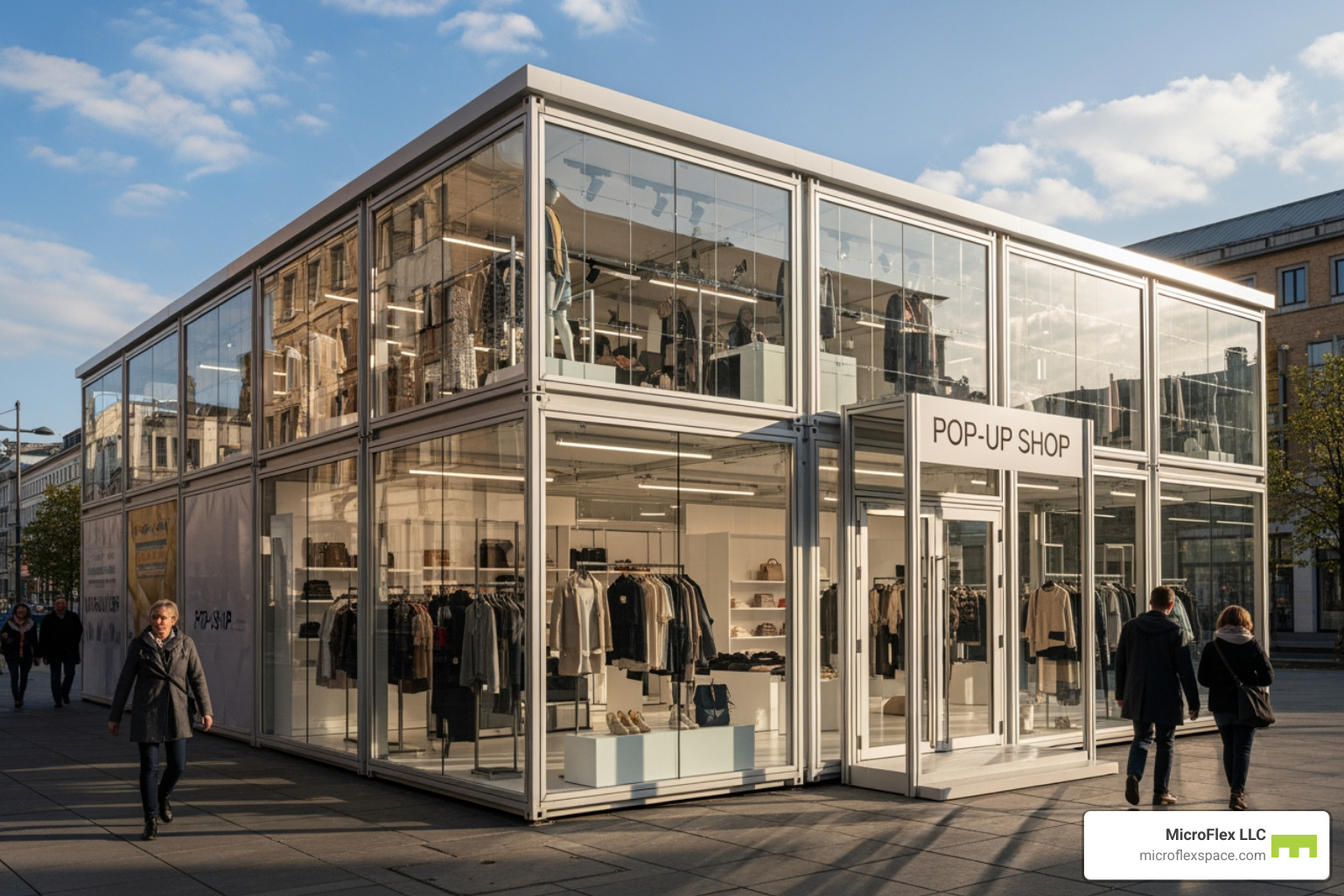
Temporary retail buildings are highly customizable, not one-size-fits-all solutions. You can choose the structure, materials, and finishes that best suit your business needs and budget.
Building Types:
- Insulated Buildings: Essential for customer comfort and protecting temperature-sensitive products. These use insulated cladding, roofing, and HVAC systems for year-round climate control, perfect for a boutique in Birmingham Hoover or a food shop in Huntsville.
- Non-Insulated Buildings: A cost-effective choice for covered storage or overflow inventory where temperature control isn’t critical.
- Canopies: These open-sided structures provide weather protection for loading areas, drive-throughs, or customer waiting zones at a lower cost.
Structural Materials:
- Steel Structures: The workhorse for larger retail spaces like car showrooms or furniture stores. Steel’s strength allows for vast, column-free interiors and ensures durability against heavy weather for decades.
- Aluminum Structures: Ideal when speed and economy are priorities. Aluminum is lightweight, assembles quickly, and costs less, making it perfect for pop-ups or smaller retail concepts. Both steel and aluminum are fully recyclable.
Designing Your Ideal Temporary Retail Building
Transform a basic structure into a unique brand experience through customization.
- Branding and Facades: Use custom facades, branded wraps, and signage to reflect your brand’s colors, logos, and design language.
- Interior Fit-Out: Choose from a wide range of flooring (polished concrete, wood, carpet), wall finishes, and ceiling treatments to create the right atmosphere.
- Lighting and Windows: Combine natural light from windows and translucent roofing with strategic LED display and ambient lighting to highlight products and create an inviting space.
- Comfort and Access: Add features like HVAC systems, automatic glass doors, industrial roller shutters, and pedestrian access doors to ensure a professional and comfortable experience for customers and staff.
Other common features include complete electrical distribution, various roofing and wall options (including glass), guttering systems, and even covered carports.
The Practicalities: Installation, Regulations, and Lifespan
Temporary retail buildings are designed for efficiency. Unlike traditional construction, they involve minimal site disruption and a straightforward setup process.
- Site Preparation and Installation: Most temporary buildings can be installed on existing hard surfaces like concrete or tarmac, often without needing traditional foundations. They are anchored directly to the surface, slashing installation time and costs. The pre-manufactured components are assembled on-site by skilled teams, with the entire process taking just 3-7 days.
- Durability and Lifespan: These are not flimsy tents. Engineered to withstand heavy snow and high winds, temporary structures are built for long-term performance. With proper maintenance, they can easily last 20+ years or more.
- Regulations and Compliance: If a building is in place for more than 28 days, it will likely require planning permission. Experienced providers can guide you through the application process, ensuring your structure complies with all local codes and manufacturing standards.
- Acquisition Options: You have flexibility in how you acquire the space. Rental contracts can start from three months, while purchasing is often more economical for needs beyond four years. Our Commercial Leasing Space Complete Guide offers a comprehensive look at your options.
Navigating Planning and Permissions for a Temporary Retail Building
Local planning requirements vary, so it’s crucial to consult your local municipality. The “28-day rule” is a general guideline, but specific regulations in Auburn Opelika may differ from those in Birmingham Hoover. The building’s intended use—whether for retail, storage, or office space—also affects the permitting process. Many temporary building providers have experience with local planning departments and can assist with applications. For a simpler path, our guide on Short-Term Business Lease options can help you understand alternatives.
Rent vs. Buy: Making the Right Financial Decision
Choosing whether to rent or buy depends on your timeline, capital, and business strategy.
Renting is ideal for short-term needs (3 months to a few years). It offers maximum flexibility with minimal upfront investment, making it perfect for testing markets, managing seasonal demand, or preserving capital. If plans change, you can walk away without being tied to an asset. Explore our Business Rental Solutions to see how renting can support your growth.
Purchasing becomes the smarter financial choice for long-term use (4+ years). While the upfront cost is higher, you own the asset, allowing for full customization and eliminating ongoing rental payments. Ownership provides better long-term value for established businesses with predictable space needs.
The MicroFlex Advantage: The Smarter Alternative for Temporary Retail Buildings

While temporary retail buildings offer speed and cost savings, they come with limitations: installation logistics, site prep, potential weather delays, and a structure that may not reflect a permanent, professional image. They also typically serve a single purpose, leaving you to find separate solutions for office or storage needs.
This is where MicroFlex offers a superior alternative.
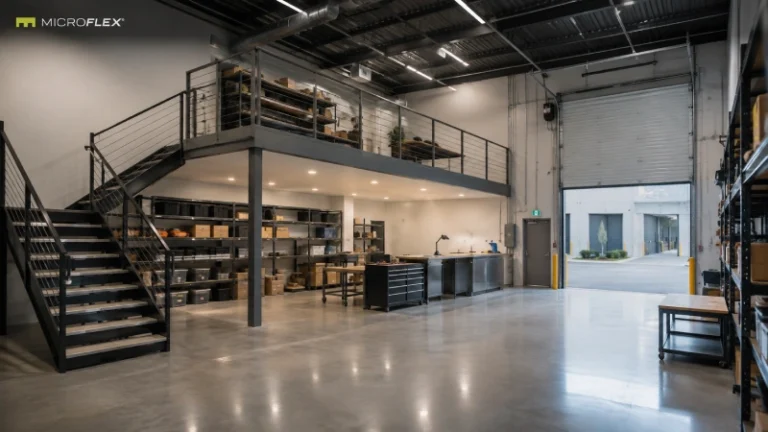
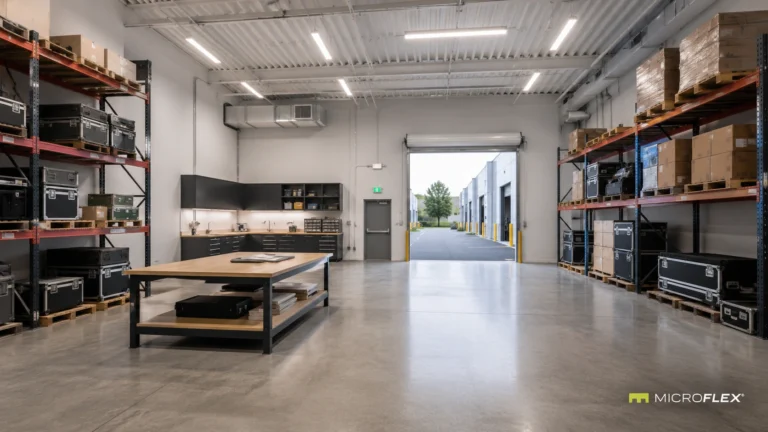
MicroFlex provides permanent, high-quality construction with the agility of a temporary solution. Our spaces are professionally built, climate-controlled units in established business parks, ready for you to move in. You get the durability of a traditional building without the construction timeline or capital investment.
Key advantages include:
- Flexible, Short-Term Leases: Get the adaptability you need without long-term commitments. Scale your space up or down as your business evolves.
- Multi-Use Functionality: Every unit seamlessly integrates warehouse, office, storage, and showroom features. Run your entire operation from one location, under one lease. Learn more about our Small Business Office Solutions and Commercial Space for Small Business.
- No Construction Hassles: MicroFlex spaces are move-in ready. Forget site surveys, permits, and installation crews. You can be operational in days.
- Prime Locations: Our business parks in Auburn Opelika, Birmingham Irondale, Huntsville, and Birmingham Hoover offer professional settings that improve your brand image. See our Locations Microflex page for details.
Why MicroFlex is the Best Choice for Retailers
For retailers, especially e-commerce brands expanding their physical presence, MicroFlex is the ideal all-in-one solution. Manage inventory, handle administrative work, and serve customers from a single, integrated space. Our climate-controlled, secure units protect your products and ensure customer comfort, while the professional business park setting signals stability and quality.
MicroFlex is perfect for creating a hybrid retail model, combining efficient e-commerce fulfillment with an in-person retail front. This is the future of retail, and it’s what we mean by Unlocking Potential Multi-Use Commercial Properties. We solve the entire equation: speed, quality, flexibility, and professionalism.
Common Applications and Industries
Temporary retail buildings are versatile solutions for numerous retail challenges across industries like fashion, automotive, home and garden, and electronics. Common applications include:
- Pop-Up Shops: Launch a brand or test a new market in a location like Birmingham without the commitment of a long-term lease.
- Seasonal Stores: Ideal for businesses with fluctuating space needs, such as garden centers in the spring or holiday stores in the winter.
- Car Showrooms: Provide expansive, well-lit, professional spaces for new model launches, overflow inventory, or temporary facilities during renovations.
- Product Launch Venues: Create a fully customized, immersive brand experience on a blank canvas.
- Emergency Retail Space: Quickly get back to business after a fire, flood, or other unexpected interruption.
- Overflow Stock Storage: Securely store excess inventory during peak seasons or after large purchases without a permanent commitment.
While temporary buildings serve these needs well, an integrated solution can offer even greater value. MicroFlex spaces in Auburn Opelika, Birmingham Irondale, Huntsville, and Birmingham Hoover combine a retail showroom with warehouse, office, and storage functions under one roof. This eliminates the compromises of temporary structures and provides a seamless foundation for growth. For businesses planning their next step, our guide on Business Expansion Space shows how an integrated space can support your strategy.
Frequently Asked Questions about Temporary Retail Buildings
Here are answers to common questions about temporary retail buildings.
How quickly can a temporary retail building be ready for business?
Speed is a primary advantage. With off-site manufacturing and minimal site prep, the on-site installation typically takes only 3-7 days. A complete turnkey solution, from design to setup, can have you open for business within a few weeks, a fraction of the time required for traditional construction.
What support services are typically offered by providers?
Reputable providers offer comprehensive support, including:
- Site Surveys: To assess your location’s feasibility and ground conditions.
- Design and Planning: Assistance in creating a building that meets your needs and brand identity.
- Project Management: A dedicated team to oversee the project from start to finish.
- Installation and Dismantling: Professional crews for safe and efficient assembly or removal.
- Maintenance: Packages for routine inspections and service to protect your investment.
Are temporary retail buildings sustainable?
Yes, they offer several environmental benefits. The primary materials, aluminum and steel, are 100% recyclable, with some structures having recyclability rates over 80%. Their modular design allows them to be disassembled, relocated, and reused multiple times, drastically reducing waste. Furthermore, they require minimal foundation work, which lessens the ecological impact on the site. Features like insulated panels and translucent roofing also help lower ongoing energy consumption and CO2 emissions.
Conclusion
The modern retail world demands agility. Temporary retail buildings offer a powerful solution, enabling businesses to launch quickly, test ideas, and adapt to market changes with significant cost savings and minimal risk. They provide a fast, flexible alternative to traditional construction for seasonal needs, market tests, or emergency space.
However, temporary structures still involve managing installation, permitting, and site prep, and may lack the professional feel of a permanent location. This is the gap MicroFlex was designed to fill.
We offer the ultimate flexible solution: permanent, multi-functional spaces that combine a warehouse, office, and showroom. Our units are already built, permitted, and located in professional business parks across Auburn Opelika, Birmingham Irondale, Huntsville, and Birmingham Hoover. You get the adaptability of a temporary building with the quality, permanence, and all-in-one functionality your business needs to thrive.
Don’t let inflexible real estate hold you back. MicroFlex provides the move-in-ready, professional space that propels your business forward. Explore how a Multi-Use Commercial Property with MicroFlex can transform your retail strategy.