Understanding What You’ll Pay for Short-Term Storage

How much does it cost for short term storage depends on several key factors, but most people spend between $35 and $200 per month. Here’s what you can expect:
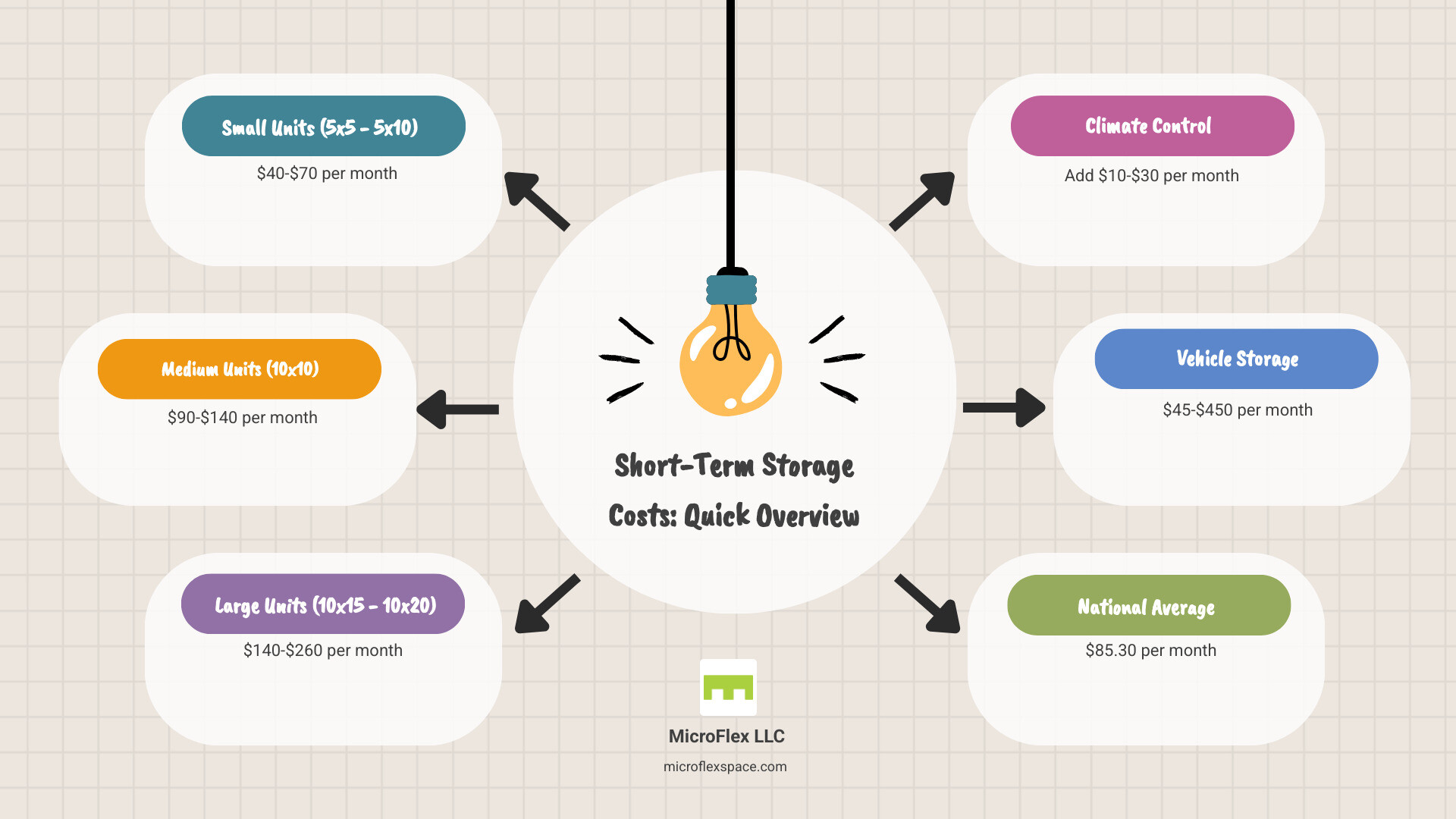
Quick Cost Overview:
- Small units (5×5 to 5×10): $40-$70 per month
- Medium units (10×10): $90-$140 per month
- Large units (10×15 to 10×20): $140-$260 per month
- Climate-controlled units: Add $10-$30 per month
- Vehicle storage: $45-$450 per month
The current national average for a self-storage unit is $85.30 per month, though prices vary significantly based on your location, unit size, and features. Most facilities operate on flexible month-to-month terms, making them ideal for short-term needs without long-term commitments.
Whether you’re between moves, downsizing, or need temporary space during renovations, understanding these costs helps you budget effectively. For business owners, the equation becomes more complex—you might need more than just a place to stack boxes.
As Chase Carroll, I’ve developed and managed flexible storage and workspace solutions across multiple markets for over 12 years, helping businesses understand how much it costs for short term storage and when they might need something more versatile than a traditional unit. My experience shows that many small businesses pay for storage when what they really need is adaptable space that can grow with them.
How much does it cost for short term storage terms to remember:
Deconstructing the Price Tag: Key Factors Influencing Storage Costs
When we set out to find short-term storage, we quickly realize that the price tag isn’t a one-size-fits-all deal. Several key factors converge to determine the final cost. Understanding these influences is the first step to smart budgeting.
Self-storage offers individuals and businesses secure off-site spaces to keep their belongings on a month-to-month basis. This flexibility makes it appealing for short-term needs. However, the exact figure you’ll pay depends heavily on what you’re storing, where you’re storing it, and what amenities you need. For more insight into what short-term storage entails, check out our guide on short-term storage unit rental.
Unit Size: The Biggest Cost Driver
The size of the storage unit is the most significant factor impacting its cost. More space equals more expense. We see a range of sizes, from small lockers to units large enough to hold the contents of an entire home or business inventory.
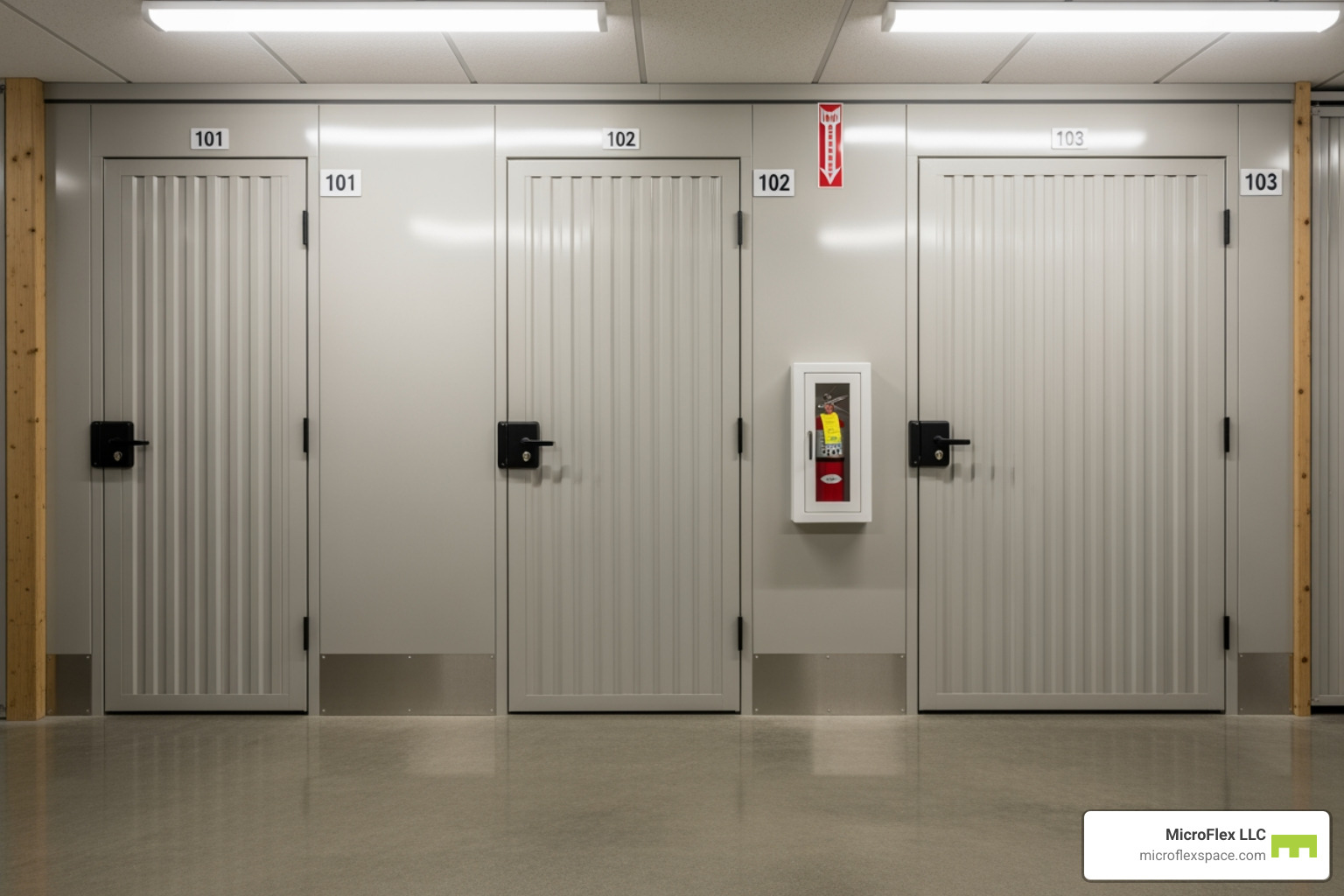
- Small Units (e.g., 5×5 feet): Think of these as a walk-in closet. They’re perfect for a few boxes, seasonal gear, small furniture items, or business documents. Our research shows these typically average $40–$60 per month.
- Medium Units (e.g., 10×10 feet): These are often likened to a standard bedroom or half of a one-car garage. They can comfortably store the contents of a one-bedroom apartment, including appliances, or provide ample space for a small business’s excess inventory. These units average $90–$130 per month. A 10×10 unit is also the most popular size among renters.
- Large Units (e.g., 10×15 to 10×20 feet): If you’re moving a multi-room home or need to store significant business equipment, these are your go-to. They can hold furniture and belongings from a two- to three-bedroom house or substantial commercial goods. Large units typically average $140–$220 per month, with the largest averaging about $260 per month.
The key here is to match the unit size to your actual needs. Renting a unit that’s too large means you’re paying for unused space, which is a budget no-no. Conversely, cramming everything into a too-small unit can lead to damage and accessibility issues.
Location, Location, Location: How Geography Affects Your Rate
Like real estate, location plays a massive role in a storage unit’s price. Facilities in dense urban centers or high-demand areas command higher prices than those in suburban or rural areas.
For instance, while the average national rental rate for a 10′ X 10′ storage unit is around $107.11, this can fluctuate wildly. In our service areas, we see competitive pricing that reflects local market conditions. For example, while Hawaii tops the chart nationally with an average rate of $137.12 per month, Oklahoma offers much lower rates at an average of $61.99 per month. Within Alabama, prices will vary. You can explore options for storage units in Birmingham and storage units in Huntsville to see how local markets compare. Sometimes, driving a few extra miles to a facility just outside a major metro area can significantly cut costs if daily access isn’t a necessity.
Special Features: Climate Control and Other Add-Ons
Beyond size and location, specific features and amenities can add to the monthly cost.
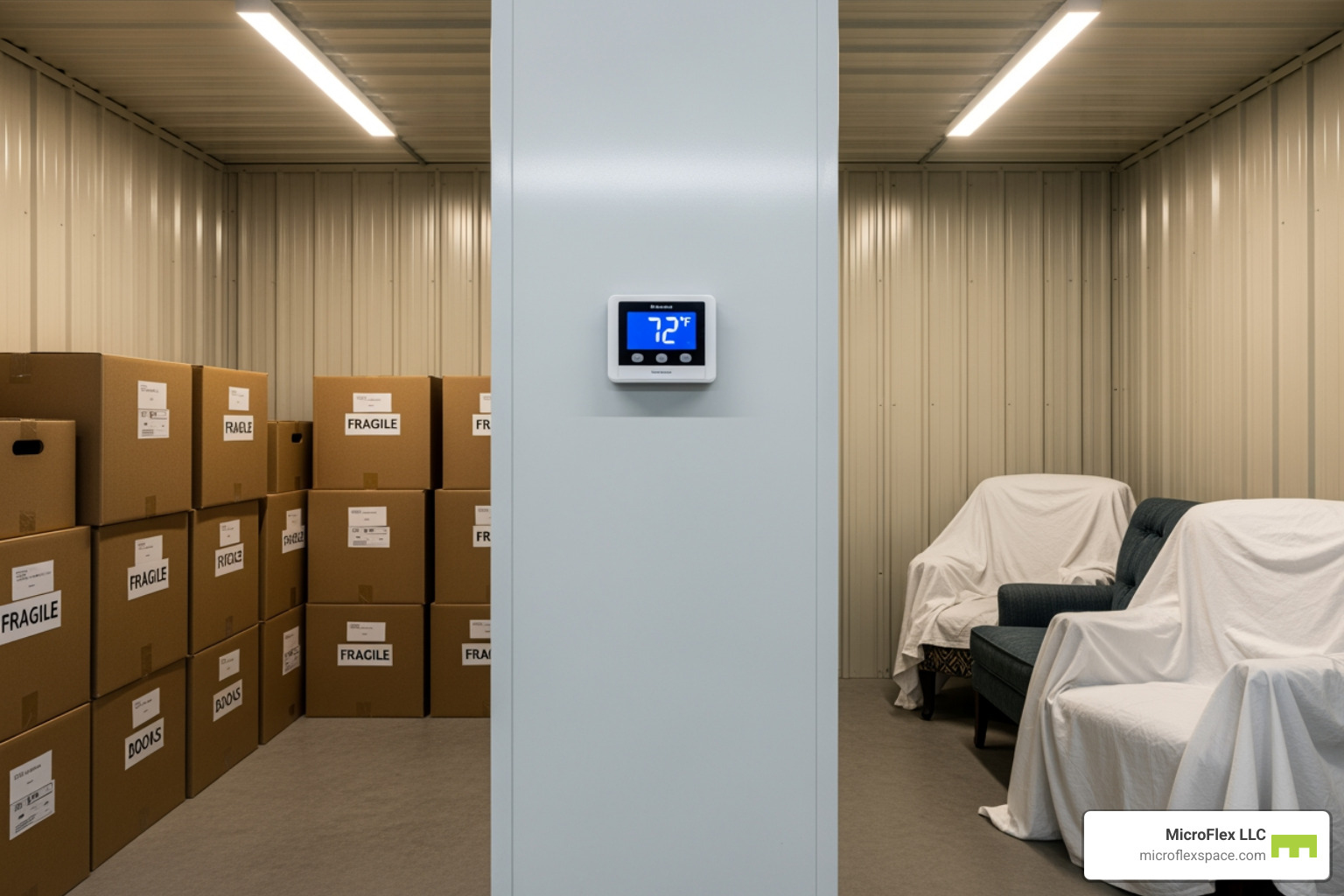
- Climate Control: This is a big one. Climate-controlled units maintain a consistent temperature and humidity level, typically between 55 and 80 degrees Fahrenheit. This is crucial for sensitive items like wooden furniture, electronics, artwork, antiques, clothing, and important documents, protecting them from extreme heat, cold, and humidity. Climate-controlled units usually add an extra $10–$30 per month to the base rate. For more information on protecting your belongings, explore climate-controlled storage in Birmingham.
- Drive-Up Access: These units allow you to drive your vehicle directly up to the unit door for easy loading and unloading. While convenient, they might be slightly more expensive than indoor units, especially in high-demand areas.
- Security Features: Improved security, such as 24/7 surveillance, gated access, individual alarms, and on-site management, provides peace of mind but can also contribute to a higher monthly fee.
- 24-Hour Access: While many facilities offer extended hours, 24/7 access can be a premium feature, particularly appealing for businesses that need flexible access to their inventory or equipment.
We recommend carefully considering which features are truly necessary for your stored items. Sometimes, the added cost is well worth the protection and convenience, but other times, a standard unit might suffice.
How much does it cost for short term storage? A Look at Average Prices
When we talk about how much does it cost for short term storage, we’re often looking at monthly rates, as most facilities operate on a month-to-month lease. This flexibility is ideal for temporary needs, whether you’re moving, renovating, or just decluttering. The average national rental rate for a storage unit is around $85.30 per month, but this is just a starting point.
Here’s a general breakdown of average monthly costs, considering different unit sizes and whether they are climate-controlled:
| Unit Size | Standard (Average Monthly Cost) | Climate-Controlled (Average Monthly Cost) |
|---|---|---|
| 5×5 feet | $40 – $60 | $45 – $70 |
| 5×10 feet | $50 – $70 | $60 – $85 |
| 10×10 feet | $90 – $130 | $100 – $145 |
| 10×15 feet | $120 – $170 | $140 – $190 |
| 10×20 feet | $140 – $220 | $160 – $250 |
Note: These are national averages. Local prices in Auburn Opelika, Birmingham Irondale, Huntsville, and Birmingham Hoover will vary based on demand and facility specifics.
For more detailed information on various pricing structures, you can always refer to our guide on short-term storage costs.
How much does it cost for short term storage for sensitive items?
If your items are precious, delicate, or simply don’t do well with temperature fluctuations, climate-controlled storage is a smart investment. As we mentioned, these units typically cost an additional $10–$30 per month, but this premium can save you from costly damage.
Imagine storing antique furniture, important business documents, electronics, or even delicate fabrics in a non-climate-controlled unit in Alabama’s humid summers or unpredictable winters. The risk of warping, cracking, mold, mildew, or rust is significant. For an average of $190 per month for a climate-controlled unit, which is only about $10 more than a traditional unit in some cases, you gain invaluable peace of mind. For those in Hoover, our climate-controlled storage guide offers more insights.
How much does it cost for short term storage for vehicles?
Storing vehicles short-term can range from parking a motorcycle to an RV. The cost varies significantly based on the type of vehicle, its size, and whether you need uncovered, covered, or enclosed storage.
- Average Vehicle Storage Cost: Expect to pay approximately $210 per month on average, but this can range from $45 to $450.
- Car Storage: A standard car might fit into a 10×20 foot enclosed unit, costing similar to a large storage unit.
- RV Storage: Recreational vehicles often require larger, specialized parking spaces, typically 10×25 to 10×40 feet. Costs can be higher due to the space required and amenities like electrical hookups.
- Boat Storage: Similar to RVs, boats require ample space, often in uncovered or covered spots.
- Covered vs. Uncovered: Uncovered parking is generally the cheapest option, while covered offers some protection from the elements, and enclosed is the most expensive, providing full security and weather protection.
We offer various temporary vehicle storage options that can accommodate different needs and budgets in our Alabama locations.
Beyond the Box: Why Businesses Need More Than Just Storage
For many small businesses, a traditional storage unit seems like a quick fix for overflowing inventory, seasonal equipment, or archived documents. However, a simple storage unit often falls short of meeting the dynamic needs of a growing business.
Traditional self-storage units are designed primarily for static storage – you put things in, and you take them out. But what if your business needs to do more? What if you need to:
- Organize and fulfill orders? A cramped, windowless storage unit isn’t conducive to efficient operations.
- Stage products for client viewing? A sterile storage facility isn’t exactly a showroom.
- Perform light assembly or repairs? There’s usually no workspace, power outlets, or appropriate lighting.
- Have flexible access for employees or contractors? Many facilities have limited access hours.
For these reasons, businesses often find themselves renting multiple spaces: an office, a small warehouse, and then a storage unit. This piecemeal approach can quickly become inefficient and expensive. That’s why we champion short-term business storage that goes beyond just boxes.
The MicroFlex Advantage: A Smarter Alternative for Businesses
At MicroFlex LLC, we understand that modern businesses need adaptable spaces that can evolve with their operations. We offer multi-functional spaces that seamlessly blend warehouse, office, storage, and even showroom features, providing a truly integrated solution in our Alabama locations, including Auburn Opelika, Birmingham Irondale, Huntsville, and Birmingham Hoover.
Our unique selling proposition lies in our flexible lease terms and diverse configurations. Imagine a space where you can:
- Combine storage with office space: Keep your inventory or equipment close at hand while having a dedicated area for administrative tasks, meetings, or client calls. This is a game-changer for efficiency. Find out more about office space with storage.
- Use workshop capabilities: Our spaces are designed to support light manufacturing, assembly, or repair work, providing the necessary infrastructure and space that a standard storage unit simply cannot.
- Showcase your products: With clean, well-lit environments, you can easily transform a section of your MicroFlex unit into a temporary showroom, perfect for client presentations or product demonstrations.
- Enjoy flexible lease terms: We know business needs can change rapidly. Our month-to-month and other flexible leasing options mean you’re not locked into long-term commitments, allowing you to scale up or down as needed.
- Benefit from scalability: As your business grows, our flexible industrial spaces can accommodate your expansion without the hassle and cost of relocating entirely. Explore our flexible industrial space options.
We believe that businesses shouldn’t have to compromise. Our spaces are built to support your ambition and hustle, providing a launchpad for growth and innovation.
Is a flexible space more expensive than a traditional storage unit?
This is a common question, and the answer depends on how you measure “expensive.” If you’re comparing the raw monthly rent of a traditional storage unit to a MicroFlex multi-functional space, our spaces might appear to have a higher sticker price. However, this comparison misses the bigger picture of value and operational efficiency.
Consider this:
- Avoiding multiple rents: If your business currently rents a small office and a separate storage unit, combining these needs into one MicroFlex space could actually be more cost-effective. You’re paying one rent for a fully integrated solution, rather than juggling two or three separate leases.
- Increased productivity: The ability to work directly alongside your inventory or equipment, hold meetings, and manage operations all from one adaptable space significantly boosts productivity. Time saved on commuting between locations or struggling with inadequate workspace directly translates to cost savings and increased revenue.
- Operational efficiency: Streamlining your operations within a single, flexible space reduces overheads, improves logistics, and improves overall business flow.
- Scalability and flexibility: The ability to easily expand or contract your space without penalty is a huge financial advantage. Traditional long-term commercial leases can be a rigid burden for a dynamic small business.
A flexible space from MicroFlex offers a superior value proposition for businesses. It’s not just about storing items; it’s about empowering your business to operate more effectively and grow more efficiently. We offer flexible leasing spaces and are an ideal commercial space for small business looking for integrated solutions.
Smart Strategies for Finding Affordable Storage
Finding affordable how much does it cost for short term storage doesn’t have to be a scavenger hunt. With a few smart strategies, we can ensure we’re getting the best value for our money in Auburn Opelika, Birmingham Irondale, Huntsville, and Birmingham Hoover.
- Compare facilities: Don’t settle for the first quote you get. Prices can vary significantly even within the same city or between nearby neighborhoods. We recommend checking multiple facilities. For instance, you can find cheap storage in Birmingham, AL by comparing options.
- Book online: Many storage providers offer discounts or promotions for online reservations. This can sometimes shave off a significant portion of your first month’s rent.
- Consider seasonal demand: Storage unit prices can fluctuate with demand. Historically, prices tend to climb in spring and peak by summer’s end, often being cheapest between November and March. If your needs are flexible, timing your rental can lead to savings.
- Look for promotions: Many facilities offer enticing deals like “first month free” or “50% off for the first three months.” Always read the fine print, as these promotions might come with specific conditions or revert to a higher rate later.
How to Avoid Hidden Fees and Unexpected Charges
The sticker price for a storage unit is often just the beginning. To truly understand how much does it cost for short term storage, we need to dig a little deeper and watch out for those sneaky additional costs:
- Administrative Fees: Many facilities charge a one-time administrative or setup fee, which can range from $10 to $30 or more.
- Required Insurance: Most storage facilities require you to have insurance for your stored belongings. This might be covered by your homeowner’s or renter’s insurance, but if not, you’ll need to purchase a protection plan through the facility, typically costing $10-$30 per month for $2,000-$5,000 coverage.
- Lock Purchase Costs: Some facilities require you to purchase a specific type of lock from them, adding a small one-time cost.
- Late Fees: Be vigilant about payment due dates. Late fees can be substantial and quickly add up, turning an affordable rental into a costly one.
- Reading the Rental Agreement: This is crucial. Always read the fine print to understand all terms, conditions, potential price increases after promotional periods, and any other charges that might apply.
Tips for Securing the Best Rates
Here are our top tips for making sure you get the most bang for your storage buck:
- Choose the Right Size: As we discussed, renting a unit that’s too big is a waste of money. Use online size guides or consult with facility staff to accurately estimate the space you need.
- Inquire About Discounts: Don’t be shy! Ask about any available discounts. These could include military discounts, student discounts, senior discounts, or even price breaks for setting up auto-pay.
- Consider Portable Storage: While not a traditional unit, portable storage containers (like those offered by some providers) can be delivered to your location. This might be a convenient option for some, though pricing structures differ, often including delivery and pickup fees.
- Negotiate Rent Increases: If you’re a long-term renter and receive a notice of a rent increase (which can happen every 6-18 months, typically 5-10%), don’t hesitate to call and see if there’s any flexibility, especially if you’re a good customer.
- Compare Online Prices: Many storage companies offer lower rates for reservations made online. Always check their websites before walking in. You might just find a deal!
Frequently Asked Questions about Short-Term Storage
We get a lot of questions about temporary storage, so let’s tackle some of the most common ones to help you feel more confident in your choices.
What is the typical duration for a ‘short-term’ storage rental?
The beauty of most storage facilities is their flexibility. While “short-term” can feel subjective, for storage rentals, it generally refers to anything less than a year. The vast majority of storage facilities operate on a month-to-month lease basis. This means you’re not locked into a long-term contract and can rent for just one month, a few months, or as long as you need, without penalty for leaving early (beyond your current month’s rent). This makes them incredibly convenient for temporary needs like moving, home renovations, or seasonal business inventory.
How does the cost of short-term storage compare to long-term storage?
In most cases, the base monthly rate for a storage unit remains the same whether you rent it for one month or for a year. The distinction between “short-term” and “long-term” often comes down to your commitment.
However, some facilities might offer incentives for longer commitments. For example, they might give a discount if you pre-pay for three, six, or twelve months in advance. This can effectively lower your monthly cost over the long term. For short-term rentals, these specific pre-payment discounts are less common, but you can often take advantage of “first month free” or “50% off for three months” promotions, which can significantly reduce the initial cost of your short-term rental.
Are there any additional costs besides the monthly rent?
Yes, absolutely. This is where understanding how much does it cost for short term storage gets a little tricky. While the monthly rent is the primary cost, you should always budget for these potential additional fees:
- Administrative Fees: A one-time setup fee, usually charged when you first rent the unit. This can range from $10 to $30.
- Mandatory Insurance/Protection Plan: Most facilities require proof of insurance for your stored items. If your homeowner’s or renter’s insurance doesn’t cover off-site storage, you’ll need to purchase a plan through the facility. This typically adds $10-$30 per month.
- Lock Purchase: Some facilities require you to buy a specific type of lock from them for security reasons. This is usually a one-time cost of $10-$20.
- Late Fees: If you miss a payment, late fees can be steep. Always pay on time to avoid these.
- Taxes: Depending on your state and local regulations, sales tax might be applied to your monthly rent.
Always ask for a complete breakdown of all costs, including any one-time fees, before signing a rental agreement.
Why MicroFlex is the Best Choice for Small Businesses
When we look at how much does it cost for short term storage, particularly for small businesses, we quickly realize that a basic storage unit rarely provides the comprehensive solution needed. That’s where MicroFlex LLC shines as the best alternative in Auburn Opelika, Birmingham Irondale, Huntsville, and Birmingham Hoover.
Traditional storage units are designed to hold items, not to facilitate business operations. For a small business, this often means paying for a storage unit and a separate office, and potentially a workshop space. This fragmented approach is not only inefficient but also surprisingly expensive when you add up all the individual costs, commute times, and logistical headaches.
MicroFlex offers a unique combination of storage, office, and workshop space, all under one flexible lease. Our adaptable units are built to serve as:
- Integrated Storage: Secure, accessible space for inventory, tools, or documents, seamlessly connected to your workspace.
- Functional Office: A dedicated area for administrative tasks, client meetings, and strategic planning, away from the clutter of inventory.
- Practical Workshop: Space equipped for light manufacturing, assembly, repairs, or creative projects, empowering your team to get work done efficiently.
- Showroom Potential: Clean, professional environments where you can display products or host demonstrations, elevating your brand image.
Our flexible lease terms are a cornerstone of our offering. We understand that small businesses need agility. Whether you need space for a few months during a busy season or a longer-term solution that can scale with your growth, MicroFlex provides the adaptability you require without the burden of rigid, long-term commercial leases. This flexibility means you can expand or contract your footprint as your business demands change, optimizing your budget and avoiding unnecessary costs.
Furthermore, by consolidating your storage, office, and workshop needs into one MicroFlex space, you gain significant cost-effectiveness. You save on multiple rents, reduce operational overheads, and boost productivity by having everything in one convenient location. We offer local expertise and support, ensuring that our spaces are custom to the needs of Alabama’s thriving business community.
MicroFlex isn’t just about providing space; it’s about providing a strategic advantage. We offer a cost-effective alternative to traditional storage that empowers small businesses to operate more efficiently, scale effectively, and grow with confidence. Explore flexible short-term storage costs and solutions with MicroFlex.
Conclusion: Finding the Right Space for Your Budget and Business
Understanding how much does it cost for short term storage involves more than just a single number; it’s about weighing unit size, location, and desired features against your specific needs. We’ve seen that while national averages hover around $85.30 per month, prices can vary dramatically, with small units starting around $40 and larger, climate-controlled options reaching $260 or more. By comparing options, looking for promotions, and being mindful of hidden fees, we can find affordable solutions for personal storage needs.
However, for small businesses, the equation shifts. A simple storage unit, while cheap on the surface, often isn’t enough. Businesses require dynamic spaces that can adapt to various functions—from storing inventory and equipment to housing an office or even a small workshop. Trying to piece these needs together with separate rentals can quickly become costly and inefficient.
This is where MicroFlex LLC steps in. We provide adaptable spaces that combine storage with essential office and workshop areas, offering greater value and flexibility for growth. Our multi-functional units in Auburn Opelika, Birmingham Irondale, Huntsville, and Birmingham Hoover are designed to be a strategic asset, allowing businesses to operate more efficiently and scale seamlessly. By choosing MicroFlex, you’re not just renting storage; you’re investing in a comprehensive solution that supports your business’s evolution.
To explore how our flexible, multi-use spaces can benefit your business and provide a smarter alternative to traditional storage, we invite you to learn more about short-term storage costs and solutions with MicroFlex.