

Why Finding the Right Commercial Space for Small Business is a Game-Changer
Finding the right commercial space for small business is more than just securing a physical location—it’s laying the foundation for your company’s growth. Moving into a commercial space is a significant milestone, signaling that your business is ready for the next level. As one business advisor notes, planning is key to avoiding common mistakes. The wrong space can hamper hiring, drain capital with hidden costs, or stifle growth with rigid terms.
Here’s what you need to know when searching:
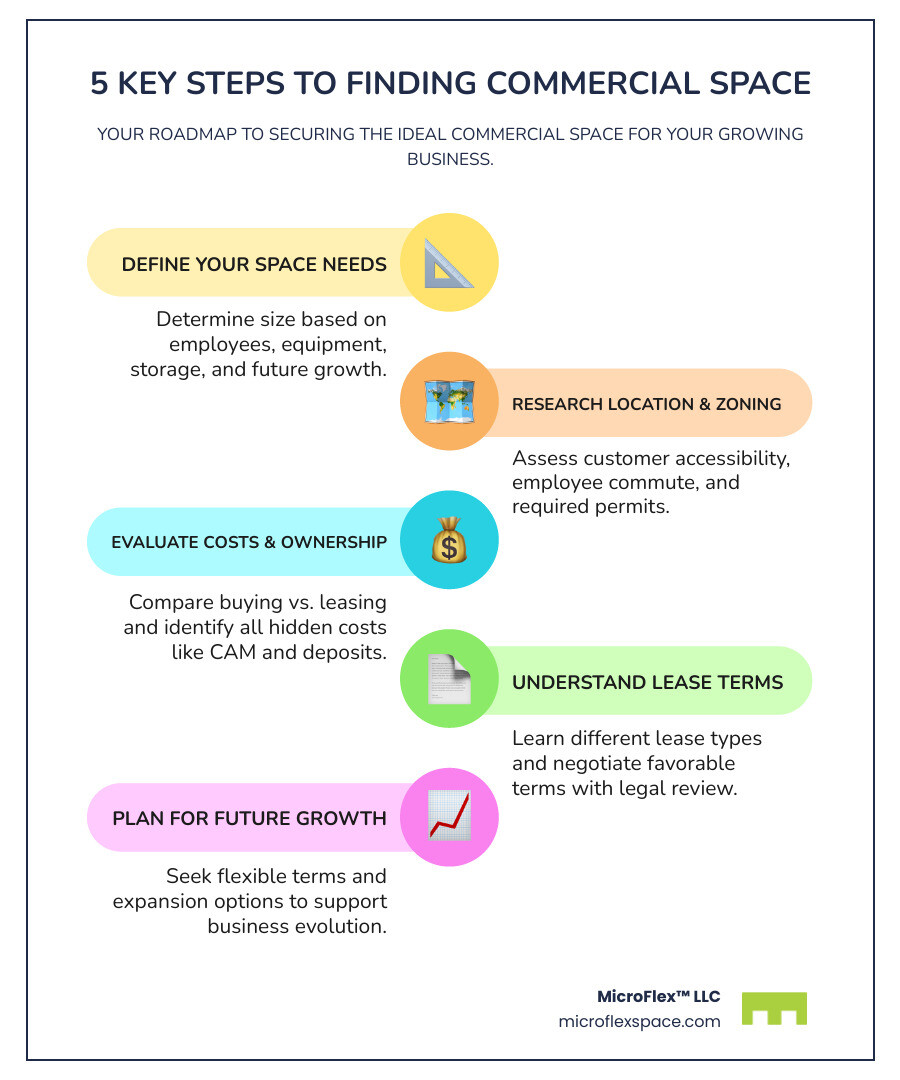
- Space Requirements – Determine size based on employees, equipment, storage, and future growth.
- Location Factors – Assess customer accessibility, employee commute, and competitor proximity.
- Lease vs. Buy Decision – Weigh initial costs, flexibility, and long-term financial impact.
- Lease Types – Understand Gross, Net, and Triple Net (NNN) leases.
- Hidden Costs – Budget for CAM charges, utilities, insurance, and renovations.
- Legal Requirements – Verify zoning compliance and obtain necessary permits.
- Lease Terms – Negotiate duration, renewal options, and flexibility clauses.
This guide will walk you through defining your needs, understanding zoning, navigating leases, and planning for the future, helping you find a space that supports your business.
I’m Sam Zoldock, founder of OWN Alabama. Since 2018, I’ve helped entrepreneurs find strategic commercial properties. My experience with value-add investments and flexible leases has shown me what growing businesses truly need from their space.
Step 1: Defining Your Business’s Space and Feature Needs
Before browsing listings, conduct a thorough business needs analysis. Don’t rely on gut feelings; determine what your operation truly requires to avoid paying for unused space. Start by mapping your current and future needs: employee count, furniture and equipment, storage requirements, and necessary areas like a reception or conference room. For flexible meeting options in Birmingham, you can explore Meeting Spaces in Birmingham. Crucially, always be planning for future growth; a space that fits today might be too small tomorrow.
How to Determine the Right Size and Layout
Getting the size and layout right for your commercial space for small business requires specifics. Consider your team’s work style—remote or hybrid models can significantly reduce your required square footage. Inventory all furniture and equipment, accounting for the necessary space around each item for movement and access.
Don’t underestimate storage. Generously factor in space for inventory and supplies; Small Office Organizer Ideas can help you visualize this. The open versus private layout debate is also important. Open plans can foster collaboration, but many teams benefit from a mix of collaborative zones and private, quiet areas. This is part of creating Dynamic Workplace Solutions that work for your team.
Your layout should support your workflow efficiency. Whether it’s customer paths in a retail store or logistics routes in a warehouse, the layout should help, not hinder, operations. Avoid leasing a space that’s just big enough for today. Smart Business Expansion Space planning involves choosing a slightly larger space and subleasing a portion, or finding a property with built-in expansion options.
Essential Features and Amenities to Prioritize
The right features in your commercial space for small business directly impact your daily operations. Prioritize these essentials:
- High-Speed Internet: This is non-negotiable for any modern business.
- HVAC System: A reliable system is crucial for employee productivity and comfort. Check its condition before signing. Our Microflex Spaces HVAC Ultimate Guide explains what to look for.
- Security Measures: Access control, surveillance, or on-site security are vital for protecting assets and data.
- Parking Availability: Convenient parking is essential for both employees and customers.
- Loading Docks: If you handle physical products, accessible loading docks or ground-level entry points are critical for logistics.
- Kitchenettes and Common Areas: These spaces boost morale and provide areas for informal collaboration.
- Accessibility Requirements: Ensure the property meets ADA standards with ramps and accessible restrooms for all.
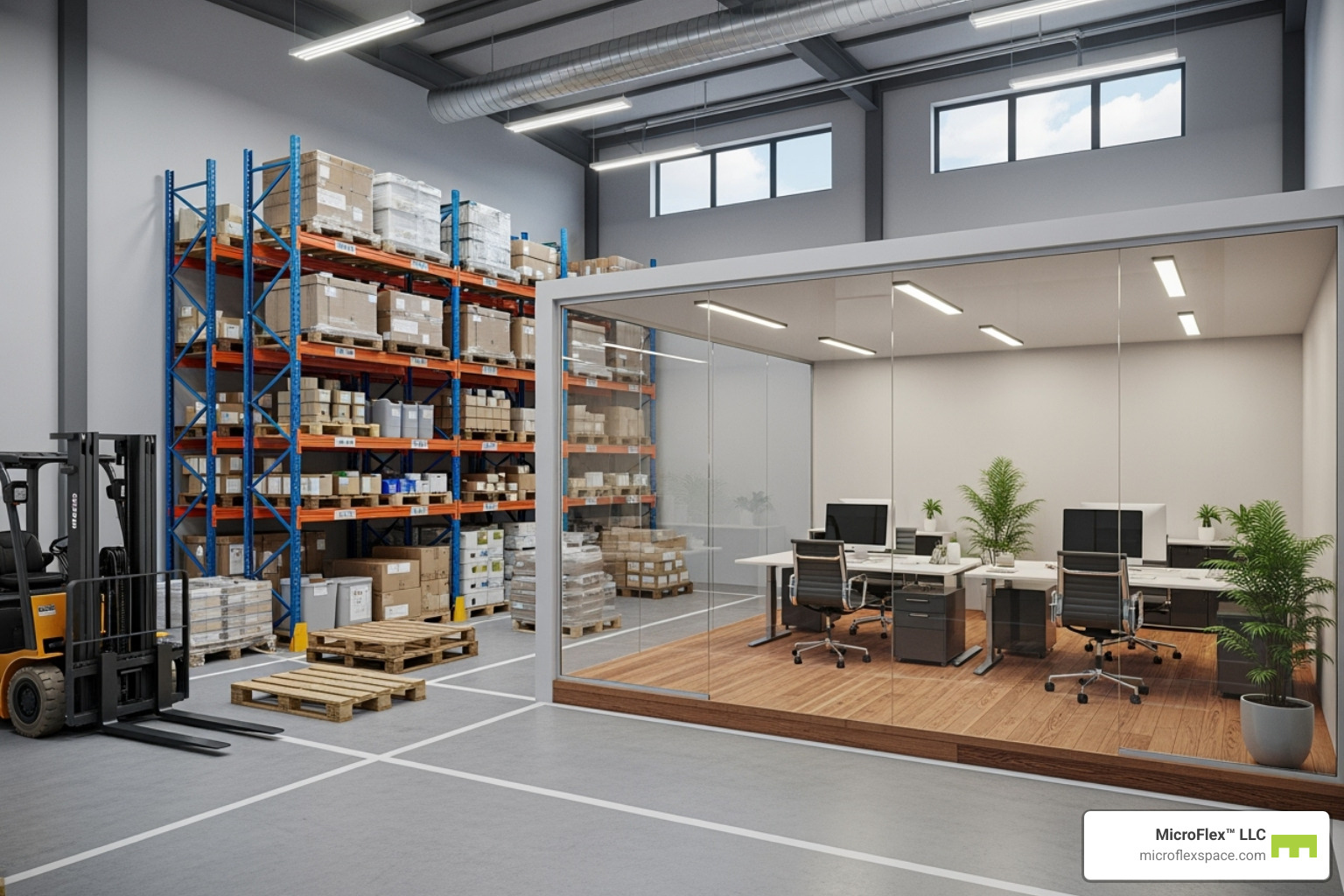
For businesses with diverse needs, a Multi-Use Commercial Property that combines office, warehouse, and showroom features offers incredible flexibility, allowing you to adapt the space as your business evolves.
Step 2: The Critical Role of Location, Zoning, and Permits
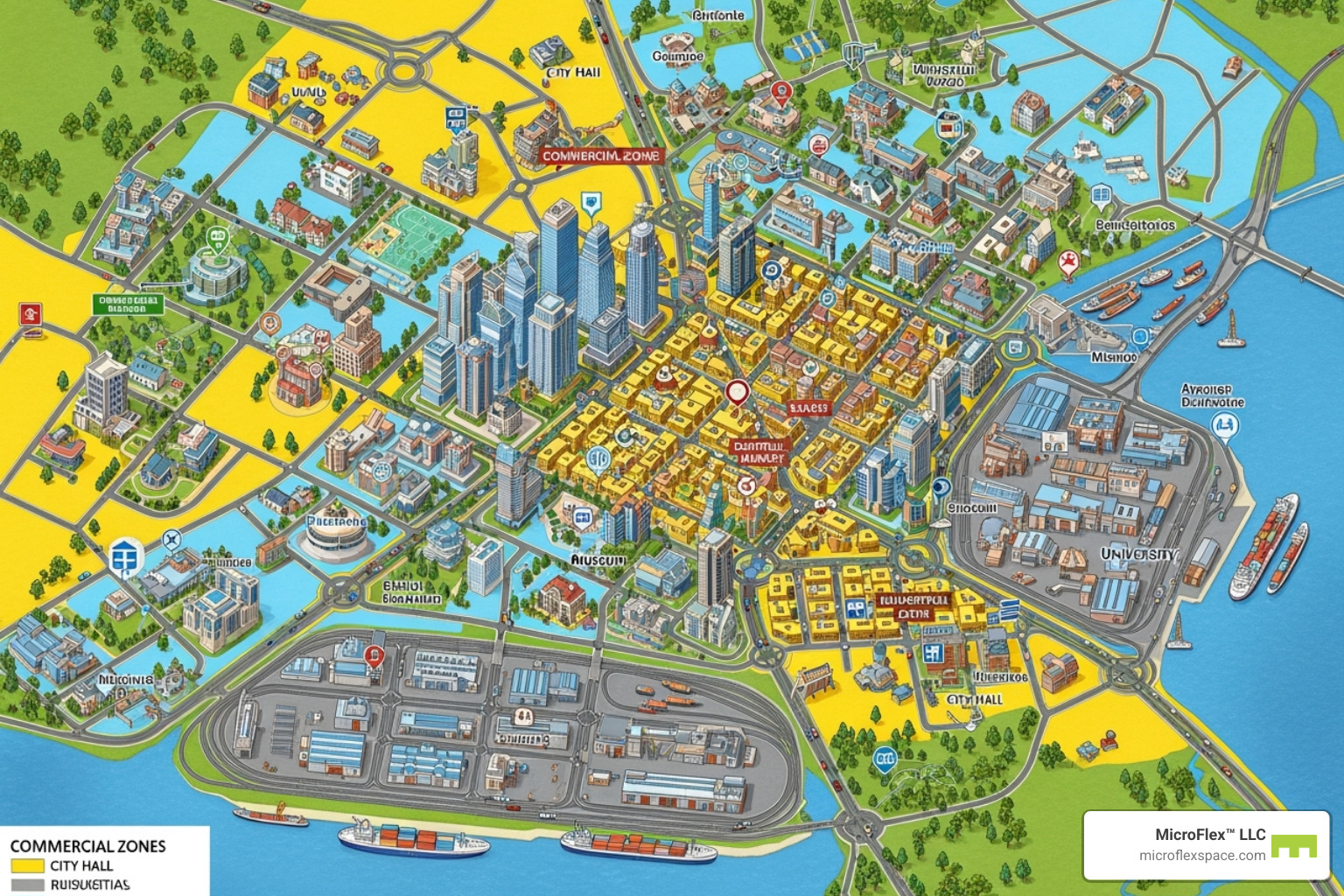
The mantra ‘location, location, location’ is critical for a commercial space for small business. The right spot boosts success, while the wrong one hinders it. It’s about more than visibility—it’s about accessibility, regulations, and community fit.
When evaluating a location, consider these key factors: customer accessibility, employee commute, supplier logistics, competitor saturation, and safety and security. A location that works for your clients, team, and suppliers will prevent daily operational headaches. For businesses in the Birmingham area, our Commercial Property Birmingham: Ultimate Guide provides detailed insights into local commercial zones.
Understanding Zoning Laws and Local Regulations
Before committing to a property, investigate local zoning laws. These rules dictate how a property can be used, and ignoring them can lead to fines or an inability to operate. Verify zoning compliance to ensure the property is zoned for your specific business type. Even within commercial zones, there may be restrictions on permitted use (e.g., a light industrial zone may not permit a restaurant).
A change in occupancy type, such as converting an office to a manufacturing facility, can trigger additional building code requirements. The best advice is to engage in municipal consultation by speaking with local planning staff before signing any agreements. They can provide invaluable guidance and clarify requirements. Some municipalities, like those highlighted in Chelsea, AL Variety of Office Sizes…, are actively working to accommodate diverse business needs.
What Permits Are Typically Required?
Beyond zoning, you’ll need several permits to legally operate in a commercial space for small business. Think of them as the official paperwork that makes a building your legal place of business. Common permits include:
- Business Registration: A fundamental requirement for all businesses in a municipality.
- Change of Use Permit: Required if you’re changing the space’s function from its previous use.
- Building Permits: Needed for any alterations, including structural, electrical, or plumbing work.
- Sign Permits: Required for installing or changing any exterior business signs.
- Occupancy Certificate: Confirms the building meets all safety and health standards for its intended use.
While navigating regulations can be complex, it’s a non-negotiable step. Most municipal staff are available to help businesses through the process, preventing future headaches and fines.
Step 3: Buying vs. Leasing and Uncovering Hidden Costs
One of the biggest decisions for a commercial space for small business is whether to buy or lease. The right choice depends on your financial situation, growth plans, and long-term vision. Buying is a long-term commitment, while leasing offers more flexibility. Understanding the trade-offs is key to avoiding costly mistakes.
| Feature | Buying Commercial Space | Leasing Commercial Space |
|---|---|---|
| Initial Cost | Significant down payment, closing costs, renovation costs | Security deposit (1-3 months rent), first month’s rent |
| Monthly Payments | Mortgage, property taxes, insurance, maintenance, utilities | Rent, potentially CAM, utilities, tenant insurance |
| Equity | Builds equity, asset appreciation, collateral for loans | No equity building, working capital remains liquid |
| Maintenance | Full responsibility and cost of repairs and upkeep | Landlord typically handles major repairs, tenant covers minor upkeep |
| Flexibility | Less flexible, harder to relocate or downsize quickly | More flexible, easier to scale up or down with lease terms |
| Customization | Full control, can customize without landlord approval | Requires landlord approval, leasehold improvements may become landlord’s property |
The Advantages and Disadvantages of Buying vs. Leasing
When you buy commercial property, you build equity, gain a long-term asset, and have complete freedom for customization. However, it requires significant upfront capital, reduces flexibility if you need to move, and makes you responsible for all maintenance and repairs.
Leasing, on the other hand, preserves your working capital for operations, inventory, and hiring. It offers greater flexibility to scale up or down as your business evolves, and the landlord typically handles major repairs. A Short-Term Business Lease can be especially valuable when testing a new market. The downsides include not building equity, having less control over the space, and facing potential rent increases. For most growing businesses, the flexibility of a Business Real Estate Lease is the preferred option.
Hidden Costs Associated with a commercial space for small business
The advertised price is just the start. Be aware of these common hidden costs when securing a commercial space for small business:
- Common Area Maintenance (CAM) charges: Fees for maintaining shared spaces like lobbies and parking lots. Always ask for a detailed breakdown.
- Property Taxes and Insurance: Under a net lease, these costs are passed on to you. If buying, you are directly responsible.
- Utilities: Budget for electricity, water, gas, waste removal, and high-speed internet, which are often not included in the base rent.
- Renovation and Build-Out Costs: Modifications to suit your business can be expensive, and improvements often become the landlord’s property.
- Security Deposits: Typically one to three months’ rent, tying up capital for the duration of your lease.
- Legal and Permit Fees: Budget for lawyer fees to review your lease and for all necessary municipal permits.
Budgeting for these expenses is crucial. A space that seems affordable at first glance might stretch your budget once all costs are factored in. For more insights, consider signing up for our newsletter: Sign up for our newsletter.
Step 4: Navigating the Leasing Process for a commercial space for small business
Once you’ve decided to lease a commercial space for small business, it’s time to understand the process. Landlords want reliable tenants, so there is often room for negotiation. Understanding tenant inducements (like a free month of rent) and leasehold improvement allowances can significantly reduce your upfront costs. Performing thorough due diligence on the property and market is key.
For a comprehensive look at what to expect, our Commercial Leasing Space: Complete Guide walks through the entire process step by step.

Understanding Different Types of Commercial Leases
The type of lease determines who pays for what. Understanding these structures is essential for accurate budgeting.
- Gross Lease (Full Service): The simplest option. You pay one flat monthly rent, and the landlord covers most operating expenses like taxes, insurance, and maintenance.
- Net Lease: You pay a base rent plus your share of the property taxes.
- Double Net (NN) Lease: You pay base rent plus taxes and building insurance.
- Triple Net (NNN) Lease: The most common type for retail and industrial properties. You pay a lower base rent plus your share of property taxes, building insurance, and common area maintenance (CAM).
- Percentage Lease: Common in retail, you pay a base rent plus a percentage of your gross sales revenue above a certain threshold.
Regardless of the label, always review the specific clauses detailing your obligations. For businesses needing warehouse space, our Small Warehouse Leasing Guide offers specific insights.
Key Legal Considerations for your commercial space for small business
A commercial lease is a major legal commitment. Always seek legal advice from a commercial real estate lawyer before signing. Pay close attention to these key terms:
- Lease Term Length: Typically 3-10 years. Shorter terms offer flexibility but may cost more. MicroFlex™ LLC offers flexible terms for growing businesses, including Short-Term Lease Birmingham options.
- Renewal Options: Ensure the lease includes clear terms for renewal, including how future rent will be determined.
- Subletting and Assignment: Negotiate the right to sublet or assign the lease if your business needs change.
- Termination Clauses: Understand the penalties and conditions for breaking the lease early.
- Rent Increase Structure: Clarify how and when rent will increase over the lease term.
- Repair and Maintenance Obligations: The lease must clearly define your responsibilities versus the landlord’s.
- Leasehold Improvements: Know who owns any improvements you make at the end of the lease.
The Role of a Commercial Real Estate Broker
A commercial real estate broker acts as your guide and advocate, simplifying the complex market. They bring market expertise, knowing what properties are available (even unlisted ones) and what typical rates are. Their negotiation leverage can secure better terms, rent, and tenant inducements than you might get on your own. A broker saves you time by handling the search, coordinating tours, and managing negotiations, freeing you to run your business. If you’re new to commercial leasing or lack the time to manage the process, hiring a broker is a smart investment.
Frequently Asked Questions about Commercial Space
As we work with small business owners across Alabama, we hear the same questions come up again and again when they’re searching for their first commercial space for small business. Let’s tackle the most common ones.
How much does commercial space cost for a small business?
The cost of commercial space for small business varies based on location and space type. A prime downtown retail spot will cost more per square foot than a suburban warehouse. Similarly, finished office space is more expensive than raw industrial space.
Nationally, office space averages about $21.50 per square foot annually, while industrial space is around $8 per square foot. In Mobile, AL, these averages are similar. To calculate your estimated monthly rent, use this formula: (Square Footage x Annual Cost Per Sq. Ft.) / 12. For a 1,000 sq. ft. office at $21.50/sq. ft., that’s about $1,792 per month.
Base rent is just the start. Budget for extras like Common Area Maintenance (CAM) charges, utilities, and taxes, which can add 20-30% to your monthly cost.
What is a typical commercial lease term?
The initial term for a commercial lease is typically three to ten years. This long commitment provides stability for landlords and can give tenants more negotiating power.
However, shorter-term leases are becoming more common, offering crucial flexibility for startups and growing businesses. Some providers, like MicroFlex™ LLC, offer one-year terms or even month-to-month options. When negotiating, ensure your lease includes clear renewal options with defined rent increase structures to protect your business from unexpected price hikes.
The key is to match the lease term to your business plan. A long-term lease can lock in good rates if you’re stable, but flexibility may be more valuable if you’re in a rapid growth phase.
What is a flexible lease and why is it beneficial?
A flexible lease avoids the rigid, long-term commitments of traditional leases, making it a smart choice for a growing commercial space for small business. Instead of being locked into a five or ten-year term, you get the adaptability you need.
With Flexible Leasing Spaces, you can scale your space up or down as your business evolves without breaking a lease or making a disruptive move. This adaptability dramatically reduces risk for startups and new ventures, allowing you to pivot your strategy without being tied to a long-term financial obligation.
Flexible leases also benefit cash flow, often requiring smaller security deposits and lower upfront costs. This preserves your working capital for what matters most—hiring, marketing, and inventory.
At MicroFlex™ LLC, our entire model is built around this concept. Our spaces combine warehouse, office, and showroom features with lease terms that work for modern businesses, not against them. We believe a space should grow with you, not constrain you.
Conclusion: Your Next Step to the Perfect Business Space
Finding the right commercial space for small business is a major decision, but you’re now equipped with the knowledge to steer the process. We’ve covered defining your needs, understanding location and zoning, weighing buying vs. leasing, and negotiating your lease.
The common thread is that flexibility matters. Your business will evolve, and your space should be able to adapt with it. A rigid lease can stifle growth, while an adaptable one provides the breathing room you need to scale efficiently.
This is especially true for businesses in Central Alabama—from Auburn Opelika AL to Birmingham Irondale AL, Huntsville AL, and Birmingham Hoover AL. If you’re looking for a space that can grow with you, consider exploring what Warehouse Space Auburn has to offer, or check out the versatility of Flexible Industrial Space.
At MicroFlex™ LLC, our model is built on this flexibility. Our multi-functional spaces combine warehouse, office, and storage features with lease terms designed for modern businesses. You get the space you need without the rigid, long-term commitment.
Your perfect business space is out there. Take your time, do your homework, and don’t be afraid to negotiate. This is about finding the foundation that will support your dreams as you build something remarkable. Ready to take the next step? Let’s find a space that empowers your growing venture.