



Why Excess Inventory Solutions Matter for Your Business
Excess inventory solutions are strategies that help businesses convert surplus stock into cash, free up warehouse space, and prevent financial losses. These solutions range from in-house tactics like discounts to professional services like liquidation and donation programs.
Top excess inventory solutions include:
- Liquidation services – Sell to specialized buyers for immediate cash
- Consignment programs – Partner with distributors who sell on your behalf
- Donation programs – Convert surplus into tax deductions while supporting communities
- Discount strategies – Bundle products, offer flash sales, or create clearance events
- Online marketplaces – Expand reach through e-commerce platforms
- Reverse logistics – Transform returns into sellable inventory
The stakes are high. The National Retail Federation estimates $1.43 trillion is tied up in retail inventory. Even more concerning, IHL Group research shows that overstocks account for nearly 32% of total retail inventory distortion, representing approximately $472.5 billion in lost sales.
Your excess inventory isn’t just taking up space; it’s draining cash flow and limiting growth. Every day surplus stock sits, it loses value while incurring costs in storage and insurance.
I’m Sam Zoldock, a commercial real estate investment professional. Through my work with MicroFlex™ LLC, I’ve seen how the right excess inventory solutions can transform this burden into a strategic advantage.
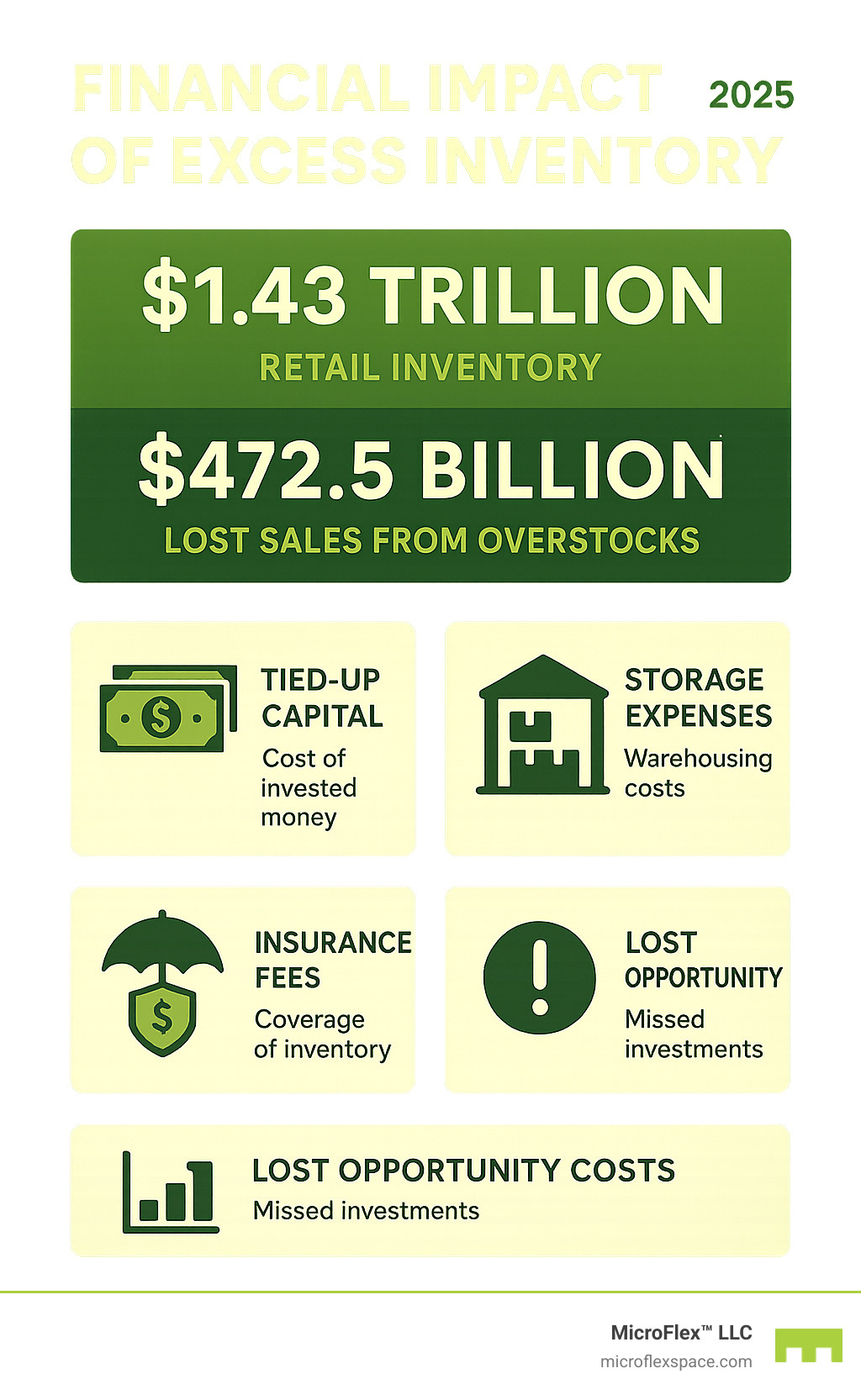
The High Cost of Doing Nothing: Understanding the Impact of Excess Inventory
Excess inventory creates significant financial and operational challenges. Understanding these impacts is the first step toward finding a solution.
Financial Impacts
- Tied-Up Capital: Every unsold product represents capital that could be invested in new products, marketing, or daily operations. Stagnant capital restricts business flexibility and growth.
- Holding Costs: These are the daily expenses of storing surplus goods, including rent, insurance, security, utilities, and labor. These costs quietly erode profit margins.
- Obsolescence: Products, especially in tech or fashion, have a limited shelf life. The longer they sit, the more their value declines, potentially leading to significant financial losses. For example, H&M once reported $4.3 billion in unsold inventory, resulting in massive markdowns.
Operational Impacts
- Warehouse Inefficiency: Overstocked warehouses are difficult to steer, reducing usable space and slowing down fulfillment. For businesses using flexible warehousing from MicroFlex™ LLC in locations like Birmingham Irondale AL or Huntsville AL, maximizing space is critical, and excess stock is a direct obstacle.
- Inaccurate Data: Surplus inventory can distort stock data, making accurate demand forecasting nearly impossible and leading to a cycle of over-ordering.
- Lost Sales: Ironically, having too much of the wrong inventory can cause lost sales. Capital tied up in slow-moving items prevents you from stocking high-demand products, sending customers to competitors. According to IHL Group, overstocks contribute to nearly $472.5 billion in lost sales.
Recognizing these impacts highlights the need for effective excess inventory solutions, turning a liability into a strategic advantage.
From Reactive to Proactive: Preventing Surplus Stock Before It Starts
The most effective way to manage excess inventory is to prevent it from accumulating. This requires a proactive approach focused on data and planning rather than reactive cleanup.

Demand Forecasting
Inaccurate demand forecasting is a primary cause of surplus stock. To improve accuracy, businesses should analyze historical sales data, monitor current market trends, and ensure strong communication between sales, marketing, and purchasing teams to align on projections.
Inventory Management Systems and Automation
Modern inventory management systems provide a clear, real-time view of your stock. Key features include:
- Real-Time Tracking: Know exactly what you have, where it is, and how fast it’s selling.
- Automation: Automated reordering and data synchronization reduce human error. A Square report found that 37% of global retail businesses have already automated their inventory management, highlighting a growing trend.
- Data Analytics: These systems analyze data to identify slow-moving items and predict future demand, providing insights to prevent overstocking.
Supply Chain Communication
Effective communication is vital. Internally, sales forecasts must be clearly shared with purchasing and production teams. Externally, strong supplier relationships can lead to more reliable deliveries and flexibility in adjusting orders if demand shifts.
Setting Clear Rules
Define what “excess inventory” means for your business.
- Item-Specific Definitions: For each product, determine the maximum time it can remain on the shelf based on its popularity, lead time, storage cost, and shelf life.
- Action Triggers: Establish clear protocols for when an item is flagged as excess. This could trigger an automatic sale, a product bundle, or a discussion with the supplier about returns. These triggers ensure swift action, preventing stock from sitting indefinitely.
Your Toolkit for Tackling Overstock: Key Strategies and Solutions
Even with strong prevention, some excess inventory is inevitable. When it happens, a toolkit of excess inventory solutions can turn that liability into cash flow.
Strategy 1: In-House Sales & Marketing Tactics
Use your existing channels to move stock quickly while maintaining brand control.
- Bundling: Pair slow-moving items with popular products to increase perceived value.
- Discounts & Flash Sales: Create urgency with time-limited clearance events, especially for seasonal or expiring goods.
- Remarketing: Refresh product descriptions and create new campaigns to position items for a different audience or use case.
- Flexible Payments: Use Buy Now, Pay Later services to make higher-priced items more accessible. Research from Afterpay shows this can boost conversion rates.

Strategy 2: Expand Your Reach with New Channels
Reach new customers by selling outside your usual channels.
- Omnichannel Strategy: Sell across multiple platforms, from your physical store to your website and social media.
- Online Marketplaces: List products on platforms like eBay or Amazon to reach a global audience.
- Pop-Up Shops & Events: Use local markets to create urgency and attract bargain hunters.
- Social Media Commerce: Use platform-integrated sales tools and targeted ads to reach specific demographics.
Strategy 3: The Sustainable Choice – Donations and Upcycling
Responsible disposal can offer significant financial and brand benefits.
- Donation Programs: Donating inventory can provide a significant tax deduction, often yielding better net value than deep discounts. Organizations like WIN Warehouse facilitate this process.
- ESG Impact: Donations reduce waste, support communities, and improve your brand’s reputation for social responsibility.
- Upcycling: Repurpose excess materials into new products. For example, a furniture maker could use wood scraps to create smaller items.
The best approach often combines these strategies, matching the right solution to each inventory challenge.
A Deep Dive into Professional Excess Inventory Solutions
When in-house efforts aren’t enough, or the volume of surplus is too large, professional excess inventory solutions providers can help. These specialists connect your surplus stock with buyers.

Types of Professional Solutions
- Liquidation: Selling inventory in bulk to a liquidation company for a discounted price. This is the fastest way to get cash and free up space.
- Consignment: A third party sells your products on your behalf for a commission. This often yields higher returns than liquidation but takes longer.
- Outright Buy: A buyer purchases your entire lot of excess inventory directly, providing immediate cash.
- B2B Platforms & Brokers: Services like Overstock Trader connect you with a network of potential buyers.
- Reverse Logistics: Specialists process, refurbish, and resell returned items to recover value.
The Benefits of Using Professional Excess Inventory Solutions
Partnering with specialists offers several advantages:
- Expertise & Network Access: They have deep knowledge of the secondary market and connections with global buyers.
- Speed & Capital Recovery: They convert dormant inventory into cash quickly. You can submit your inventory for offers that are often made within 48 hours.
- Reduced Workload: They handle marketing, negotiations, and logistics, freeing up your team.
- Brand Protection: Reputable partners sell discreetly and respect channel restrictions to protect your brand’s integrity.
How to Choose the Right Excess Inventory Solutions Partner
When selecting a partner, consider their:
- Reputation and Experience: Look for a long track record and positive testimonials.
- Transparency: Ensure their valuation and sales processes are clear.
- Brand Protection Policies: Discuss how they will protect your brand and respect MAP policies.
- Payment Terms: Prioritize partners who offer fast or upfront payment.
- Logistics Capabilities: Choose partners who can handle pickup and shipping.
Professional providers like those found through Excess Inventory Solutions can turn an overwhelming problem into a manageable transaction.
The Strategic Role of Flexible Storage
A key part of managing surplus stock is having a place to put it without disrupting your primary operations. This is where flexible storage solutions become a strategic asset, especially for handling seasonal peaks or unexpected inventory surges.

Overflow Storage
Overflow storage acts as a safety valve when you have more inventory than your main facility can hold. Instead of committing to a large, expensive year-round warehouse, short-term storage is a cost-effective way to manage temporary inventory spikes from seasonal demand or canceled orders. It keeps your primary workspace clear and efficient while you implement your excess inventory solutions. You only pay for the space you need, for as long as you need it.
Agility and Flexibility
Modern business requires adaptability, which is what flexible storage solutions from MicroFlex™ LLC provide. Our locations in Auburn Opelika AL, Birmingham Hoover AL, and across the greater Birmingham area offer an adaptable blend of warehouse, office, storage, and showroom features. This allows you to not only store excess inventory but also use the space for light assembly, organization, or even a temporary clearance center.
With flexible lease terms and diverse configurations, we are ideal for businesses seeking a short-term warehouse lease or small warehouses for rent in Birmingham AL. Whether you need short-term business storage or a dedicated Micro Warehouse unit, we provide the agility to handle inventory fluctuations smoothly. This prevents overflow from disrupting daily operations, keeping your team focused on productive tasks.
Frequently Asked Questions about Managing Surplus Stock
Navigating surplus stock can be confusing. Here are answers to common questions about excess inventory solutions.
What’s the fastest way to get rid of excess inventory?
For immediate results, flash sales and deep discounts to your existing customers are effective. For larger volumes, the fastest method is partnering with a liquidation company for an outright buy. They can provide immediate cash and handle removal, often within 48 hours, freeing up your warehouse space instantly.
Can I sell excess inventory without devaluing my brand?
Yes, protecting your brand is crucial. A reputable solutions provider will work with you to sell inventory discreetly. This can involve adhering to your Minimum Advertised Price (MAP) policies, selling to non-competing channels like export markets or specific discount retailers, and ensuring your surplus goods don’t compete with your primary sales.
Is it better to liquidate or donate excess inventory?
The best choice depends on your goals.
- Liquidation is ideal for immediate cash flow. It helps you recoup a portion of your investment and frees up capital tied up in slow-moving stock.
- Donation offers significant tax deductions and improves your brand’s image by supporting community causes. While it doesn’t provide direct revenue, the tax benefits and goodwill can be very valuable. Organizations like WIN Warehouse can facilitate these donations and maximize your tax write-offs.
Evaluate the net value of each option, considering the financial return, tax benefits, and brand impact. A hybrid approach—liquidating some items and donating others—is often a smart strategy.
Conclusion
Excess inventory can feel like a burden, but with the right approach, it can become a strategic opportunity. The key is to shift from a reactive to a proactive mindset.
Effective excess inventory solutions begin with prevention through smart demand forecasting and modern inventory management systems. When surplus does occur, a toolkit of strategies—from in-house sales and new marketing channels to professional liquidation and donation—allows you to recover value and protect your brand.
A crucial component of this strategy is flexible storage. When dealing with seasonal overflow or unexpected returns, you need a space that doesn’t disrupt your main operations. MicroFlex™ LLC provides adaptable, cost-effective spaces in Birmingham, Alabama, and our other locations. Our multi-function units and flexible lease terms mean you only pay for the space you need, when you need it, giving your business the agility to manage inventory fluctuations without missing a beat.
Excess inventory is not a dead end but a call to action. By implementing the right strategies and partnering with the right resources, you can free up capital, streamline operations, and position your business for future growth.
Ready to take control of your space and your inventory?