


Why Flexible Commercial Space is Reshaping How Businesses Grow
Flexible commercial space is redefining commercial real estate by combining office, warehouse, and showroom functions under one roof—designed for businesses that need adaptability without long-term commitments. Here’s what you need to know:
- What it is: Single-story properties blending warehouse space with office/retail areas
- Who it’s for: E-commerce businesses, service contractors, startups, artisans, and growing companies
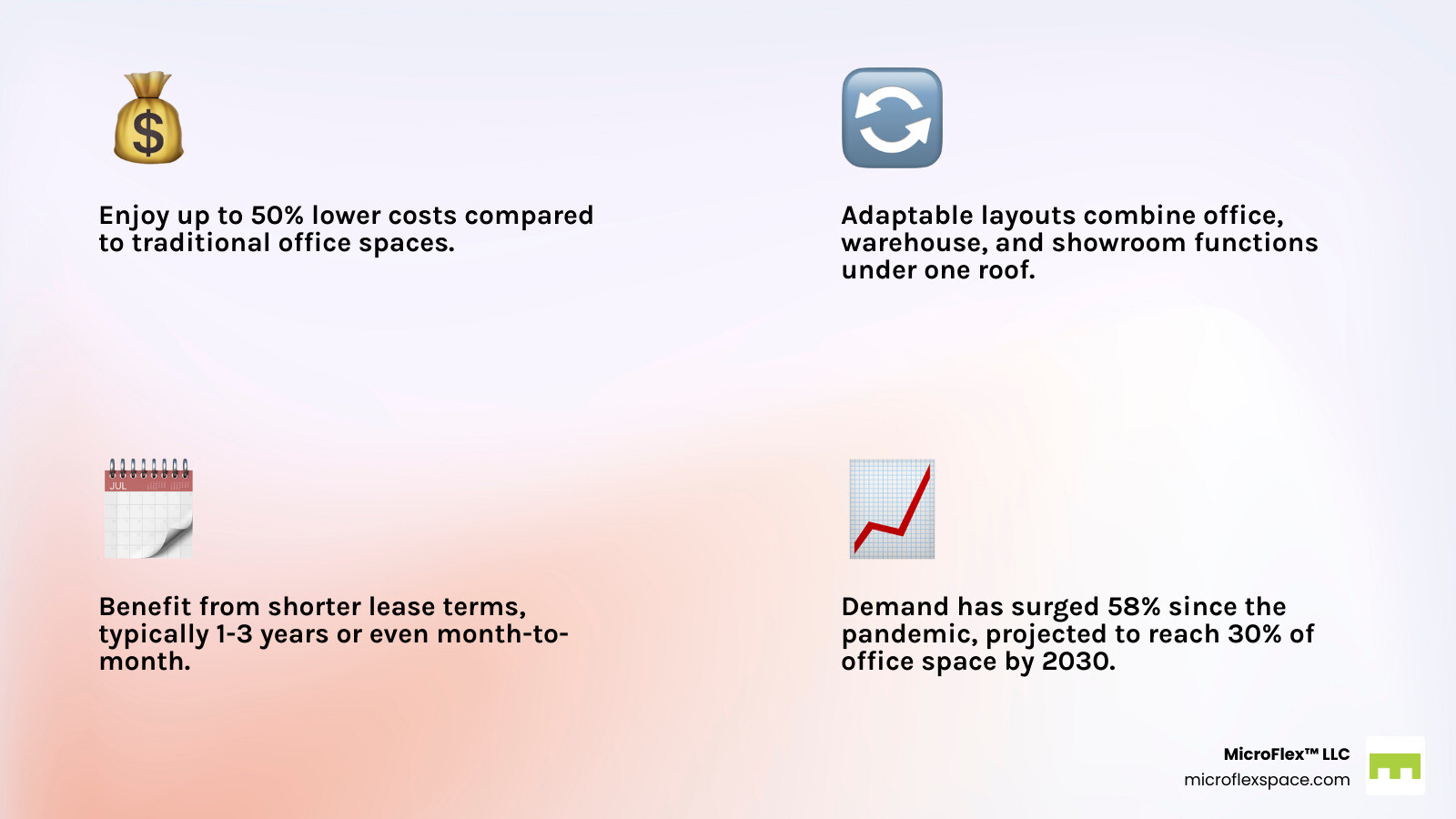
- Key benefits: 50% lower costs than traditional office space, shorter lease terms (1-3 years or month-to-month), and adaptable layouts
- Common features: 14-18 ft ceilings, loading docks, roll-up doors, and significant office portions (30-50%+)
- Market growth: Demand up 58% since the pandemic; projected to comprise 30% of office space by 2030
The world of work is changing fast. Remote teams are becoming the norm. E-commerce is booming. Small businesses are driving job growth—accounting for 55% of total net job creation from 2013-2023. Traditional office leases and rigid warehouse contracts don’t fit these new realities.
That’s where flex space comes in. Instead of signing a 10-year lease for an office and renting separate warehouse space, you get both in one location. Need to scale up during the holiday rush? No problem. Want to pivot your business model? Your space can pivot with you.
This shift is a fundamental change in how businesses view real estate. Companies are ditching the “one-size-fits-all” approach for spaces that work for them, not against them.
I’m Sam Zoldock, a commercial real estate investment professional in Alabama. I’ve seen how flexible commercial space solves real problems for growing businesses, watching it transform from a niche option into a mainstream solution.
What is Flexible Commercial Space and Why is it Booming?
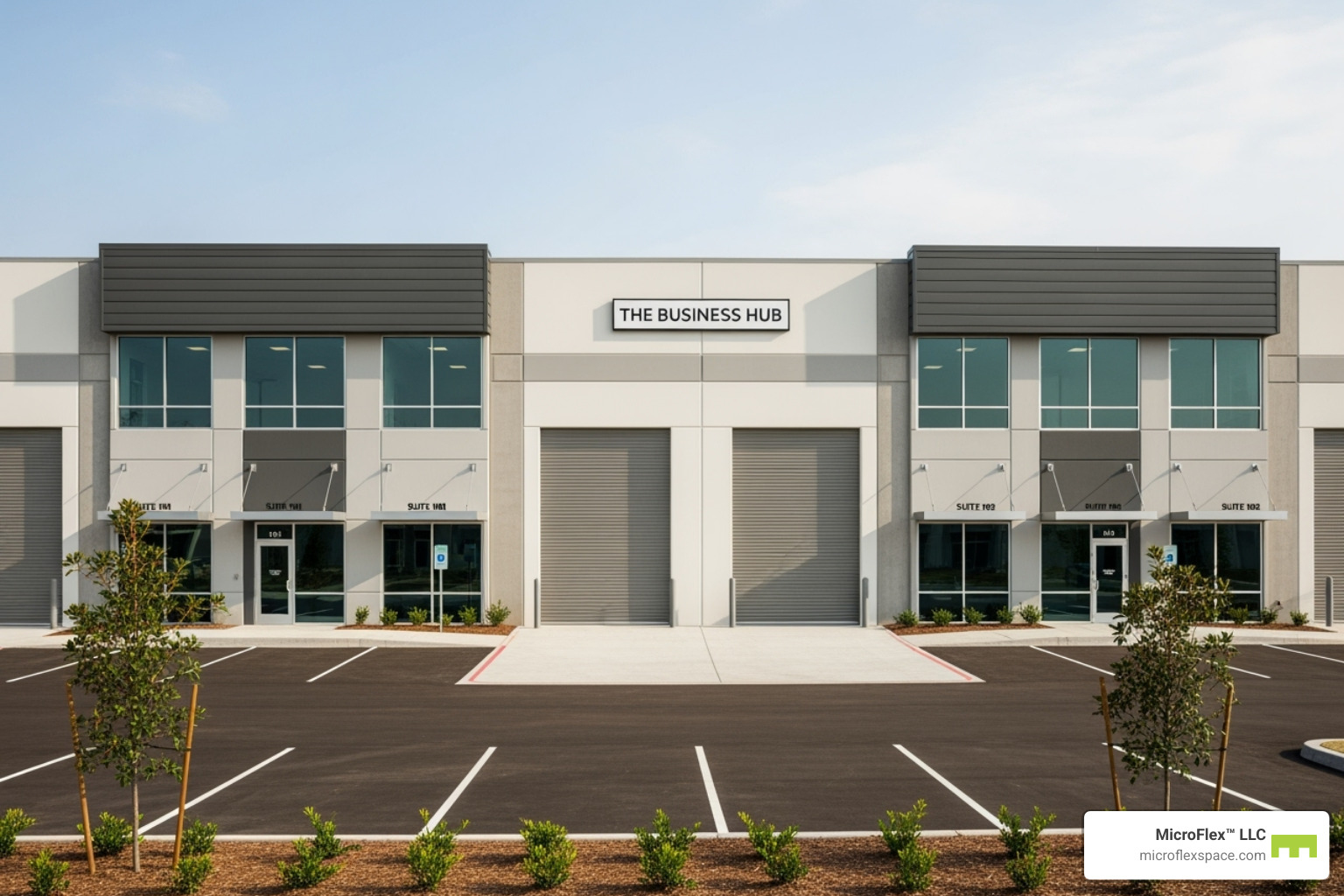
Think of flexible commercial space as the Swiss Army knife of commercial real estate. It’s a property that refuses to be defined by just one purpose, offering businesses the freedom to combine multiple functions under a single roof. You’re not locked into being “just an office” or “just a warehouse.”
Businesses are ditching rigid, single-purpose properties in favor of spaces that keep up with how they work today.
Defining “Flex Space”: More Than Just Four Walls
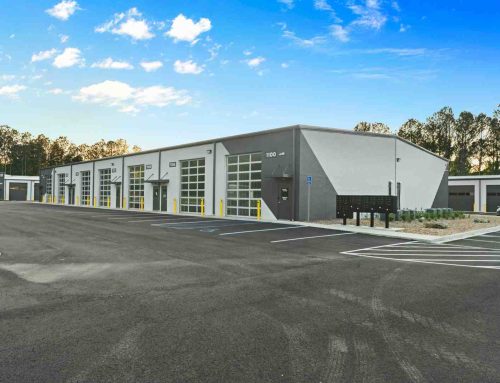
Let’s get specific about what we mean by flexible commercial space. At its heart, flex space is a commercial property designed to accommodate multiple business functions simultaneously. It’s the detailed definition that matters here: these are typically single-story buildings where you’ll find office space, warehouse areas, showrooms, and sometimes even retail components all working together seamlessly.
What really makes this property type special is how it blurs traditional asset classes. You’re not choosing between an office building, an industrial warehouse, or a retail storefront. You’re getting a blend of all three, customized to your specific needs. This is what true Adaptable Business Solutions look like in practice. For companies exploring Multi-Use Commercial Property options, flex space eliminates the old either-or dilemma entirely.
Key Characteristics and Common Features
While “flexible” suggests endless variety, flexible commercial space actually shares some distinctive traits that make it so effective. Understanding these common features helps you recognize whether a property truly qualifies as flex space.
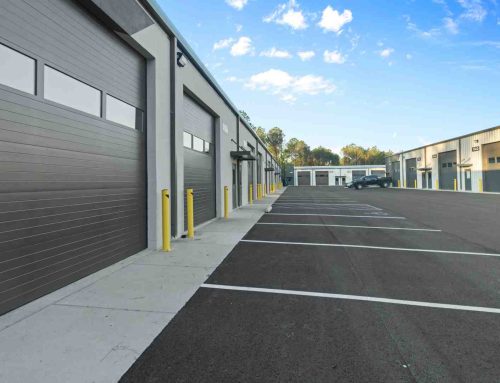
The single-story layout is almost universal, making logistics straightforward and eliminating elevator headaches. You’ll find higher ceilings—typically 14-18 feet—that provide crucial vertical storage capacity and room for specialized equipment. Those loading docks and roll-up doors aren’t just convenient; they’re essential for businesses handling inventory, allowing easy drive-up access for deliveries and shipments.
Here’s what sets flex space apart physically: the significant office portion usually comprises 30-50% or more of the total space. This isn’t just a desk shoved in the corner of a warehouse. It’s a dedicated, professional area designed for administrative work, client meetings, and day-to-day operations. The customer-facing entrance on the front side creates a polished first impression, while the operational areas stay efficiently tucked in back.
The smaller parking lots compared to massive industrial complexes make sense when you consider the tenant mix—you need enough spots for employees and customers without wasting money on asphalt you’ll never use. Many properties offer drive-up access directly to warehouse areas, which simplifies everything from receiving deliveries to loading finished products.
What really matters for growing businesses is the built-in scalability. Many flex properties allow you to expand within the same building or move to an adjacent unit as you grow. This Modular Office Space approach means your lease can actually evolve with your business instead of holding you back.
The Evolution of Demand: From Niche to Mainstream
The surge in flexible commercial space demand didn’t happen in a vacuum. It’s the direct result of fundamental shifts in how we work and run businesses.
Remote and hybrid work models completely changed the office equation. Companies realized they didn’t need massive traditional offices with assigned desks for everyone. They needed adaptable spaces that could flex with their teams. The numbers tell the story: by 2030, 30% of office space is projected to include some type of flexible configuration.
The e-commerce boom created an entirely new category of real estate needs. When the pandemic accelerated online shopping, businesses suddenly needed spaces that could handle both the administrative side and the fulfillment operations. Traditional offices couldn’t store inventory. Traditional warehouses weren’t professional enough for customer interactions. Flex space solved both problems at once.
This ties directly into the shift from traditional retail. Why pay premium prices for a large storefront when you can have a smaller showroom combined with efficient warehouse space? Businesses are rethinking the entire retail model, and flex space fits the new approach perfectly.
Perhaps the biggest driver is the rise of small businesses. These companies are the engine of job growth in America, contributing 55% of total net job creation from 2013 to 2023. Small businesses employ roughly half the U.S. workforce, according to government statistics. These nimble companies need real estate that matches their agility—lower risk, maximum flexibility, and spaces that grow with them.
The market response has been dramatic. Demand for flex space jumped 58% since the pandemic, and it’s still climbing with a 6% quarter-over-quarter increase in early 2024. This isn’t a temporary trend. It’s a fundamental market evolution from niche option to mainstream solution, reflecting how profoundly business needs have changed.
The Pros and Cons of Choosing Flexible Commercial Space
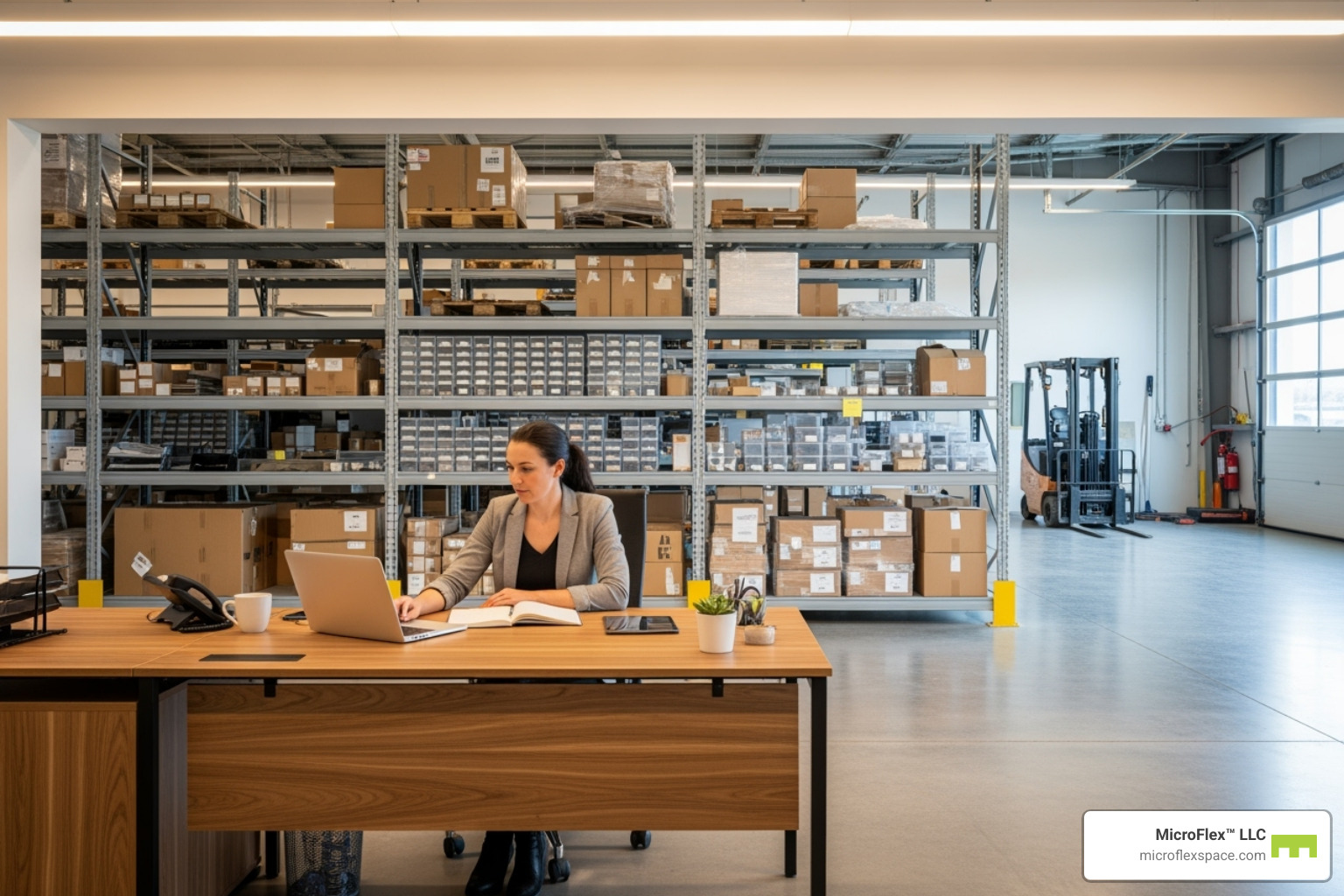
Choosing the right commercial property for your business is a big decision—one that can make or break your operations and budget. While flexible commercial space offers incredible advantages for modern businesses, it’s not a perfect fit for everyone. Let’s take an honest look at both sides so you can make the smartest choice for your unique situation.
The Primary Advantages for Modern Businesses
The biggest reason businesses are rushing toward flexible commercial space? It solves real problems that traditional leases create.
Let’s start with cost-effectiveness, because honestly, that’s what gets most people’s attention first. Flex space typically runs about 50% less than traditional office space in many markets. That’s not a typo—we’re talking half the cost! When you combine your office, warehouse, and showroom needs under one roof, you’re cutting out the expense of multiple leases, separate utility bills, and duplicate services.
Reduced startup costs make flex space especially attractive for newer businesses. Most units come with existing infrastructure already in place—think HVAC systems, loading docks, and sometimes even office furniture. You’re not starting from scratch, which means your initial investment stays manageable.
Here’s where things get really interesting: scalability. Your business doesn’t grow in a straight line, and flex space understands that. Need more room during the holiday rush? You can often expand within the same property. Business slowing down temporarily? You have options to scale back without breaking a long-term lease. This makes it perfect for Business Expansion Space needs.
The adaptability factor is built right into the name. You can reconfigure your layout as your business evolves. Maybe you need 60% warehouse space this year but will need 40% office space next year—flex space lets you make those changes without moving to a completely new building.
Then there’s the shorter lease terms, which feel like a breath of fresh air compared to those intimidating 10-year commercial commitments. Most flex space leases run 1-3 years, and some landlords even offer month-to-month options. This flexibility lets you stay nimble in changing markets. For businesses exploring Short-Term Commercial Rentals, this is a game-changer.
Finally, the all-in-one convenience simply makes life easier. Imagine conducting a client meeting, then walking directly to your warehouse to show them inventory, and then shipping orders—all without getting in your car. No more wasting hours driving between separate facilities. It’s the kind of Small Business Office Solutions that actually makes sense for how modern businesses operate.
Potential Disadvantages and Challenges to Consider
Now for the honest truth: flexible commercial space isn’t perfect for every business. We’d rather you know the potential challenges upfront than find them after signing a lease.
Zoning restrictions can be a real stumbling block. Most flex space is zoned as light industrial, which works great for many businesses but might not allow certain operations. Heavy manufacturing, specific retail formats, or businesses requiring special permits might face limitations. Always check zoning regulations carefully before you commit—this isn’t the kind of surprise you want after moving in.
Related to that, flex space has limited heavy industrial use capabilities. If your business needs massive machinery, extremely high power loads, or produces significant noise or emissions, a standard flex unit probably isn’t your best option. These spaces are designed for lighter operations.
Higher maintenance costs sometimes catch tenants off guard. Because you’re maintaining both office and warehouse components, your responsibilities can be more complex than a simple warehouse lease. The HVAC systems alone require special attention—our Microflex Spaces HVAC Ultimate Guide walks you through what to expect. Make sure you understand exactly what you’re responsible for maintaining before signing anything.
The limited branding opportunities might matter if your building’s exterior is important to your business identity. Multi-unit flex buildings typically have uniform exteriors, which means less opportunity for unique signage or architectural expression compared to a standalone building.
In properties with shared amenities, potential for shared space issues can occasionally pop up. Different businesses have different hours, noise levels, and space needs. Most well-managed properties have clear rules to prevent conflicts, but it’s worth considering if you need absolute control over your environment.
Finally, there are growth limitations to consider. While flex space offers great scalability, you might eventually outgrow even the largest units available. If your five-year plan includes massive expansion, think about whether flex space can accommodate your long-term vision or if it’s better as a stepping stone.
Understanding both the advantages and challenges helps you make a decision that truly fits your business needs, not just today but as you grow and evolve.
Who Thrives in Flex Space and How to Lease It
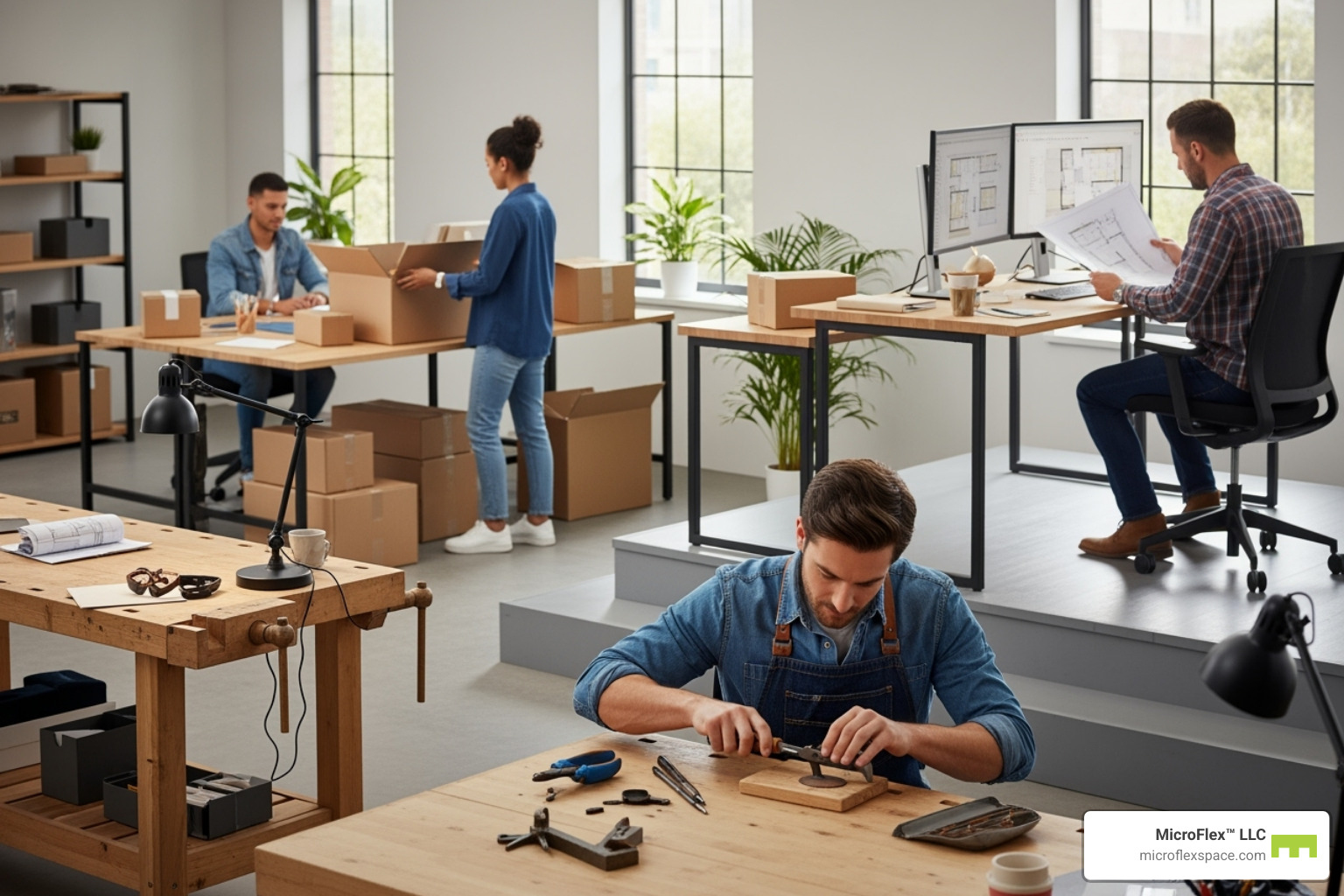
Here’s the thing about flexible commercial space: it’s not just for one type of business. Walk into any thriving flex property, and you’ll see an incredible mix of entrepreneurs and companies, each using the space in their own unique way. That’s the magic of it—the same building that houses a busy e-commerce fulfillment center might also be home to a contractor’s headquarters and an artisan’s workshop.
This diversity isn’t accidental. Flex space naturally attracts businesses that need to be nimble, that blend different functions under one roof, and that value efficiency over ego. For many growing companies, it’s exactly the kind of Small Business Office Solutions that makes day-to-day operations smoother and more cost-effective.
What Types of Businesses Benefit Most?
If your business involves juggling multiple functions—administrative work, inventory storage, customer meetings, and hands-on production—you’re probably going to love flex space.
E-commerce and logistics companies are natural fits. They need somewhere to store products, pack orders, and handle shipping, but they also need a professional office area for customer service calls and managing the business side of things. Having everything in one location means your team can move seamlessly from desk work to warehouse tasks without jumping in the car.
Service-oriented trades make up a huge portion of flex space tenants, and for good reason. Whether you’re a general contractor, electrician, plumber, roofer, HVAC technician, or run a cleaning or pest control company, you need an office to meet clients and handle paperwork, plus space to store equipment, tools, and vehicles. Flex space gives you both without paying for two separate leases.
Tech startups and R&D firms appreciate the combination of collaborative office space for their teams alongside dedicated areas for prototyping, testing equipment, or storing specialized gear. It’s perfect for companies that are still figuring out their exact needs and want room to experiment.
Light manufacturing businesses and artisans creating custom products, whether it’s furniture, specialty goods, or small-batch manufacturing, benefit from the workshop-style warehouse area paired with an office for design work and client consultations. You can literally walk from your drafting table to your production floor in seconds.
Fitness studios and specialized gyms have finded that flex space works beautifully for their needs. The high ceilings and open warehouse layout are perfect for CrossFit boxes, personal training studios, or martial arts facilities, while the office component handles client check-ins and administrative tasks.
Commercial kitchens and food production businesses—think meal prep services, caterers, and small-batch food producers—use flex space to combine food preparation areas, storage, and the necessary office space for managing orders and meeting health department requirements.
You’ll also find distributors, medical equipment firms, environmental testing companies, auto repair shops, and countless other businesses that have realized flexible commercial space offers the Dynamic Workplace Solutions they’ve been looking for. The common thread? They all need more than just a desk or just a warehouse.
Key Tips for Leasing Your First Flexible Commercial Space
Ready to take the plunge? Leasing your first flexible commercial space is exciting, but a little preparation goes a long way toward avoiding headaches down the road.
Start with zoning regulations. This isn’t the glamorous part, but it’s absolutely critical. Just because a space looks perfect doesn’t mean your business is allowed to operate there. Check zoning laws to make sure your specific operations—whether that’s light manufacturing, food production, or retail—are permitted. Don’t assume; call the local zoning office and verify. It’ll save you from signing a lease you can’t actually use.
Think carefully about your service area. Location matters more than you might think. Is the property convenient for your employees? Can your clients or customers find you easily? For service-oriented businesses, being near major highways can be a game-changer, cutting down drive time to job sites. Consider how often you’ll need deliveries, how much customer traffic you expect, and whether the location makes sense for your specific business model.
Ask about expansion options before you sign anything. Your business might be small now, but what happens when you land that big contract or double your product line? Talk to the landlord about whether you could lease an adjacent unit or expand your current space if needed. Some flex properties are designed with growth in mind, making it easy to scale up without the hassle of moving to a completely new location. This is especially important for businesses eyeing Business Expansion Space.
Understand every detail of the lease terms. Yes, flex spaces typically offer shorter, more flexible lease agreements—often one to three years, sometimes even month-to-month—but that doesn’t mean you should skip reading the fine print. Pay attention to renewal clauses, early termination penalties, and any operational restrictions. What happens if you need to break the lease early? Are there automatic rent increases? Our Commercial Leasing Space Complete Guide can help you steer these details with confidence.
Evaluate the actual amenities and infrastructure, not just the square footage. Walk through the space with a critical eye. Does the office portion have reliable internet connectivity and adequate power for your equipment? Is the HVAC system sufficient for both the office and warehouse areas? Does the warehouse have the ceiling height you need for racking or equipment? Are there enough loading docks or roll-up doors for your operations? Check the security features too—good lighting, cameras, and secure access points matter.
Get crystal clear on maintenance responsibilities. Who fixes what? This conversation needs to happen before you sign. Understand what the landlord handles—typically exterior maintenance, roof repairs, and structural issues—and what falls on your plate. This includes everything from HVAC maintenance to keeping your unit clean and functional. Knowing this upfront prevents surprises when something breaks.
By taking the time to do your homework, you’ll find a flexible commercial space that doesn’t just meet your needs today but supports your business as it grows and evolves. And that’s exactly what this type of space is designed to do.
The Financials and Future of the Flex Space Market
Let’s talk money. Whether you’re a business owner weighing your leasing options or an investor eyeing the next smart opportunity, the financial picture of flexible commercial space is pretty impressive. This isn’t just a trendy real estate category—it’s a strategic asset class that’s proving its worth in both immediate savings and long-term value.
Understanding the Financial Aspects of Flexible Commercial Space
When it comes to the bottom line, flexible commercial space delivers compelling numbers for everyone involved.
If you’re a business owner looking at leasing costs, the savings can be dramatic. Flex space typically comes with lower rental rates compared to traditional office space, and we’re not talking about small differences here. In metro Charlotte, for example, flex space runs about 50% of the cost of traditional office space. That’s real money you can reinvest in your team, your products, or your growth.
But the savings don’t stop at the monthly rent check. By combining your office and warehouse needs under one roof, you’re eliminating the complexity and expense of managing two separate leases. No more paying double utility bills, no more maintaining two properties, no more driving across town to check on inventory. It all adds up to a significantly more cost-effective operation.
For investors, the appeal is equally strong. The investment potential in flex space has been turning heads across the commercial real estate world. Here’s why: demand for flex space is up by 58% since the Covid pandemic, and that kind of market momentum translates directly into opportunity.
The vacancy rates tell an encouraging story too. Nashville saw flex space vacancy at just 3.8% last year—remarkably low by any standard. When properties stay consistently occupied, investors enjoy steady rental income with minimal disruption. And here’s something that really catches attention: flex spaces see the highest rental rates of all types of industrial real estate. High demand plus low vacancy plus premium rates equals a strong ROI that’s hard to ignore.
There’s also something to be said for resilience. Because flex space appeals to such a diverse range of tenants—from e-commerce operations to contractors to tech startups—it remains attractive even when economic conditions shift. That versatility makes it a more stable investment than properties tied to a single industry or use.
These figures can vary by market and location, but the pattern holds: flex space sits in that sweet spot between warehouse affordability and office functionality.
The Future Outlook for the Flex Space Market
The trajectory for flexible commercial space isn’t just positive—it’s accelerating. Industry projections suggest that by 2030, 30% of office space will include some type of flexible space. That’s a massive shift in how commercial real estate is structured and used.
What’s driving this growth? The continued demand from hybrid work arrangements is a big factor. Companies have realized they don’t need the same sprawling office footprints they once did, but they still need space that serves multiple purposes. Remote teams need occasional gathering spots. Product-based businesses need both administrative areas and operational zones. Flex space answers both needs perfectly.
The integration of technology is also shaping the future of flex properties. Smart building systems, improved connectivity, and digital management tools are making these spaces even more efficient and appealing. Property managers are investing in tech that makes operations smoother for tenants, from automated access systems to energy-efficient climate control.
We’re also seeing new construction trends emerge specifically around flex space design. Developers are building with adaptability baked in from the start—modular layouts, improved power infrastructure, versatile loading areas, and spaces that can easily transform as tenant needs evolve. This isn’t retrofit thinking; it’s purpose-built flexibility.
The market shows no signs of slowing down either. Demand for flex space in the U.S. increased 6% quarter-over-quarter in the first quarter of 2024, demonstrating sustained momentum beyond the initial pandemic-driven surge. Businesses have finded that Flexible Industrial Space isn’t just a temporary solution—it’s a smarter way to operate.
For investors and business owners alike, this represents a fundamental shift in commercial real estate thinking. The old model of rigid, single-purpose properties is giving way to spaces that adapt, evolve, and serve multiple functions. That’s not just a trend—it’s the new standard.
At MicroFlex™ LLC, we’re at the forefront of this movement. Our properties in Auburn Opelika, Birmingham Irondale, Huntsville, and Birmingham Hoover, Alabama, are designed specifically with this future in mind. We’ve built adaptability into every aspect, from the physical layouts to the lease structures, because we believe your space should support your success, not limit it.
The future of flex space is bright and growing rapidly. We’ve seen a clear movement towards more adaptable, cost-effective, and strategically located properties. The days of “one-size-fits-all” leases are fading, replaced by solutions that truly empower businesses to thrive.
Ready to be part of this evolution? Explore how flexible commercial space can provide the foundation your business needs to grow and adapt. Find your ideal warehouse office space for rent with us today!