

Why Flexible Industrial Space is Reshaping Modern Business
Flexible industrial space is revolutionizing how businesses think about commercial real estate. These hybrid properties combine warehouse, office, and sometimes retail functions in a single building, offering unprecedented adaptability for modern companies.
Key Features of Flexible Industrial Space:
- Multi-functional design – warehouse storage with finished office areas
- Shorter lease terms – typically 1-3 years vs. traditional 7-10 year commitments
- Cost-effective – lower markup (1%) compared to traditional office space (15%)
- High ceilings – usually 14-16 feet for efficient storage and operations
- Loading access – dock doors or drive-in capabilities for logistics
- Customizable layouts – adaptable to changing business needs
The rise of e-commerce, remote work trends, and the need for operational agility have made flex space increasingly popular. Rather than juggling separate leases for office and warehouse needs, businesses can now consolidate operations under one roof.
This shift addresses a critical pain point for entrepreneurs and growing companies: the struggle between rigid lease terms and evolving business requirements. Traditional commercial real estate often forces businesses into long-term commitments that may not align with their growth trajectory or changing operational needs.
Who Benefits Most:
- E-commerce businesses needing storage and fulfillment space
- Contractors requiring both office and equipment storage
- Startups seeking scalable, affordable workspace solutions
- Light manufacturers combining production and administrative functions
- Service businesses needing customer-facing areas plus back-end operations
I’m Sam Zoldock, a commercial real estate investment professional specializing in Alabama markets, where I’ve seen how flexible industrial space transforms business operations for companies of all sizes. Through my work with diverse properties including industrial and office investments, I’ve witnessed the growing demand for adaptable workspace solutions that support modern business models.
What is Flexible Industrial Space? A Modern Real Estate Solution
Imagine having a workspace that adapts to your business like a perfectly custom suit. That’s exactly what flexible industrial space delivers – a smart real estate solution that grows and changes with your company’s needs.
Defining the Hybrid Model
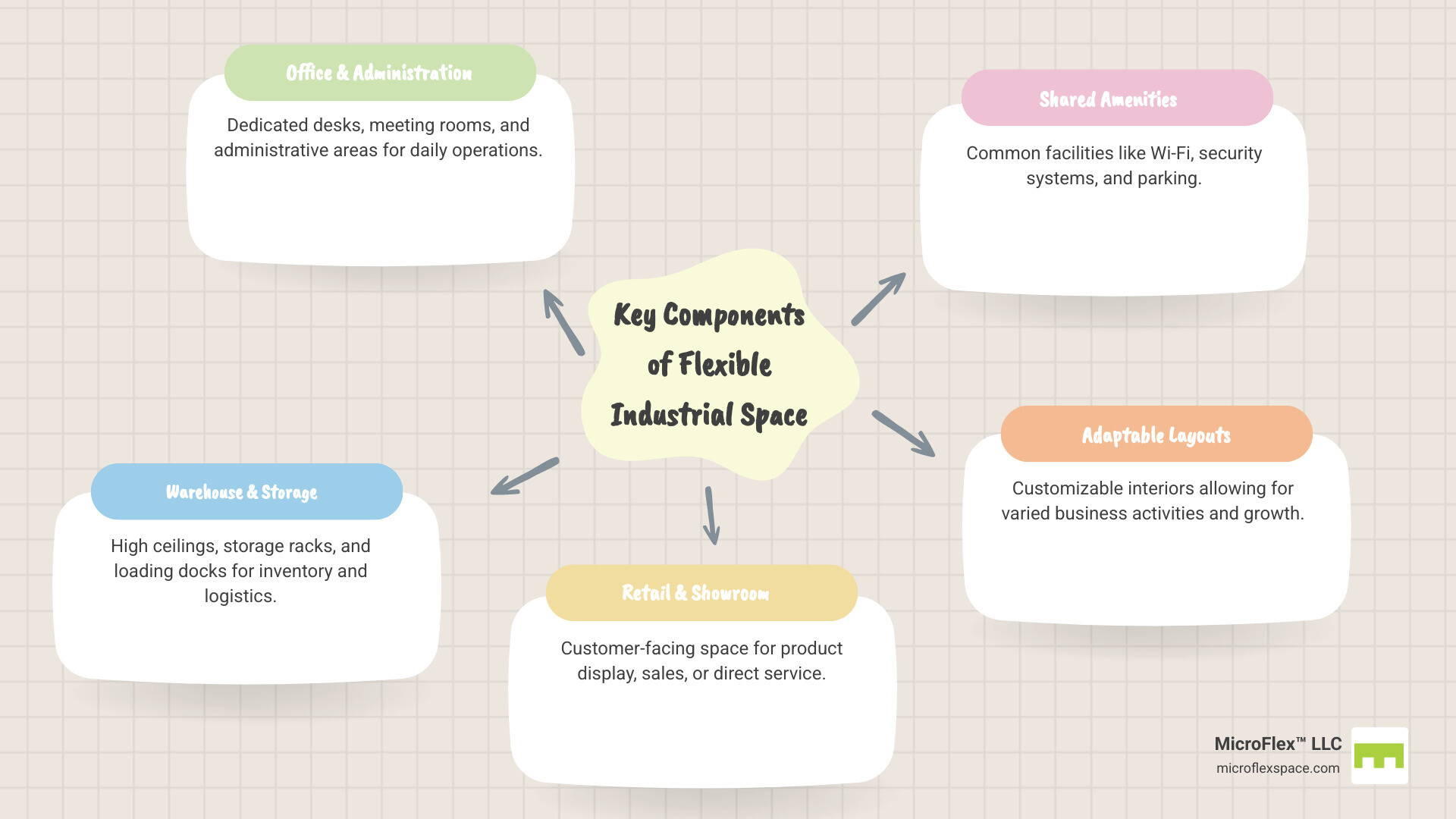
Flexible industrial space is essentially the Swiss Army knife of commercial real estate. These properties cleverly blend warehouse functionality, office space, and sometimes even retail areas into one cohesive unit. Instead of juggling multiple leases across different locations, you get everything under one roof.
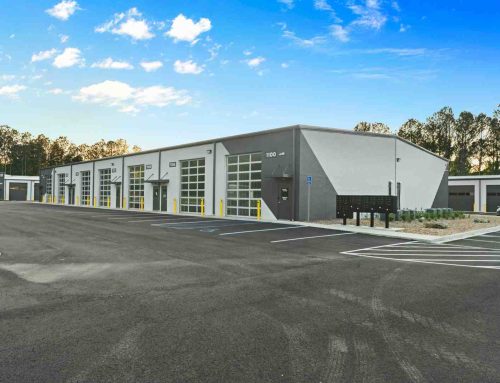
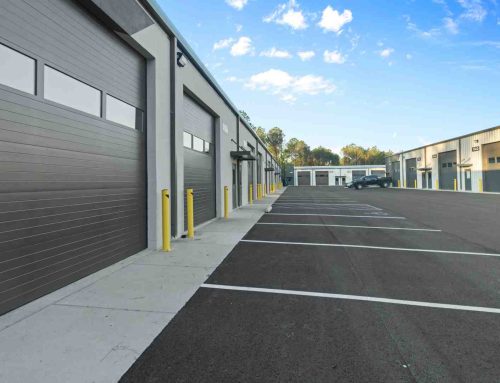
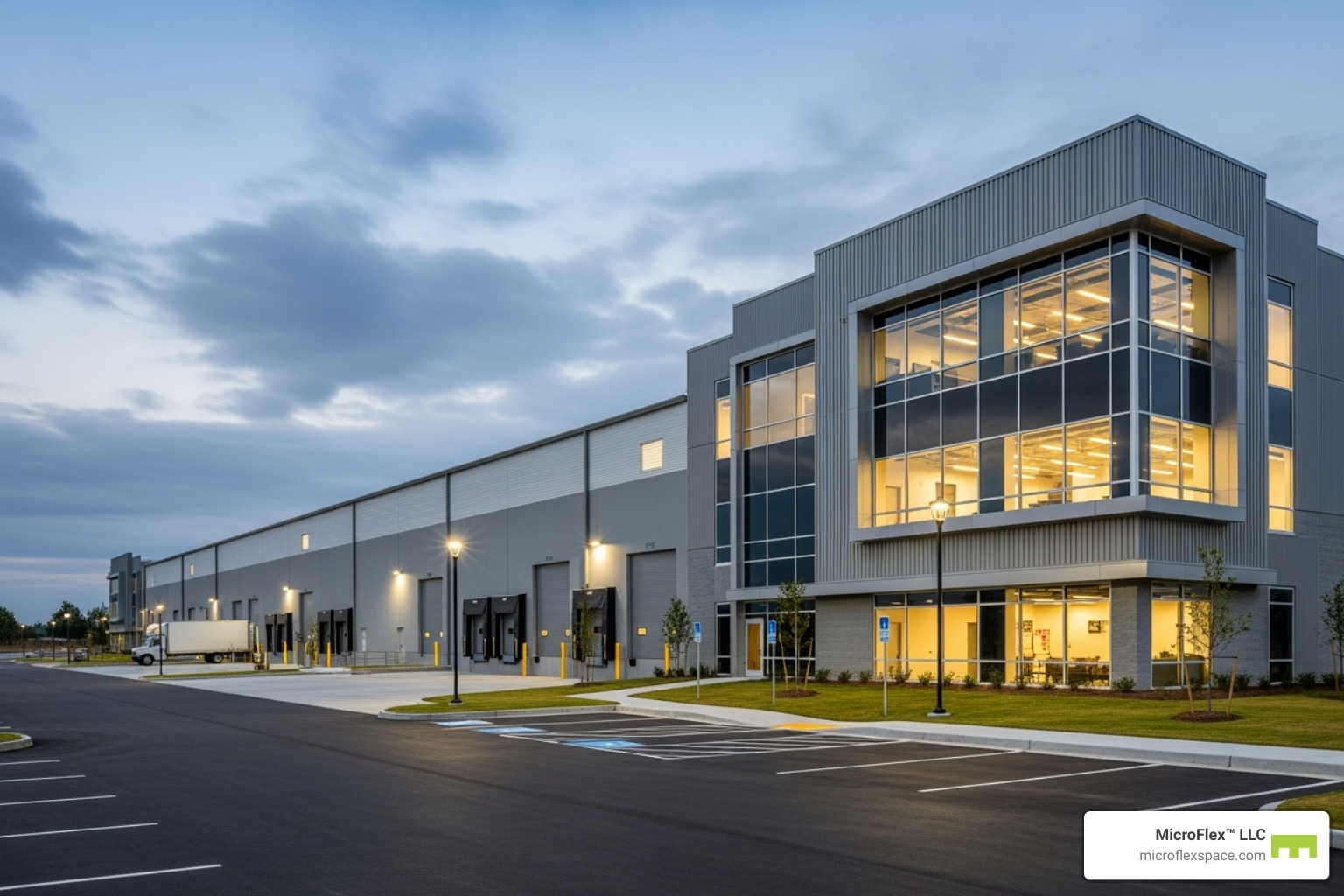
Most flex spaces are housed in single-story buildings designed with adaptability at their core. You’ll typically find high ceilings ranging from 14 to 16 feet – perfect for stacking inventory or accommodating larger equipment. The loading docks and drive-in doors make receiving shipments and moving products a breeze, while the finished office areas provide a professional environment for meetings and daily operations.
What makes these spaces truly special is their customizable layouts. Need more office space this month? No problem. Planning to expand your inventory next quarter? Easy to accommodate. The beauty lies in having the freedom to configure your space exactly how your business operates, rather than forcing your operations to fit a rigid floor plan.
For businesses looking to maximize their operational efficiency, you can learn more about multi-use commercial property and how these spaces can be custom to your specific needs.
How It Differs from Traditional Spaces
The difference between flexible industrial space and traditional commercial properties is like comparing a smartphone to a landline – both make calls, but one offers so much more versatility.
| Feature | Flexible Industrial Space | Traditional Office Space | Traditional Warehouse Space |
|---|---|---|---|
| Lease Terms | Shorter (7 months to 3 years); month-to-month often available | Long (7-10 years); rigid | Long (5-10+ years); rigid |
| Cost | Often more affordable per sq ft; lower markup (~1%); all-inclusive pricing common | Higher per sq ft; significant renovation costs; higher markup (~15%) | Lower per sq ft than office, but less functional for admin/retail |
| Layout | Hybrid (office + warehouse/retail); customizable; adaptable | Primarily office; fixed layout; less adaptable | Primarily open storage; minimal office; not customer-facing |
| Primary Use | Multi-functional (operations, admin, sales, storage) | Administrative, professional services | Storage, distribution, logistics |
Traditional office spaces often come with hefty price tags and rigid long-term commitments that can feel restrictive as your business evolves. You’re typically locked into expensive renovations to make the space work for your needs, plus you’re paying for common areas and amenities you might not even use.
Traditional warehouses, while great for storage, usually lack the professional atmosphere needed for client meetings or administrative work. Try hosting an important customer presentation in a dusty warehouse – not exactly the impression most businesses want to make!
Flexible industrial space strikes the perfect balance. The cost structure is typically much more favorable, with markup factors as low as 1% compared to the 15% you might see with traditional office space. This means flex space can be more affordable while offering significantly more functionality.
The adaptability factor is where flex space really shines. As your business grows or pivots, your space can evolve with you. Whether you need to expand your team, increase inventory, or create a customer showroom, the flexibility is built right in. For businesses seeking this perfect combination of functionality and affordability, exploring warehouse office space for rent options can provide the ideal solution for modern operational needs.
The Key Advantages of Choosing Flexible Industrial Space
When you’re searching for the perfect space for your business, flexible industrial space offers advantages that go far beyond just having a roof over your head. These hybrid properties can transform how you operate, save money, and grow your business in ways that traditional commercial real estate simply can’t match.
Open uping Cost-Effectiveness and Efficiency
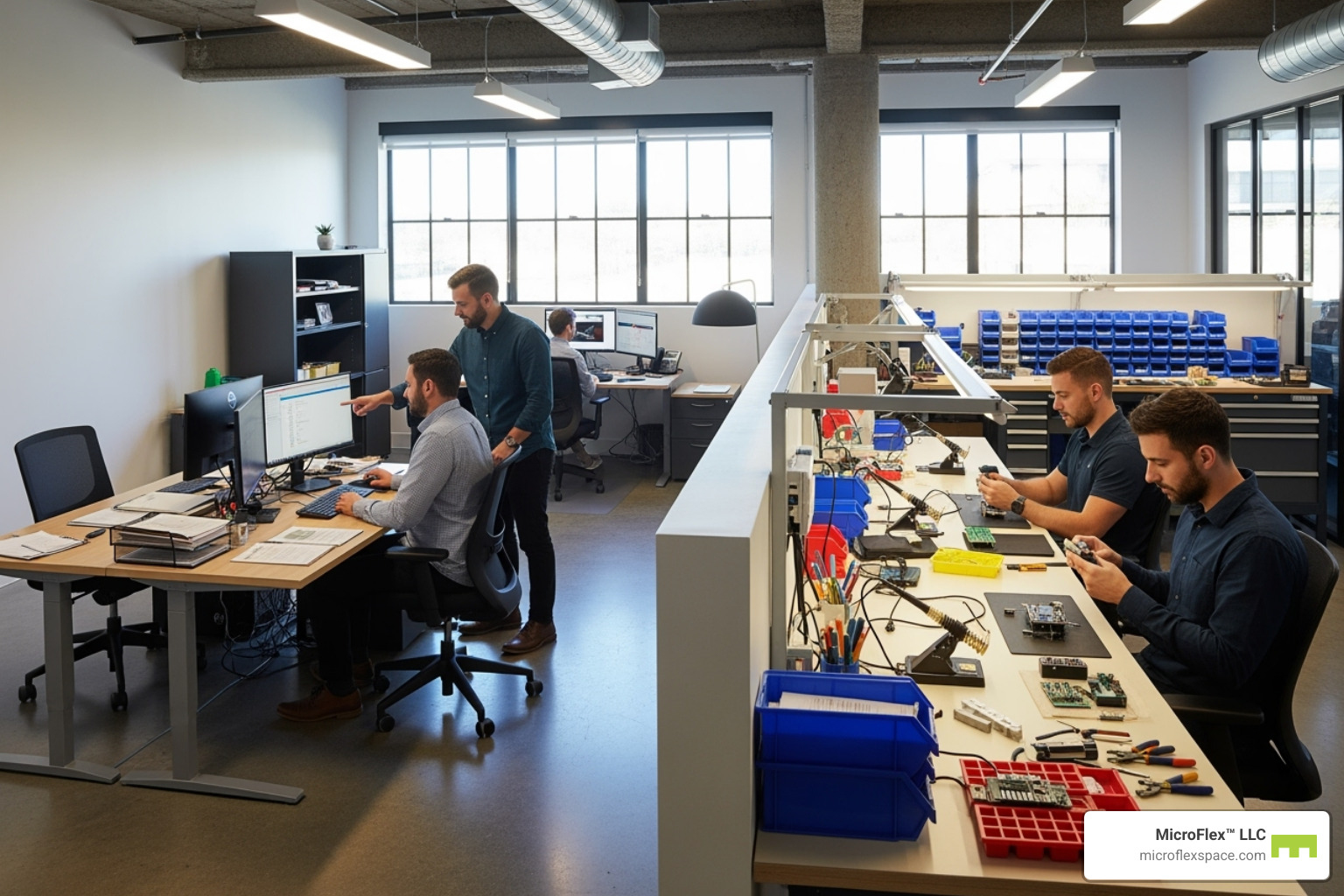
Let’s talk dollars and cents first, because that’s often what keeps business owners up at night. Flexible industrial space delivers impressive cost savings that can make a real difference to your bottom line. Many flex spaces bundle everything into one transparent monthly payment – utilities, Wi-Fi, property taxes, even maintenance. No more juggling five different bills or getting surprised by unexpected fees.
But the real magic happens when you consolidate your operations under one roof. Instead of paying for separate office and warehouse leases across town, you’re running everything from a single location. This means lower startup costs and reduced overhead that frees up capital for what really matters – growing your business.
The efficiency gains are just as impressive. When your sales team can walk twenty feet to check inventory levels, or your fulfillment staff can pop into the office to clarify an order, everything moves faster. Improved communication becomes natural when everyone’s working in the same space. Your logistics get streamlined because there’s no back-and-forth between locations.
Plus, these spaces grow with you. Need more room for holiday inventory? Most flex properties offer scalability that lets you expand without the headache of finding entirely new space. It’s like having a workspace that breathes with your business cycle, which is perfect for business expansion space.
Adaptability for Startups and Growing Businesses
If you’re running a startup or experiencing rapid growth, traditional commercial leases can feel like wearing a suit that’s three sizes too big – or too small. Flexible industrial space solves this problem with lease terms that actually make sense for modern businesses.
Instead of committing to a decade-long lease when you’re not sure what next year looks like, flex spaces typically offer shorter lease terms ranging from month-to-month agreements to 1-3 years. This reduced risk is a game-changer for entrepreneurs who need to stay nimble.
The agility these spaces provide supports businesses through every growth phase. Maybe your e-commerce business suddenly takes off and you need double the fulfillment space. Or perhaps you’re pivoting your business model and need less storage but more office area. With flex space, these changes don’t require breaking leases or scrambling to find new locations.
This adaptability is especially valuable for businesses that experience seasonal fluctuations or are testing new markets. You can support rapid growth without overcommitting, which is exactly what many businesses need when exploring small business office solutions.
Common Features and Amenities
What really sets flexible industrial space apart are the thoughtful features and amenities that come standard. These aren’t just nice-to-haves – they’re practical elements that can save you thousands in equipment costs and setup time.
Most flex spaces include loading docks or grade-level doors that make shipping and receiving a breeze. Those high ceilings we mentioned earlier aren’t just for show – they give you vertical storage options and can accommodate taller equipment or unique workspace configurations.
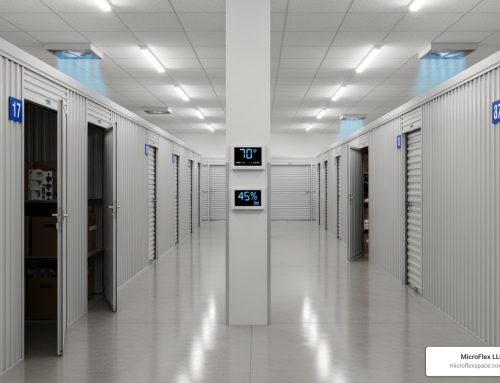
The Wi-Fi and security systems are typically robust and professional-grade, so you don’t have to worry about connectivity or safety. Many facilities even offer shared equipment like forklifts and pallet jacks, which eliminates major upfront equipment purchases.
What many business owners love most are the community aspects. Professional conference rooms are often available for those important client meetings or team presentations. Some locations, like conference rooms Birmingham AL, provide exactly the professional environment you need without requiring a massive office lease.
The combination of practical warehouse features with finished office amenities means you’re getting the best of both worlds. You can meet with clients in a polished conference room in the morning, then walk into your warehouse area to oversee fulfillment in the afternoon – all without leaving the building.
Who Thrives in Flex Space? Ideal Industries and Use Cases
The beauty of flexible industrial space lies in its incredible versatility. We’ve watched businesses from all walks of life find how these adaptable units can transform their operations. From busy e-commerce startups to creative artisans, flex spaces seem to have this magical ability to mold themselves around whatever vision entrepreneurs bring to the table.

E-commerce and Last-Mile Logistics
The online shopping revolution has been a game-changer, and flexible industrial space has become the secret weapon for e-commerce businesses trying to keep up with demand. These spaces are practically designed for the modern world of online retail, where you need to seamlessly blend inventory storage with order fulfillment operations.
Picture this: your team can pick, pack, and ship orders in the warehouse section while your customer service team handles inquiries just steps away in the finished office area. No more running between separate buildings or trying to take professional calls over the sound of forklifts! Many businesses use these spaces as distribution hubs, strategically positioning themselves to serve customers faster and more efficiently.
The numbers tell the story too. Online shopping continues to surge, with more people buying online each year. This growth fuels demand for smart, efficient fulfillment solutions. For businesses just starting out or testing new markets, a micro warehouse can be the perfect way to dip your toes in the water without diving into a massive, expensive facility.
Service, Creative, and R&D Businesses
Here’s where things get really interesting. You might think flexible industrial space is just for businesses moving boxes around, but we’ve seen some truly creative uses that might surprise you. The combination of workshop space, storage, and professional office areas creates opportunities that traditional commercial spaces simply can’t match.
Contractors and remodelers love these spaces because they can store all their equipment and materials while maintaining a clean, professional office for meeting with clients. No more embarrassing clients by having them step over paint cans to reach your desk! Light manufacturing businesses and artisans find the high ceilings and open layouts perfect for their production needs, while the finished office space gives them a place to handle the business side of things.
The creative community has really acceptd these spaces too. Photographers appreciate the natural light and ceiling height for shoots, plus they get a proper office for client consultations and editing work. We’ve seen some amazing creative workspace Birmingham setups that blend artistic vision with practical business needs.
Maker spaces have found a natural home in flex environments, where communities of craftsmen and hobbyists can share tools and workspace while each maintaining their own area. Even research and development labs are finding the benefits of combining their testing and lab space with administrative offices, all within a secure, adaptable environment.
The Rise of Data Centers in Flexible Industrial Space
Now here’s a trend that caught even us by surprise. Data centers are increasingly turning to flexible industrial space to meet their unique needs. With our world generating more data every day, companies need secure, scalable infrastructure that can grow with demand.
These facilities require significant space for servers and equipment, along with the power capacity to keep everything running smoothly. The office areas provide space for technical staff and management, while the warehouse sections can house the massive server farms. The security requirements are intense, but many flex spaces can be adapted to meet these stringent needs.
The growing need for data centers shows no signs of slowing down. As more businesses move to cloud-based services and our daily lives become increasingly digital, the demand for data storage and processing continues to climb. Flex spaces offer these high-tech businesses the scalable infrastructure they need without the massive upfront investment of building from scratch.
Navigating the Flex Space Market: Leasing, Costs, and Investment
So you’re ready to take the plunge into flexible industrial space? That’s exciting! Let’s walk through everything you need to know about actually making it happen – from understanding what you’ll pay to finding your perfect space and even considering whether these properties make good investments.
Understanding Lease Terms and Costs
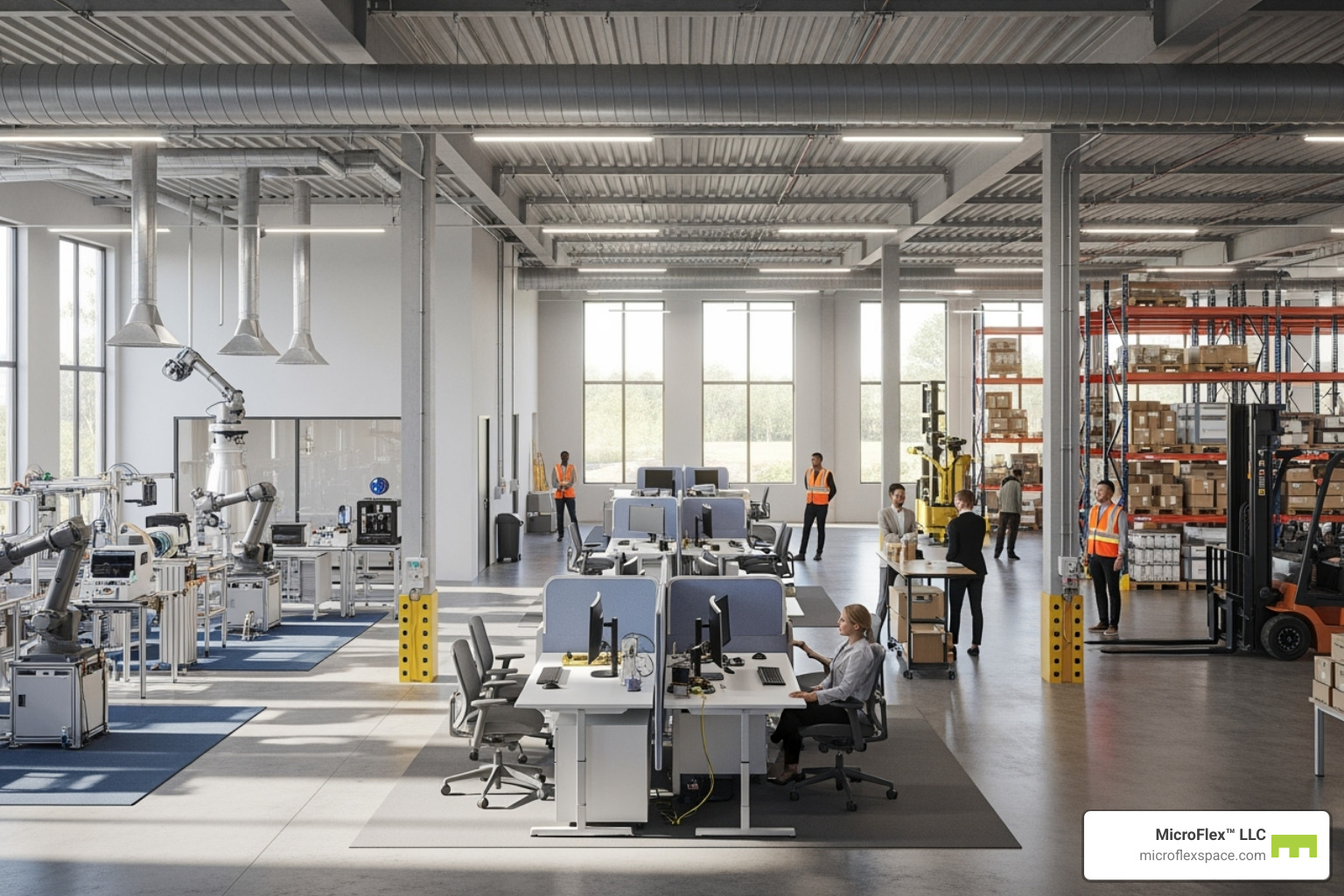
Here’s where flexible industrial space really shines – the lease terms are actually flexible! While traditional commercial leases can feel like you’re signing your life away for 7-10 years, flex spaces typically offer much shorter commitments. We’re talking anywhere from 7 months to 3 years, and many providers even offer month-to-month options. This flexibility is a game-changer for businesses that need to stay nimble, which is why short-term warehouse rental has become so popular.
When it comes to pricing, you’ll encounter two main approaches. NNN (Net Net Net) leases mean you pay a base rent plus your share of property expenses like taxes, insurance, and maintenance. It’s transparent, but it can make budgeting a bit tricky since these costs can fluctuate.
The other option is all-inclusive pricing, which bundles everything – utilities, Wi-Fi, sometimes even cleaning – into one predictable monthly payment. No surprise bills, no juggling multiple vendors. It’s like the difference between paying separately for every feature in your car versus getting an all-inclusive package.
As for actual costs, the average price per square foot varies significantly by location and features. In places like Mobile, Alabama, office space might run around $21.50 per square foot while industrial space averages closer to $8 per square foot. But remember, the real value often comes from those bundled amenities and operational efficiencies that can save you money in ways you might not expect.
Potential Limitations to Consider
Let’s be honest – no space is perfect for every business, and flexible industrial space has a few limitations worth considering. Growth constraints can be real if your business explodes in size. While you can often expand into neighboring units, there’s usually a ceiling to how large you can grow within a single flex park before you need to consider a standalone facility.
Zoning restrictions are another consideration. These spaces are versatile, but they’re not miracle workers – heavy manufacturing or specialized chemical processing might not be permitted. Always double-check what activities are allowed before you sign anything.
Some businesses find the industrial park aesthetic less impressive than a gleaming downtown office tower, especially for client-facing operations. And shared amenities like conference rooms or forklifts, while cost-effective, occasionally mean dealing with scheduling conflicts when everyone wants to use them at the same time.
Privacy can also be a factor if your business requires complete discretion. While individual units offer good privacy, you’re still part of a shared campus environment. These are minor trade-offs, but they’re worth thinking through as you evaluate your options.
How to Find and Secure Your Ideal Space
Finding your perfect flexible industrial space doesn’t have to feel overwhelming. The key is knowing where to look and what questions to ask. Online commercial real estate platforms like LoopNet and CoStar are great starting points – you can filter by size, location, and specific features you need.
Commercial brokers can be incredibly valuable allies. They know the market inside and out, have access to off-market properties, and can negotiate on your behalf. Local networking through chambers of commerce, industry associations, and fellow business owners often uncovers hidden gems that never make it to the big listing sites.
Sometimes the old-fashioned approach works best – driving through industrial areas in your target locations and looking for “For Lease” signs. You might find the perfect space that’s not even officially on the market yet. Social media groups and local business forums can also be goldmines of information and referrals.
Of course, if you’re looking in Central Alabama, we’ve made it even easier. You can find a location for your business directly through our network of properties, eliminating much of the legwork.
Is Flexible Industrial Space a Good Investment?
From an investor’s perspective, flexible industrial space has become one of the most compelling opportunities in commercial real estate. The numbers tell a pretty convincing story – high demand from the e-commerce boom and the need for adaptable workspaces has created consistently low vacancy rates and steady rental income.
These properties often command stronger rental rates than traditional industrial real estate because of their versatility and integrated features. For investors looking to diversify their portfolios, flex properties offer economic resilience that’s hard to beat. During downturns, their flexible terms and multi-purpose nature appeal to a broader range of tenants, from startups to established businesses looking to downsize.
The investment potential of flex properties continues to grow as more businesses recognize the operational advantages. Limited supply combined with consistent demand creates an environment where these properties often deliver excellent returns and long-term appreciation potential.
Whether you’re a business owner looking for the perfect space or an investor seeking your next opportunity, flexible industrial space represents a smart bet on the future of how we work and do business.
Frequently Asked Questions about Flexible Industrial Spaces
We love chatting with business owners about flexible industrial space because there’s so much to find! Over the years, we’ve noticed the same thoughtful questions come up again and again. Let me share the answers to the ones we hear most often.
What’s the main difference between flex space and a regular warehouse?
The magic word here is versatility. A regular warehouse is like a one-trick pony – it’s fantastic for storage and logistics, but that’s pretty much where it stops. Flexible industrial space, on the other hand, is more like a Swiss Army knife for your business.
These hybrid properties cleverly combine warehouse functionality with finished office areas, and sometimes even showroom or light retail space, all within a single unit. Imagine walking from your professional office area, where you just finished a client meeting, straight into your warehouse section to check on inventory. No driving across town, no juggling multiple leases – just seamless operations under one roof.
Is flex space cheaper than a traditional office?
In most cases, absolutely! Flexible industrial space typically offers better value on multiple fronts. First, the per-square-foot cost is generally lower than traditional office space. But the real savings come from the bigger picture.
Think about it this way: instead of paying for separate office and warehouse leases, you’re consolidating everything into one payment. Many flex spaces also bundle utilities, Wi-Fi, and even property taxes into your rent, which eliminates those surprise bills that can pop up with traditional office spaces. Plus, you’ll likely spend less on upfront renovation costs since these spaces are designed to be move-in ready.
The operational efficiency alone can save you serious money. When your team doesn’t have to travel between locations, and your inventory is steps away from your order processing desk, those time savings add up to real dollars.
What kind of lease can I expect with a flex space?
Here’s where flexible industrial space really shines – the lease terms are as adaptable as the spaces themselves! We understand that business needs change, sometimes faster than you’d expect.
While traditional commercial leases often lock you into rigid 7-10 year commitments, flex spaces typically offer much shorter, more business-friendly terms. You might find options ranging from month-to-month agreements (perfect for testing the waters) all the way up to 1-3 year leases.
This flexibility is a game-changer for startups who aren’t sure what next year will bring, or growing businesses that need the freedom to scale up or down without the stress of being trapped in an unsuitable lease. It’s about giving you the space to grow at your own pace, not the pace your lease demands.
Conclusion
Flexible industrial space represents more than just a trend in commercial real estate—it’s a fundamental shift toward smarter, more responsive business operations. These hybrid properties have proven themselves as powerful allies for companies navigating today’s market landscape, offering the perfect blend of affordability, adaptability, and operational efficiency that modern businesses desperately need.
Whether you’re an entrepreneur launching your first e-commerce venture, a contractor needing space for both equipment and client meetings, or a creative professional seeking a versatile workshop environment, flexible industrial space provides the foundation for sustainable growth. The ability to consolidate operations under one roof while maintaining the flexibility to pivot as your business evolves is truly game-changing.
What makes these spaces so compelling isn’t just their hybrid nature—it’s how they empower businesses to scale smartly and respond to market changes with agility. No more being trapped in decade-long leases that no longer fit your needs. No more juggling multiple locations for different functions. Instead, you get a workspace that grows and adapts alongside your ambitions.
For businesses throughout Central Alabama, MicroFlex™ LLC understands these challenges firsthand. We’ve built our entire approach around providing adaptable workspace solutions that truly work for real businesses with real needs. Our locations across Auburn Opelika AL, Birmingham Irondale AL, Huntsville AL, and Birmingham Hoover AL offer the flexible lease terms and transparent pricing that take the stress out of finding the right space.
We believe your workspace should support your dreams, not limit them. That’s why we pride ourselves on creating spaces that genuinely grow with your business, whether you need more storage this month or additional office space next quarter.
Ready to find how the right space can transform your operations? Explore our short-term storage and workspace options today, and let’s find the perfect fit for your business’s unique journey.