


Why Your Business Needs a Flexible Lease Warehouse in Today’s Fast-Paced Market
A flexible lease warehouse is a multi-functional industrial space offering adaptable lease terms—typically month-to-month or short-term contracts—that allows businesses to scale operations up or down without long-term commitment. These spaces combine warehouse, office, and sometimes showroom features under one roof.
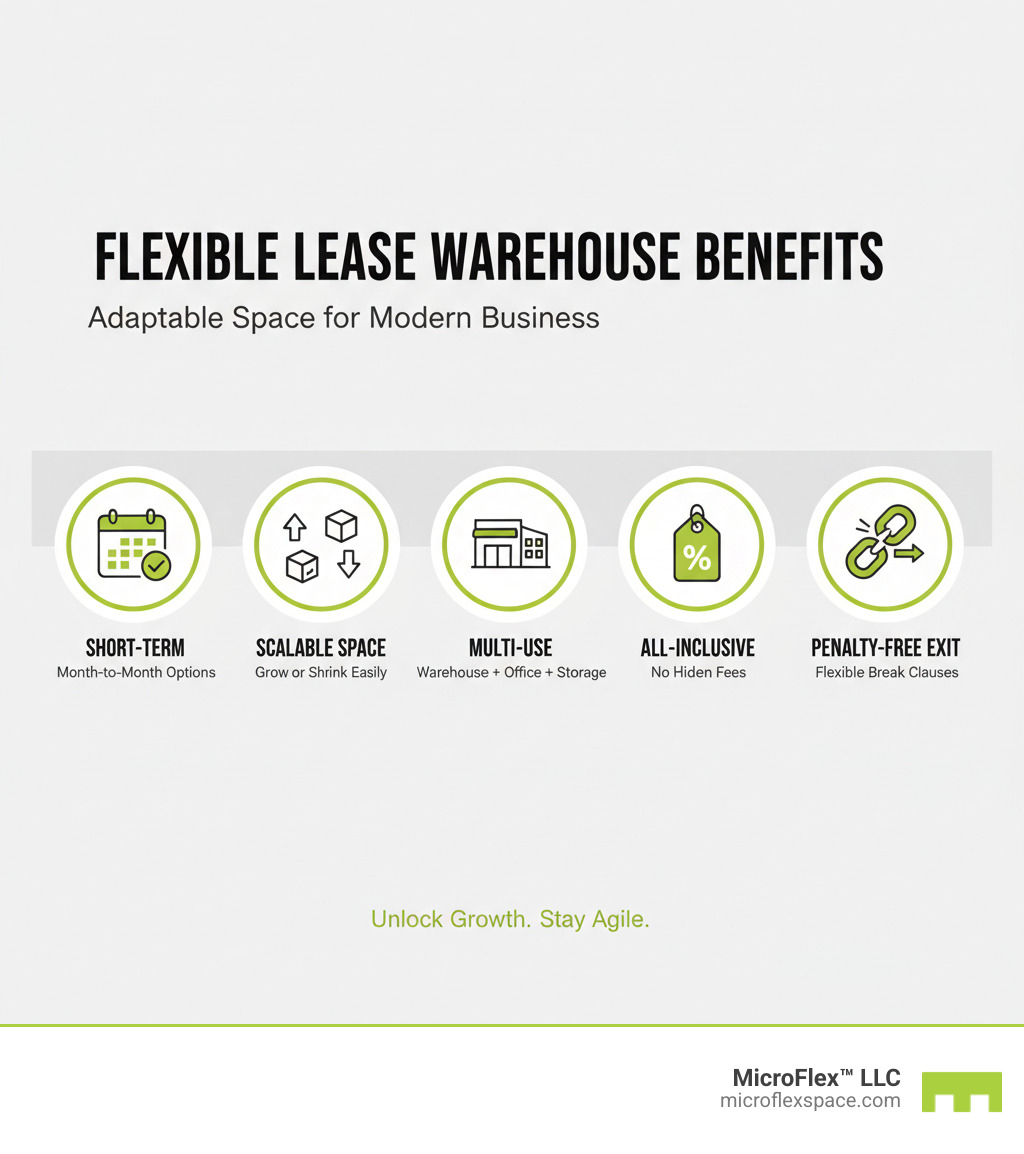
Key Features of Flexible Lease Warehouses:
- Short-term contracts – Month-to-month or 6-month rolling terms instead of 3-10 year leases
- Scalable space – Expand or reduce square footage as your business needs change
- All-inclusive pricing – Bundled utilities, maintenance, and amenities with transparent costs
- Multi-functional design – Combined warehouse, office, storage, and workspace areas
- No penalty exits – Break clauses allowing you to leave without hefty termination fees
Traditional warehouse leases lock businesses into rigid, multi-year commitments that don’t align with modern growth. The demand for flexible industrial space has surged, with startups and SMEs leading the shift toward shorter, more versatile contracts.
I’m Chase Carroll, and with over 12 years in commercial real estate, I’ve focused on developing MicroFlex spaces. My experience has shown me how the right flexible lease warehouse can open up growth for entrepreneurs by moving beyond outdated real estate models.
Flexible lease warehouse word roundup:
What is a Flexible Lease Warehouse and How Does It Compare?
At its core, a flexible lease warehouse is about giving you control. Instead of forcing your business into a rigid box, these spaces adapt to match how you work. Imagine a warehouse that grows with you during busy seasons and shrinks when things slow down, without a decade-long commitment. That’s what a flexible lease warehouse delivers.
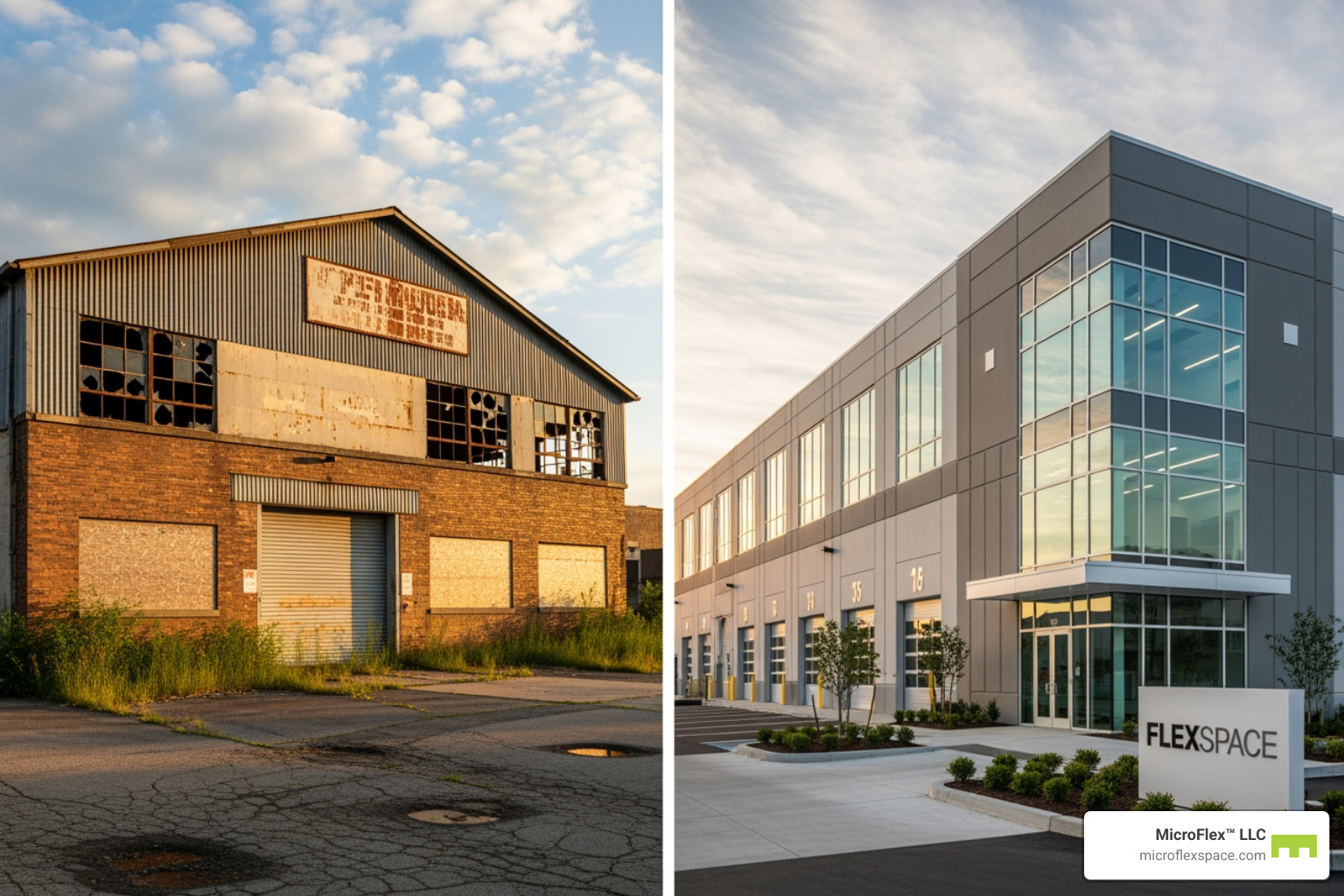
These are modern, dynamic environments built for today’s economy. A flexible lease warehouse typically offers shorter lease commitments—think month-to-month or six-month rolling contracts instead of the traditional 3-10 year term. They’re often multi-functional, blending warehouse storage with office space and sometimes showroom areas. The beauty is in the adaptability, giving you breathing room to test products, manage growth, or steer seasonal demand. For businesses exploring their options, our guide on short-term warehouse lease breaks down what to look for.
The Key Differences from Traditional Leases
Traditional warehouse leases were designed for a different era. They work for massive corporations with predictable needs, but for most businesses, they are too restrictive. The main differences are clear:
Lease duration is the first major distinction. Traditional leases demand commitments of 3-10 years. A flexible lease warehouse offers terms as short as month-to-month, giving you the freedom to adapt.
The cost structure is also different. Traditional leases often have a low base rate followed by hidden costs like CAM fees, property taxes, and unpredictable utility bills. A flexible lease warehouse typically offers transparent, all-inclusive pricing—one predictable monthly fee that bundles utilities, maintenance, and services.
Scalability is where flexible leases truly shine. Traditional leases make it difficult and expensive to change your square footage. A flexible lease warehouse lets you expand or reduce your footprint easily, often within the same facility, without penalties.
When it comes to customization, traditional spaces may require huge upfront costs for permanent build-outs. Flexible spaces offer a cost-effective “blank canvas” approach, allowing you to modify your setup as your business evolves.
Finally, exit clauses in traditional leases are punitive. Flexible leases include break clauses and shorter terms that let you move on without the same financial burden.
Here’s how they stack up side by side:
| Feature | Flexible Lease Warehouse | Traditional Warehouse Lease |
|---|---|---|
| Term Length | Month-to-month, 6-month rolling, short-term | 3-10 years, rigid |
| Cost | All-inclusive, transparent, predictable | Base rate + hidden fees (utilities, CAM, maintenance, etc.) |
| Flexibility | High: Scale up/down, easy exit | Low: Rigid, penalties for changes |
| Scalability | Excellent: Adapt to growth/contraction within terms | Poor: Costly to expand or reduce, long-term commitment |
| Customization | Cost-effective, adaptable layouts, build-to-suit | Expensive, permanent build-outs |
| Exit Options | Break clauses, shorter terms, less penalty | Significant penalties for early termination |
| Use Cases | Startups, e-commerce, seasonal, project-based, SMEs | Large, stable enterprises with predictable long-term needs |
Understanding “Flex Space” and “Cowarehousing”
“Flex space” and “cowarehousing” represent the future of commercial real estate.
Flex space is a hybrid facility combining multiple functions—warehouse storage, office workspace, and sometimes retail or showroom areas. For example, an e-commerce business can have desks for order processing, inventory storage, and fulfillment operations in one cohesive environment. This is exactly what warehouse office space for rent delivers.
Cowarehousing divides large industrial buildings into smaller, self-contained units that share amenities like conference rooms, mail service, loading docks, and even on-site support teams. This gives small businesses access to resources they might not afford independently, creating a collaborative and cost-effective environment.
Both models emphasize adaptability, scalability, and cost-effectiveness, allowing you to focus on your business, not real estate headaches. Our flexible commercial space ultimate guide explores these solutions in more depth.
The Core Benefits and Ideal Candidates for Flexible Warehousing
Why are so many businesses switching to a flexible lease warehouse? In today’s market, agility is key. A flexible lease gives you the freedom to make smart decisions without betting your entire business on a single real estate commitment.

The financial benefits are compelling. You get cost savings through transparent, all-inclusive pricing that eliminates surprise bills. Your budget becomes predictable, allowing you to plan for growth. The real advantage, however, is operational agility. When a major opportunity arises, you can scale up your space within weeks. When the holiday rush ends, you’re not stuck paying for empty square footage. This flexibility translates directly to reduced risk, as you’re never overcommitted or scrambling for space. Businesses in Birmingham and Huntsville are changing their operations with business rental solutions that work with them, not against them.
Which Businesses Thrive with a flexible lease warehouse?
While almost any business can benefit, some are perfect fits:
- E-commerce retailers need to manage wild inventory swings. A flexible warehouse allows them to expand for peak seasons and scale back in quieter months without penalty.
- Startups and growing businesses need professional space without the risk of a long-term lease. A short-term business lease provides credibility and room to grow without a crushing financial commitment.
- Seasonal businesses, like those in holiday decor or events, can save significantly by downsizing during slow months and only paying for the space they use.
- Project-based companies in construction or manufacturing can lease space that matches the duration of their contracts, avoiding long-term commitments for short-term needs.
- Small to medium-sized enterprises (SMEs) across all industries find that combining warehouse and office space improves efficiency. Common use cases include managing inventory overflow, testing new markets, or finding small warehouse storage that can grow with them. For those looking locally, a small warehouse for rent birmingham al option provides this flexibility.
How Flexibility Boosts Your Ability to Scale
Scaling a business is hard enough without real estate working against you. A flexible lease warehouse removes that obstacle.
When market conditions shift, you can respond quickly. A competitor closes, a supply chain is disrupted, or a new client doubles your fulfillment needs—with a flexible lease, these are manageable events, not crises. The ability to scale up or down without penalty is transformative. During peak seasons, you can expand your footprint in Huntsville or Irondale. When things slow down, you contract without financial pain. This matches your overhead to your actual revenue in real time.
For businesses experiencing rapid growth, real estate is no longer a bottleneck. Companies can accept larger orders and hire more staff exactly when needed. Seasonal demand becomes manageable, as you only lease the space you need for your busy months. A flexible lease warehouse shifts the relationship so that your space supports your strategy, not the other way around.
Navigating the Terms and Costs of a Flexible Lease Warehouse
Understanding the money and fine print of a flexible lease warehouse is crucial, but it doesn’t have to be overwhelming. Unlike traditional leases that lock you into fixed costs, flexible arrangements let you align expenses with your actual needs. When business is booming, you can scale up; when things are quiet, you can scale back. This financial agility is invaluable. For a deeper dive, check out our ultimate storage warehouse lease guide. The key is to understand what you’re paying for and what terms matter.
Key Terms to Look for in Your Agreement
When reviewing an agreement, these terms define your experience and costs:
- Lease Length: Look for month-to-month or short-term rolling contracts (e.g., six months). A true month-to-month warehouse rental guide approach means you’re never stuck.
- Break Clauses: This is your safety net. The agreement should clearly state the notice period and any penalties for exiting the lease early. A good flexible lease minimizes these penalties.
- Renewal Options: Ensure you can easily extend your lease. The best arrangements make renewals simple and transparent, without surprise price hikes.
- Rent Structure: Look for “all-inclusive pricing.” This should bundle utilities, maintenance, property taxes (CAM fees), and ideally internet and amenities into one predictable monthly payment.
- Permitted Use: The agreement must explicitly state what activities are allowed in your space (e.g., warehousing, light manufacturing, office work). This prevents future disputes.
- Maintenance Responsibilities: A quality provider typically handles general maintenance and repairs (“frustration-free maintenance”). Clarify who fixes what upfront.
Leveraging Flexible Leases to Optimize Costs
A flexible lease warehouse can fundamentally improve your profitability by changing your cost structure.
Traditional leases often hide costs behind an attractive base rent. Common area maintenance charges, property tax adjustments, and fluctuating utility bills can add up. We’ve seen businesses hit with over $15,000 in surprise maintenance charges over just two years—money that could have fueled growth.
All-inclusive pricing models eliminate this. One fixed monthly payment covers everything, making financial planning possible. Businesses can reduce their operational overhead by up to 25% with this transparent model.
Another advantage is reduced capital expenditure. Many flexible warehouse environments, especially cowarehousing models, provide shared access to equipment like forklifts and pallet jacks. This frees up capital that would otherwise be spent buying and maintaining your own equipment.
For businesses with variable needs, pay-per-use fulfillment services are a game-changer. Instead of maintaining a full-time staff year-round, you pay only for the services you use, precisely matching expenses to revenue.
A flexible lease warehouse transforms real estate from a fixed liability into a dynamic asset. For more strategies on managing expenses, our warehouse rentals guide 2025 offers comprehensive insights.
The Future of Industrial Real Estate: Technology and Trends
The industrial real estate world is changing fast. The rise of the flexible lease warehouse is a fundamental reimagining of how businesses use physical space, driven by the on-demand economy. From Birmingham to Huntsville, businesses are demanding shorter lease terms and greater control. The data shows a significant increase in leasing for adaptable, short-term arrangements, led by startups and e-commerce retailers. If you’re exploring local options, our warehouse space auburn locations offer a glimpse into this new reality.
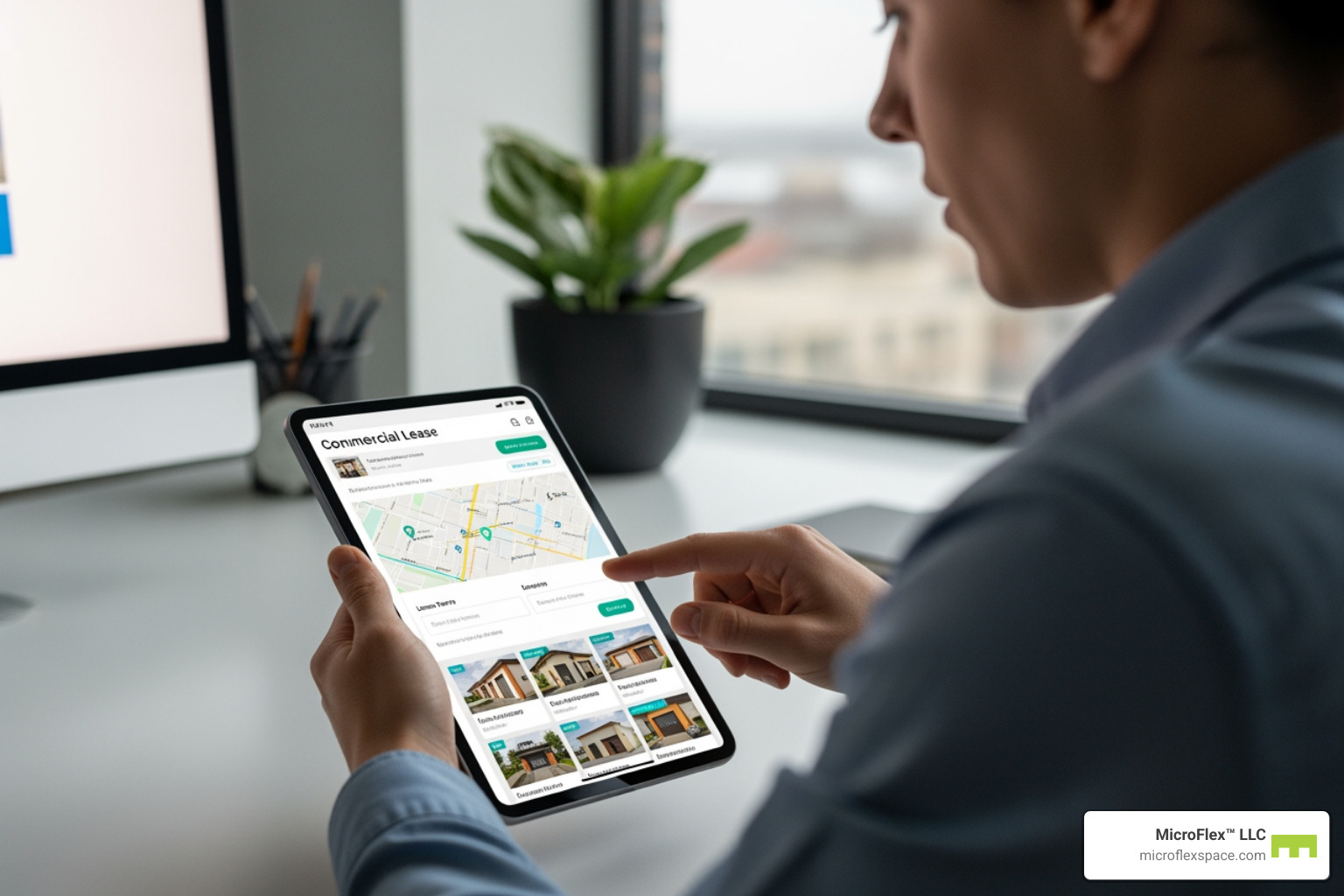
This shift is powered by technology in ways that were impossible a decade ago.
The Role of Technology in Facilitating a flexible lease warehouse
Technology is making flexible warehouses more accessible and manageable:
- Online booking platforms have revolutionized the search process, allowing you to browse, compare, and reserve a flexible lease warehouse from your desk.
- Digital lease management systems replace paperwork with electronic signatures, online payments, and centralized document tracking.
- Smart building features like intelligent climate control, LED lighting, and advanced security are becoming standard, making operations more efficient and secure.
- Automated access systems using smartphone apps or key fobs provide 24/7 access, so you can work on your own schedule.
This connectivity relies on a robust data infrastructure. While not a data center, your warehouse benefits from the same principles of secure, cloud-based management, as explained in the need for data centers. Sophisticated search tools also make it easier to find warehouse storage near me by filtering for specific needs and locations.
Future Trends Shaping the Industry
The evolution of flexible industrial space is accelerating with several key trends:
- Increased customization: Future spaces will offer true build-to-suit flexibility, allowing businesses to configure layouts without the massive capital investment of traditional build-outs.
- Sustainability in design: Energy-efficient systems, sustainable materials, and solar power are becoming standard, reducing operating costs and meeting customer expectations.
- The rise of “cowarehousing”: These community hubs combine warehouse, office, and shared amenities, fostering collaboration and reducing costs for all tenants.
- Hyper-local distribution centers: As same-day delivery becomes standard, businesses are using flexible warehouses as micro-fulfillment centers to reduce last-mile costs.
- Integrated services: Providers are beginning to bundle inventory management, fulfillment support, and logistics coordination into their offerings, creating true operational partnerships.
These trends point toward a more responsive and sustainable industrial real estate market. Whether you’re seeking a traditional commercial warehouse for lease or a flex space, the future promises greater opportunity.
Conclusion: Is a Flexible Warehouse Right for Your Business?
Is a flexible lease warehouse the right move for your business? The old way of locking into a 5- or 10-year lease no longer makes sense for most growing companies.
A flexible lease warehouse is a powerful tool for modern businesses. You gain true flexibility with month-to-month contracts, predictable costs through all-inclusive pricing, the ability to scale with confidence, and more efficient operations by combining functions under one roof. Most importantly, you reduce your risk by avoiding long-term commitments.
Whether you’re an e-commerce retailer, a startup, a seasonal business, or an SME looking to optimize costs, a flexible lease warehouse offers the agility you need to compete in today’s market.
At MicroFlex™ LLC, we’ve built our business around this philosophy. We believe your workspace should empower your growth, not constrain it. That’s why we offer adaptable multi-function spaces across Auburn Opelika, Birmingham Irondale, Huntsville, and Birmingham Hoover—designed for businesses that refuse to be held back.
When you’re not worried about breaking a lease or facing unexpected bills, you can focus on what really matters: growing your business. The question isn’t whether flexible warehousing is right for you, but whether you can afford to stay locked into the old way of doing things.
Take control of your operational needs today. Your business deserves a space that works as hard as you do.
Find your flexible industrial space today and find what’s possible when your workspace finally works for you.