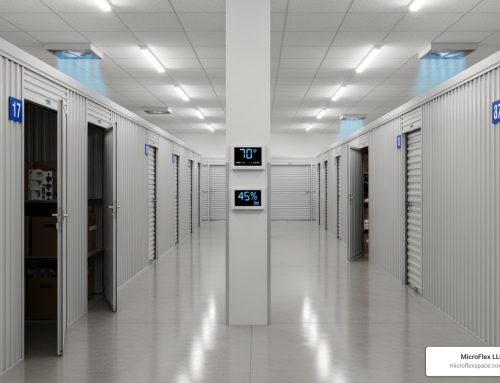



Why Managed Office Spaces Are Reshaping How Businesses Work
Managed office spaces are fully customized workspaces where a third-party provider handles everything from finding the location to daily operations, delivering a turnkey solution in 6-12 weeks with flexible lease terms and all-inclusive pricing.
Quick Overview:
• What they are: Bespoke office spaces managed by a single provider
• Timeline: Move-in ready in 6-12 weeks vs. 6+ months for traditional leases
• Cost structure: One fixed monthly fee covers rent, utilities, maintenance, and services
• Flexibility: Lease terms typically 1-3 years vs. 5-10 years traditional
• Customization: Full branding and layout control vs. limited options in coworking
The office isn’t dead—it’s evolving. 86% of business leaders believe the office is critical for profitability and culture, according to recent workplace surveys. As hybrid work becomes the norm, companies need spaces that adapt quickly without the headaches of traditional real estate.
Managed offices bridge the gap between rigid long-term leases and basic coworking spaces. They offer the control and privacy of a traditional office with the speed and flexibility of modern workspace solutions.
I’m Sam Zoldock, a commercial real estate investment professional who has specialized in Alabama markets since founding OWN Alabama in 2018. Through my work with office, medical, and industrial properties, I’ve seen how managed office spaces are changing how businesses approach their real estate needs while reducing both risk and capital requirements.
Similar topics to managed office spaces:
– home office solutions for small spaces
– office space for rent
Why the Office Still Matters
Despite the remote work revolution, the physical office remains crucial for business success. That 86% statistic isn’t just a number—it reflects what we’ve observed across our Alabama markets. Companies that maintain well-designed office spaces report stronger team cohesion, better client relationships, and more effective collaboration.
The post-pandemic shift hasn’t eliminated the need for offices; it’s changed how we use them. Teams now need spaces that support both focused individual work and dynamic group collaboration. Managed office spaces excel at providing this flexibility because they’re designed from the ground up with hybrid work patterns in mind.
We’ve seen businesses struggle with the all-or-nothing choice between expensive long-term leases and impersonal coworking spaces. The companies that thrive are those that find the sweet spot—professional, branded environments that can evolve as their teams grow.
What Are Managed Office Spaces?
Managed office spaces are like having a personal assistant for your entire office setup. Instead of spending months hunting for locations, negotiating leases, and coordinating contractors, you work with one provider who handles everything from start to finish.
Here’s the beautiful simplicity of it: You tell them what you need—maybe 5,000 square feet for your growing tech team, or a sleek showroom space for client meetings. They find the perfect location, design it to match your brand, and deliver the keys to your fully operational office in just 6-12 weeks. No juggling multiple vendors, no surprise construction delays, no headaches.
The financial side is just as straightforward. Remember the days of tracking separate bills for rent, electricity, internet, cleaning, and maintenance? Managed office spaces roll everything into one single invoice. Your monthly fee covers the space, utilities, upkeep, and ongoing support. It’s like having an all-inclusive resort, but for your business.
What makes this approach special is the bespoke fit-out. This isn’t about squeezing your team into someone else’s idea of an office. Need soundproof rooms for confidential client calls? You got it. Want your company colors throughout the space? Done. Require specialized lighting for your design work? No problem.
The cost certainty alone makes many business owners sleep better at night. No more surprise repair bills or utility spikes—you know exactly what you’re paying each month. Scientific research on flexible work’s ROI shows that this kind of predictable, customized workspace significantly boosts both productivity and employee happiness.
Managed Office Spaces vs “Plug-and-Play” Coworking
Think of coworking spaces as the coffee shop of the office world—great for grabbing a quick workspace, but not ideal when you need privacy and control. Managed office spaces are more like having your own home, where you set the rules and design the environment.
The privacy difference becomes crystal clear during your first confidential client meeting. In a coworking space, you’re hoping the freelancer at the next table isn’t listening to your quarterly projections. In a managed office, those conversations happen behind your own branded doors.
Branding freedom tells the whole story. Coworking spaces might let you put a small logo on your desk, but managed offices let you create an environment that screams “this is us.” Your reception area, your colors, your vibe. When clients walk in, they’re experiencing your company culture, not someone else’s trendy industrial aesthetic.
The sweet spot for managed office spaces typically starts around 50+ employees, though smaller teams with specific privacy needs often make the jump earlier. If you’re handling sensitive information, meeting with high-value clients, or simply want your team to feel like they belong somewhere uniquely yours, the investment makes perfect sense.
Managed Office Spaces for Enterprises
Fortune 500 companies have finded that managed office spaces are like having a Swiss Army knife for real estate strategy. Need to test a new market? Set up a managed office in three months instead of spending two years on a traditional lease negotiation.
The multi-city network advantage is game-changing for distributed teams. Imagine your sales team having professional, branded spaces in Birmingham, Atlanta, and Nashville—all with the same look, feel, and functionality. Your people can work seamlessly across locations while maintaining that consistent corporate identity.
Corporate governance requirements often favor this approach too. Traditional leases mean lengthy approval processes, capital allocation committees, and long-term balance sheet commitments. Managed offices operate as operational expenses with shorter approval cycles, which means faster decisions and quicker market responses.
For enterprise clients, it’s about agility without sacrificing professionalism. You get the flexibility to scale up or down based on market conditions, while maintaining the polished environment that clients and employees expect from an established company.
Managed vs. Serviced vs. Traditional Leases
Choosing the right workspace model can feel overwhelming, especially when each option seems to have trade-offs. Let me break down the three main approaches in plain terms, so you can see why managed office spaces have become such a popular middle ground.
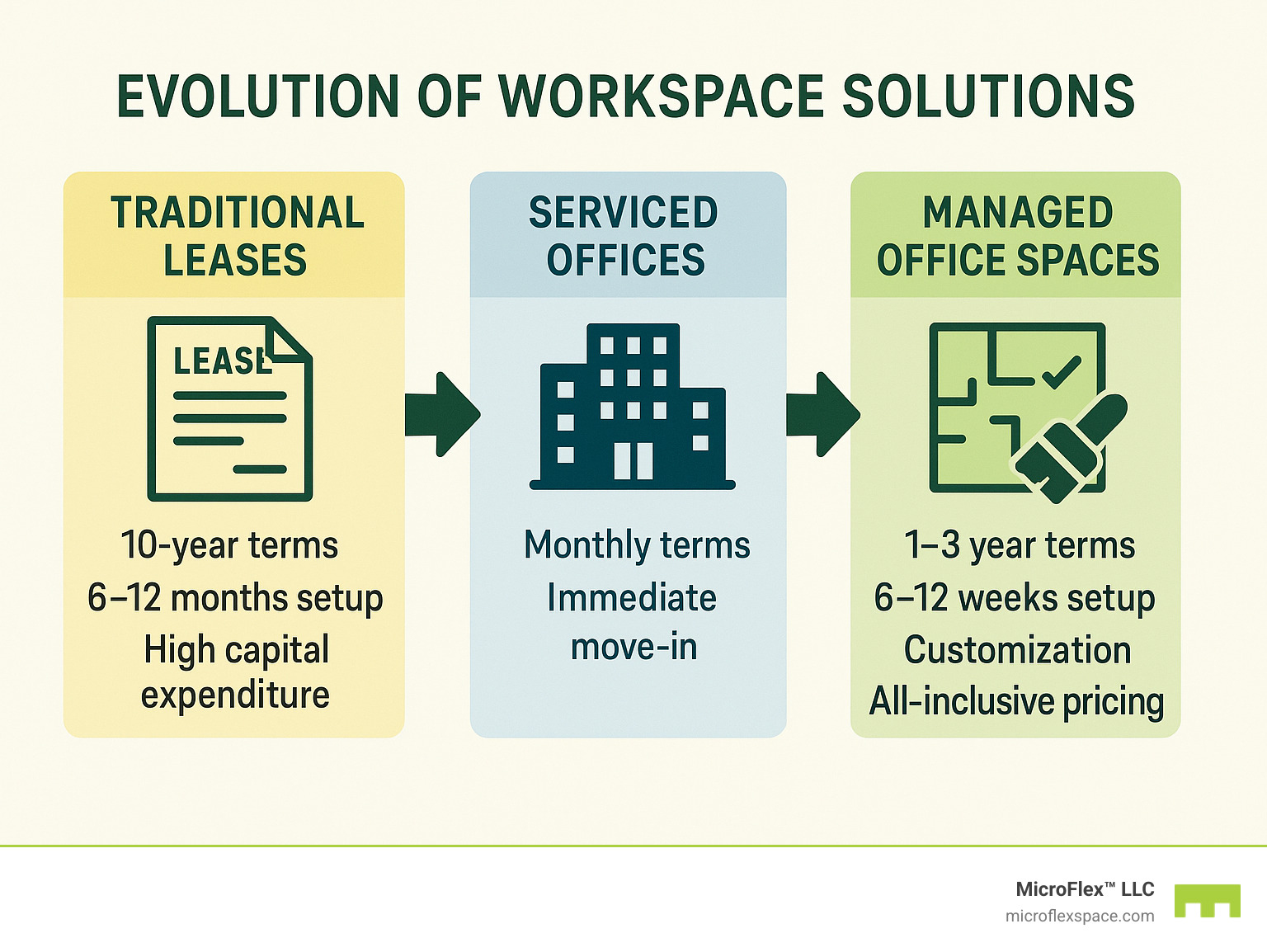
Traditional leases are the old-school approach. You sign a long-term contract (usually 5-10 years), handle your own build-out, and manage everything from the coffee machine to the air conditioning. The upside? You get maximum control and potentially lower costs if you stay put for years. The downside? You’ll need 6-12 months to get moved in, plus a hefty upfront investment for construction and furniture.
Serviced offices swing to the opposite extreme. Walk in today, start working tomorrow. Everything’s included, but you’re essentially renting a desk in someone else’s space. Great for freelancers or tiny teams, but the per-person pricing gets expensive fast, and good luck hanging your company logo in the lobby.
Managed office spaces land right in the sweet spot. You get a fully customized space that screams your brand, but without the headaches of managing contractors or negotiating with utility companies. The setup takes 6-12 weeks instead of months, and you’re looking at moderate capital requirements rather than massive upfront costs.
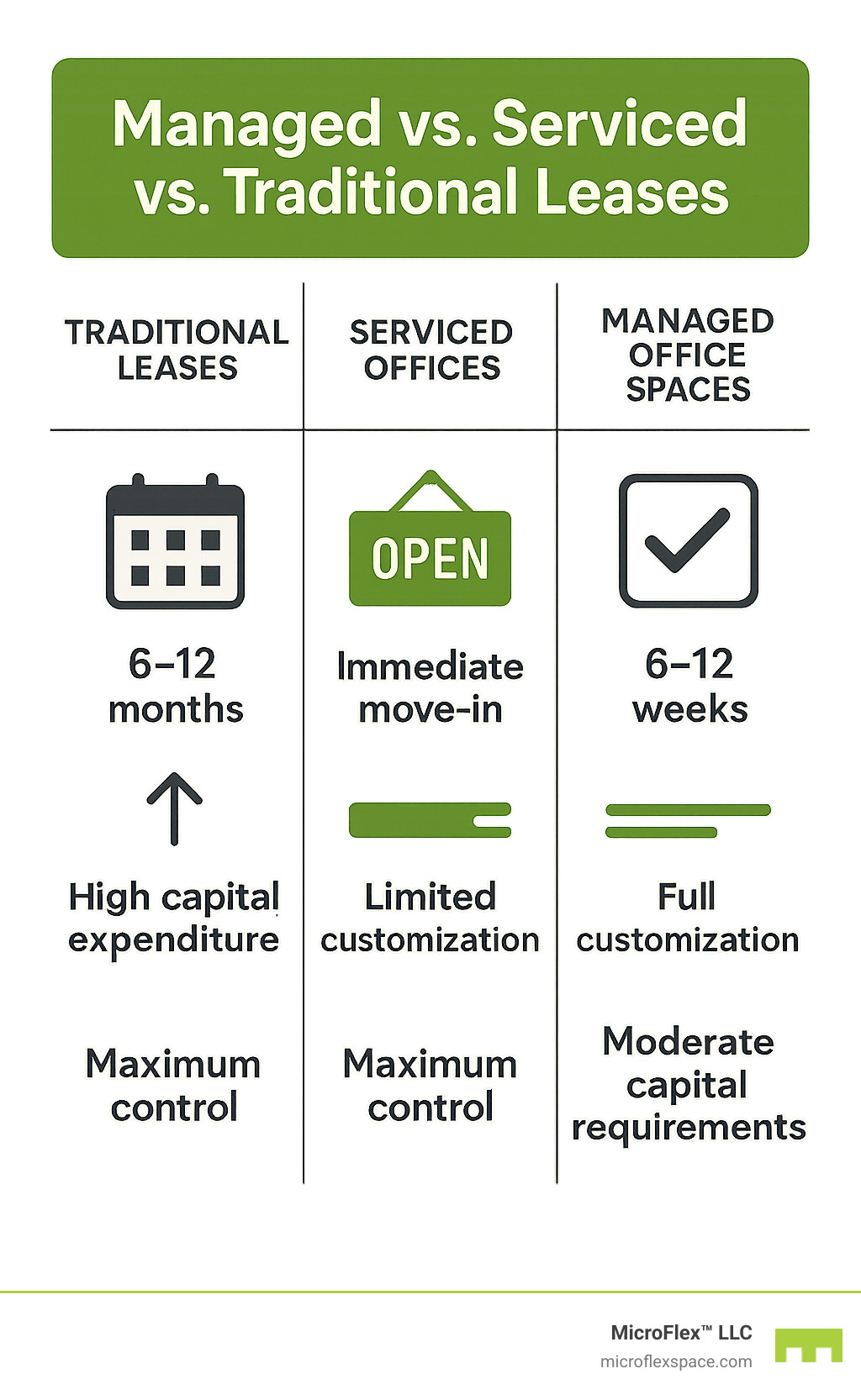
Think of it this way: traditional leases are like buying a house, serviced offices are like staying in a hotel, and managed office spaces are like having a custom apartment with a really good property management company.
Key Cost Drivers in Managed Office Spaces
Here’s what I love about managed office spaces from a financial planning perspective—no surprise bills showing up in your mailbox. Time your office AC died in July and you got hit with a $3,000 repair bill? Yeah, that doesn’t happen here.
The beauty lies in that single monthly fee that covers everything. We’re talking rent, utilities, cleaning, maintenance, security, and usually some nice perks like coffee service or reception support. It’s like having an all-inclusive resort, but for your business.
Location drives the biggest cost differences. A managed office in downtown Birmingham will cost more than one in the suburbs—that’s just real estate economics. But within any given area, your main cost factors are space size and customization level. Want a basic professional setup? Lower cost. Need specialized lighting for your design team or soundproof rooms for confidential calls? That’ll bump up the price.
The magic number for most businesses is around 3,000 square feet. That’s typically where the all-inclusive managed office rate starts competing favorably with the total cost of a traditional lease plus all those separate service contracts. Plus, you avoid those sneaky extras that traditional leases love to spring on you—like when the building decides to “improve” the lobby and passes the cost to tenants.
Flexibility & Risk Allocation
Let’s talk about something that keeps business owners up at night: what happens when things go wrong? In a traditional lease, you’re on the hook for everything. Roof leaks? Your problem. HVAC system decides to retire? Hope you’ve got cash sitting around.
Managed office spaces flip this script entirely. The provider takes on all those operational headaches, so you can focus on actually running your business instead of becoming an amateur facilities manager. It’s like having a really competent business partner who handles all the stuff you don’t want to deal with.
The exit terms alone make managed offices worth considering. Traditional leases often trap you with personal guarantees and complicated subletting rules. Try explaining to your landlord that your business model changed and you need out of that 7-year lease—it’s not a fun conversation.
With managed office spaces, you get much clearer termination procedures and the ability to scale your team up or down without being stuck with empty desks or cramped conditions. Growing from 20 to 50 employees? Most managed office agreements include expansion options. Need to downsize during tough times? There are usually reasonable ways to adjust your footprint.
This flexibility proves invaluable in today’s business environment, where companies need to pivot quickly. You’re not locked into yesterday’s space decisions when tomorrow’s opportunities come knocking.
Key Features & Amenities of a Managed Office
The magic of managed office spaces lies in how they bundle professional amenities that would cost a fortune to implement on your own. Think of it as getting the executive suite experience without the executive suite headaches or price tag.
Private suites form the backbone of any quality managed office. While coworking spaces leave you overhearing everyone’s phone calls (and them overhearing yours), managed offices give you the confidentiality your business actually needs. Whether you’re discussing sensitive client matters or just need to focus without distractions, having your own space makes all the difference.
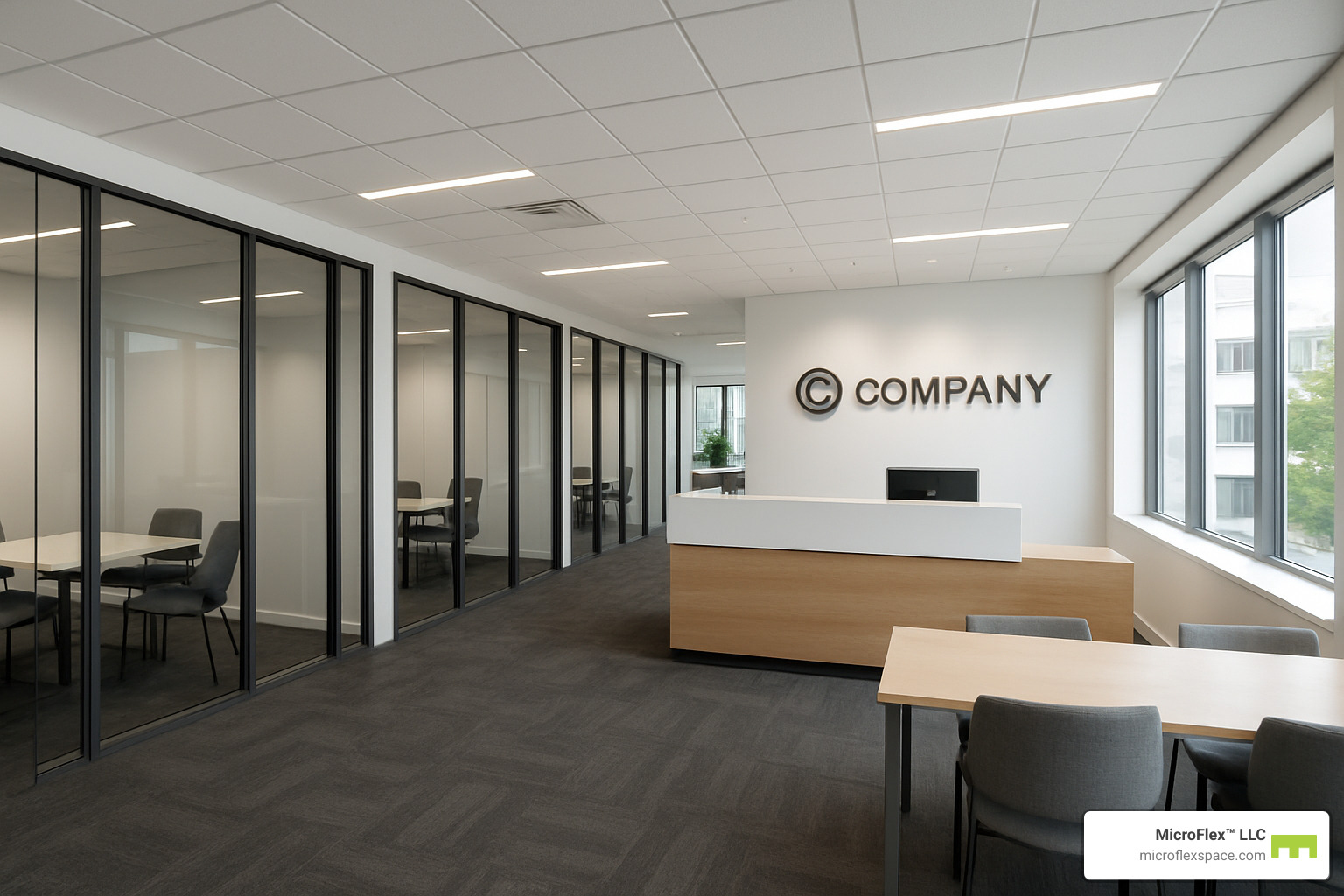
Your branded reception area becomes your company’s first impression. Instead of directing clients to “the third desk by the window in the shared space,” they walk into an area that screams your brand. Your logo on the wall, your colors in the design, your vibe in every detail. It’s like having a custom storefront for your business identity.
The enterprise-grade IT infrastructure alone justifies the investment for most businesses. High-speed internet that actually works during video calls, secure networks that protect your data, and professional telecommunications that don’t cut out mid-sentence. No more playing IT troubleshooter when you should be running your business.
Hospitality staff handle all those little tasks that eat up your day. Reception duties, package management, basic maintenance requests, and general facility support all happen without you lifting a finger. It’s like having a dedicated facilities team without the payroll complexity.
Modern sustainable fit-out options help you meet environmental goals while often reducing energy costs. LED lighting, eco-friendly materials, and energy-efficient systems aren’t just good for the planet—they’re good for your bottom line too.
More info about Dynamic Workplace Solutions shows how these features work together to create comprehensive workspace solutions.
Tech & Infrastructure Inside Managed Office Spaces
The technology backbone of managed office spaces delivers enterprise-level capabilities that most businesses couldn’t afford or manage independently. It’s like getting the IT department of a Fortune 500 company without hiring a single tech person.
Secure Wi-Fi networks include separate guest and business access, so your data stays protected while clients can still check their email. Many providers include ongoing cybersecurity monitoring and network maintenance, which means fewer “the internet is down” emergencies.
Meeting-room AV systems eliminate those awkward “can everyone hear me?” moments. Professional video conferencing, wireless presentation capabilities, and crystal-clear audio systems make client meetings and team collaboration actually productive. Plus, when something breaks, fixing it is someone else’s job.
Space-management software streamlines daily operations through real-time room booking, space utilization tracking, and resource coordination. Some systems even integrate with your corporate calendar and provide insights into how your team actually uses the space.
Wellness & Community Perks
Today’s managed office spaces understand that happy employees are productive employees. Natural light optimization keeps your team energized, ergonomic furniture prevents the afternoon slump, and proper air quality management means fewer sick days and clearer thinking.
Community events and networking opportunities add unexpected value beyond the physical space. Professional development sessions, industry meetups, and social events help growing companies build valuable business relationships. It’s networking without the awkward hotel conference room atmosphere.
Concierge services handle the small stuff that somehow takes forever. Maintenance coordination, delivery management, and general facility support free up your team to focus on what actually makes money. Because nobody started their business to become an expert in office management.
Pros and Cons: Is a Managed Office Right for You?
Choosing managed office spaces feels a bit like picking the perfect pair of shoes—what works brilliantly for one person might pinch uncomfortably for another. The key is understanding whether the benefits align with your business needs and whether you can live comfortably with the trade-offs.
The low capital outlay often catches business owners’ attention first, and for good reason. Traditional office setups can drain tens of thousands from your bank account before you even open the doors. Between furniture, technology systems, security installations, and all those little details you never thought about, the costs add up fast. With managed offices, all of that gets rolled into your monthly payment, leaving your cash available for the things that actually grow your business.
Speed to market can make or break opportunities. I’ve watched companies lose clients because they couldn’t meet in a professional setting, and I’ve seen others miss expansion opportunities while waiting months for traditional lease approvals. When managed office spaces can have you operational in 6-12 weeks instead of 6-12 months, that time savings often translates directly to revenue.
The scalability aspect solves a problem that keeps many business owners awake at night. What if we grow faster than expected? What if we need to downsize? Traditional leases lock you into decisions made months ago, but managed offices typically build in flexibility for these very real business scenarios.
Privacy and control give you the best of both worlds—more flexibility than traditional leases, but none of the goldfish-bowl feeling of shared coworking spaces. Your team can have confidential conversations without wondering who’s listening, and clients see your brand, not someone else’s aesthetic choices.
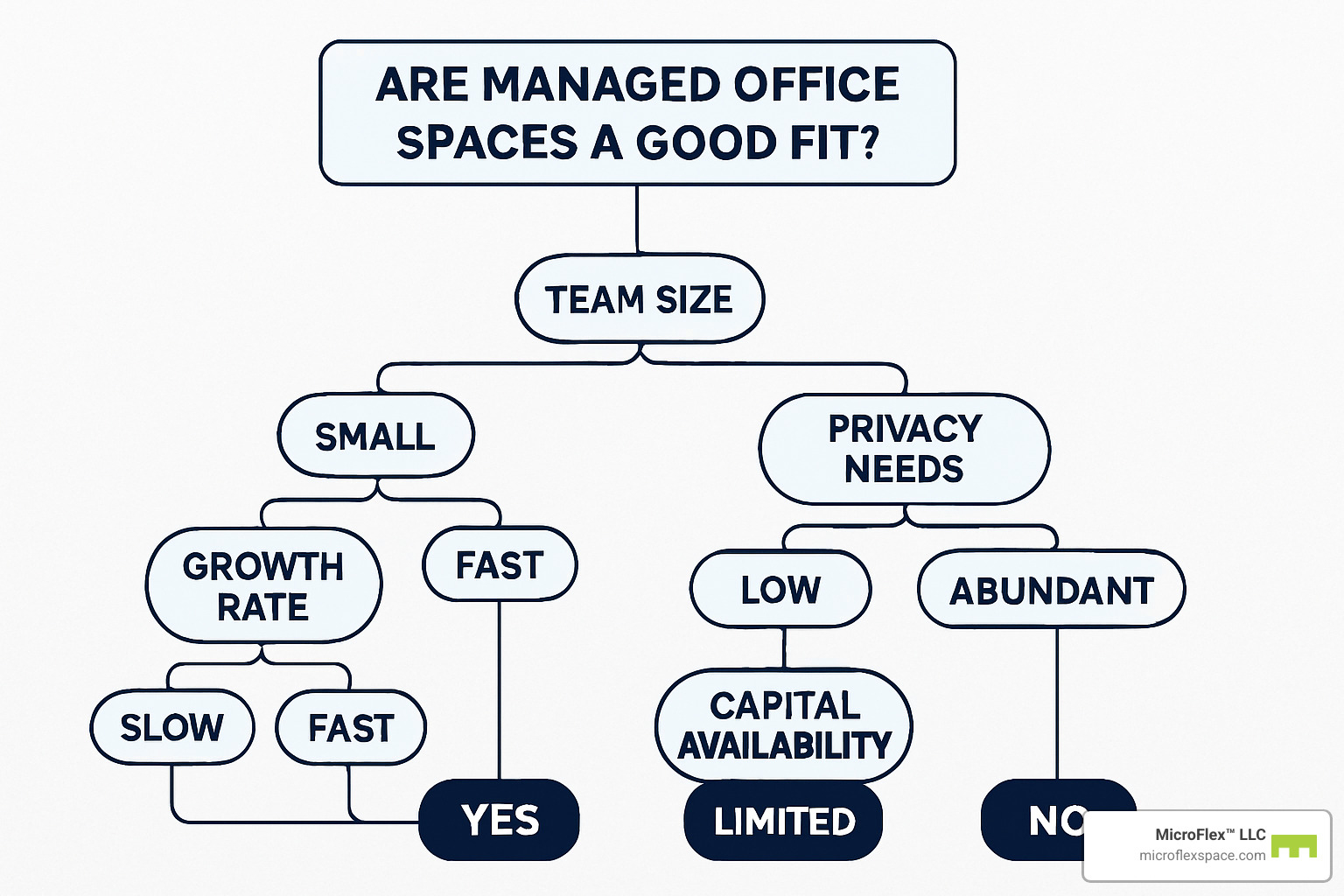
But let’s be honest about the downsides. That 6-12 week setup period still requires patience and planning. If you need space tomorrow, managed office spaces won’t solve your immediate problem. You’ll need to think ahead and possibly arrange temporary solutions while your custom space comes together.
Minimum term commitments typically run 18 months to 3 years. While that’s more flexible than traditional commercial leases, it’s still a significant commitment. If your business model thrives on maximum flexibility or you’re genuinely unsure about your space needs, this might feel restrictive.
Provider dependence means trusting another company with a crucial part of your operations. Most managed office providers maintain excellent standards, but you’re still relying on their continued performance, financial stability, and business decisions. Some business owners prefer the control that comes with handling everything directly.
Advantages for Start-Ups & SMEs
Start-ups and smaller businesses often find managed office spaces feel like they were designed specifically for their challenges. Cash flow remains king when you’re growing, and the operational expense model makes much more sense than dropping huge chunks of capital on office setup.
Flexible growth becomes especially valuable when your team size feels like a moving target. One month you’re five people, three months later you’re twelve, and who knows what next year brings? Managed offices typically accommodate these changes without forcing you into impossible choices between too much space or too little.
The hybrid work hub concept works beautifully for modern teams. Your people might work from home most days, but when you need to bring everyone together, meet with clients, or just escape the home office distractions, you have a professional space that actually represents your company well.
Professional credibility matters more than many business owners want to admit. When you’re competing against established companies, that impressive office space can level the playing field. Clients take you more seriously when they walk into a well-designed, branded environment instead of meeting at coffee shops or kitchen tables.
Drawbacks to Consider in Managed Office Spaces
The customization wait can feel frustrating when you’re eager to get moving. While 6-12 weeks beats traditional timelines, it still means planning ahead and potentially juggling temporary arrangements. Some businesses find this planning requirement more stressful than helpful.
Decision burden increases significantly compared to plug-and-play options. Managed office spaces require your input on everything from wall colors to technology specifications. If you prefer walking into a finished space and focusing entirely on your business, all these choices might feel overwhelming.
Provider dependence creates a relationship you need to manage carefully. Your office operations depend on their continued success and service quality. While most providers maintain high standards, any changes in their business could potentially impact your day-to-day operations.
Cost comparisons can get complicated quickly. The all-inclusive pricing provides convenience, but businesses with strong vendor relationships or specific cost management strategies might achieve lower total expenses through traditional arrangements. The key is understanding your total cost picture, not just the monthly payment.
How to Choose & Move Into a Managed Office
Finding the perfect managed office space doesn’t have to feel overwhelming. Think of it like finding a new home for your business—you want a place that fits your team’s personality, supports your work style, and grows with your ambitions.
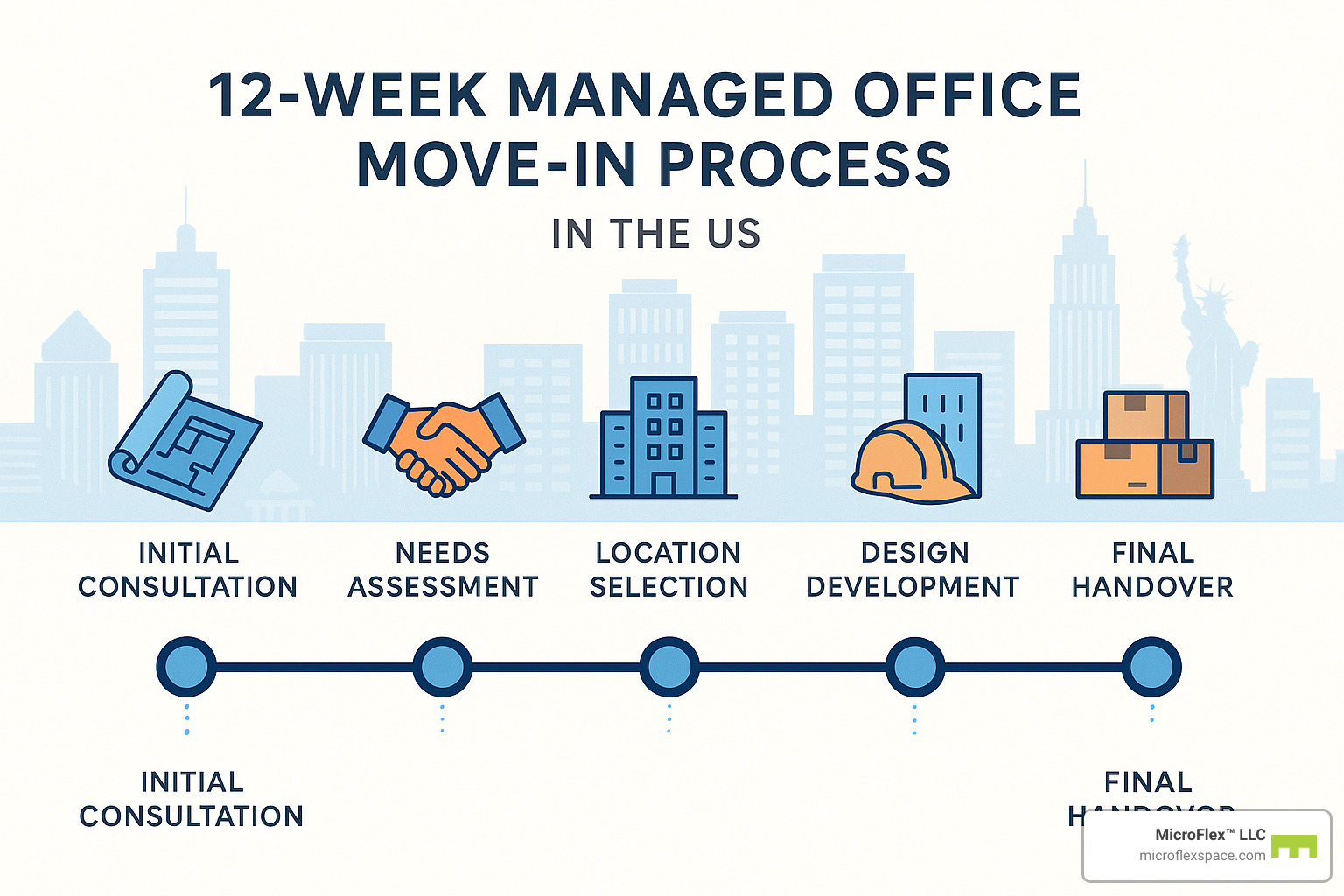
The journey from “we need a new office” to “welcome to your new workspace” typically unfolds over 12-16 weeks total. The first 4-8 weeks involve selection and planning, followed by 6-12 weeks of customization and construction. Yes, it requires patience, but the payoff is a space that truly works for your team.
Start with honest self-reflection about your business needs. How many people work in your office daily versus occasionally? Do you host client meetings that require impressive conference rooms? Does your team collaborate best in open spaces or need quiet, private areas? These questions shape everything that follows.
Location matters more than you might think. Your Birmingham-based team might love the energy of downtown, but if most clients drive in from suburban areas, easy parking could trump urban amenities. Consider where your people live, where your clients come from, and how location impacts your company’s daily rhythm.
Provider selection deserves careful attention because you’re choosing a long-term partner, not just a landlord. Look for companies with solid track records, happy current tenants, and financial stability. Ask to tour their existing spaces and talk with other businesses using their services. A provider’s response to problems matters as much as their ability to prevent them.
The design process becomes a collaboration between your vision and their expertise. Professional space planners help translate your needs into functional layouts, but the best results come when you actively participate. Share how your team actually works, not just how you think they should work.
Contract negotiations in managed office spaces tend to be more straightforward than traditional leases, but key terms still matter. Pay attention to expansion options, termination procedures, and what happens if your business needs change dramatically. Good providers want long-term relationships and will work with you on reasonable flexibility.
The handover process separates great providers from merely good ones. Expect coordination of your move-in logistics, thorough testing of all systems, and support during those crucial first weeks. Moving offices disrupts everyone’s routine—professional support makes the transition smoother for your entire team.
More info about Flexible Leasing Spaces provides additional insights into lease structure options and negotiation strategies.
Step-by-Step Move-In Checklist
The final weeks before moving into your managed office space require careful orchestration. Think of it as preparing for a big event—success comes from handling details before they become urgent problems.
Finalize your specifications 8-10 weeks before move-in. This includes everything from desk heights to conference room technology. Changes after this point usually mean delays and extra costs. It’s better to spend extra time getting details right than rushing through decisions you’ll regret later.
Technology testing deserves its own timeline starting 2-3 weeks before your team arrives. Internet speeds that look good on paper might not handle your actual usage patterns. Video conferencing systems need testing with real calls, not just equipment checks. Phone systems require programming and testing with your existing numbers.
Your brand installation transforms generic space into your company’s home. Coordinate signage, logo placement, and color schemes with your marketing team. These details create the professional impression that justifies choosing managed office spaces over basic alternatives.
Plan an orientation day for your team once everything is ready. Introduce building staff, explain new procedures, and address questions while everyone’s attention is focused. People adapt to change better when they understand how things work and who to contact for help.
Budgeting & Pricing Structures in Managed Office Spaces
Understanding how managed office spaces price their services helps you budget accurately and avoid surprises. Most providers aim for transparency, but pricing structures can vary significantly between companies.
Per-desk pricing works well for smaller teams with predictable headcounts. You pay a monthly rate for each workstation, typically including furniture, technology access, and shared amenities. This approach makes budgeting simple but can become expensive as your team grows beyond 20-30 people.
Square footage pricing offers more control for larger teams or businesses with unique space needs. Rates in Alabama markets typically range from $25-50 per square foot annually, depending on location, customization level, and included services. Downtown Birmingham commands premium pricing, while suburban locations offer more value.
The beauty of all-inclusive rates lies in their predictability. One monthly payment covers rent, utilities, cleaning, maintenance, and standard amenities. No surprise utility bills in summer when everyone cranks up the air conditioning. No emergency maintenance fees when something breaks.
Watch for escalation clauses that address annual cost increases. Most providers tie increases to inflation or market conditions, typically 2-4% annually. Understanding these mechanisms helps you predict long-term costs and compare different providers fairly. A lower initial rate with aggressive escalations might cost more over time than higher upfront pricing with modest annual increases.
Frequently Asked Questions about Managed Office Spaces
What is included in the cost of a managed office?
When you sign up for managed office spaces, you’re essentially getting a complete business solution wrapped into one monthly payment. Think of it like an all-inclusive resort, but for your office needs.
The basics are always covered: your base rent, all utilities including electricity and water, high-speed internet that actually works, professional cleaning services, and building security. You won’t be juggling multiple bills or wondering why your internet crashed during an important client call.
Most providers also throw in the furniture, so you’re not starting from scratch with empty rooms. Shared meeting rooms come standard, along with reception services that make your business look more established than it might actually be. Some packages even include basic office supplies, which is one less thing to worry about when you’re focused on growing your business.
The premium packages get interesting. We’re talking concierge services, catered events that make your team feel appreciated, fitness facilities for those lunch break workouts, and specialized tech support when things go sideways.
Here’s the catch though—managed office spaces vary widely in what they include. One provider’s “standard package” might be another’s premium offering. Always ask for the detailed list of what’s included versus what costs extra. Things like dedicated parking spots, after-hours building access, or that specialized equipment your industry requires might bump up your monthly bill.
How customizable are managed office spaces?
This is where managed office spaces really shine compared to those generic coworking spots where everything looks the same. You can actually make the space feel like your company works there.
The branding opportunities are pretty extensive. Your logo on the reception wall, your company colors throughout the space, custom signage that doesn’t look like it came from a discount office store. Some clients even get specialized lighting or flooring that matches their brand aesthetic.
Layout flexibility means you’re not stuck with whatever configuration the previous tenant needed. Want more private offices and fewer open areas? Done. Need a large conference room for those all-hands meetings? They can make it happen. Storage solutions, collaboration spaces, even that coffee station your team keeps requesting—it’s all on the table.
The technology side gets customized too. Maybe you need extra bandwidth for video editing, or specialized phone systems, or accommodation for industry-specific equipment. Good managed office spaces work with you to make sure the infrastructure supports how your business actually operates.
But let’s be realistic about timelines and costs. Simple changes like new paint colors or basic signage might add a week or two to your setup. More complex customization—think major layout changes or specialized construction—could push your timeline to 12-16 weeks and increase costs significantly.
The key is having these conversations early. Don’t wait until week 10 to mention that you need a soundproof booth for podcast recording. Your provider can work miracles, but they’re not actual magicians.
What lease lengths are typical?
Managed office spaces hit the sweet spot between commitment and flexibility. Most contracts run 1-3 years, which gives you stability without the decade-long commitment that traditional commercial leases demand.
The 18-month to 3-year range works because it gives providers enough time to recover their customization costs while offering you reasonable flexibility. It’s long enough to justify that custom buildout you want, but short enough that you’re not locked in if your business changes direction.
Shorter terms around 12-18 months are sometimes possible, but expect to pay a premium. Providers need to recoup their investment somehow, and if you’re not sticking around long, the monthly rate goes up. Limited customization options might also be part of the package.
Longer terms of 3-5 years can save you money and open up more customization options. But honestly, if you’re willing to commit for that long, you might want to compare costs with traditional leasing options.
The real magic happens with expansion and contraction clauses. Many contracts let you adjust your space requirements at predetermined points without renegotiating the entire agreement. Growing faster than expected? Add more square footage. Market conditions change? Scale back without breaking your lease.
These flexibility provisions often justify paying slightly more than traditional lease rates. When you factor in the reduced risk and increased adaptability, that extra cost starts looking like pretty good insurance for your business.
Conclusion & Next Steps
The workspace revolution isn’t about choosing between remote work and traditional offices—it’s about finding smarter solutions that adapt to how we actually work today. Managed office spaces have emerged as that smart solution, offering the professional environment and customization control of traditional offices while delivering the speed and flexibility that modern businesses desperately need.
That statistic about 86% of business leaders believing offices drive profitability isn’t just corporate nostalgia. It reflects a fundamental truth: the right workspace becomes a competitive advantage. Managed office spaces deliver this advantage by creating professional environments that genuinely support both focused individual work and dynamic team collaboration, all while adapting seamlessly to your changing business needs.
The beauty of managed offices lies in their practical approach to common business challenges. Instead of wrestling with multiple vendors, lengthy lease negotiations, and surprise maintenance costs, you get a streamlined solution that lets you focus on what you do best—running your business. The 6-12 week timeline means you can respond quickly to opportunities rather than waiting months for traditional lease arrangements.
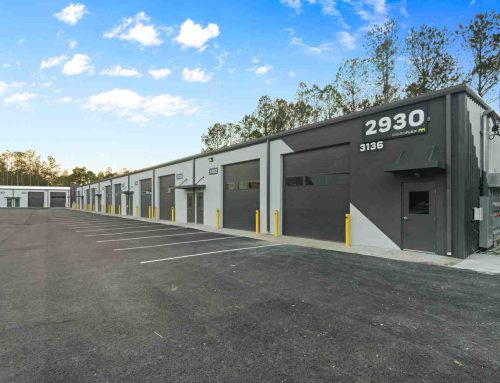
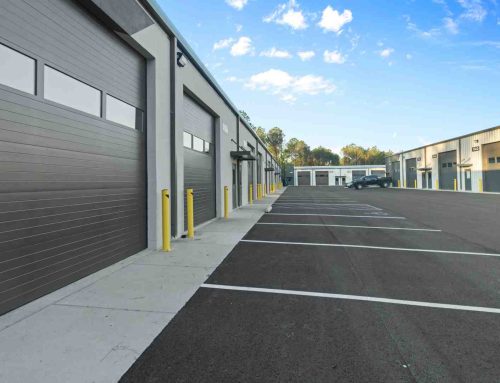
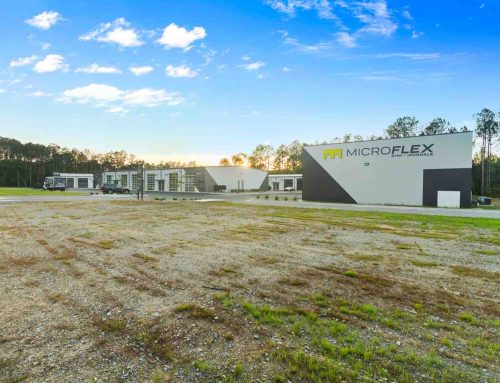
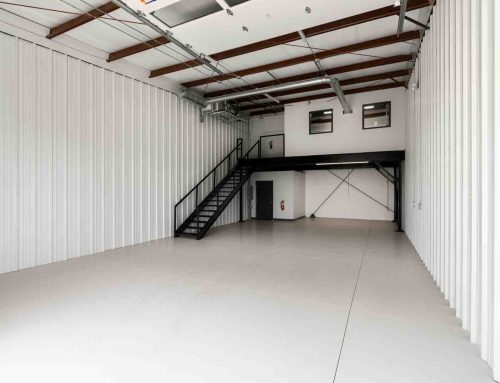
At MicroFlex™ LLC, we’ve built our entire approach around understanding that every business has unique workspace requirements. Our adaptable multi-function spaces don’t just offer office solutions—they combine office, warehouse, storage, and showroom features with the flexible lease terms that let your business grow naturally. Whether you’re a Birmingham startup needing professional meeting space for client presentations or an established company expanding into Alabama markets, our locations provide the flexibility and functionality that modern businesses actually need.
The decision to pursue managed office spaces ultimately comes down to your specific situation, but the model offers compelling advantages for companies that value professional environments without the headaches of traditional real estate. As hybrid work continues reshaping how we think about business operations, managed offices provide that adaptable foundation supporting both your current needs and future opportunities.
Your next step is simpler than you might think. Take an honest look at your current workspace challenges—whether that’s outgrown space, inflexible lease terms, or the constant juggling of multiple service providers. Then consider how a managed office solution might address those specific pain points while positioning your business for growth.
Ready to explore what managed office solutions could mean for your business? More info about locations shows you the possibilities available across Alabama’s dynamic business markets, from Auburn Opelika to Birmingham Irondale, Huntsville, and Birmingham Hoover.