

Why Mobile Office Spaces Are Revolutionizing Modern Workspaces
Mobile office spaces are portable, self-contained work environments that can be delivered and set up virtually anywhere within 30 minutes to a few hours. These flexible workspaces range from 24-foot trailers accommodating small teams to 70-foot modular complexes housing 20+ employees, offering a cost-effective alternative that’s typically 20-30% more affordable than traditional site-built construction.
Key types of mobile office spaces include:
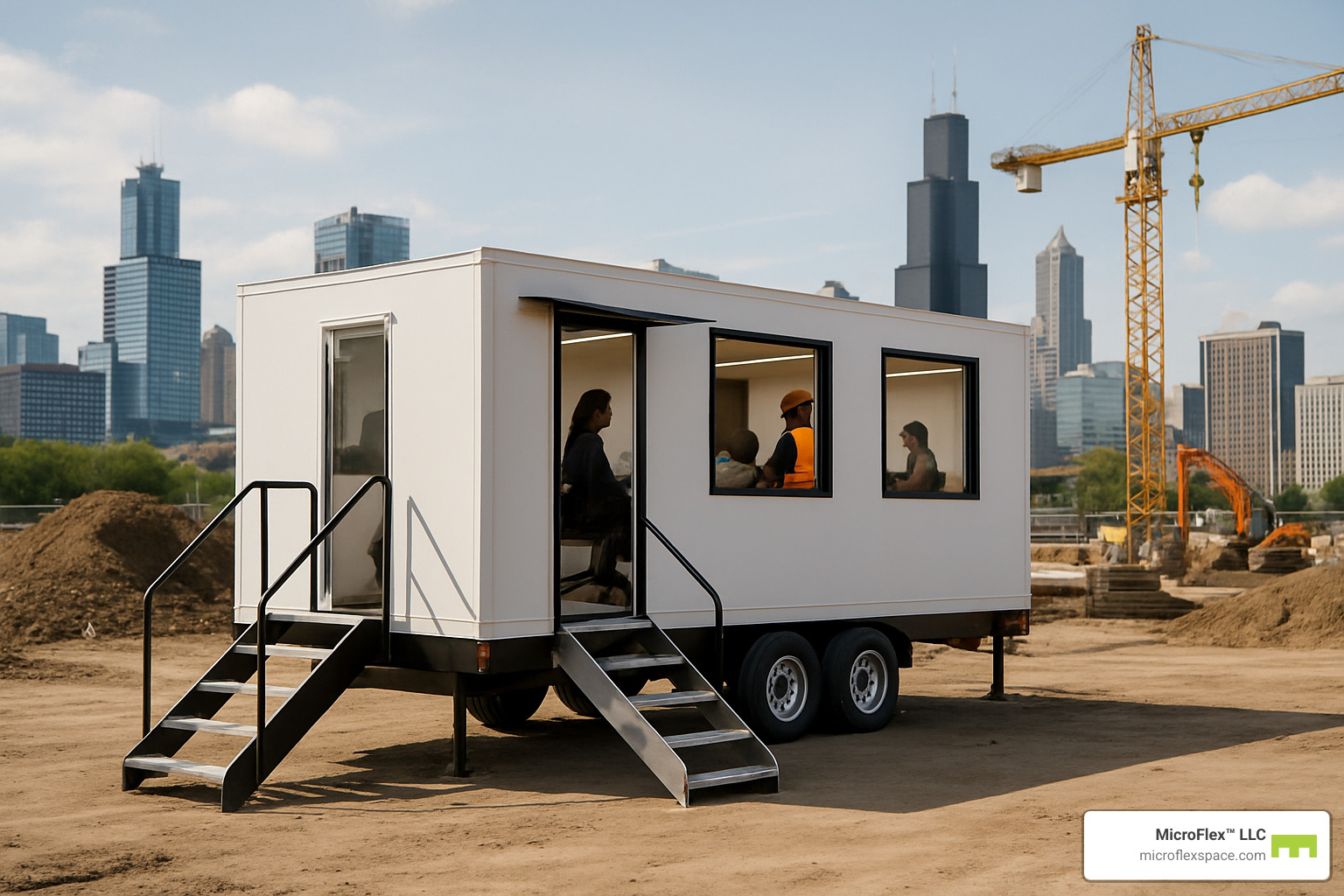
- Office Trailers – 8-14 feet wide, mounted on wheels with stairs/ramps
- Ground-Level Containers – No stairs required, corrugated steel construction
- Modular Buildings – Stackable up to 3 stories, fully customizable layouts
- Expandable Units – Hydraulic expansion systems for maximum space efficiency
Primary benefits:
- Rapid deployment – Most units operational same day
- Weather resistant – Engineered for wind, snow, rain, and extreme heat
- Fully equipped – HVAC, restrooms, furniture, and connectivity included
- Scalable – Connect multiple units or reconfigure as needs change
The mobile office market has exploded as businesses seek alternatives to rigid lease terms and lengthy construction timelines. From construction sites requiring temporary administrative space to companies needing swing space during renovations, these portable solutions deliver professional work environments without the traditional real estate constraints.
I’m Sam Zoldock, a commercial real estate investment professional who has worked extensively with mobile office spaces across Alabama markets since founding OWN Alabama in 2018. My experience spans evaluating mobile office spaces for everything from medical facilities to industrial projects, giving me deep insight into how these flexible solutions solve real-world workspace challenges.
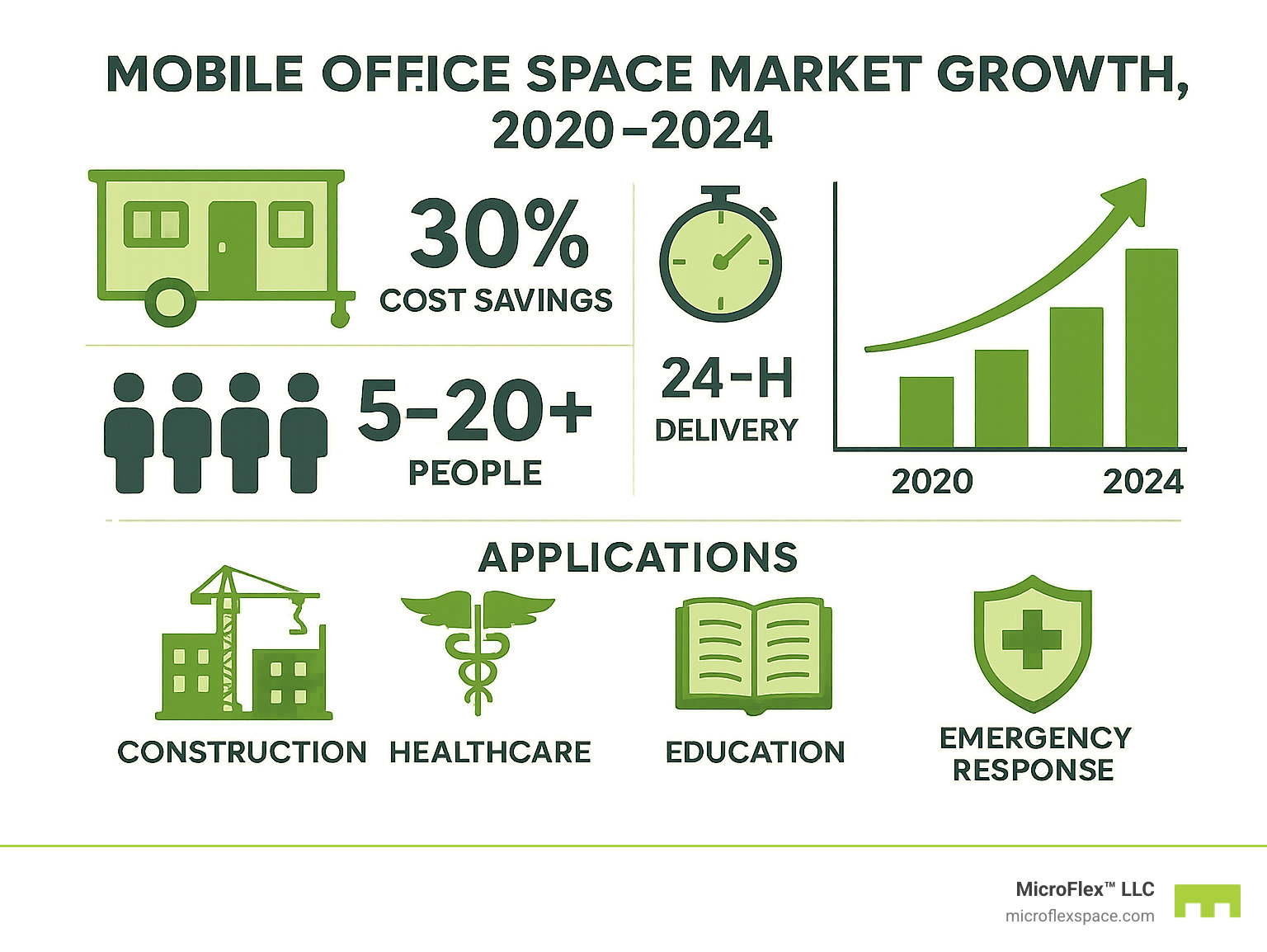
Essential mobile office spaces terms:
Understanding Mobile Office Spaces
Mobile office spaces are turnkey work environments that arrive ready to plug-and-play, skipping the lengthy planning, permitting, and construction phases of a traditional build. Factory fabrication is the secret weapon: walls, utilities, and finishes are completed indoors, then the finished module is shipped to your site.
Three construction approaches dominate:
- Trailer-based units – Built on licensed trailers, they often avoid full building-permit requirements and can be towed away when the project ends.
- Container conversions – Re-purposed shipping containers with welded corrugated steel exteriors deliver ground-level entry and exceptional security.
- Modular buildings – Stackable, reconfigurable sections (similar to a modular building) that can scale from a single office to a multi-story complex.
Key Components Inside Modern Units
- Climate control – Programmable HVAC and upgraded insulation keep interiors comfortable year-round.
- Restrooms – Built-in plumbing means no separate portable toilets.
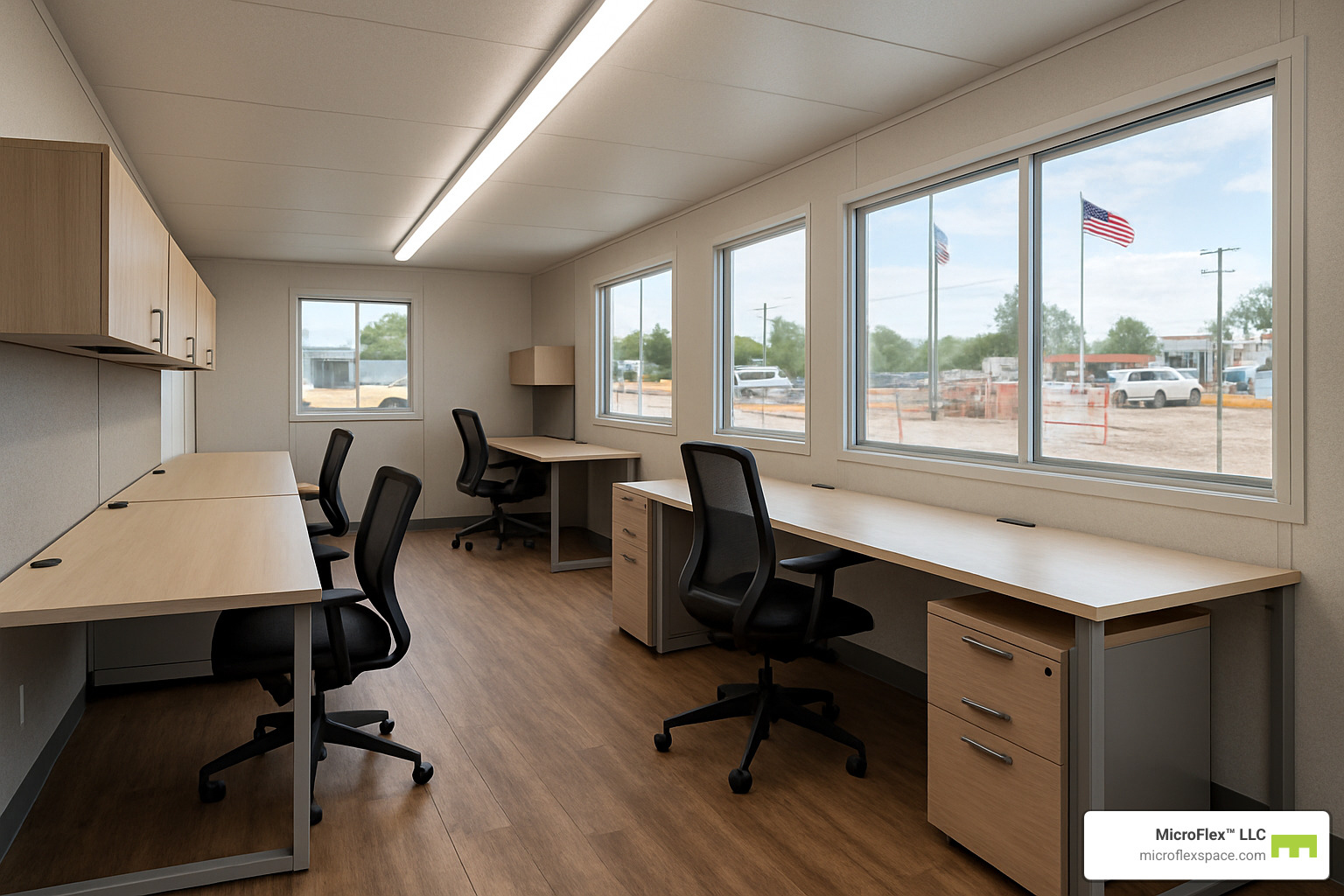
- Furniture & storage – Desks, chairs, and filing cabinets can ship installed, so teams start working on day one.
- Connectivity – Pre-wired electrical panels, data ports, and optional Wi-Fi routers ensure you stay online.
- Security – Smart locks, tamper-proof doors, and window guards protect valuable equipment and documents.
Why They’re Disrupting Real Estate
- Cost efficiency – Mobile offices run roughly 20–30 % cheaper than site-built construction.
- Rapid deployment – Standard units are often delivered and operational in under 24 hours.
- Remote-work compatibility – Their flexibility supports hybrid scheduling and changing headcounts far better than rigid leases.
- Scalability – Add or remove modules as projects ebb and flow instead of renegotiating long leases.
Peer-reviewed studies on flexible work environments consistently link adaptable space to higher employee satisfaction and productivity, underlining why businesses across Alabama are choosing mobile solutions over bricks and mortar.
Comparing Types & Features
The modern market offers three main flavors of mobile office spaces, each tuned for a different use-case.
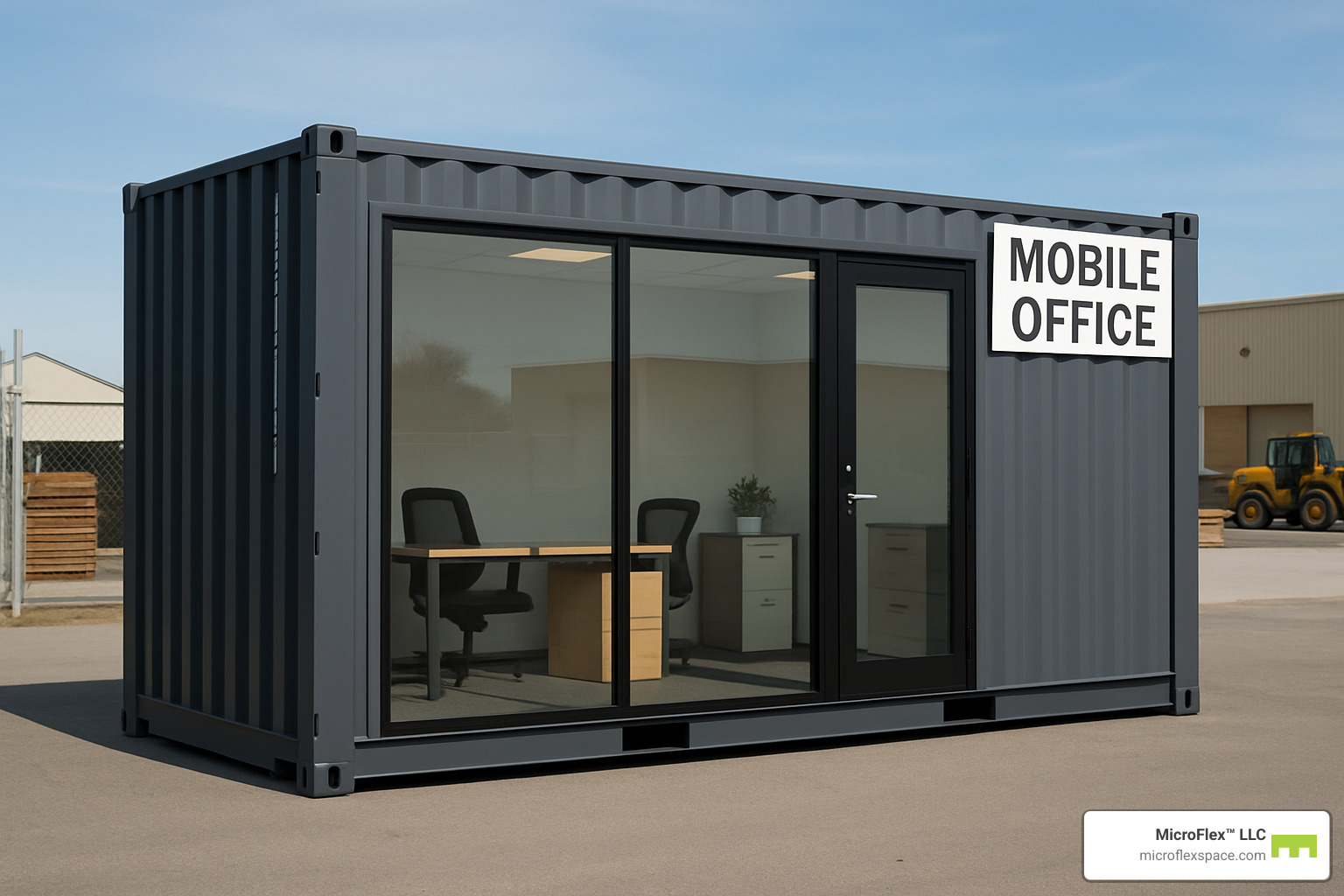
1. Office Trailers – Fast & Mobile
Wheel-mounted trailers are the go-to option when you need space this week and might need it gone next month. Most range from 24- to 60-foot lengths and set up in 30–60 minutes. Single-wides suit small crews; double-wides snap together for open-plan areas or conference rooms. The trade-off is stair access, which may not suit every site.
2. Container Offices – Ground-Level Security
Containers eliminate stairs entirely. With steel shells and heavy-duty locks, they shine on construction or industrial sites where durability matters. Popular sizes include 20- and 40-foot units with optional restroom packages. Units can be stacked up to three stories when footprints are tight.
3. FLEX / Stackable Modular Complexes – Premium & Scalable
FLEX modules feel closest to a conventional office. Reconfigurable partitions, turnkey furnishings, motion-activated LED lighting, and double-pane windows create a high-end environment that can expand upward or outward as needed.
| Feature | Trailers | Containers | FLEX Units |
|---|---|---|---|
| Access | Stairs/Ramps | Ground Level | Ground Level |
| Mobility | Highest | High | Medium |
| Security | Standard | Very High | High |
| Customization | Basic | Moderate | Extensive |
| Stacking | No | Up to 3 | Up to 3 |
| Typical Setup | 30–60 min | 1–2 hrs | 2–4 hrs |
Whatever option you choose, even the slowest install beats months of conventional construction.
Choosing & Customizing Your Portable Workspace
Start with today’s headcount and pad 25 % for growth. Fewer than ten people generally fit an 8-foot-wide trailer; larger teams benefit from 10- or 12-foot-wide models or modular complexes that can expand.
Customization depth matters. Basic administrative tasks may only need desks and Wi-Fi. If you require conference rooms, secure storage, or break areas, opt for FLEX or container units that accept interior partitions and kitchenette packages.
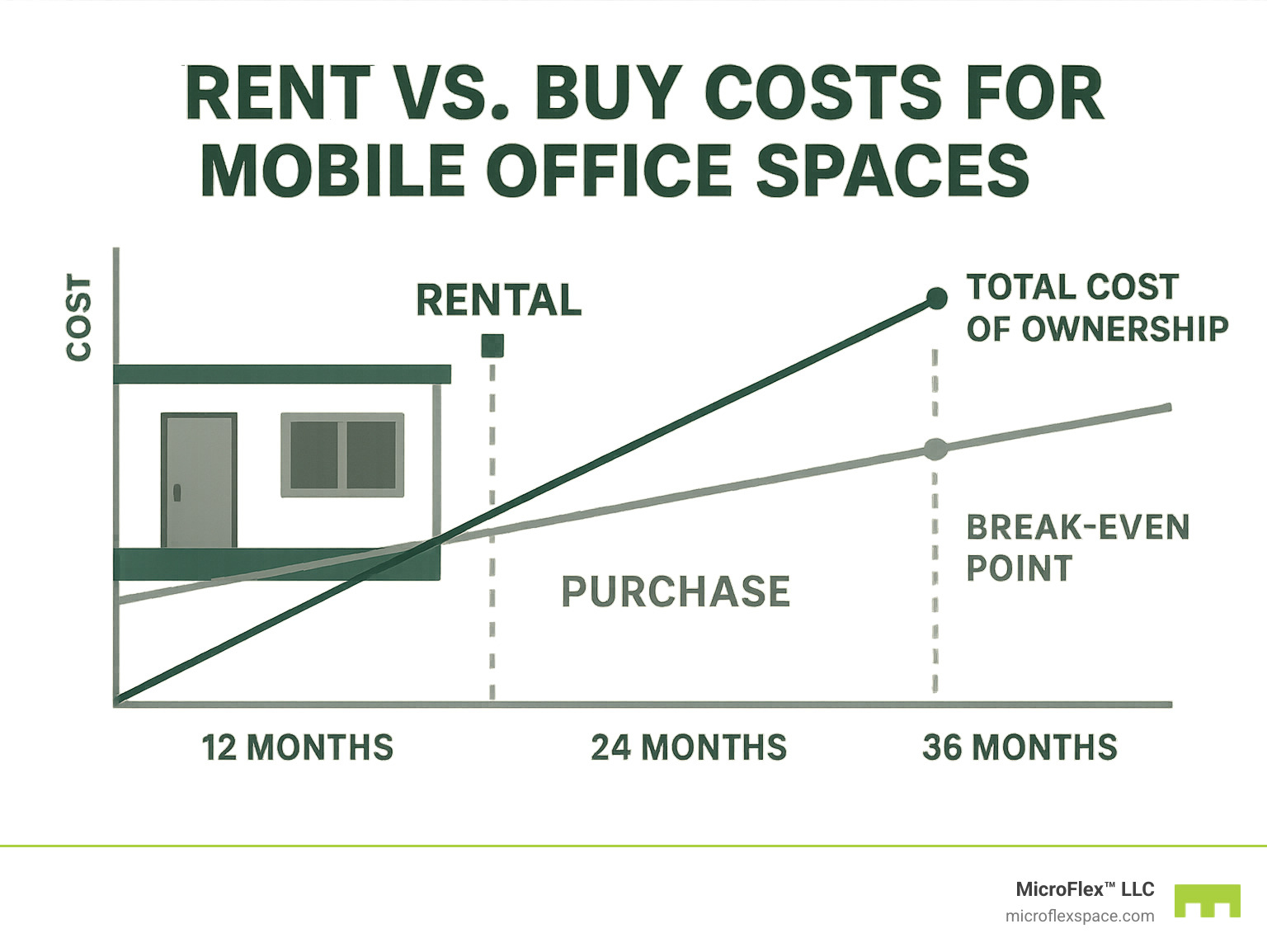
Rent vs. buy is mostly about timeline:
- Rent – Projects under 18 months, minimal upfront cash, maintenance included.
- Lease-to-own – Medium-term projects where you might keep the unit afterward.
- Purchase – Multi-year or permanent use, or when extensive customization is essential.
Cost Snapshot & ROI
- Rent – $200–800 per month, delivery/setup $500–$2 000, utilities roughly $100–300.
- Buy – $25 000–75 000 new; well-maintained units resale at 60–70 % of purchase after 3–5 years.
Typical Alabama office leases average $21.50 per square foot annually; mobile offices often realize 40–60 % savings when you factor in faster occupancy and zero build-out waste.
Site Prep & Installation
Stable, level ground and a 12-foot-wide access path are usually all that’s required. Most setups finish the same day—often before lunch.
For more details on adapting layouts over time, see our modular office space page.
Security, Technology & Sustainability
Today’s mobile office spaces aren’t just portable boxes with desks inside. They’re sophisticated work environments packed with technology and security features that would make many traditional offices jealous.
When it comes to keeping your workspace secure, modern mobile offices deliver impressive protection. Smart locks eliminate the hassle of physical keys while letting you program access codes for different team members. Many units now include CCTV integration with IP cameras that connect to your smartphone.
The technology infrastructure in these spaces has come a long way too. Most units arrive pre-wired for internet, phone, and data services. Solar integration is increasingly popular, with many units offering 1.5kW solar arrays with battery backup systems for off-grid operation.
Smart building features like programmable thermostats and automated lighting systems help keep energy costs down. The sustainability story gets better when you look at the bigger picture. Energy-efficient HVAC systems can reduce your operational costs by 20-30% compared to older units.
Scientific research on green buildings shows that sustainable workspace features don’t just help the environment – they actually improve employee health, productivity, and satisfaction while cutting operational costs.
Storm resistance is built into these units from the ground up. They’re engineered to meet regional building codes for wind loads, snow loads, and seismic requirements.
Operating Mobile Office Spaces in Extreme Climates
Mobile office spaces work everywhere from Alaska construction sites to Arizona desert projects, but getting the climate control right makes all the difference in employee comfort and productivity.
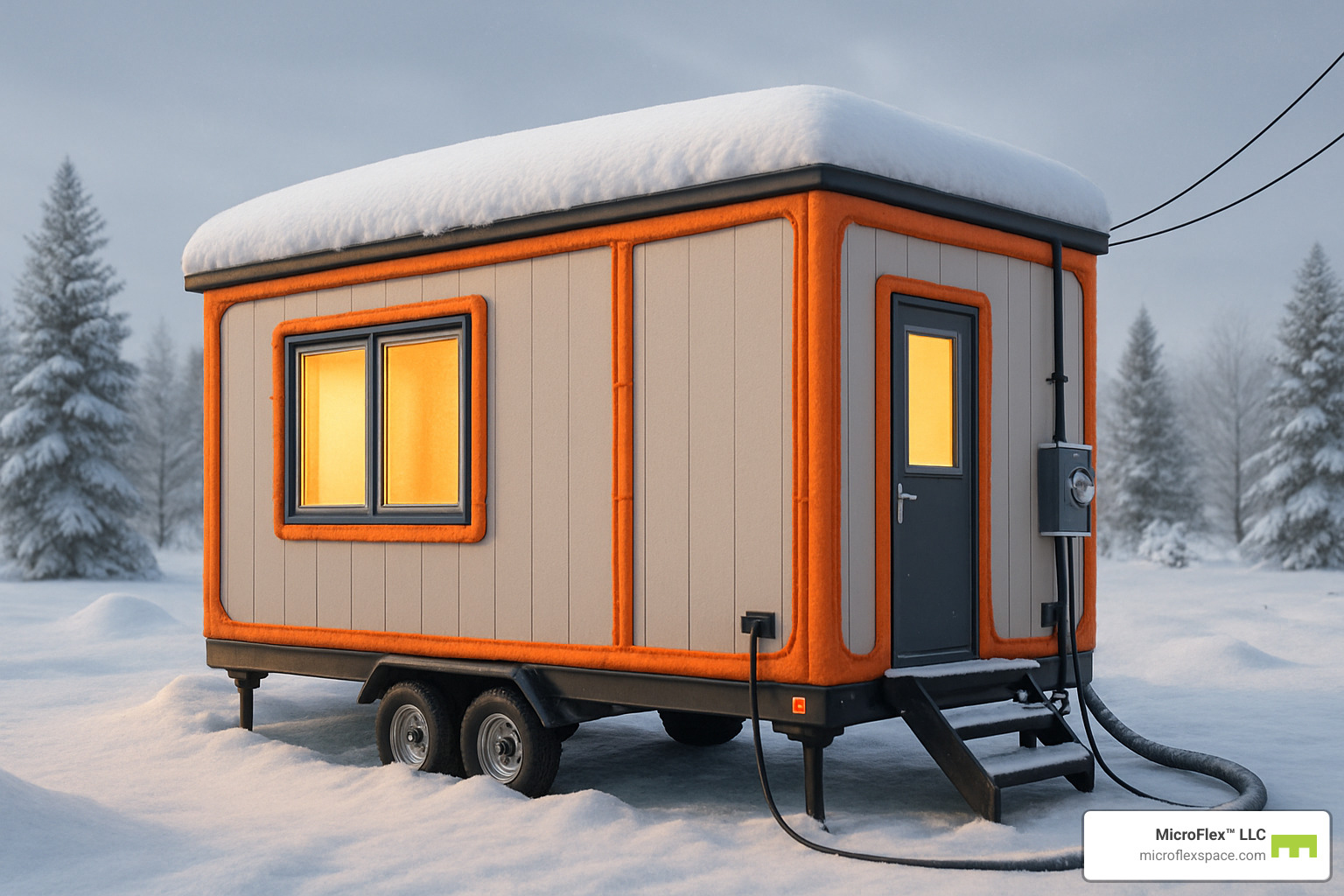
Cold weather brings unique challenges, but modern units handle them beautifully. Upgraded insulation options include R24 wall insulation and R30 roof insulation – significantly better than many traditional buildings. Snow load engineering ensures the roof won’t buckle under heavy snowfall.
Hot climates require different strategies but equally effective solutions. Reflective roofing materials reduce heat absorption, while oversized air conditioning systems with programmable controls keep temperatures comfortable even during peak summer heat.
Humidity control becomes critical in coastal areas or regions with high moisture levels. Sealed construction with vapor barriers and dedicated humidity control systems prevent condensation and mold issues.
Wind resistance is engineered into every unit, but proper anchoring and tie-downs are essential for safety. These systems are tested to withstand winds up to 90 mph when properly secured.
Real-World Applications & Case Studies
Mobile office spaces have transformed how businesses approach temporary and flexible workspace needs. These portable solutions shine in situations where traditional construction simply isn’t practical or cost-effective.
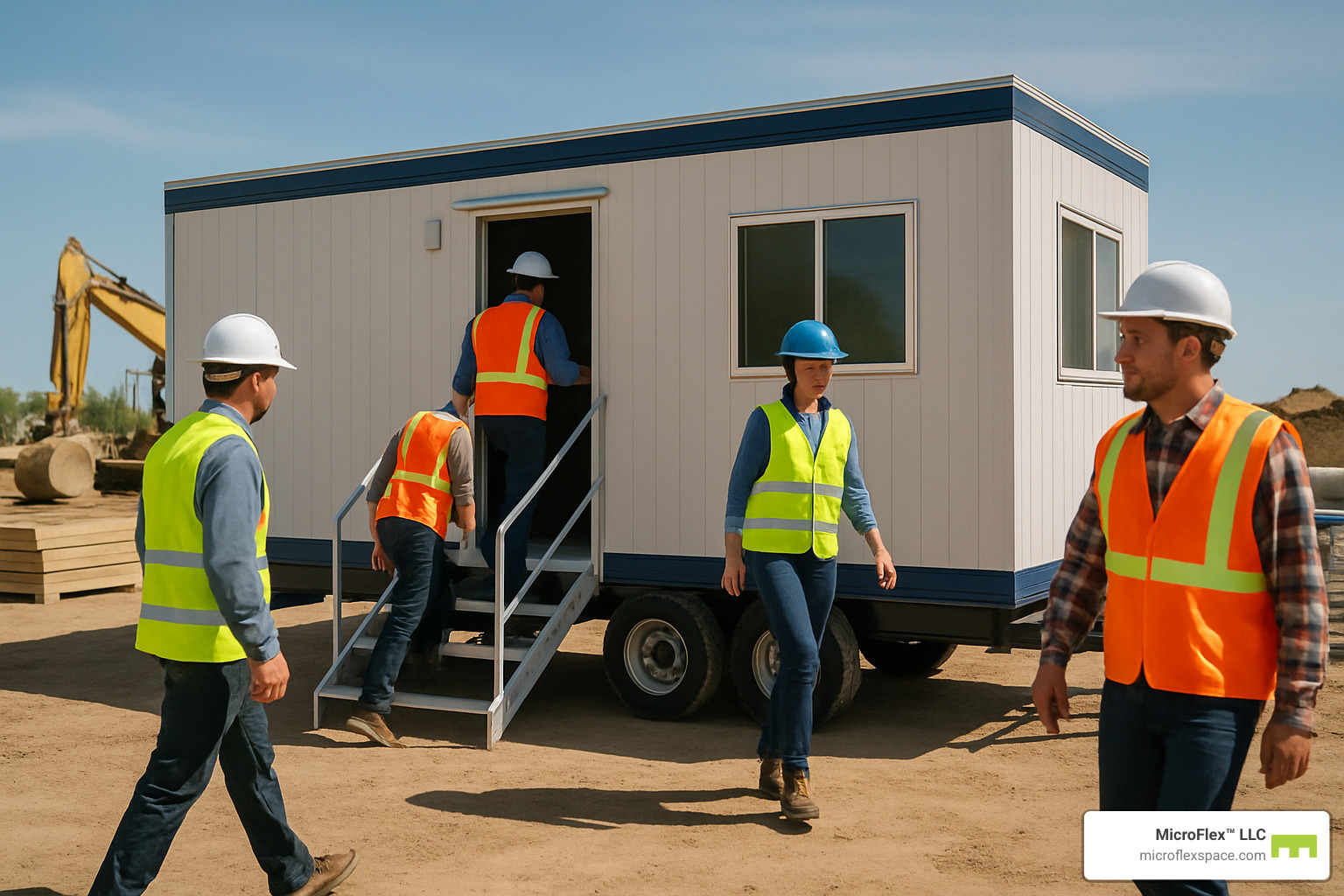
Construction sites represent the most common application for mobile offices. Project managers need secure spaces to store blueprints, conduct meetings with subcontractors, and handle administrative tasks. Having an on-site office eliminates the need for workers to travel back to headquarters for meetings or paperwork.
Emergency response situations demand rapid deployment capabilities that only mobile offices can provide. When disasters strike, emergency coordinators need functional workspace within hours, not weeks. These units become critical command centers where first responders coordinate rescue efforts.
Events and pop-up operations rely on mobile offices for registration centers, sales offices, and administrative support. Whether it’s a music festival, trade show, or seasonal retail operation, these units provide professional spaces that can be positioned exactly where needed.
Educational institutions use portable offices to address space shortages and support remote learning initiatives. School districts facing overcrowding can quickly add administrative offices or specialized learning spaces.
Healthcare facilities have found mobile offices work perfectly for screening rooms, administrative offices, and temporary medical facilities. The full HVAC systems accommodate medical equipment requirements while providing the controlled environment healthcare demands.
Backyard home offices have become increasingly popular as remote work continues growing. Professionals seeking dedicated workspace separate from household distractions find mobile offices provide the perfect solution.
Success Stories Using Mobile Office Spaces
Real-world success stories demonstrate how mobile office spaces solve complex business challenges with neat simplicity.
Schedule recovery during renovations saved a healthcare facility from major operational disruptions. When their administrative building needed extensive renovations, they positioned mobile offices in their parking lot, keeping the entire team together and maintaining normal workflows.
Rapid disaster command centers proved their worth during recent wildfire response operations. Emergency responders needed coordination space in remote areas where no buildings existed. Mobile offices were deployed and operational within hours, providing critical communication infrastructure.
Seasonal workforce expansions helped a renewable energy company manage fluctuating staffing needs. During peak construction seasons, expandable mobile offices provided the extra space needed, then could be reconfigured as projects wound down.
These success stories highlight the core advantage of mobile offices: they adapt to your business needs rather than forcing your business to adapt to rigid real estate constraints.
Frequently Asked Questions about Mobile Office Spaces
What permits or zoning rules apply?
Here’s the good news: most mobile office spaces under 100 square feet don’t need building permits since they’re classified as movable structures. It’s like the difference between parking a trailer and building a house – much simpler paperwork.
But every area has its own rules, so you’ll want to check a few things. If you’re using the unit for temporary supplemental space on your existing property, you’re usually in the clear. However, if that mobile office becomes your official business address, local authorities might want to have a chat about permits.
Zoning compliance is another piece of the puzzle. Some neighborhoods or commercial districts have specific rules about temporary structures. The last thing you want is a surprise visit from code enforcement when you’re trying to run your business.
Don’t forget that standard business licensing requirements still apply, regardless of whether you’re working from a traditional building or a mobile unit. Your business is still a business, after all.
The smart move? Give your local planning department a quick call before your unit arrives. A five-minute conversation can save you weeks of headaches later.
How fast can a unit be delivered and operational?
This is where mobile office spaces really shine compared to traditional construction. Most standard units can be delivered and operational within 24-48 hours of placing your order. Compare that to months of construction delays, and you’ll see why businesses are making the switch.
Custom configurations with specialized layouts or extra features might take 1-2 weeks, but that’s still lightning-fast compared to building from scratch. The timeline mainly depends on what you need inside and how complex your setup requirements are.
Site conditions play a big role in setup speed. If you’ve got level, accessible ground, we can have you up and running in as little as 30 minutes. More complex installations might take several hours, especially if we need crane services or utility connections.
Weather can throw a wrench in the works – high winds or severe storms might delay crane operations for safety reasons. But once conditions clear, setup happens quickly.
Most providers keep popular configurations in stock specifically to meet that 24-hour delivery promise. It’s one of the biggest advantages of choosing mobile over traditional construction.
Should I rent or buy for a 12-month project?
For a 12-month project, you’re right in that sweet spot where both options make sense, so let’s break down the math and logistics.
Renting typically wins for 12-month projects because of the lower upfront costs and included maintenance. You’re not tying up capital, and if something breaks, it’s the rental company’s problem, not yours. Plus, you have flexibility to upgrade, downsize, or add features as your project evolves.
Purchasing starts making financial sense around the 18-month mark, especially if you might use the unit for multiple projects. The upfront investment is higher, but you’ll own an asset that retains 60-70% of its value after 3-5 years.
Consider your cash flow situation too. Rental spreads costs evenly over monthly payments, while purchasing requires significant upfront capital. Some companies offer lease-to-own arrangements that split the difference.
Customization needs might tip the scales toward purchasing. If you need specialized interior layouts, upgraded HVAC, or specific security features, buying gives you more control over modifications.
The practical reality? Most businesses choose rental for 12-month projects because it’s simpler, more predictable, and keeps options open for future changes.
Conclusion
Mobile office spaces have revolutionized how we think about workspace solutions. Instead of waiting months for traditional construction or signing rigid lease agreements, businesses can now have professional offices delivered and operational within hours. The numbers speak for themselves – costs that are 20-30% below traditional construction, setup times measured in minutes rather than months, and the flexibility to adapt as your business grows.
The beauty of these portable workspaces lies in their simplicity and adaptability. Whether you’re managing a construction project that needs on-site administrative space, dealing with office renovations, or expanding your team for a seasonal project, mobile office spaces provide professional environments without the traditional headaches of real estate commitments.
Your selection process should focus on a few key areas: understanding your current team size while planning for growth, evaluating your site conditions and access needs, considering climate requirements for your location, planning for technology and connectivity, assessing security features, comparing the economics of renting versus buying, and verifying any permit or zoning requirements in your area.
The real game-changer is how these solutions eliminate the usual constraints of traditional office space. No more worrying about long-term lease commitments when your project timeline is uncertain. No more paying for space you don’t need or scrambling to find additional space when you grow quickly.
At MicroFlex™ LLC, we’ve seen how businesses across Alabama benefit from adaptable workspace solutions. Our approach combines the flexibility of mobile offices with the functionality businesses actually need – whether that’s warehouse space, office areas, storage solutions, or showroom features. With locations throughout Alabama including Birmingham, Auburn, Huntsville, and Hoover, we understand the unique challenges businesses face in our region.
What sets us apart is our commitment to flexible lease terms that work with your business cycle, not against it. We know that modern businesses need solutions that can evolve with their needs, which is why our business rental solutions are designed to support your growth objectives rather than constrain them.
The future of workspace flexibility isn’t coming – it’s here right now. Mobile office spaces represent a fundamental shift toward solutions that work for real businesses with real challenges. They offer the freedom to work where you need to be, when you need to be there, with all the professional amenities and cost-effectiveness that traditional real estate simply cannot deliver.
The question isn’t whether mobile offices will continue to disrupt traditional workspace solutions – it’s whether your business will take advantage of this flexibility to stay ahead of the competition.