


Why Month-to-Month Warehouse Rentals Are Revolutionizing Business Storage
Month to month warehouse rental agreements are changing how businesses approach their storage and operational needs, offering unprecedented flexibility in an increasingly dynamic market. Unlike traditional long-term leases that lock businesses into rigid commitments, these flexible arrangements allow companies to adapt quickly to changing demands.
Key Benefits of Month-to-Month Warehouse Rentals:
- No long-term commitment – Scale up or down as needed
- Reduced financial risk – Lower upfront costs and security deposits
- Operational agility – Perfect for seasonal businesses and startups
- Quick move-in – Faster approval process than traditional leases
- Market testing – Try new locations without major commitments
The logistics and distribution sector continues to grow, driving demand for flexible warehouse solutions. As one industry expert noted, businesses can now “concentrate on their core operations without worrying about storage restraints” by choosing adaptable rental terms that match their operational cycles.
Modern entrepreneurs and small business owners are finding that month-to-month arrangements provide the breathing room needed to steer uncertain markets, seasonal fluctuations, and rapid growth phases. Whether you’re an e-commerce startup testing new markets or an established business managing seasonal inventory, flexible warehouse rentals eliminate the traditional barriers that have historically limited business agility.
I’m Sam Zoldock, a commercial real estate investment professional specializing in Alabama markets, with extensive experience helping businesses steer month to month warehouse rental options across industrial and multi-tenant properties. Through my work with OWN Alabama since 2018, I’ve seen how flexible lease structures can open up growth opportunities for businesses of all sizes.
The Flexibility Advantage: Why Businesses are Choosing Shorter Leases
Imagine your business lands a huge, six-month contract requiring triple your inventory space. A traditional lease would lock you into years of paying for unneeded space. This is why smart business owners are ditching rigid commitments for more sensible solutions.
Today’s business world moves fast, and companies need storage that can keep up. A month to month warehouse rental provides that flexibility, letting you adapt to market changes instead of being locked into outdated agreements.

Key Advantages of a Month to Month Warehouse Rental
Flexible warehouse agreements match the reality of running a modern business. Here’s why more companies are choosing this approach.
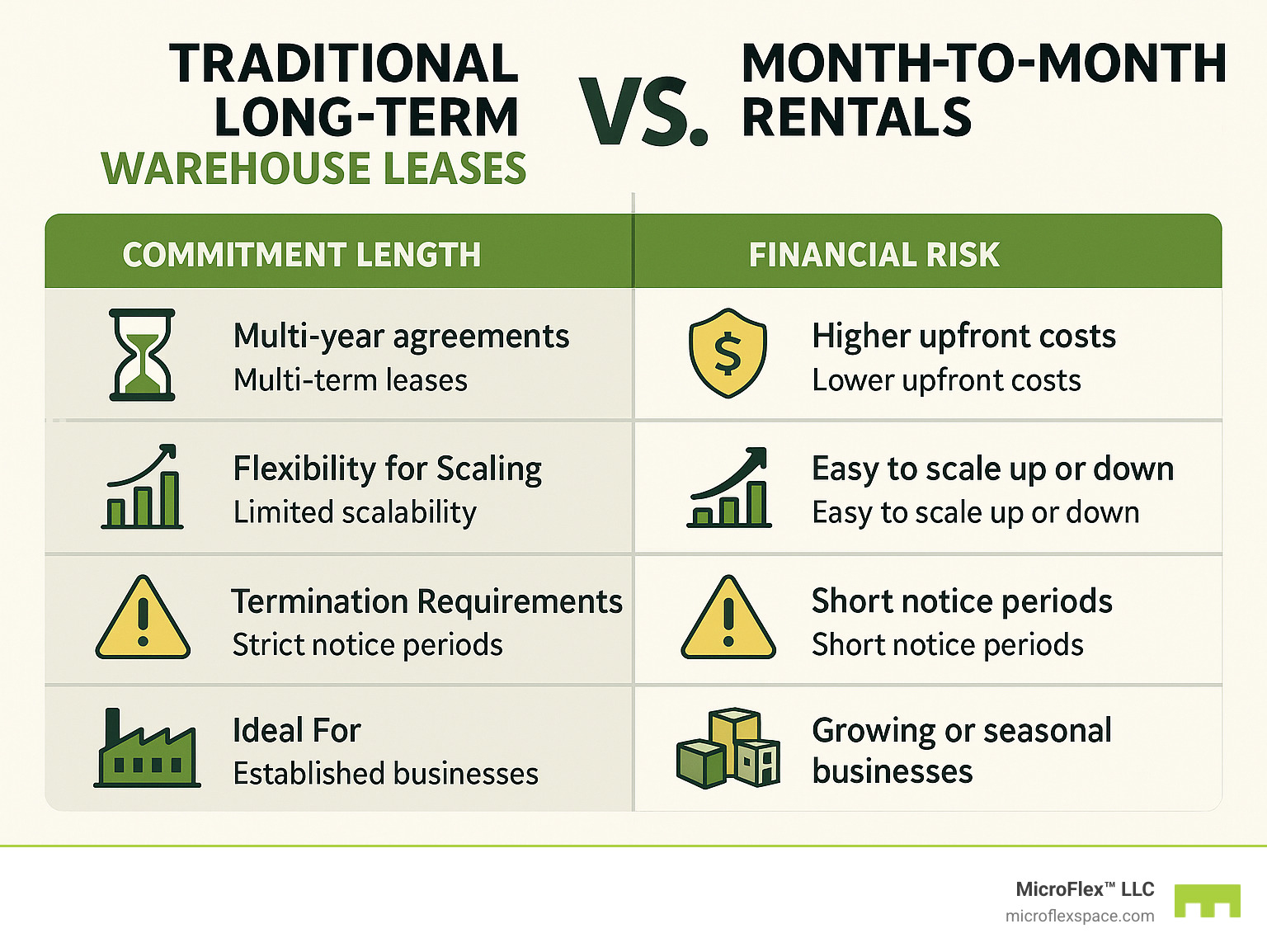
Scalability is a game-changer. When demand spikes, you need more space now. A month-to-month rental lets you expand your footprint quickly. When things slow down, you can scale back just as easily, ensuring you don’t pay for empty space.
Reduced financial risk is especially attractive for smaller businesses. Traditional leases demand hefty deposits and guarantees, tying up capital. Short-term rentals require less upfront, often just the first month’s rent, freeing up cash for business growth.
The no long-term commitment aspect brings peace of mind. Markets change and businesses evolve. Without a five-year lease, you can pivot quickly and make decisions based on current needs, not past commitments.
Market testing becomes more feasible. Set up operations in a new city for a trial period, like six months, to test performance before making a long-term commitment. It’s a low-risk way to plan expansion.
Seasonal inventory management is where flexible leases shine. Retailers, landscapers, or agricultural businesses can manage seasonal inventory by expanding and contracting storage as needed, avoiding year-round costs for space only used for a few months.
Many businesses have project-based needs that don’t fit traditional lease structures. Construction companies, event planners, or manufacturers with special orders can get the exact space they need for the duration of a project.
The faster move-in process is another huge advantage. Unlike traditional leases that take weeks to approve, flexible providers can often get you moved in within days, sometimes even offering same-day service for immediate needs.
These flexible arrangements give you true operational freedom. If you’re ready to explore how flexible space can work for your operations, check out our Business Warehouse for Rent options.
Potential Downsides and How to Mitigate Them
Let’s be honest—month to month warehouse rental agreements aren’t perfect for everyone. Understanding the challenges helps you make smart decisions.
Higher monthly rates are the most common trade-off. Landlords charge a premium for the uncertainty of short-term agreements. You might pay 10-20% more per square foot, but this is often offset by reduced risk and increased agility.
Less stability can be a concern. The landlord can terminate the agreement with 30-60 days’ notice. This uncertainty isn’t ideal for businesses requiring extensive setup or those dependent on a specific location.
Limited customization can be an issue. Landlords rarely approve expensive modifications for short-term tenants. If you need specialized build-outs, a flexible lease may not be suitable.
Mitigation strategies can help. Be upfront about your needs and timeline; landlords may offer better terms if they see potential for a longer relationship. A good relationship with your property manager can lead to informal renewals and advance notice of changes. Ask about intermediate options like 90-day or six-month agreements for more stability.
Choose properties with all-inclusive rates (utilities, security, maintenance) to avoid surprise costs and simplify budgeting. Finally, have a backup plan. Know what alternative spaces are available and maintain relationships with multiple providers to reduce stress and increase negotiating power.
The key is understanding these trade-offs and deciding if the flexibility benefits outweigh the potential downsides for your business.
Who Thrives with Flexible Warehouse Space?
The versatility of month to month warehouse rental agreements makes them perfect for a diverse range of companies and hobbyists who need space that adapts as quickly as they do.

Industries and Business Models That Benefit Most
Certain businesses are built for flexible warehouse arrangements.
- E-commerce businesses lead the pack. Their inventory needs shift constantly with trends and sales. A flexible lease prevents paying for empty space or scrambling for more room.
- Retailers with seasonal peaks face predictable challenges. A Christmas wholesaler, for example, needs massive storage from August to December but little the rest of the year. A flexible rental lets them scale up and down accordingly.
- Startups and small businesses have unpredictable growth. They might suddenly need more space after landing a big contract. Flexible leases allow them to grow at their own pace without the risk of a long-term commitment.
- Third-party logistics providers use flexible spaces to test new markets or handle temporary client surges, acting as a storage safety valve.
- Contractors and tradespeople find these spaces ideal. A plumber or landscaper can get secure, accessible storage without a multi-year commitment.
- Event management companies need massive space for a few months to prepare for an event, then nothing. Flexible space lets them operate efficiently without carrying unnecessary overhead.
For businesses exploring their options, Small Warehouse Storage solutions provide an excellent entry point.
The Rise of Multi-Function Spaces
The demand for flexibility has revolutionized warehouse space. It’s not just about storing boxes anymore—these spaces are becoming true business hubs.
- Co-warehousing is like co-working for warehouses. Businesses share a facility and split costs on amenities like loading docks and forklifts, making professional infrastructure affordable for small businesses.
- Integrated office areas are often included. Manage inventory, meet clients, and handle paperwork in one place, eliminating separate leases. Explore these solutions through Warehouse Office Space for Rent.
- Showroom capabilities are increasingly popular. A business can use part of its space for storage and the other half as a showroom.
- Workshop and light manufacturing are also common. You can assemble products or run a small production line without the commitment of a traditional industrial lease.
- Hobbyist spaces are also popular. Car enthusiasts, woodworkers, and artists get professional-grade space without a long-term financial commitment.
At MicroFlex™ LLC, we’ve acceptd this multi-function approach, creating adaptable spaces that can serve as warehouse, office, storage, and showroom all at once. Our flexible lease terms mean you can configure your space exactly how you need it, then reconfigure it as your needs evolve.
The future belongs to businesses that can adapt quickly, and Flexible Industrial Space provides the foundation for that adaptability. Whether you’re storing inventory, building products, meeting clients, or pursuing your passion projects, these spaces grow and change with you.
Securing Your Flexible Warehouse: A Step-by-Step Guide
Finding the perfect month to month warehouse rental might seem daunting, but with a clear process and understanding of what to look for, it can be a surprisingly smooth journey. Our goal is to make this process as simple and straightforward as possible for you.

Finding the Right Month to Month Warehouse Rental for Your Business
The first step is to identify where these flexible spaces are available and how to access them.
- Online Marketplaces & Aggregators: Websites specializing in commercial real estate listings are a great starting point. These platforms often allow you to filter by lease term, size, and location. While some listings might show longer terms, many providers of flexible spaces advertise here.
- Commercial Real Estate Brokers: A local commercial real estate broker can be an invaluable resource. They have in-depth knowledge of the market, access to off-market listings, and can help you negotiate terms. They understand the nuances of short-term leases and can connect you with landlords open to such arrangements.
- Direct Searches & Local Providers: Sometimes, the best way is to search directly for “short-term warehouse rental” or “flexible industrial space” in your target area. Many providers, like MicroFlex™ LLC, offer these solutions directly through their websites. We operate in key Alabama markets, including Auburn Opelika, Birmingham Irondale, Huntsville, and Birmingham Hoover, offering diverse options for your needs. For instance, if you’re in the Magic City, you can explore a Small Warehouse for Rent Birmingham AL directly through us.
- Location Variance: The availability and cost of month to month warehouse rental can vary significantly by location. Major metropolitan hubs like Toronto, Vancouver, or Montreal in Canada (where warehouse costs can range from CAD $10 to $22 per square foot annually) tend to have higher demand and thus higher prices, but also more options for flexible terms due to higher market liquidity. Smaller cities or more rural areas might offer lower rates, potentially sacrificing some accessibility or convenience. Consider your logistical needs carefully when choosing a location.
Essential Features and Amenities to Look For
Once you’ve identified potential locations, it’s time to scrutinize the spaces themselves. The right amenities can significantly impact your operational efficiency.
- Loading Docks and Drive-In Doors: Essential for efficient shipping and receiving. Loading docks accommodate large trucks, while drive-in doors allow vehicles to enter the warehouse directly, crucial for certain operations.
- Ceiling Height: High ceilings (e.g., 11 feet or more) provide vertical storage capacity, maximizing your usable space and allowing for high-bay racking systems.
- Security Systems: Look for robust security features such as 24/7 video surveillance (CCTV), access control systems (ensuring only authorized personnel can enter), and on-site security personnel or managers. Adequate security is paramount for protecting your inventory and assets.
- Utilities (HVAC, Power, Wi-Fi): Clarify what utilities are included in the rent. HVAC (heating, ventilation, and air conditioning) is vital for climate-sensitive inventory or if the space will be used for office work or light manufacturing. Adequate power (e.g., 120v, 240v, or three-phase power) is crucial for machinery. Reliable high-speed Wi-Fi is a must for modern business operations.
- Forklift Access and Equipment: The availability of forklifts, pallet jacks, and other material handling equipment, or at least the space for them to operate, is a huge plus. Some facilities even provide shared equipment, which can save you significant capital expenditure.
- On-Site Management: An on-site manager can be a tremendous asset, providing immediate support for maintenance issues, security concerns, or general inquiries. They can also foster a sense of community among tenants.
- Compliance: Ensure the facility meets relevant safety and environmental standards. For example, compliance with Environmental Protection Agency (EPA) guidelines might be relevant for certain types of storage or operations.
Preparing for Your Move
Once you’ve found your ideal month to month warehouse rental, a little preparation goes a long way to ensure a smooth transition.
- Inventory Planning: Before the move, conduct a thorough inventory audit. Decide what needs to be moved, what can be discarded, and how it will be organized in the new space. This is a great opportunity to declutter!
- Operational Workflow: Plan how your operations will adapt to the new space. Will the layout optimize your receiving, storage, and shipping processes? Consider how new amenities (or lack thereof) will impact your daily tasks.
- Staff Coordination: Inform your team about the move and any changes to their daily routines. Assign responsibilities and ensure everyone knows their role in the transition.
- Insurance Requirements: Landlords typically require tenants to carry certain types of insurance, often including general liability and property insurance to cover your inventory and operations. Ensure you understand these requirements and have appropriate coverage in place before moving anything in.
- Moving Logistics: Plan the actual move. Will you hire professional movers specializing in commercial or industrial moves? Coordinate delivery schedules, equipment rentals, and any necessary permits for oversized vehicles. The beauty of flexible spaces is that some allow for very rapid move-ins, meaning your planning needs to be just as swift!
By carefully considering these aspects, you can ensure your transition into a flexible warehouse space is efficient, cost-effective, and sets you up for continued success.
Understanding the Costs and Contractual Nuances of a Month to Month Warehouse Rental
The numbers don’t lie – flexible warehouse solutions are reshaping how businesses budget for space. While a month to month warehouse rental might seem more expensive at first glance, the true value becomes clear when you factor in the reduced risk and operational freedom these arrangements provide.
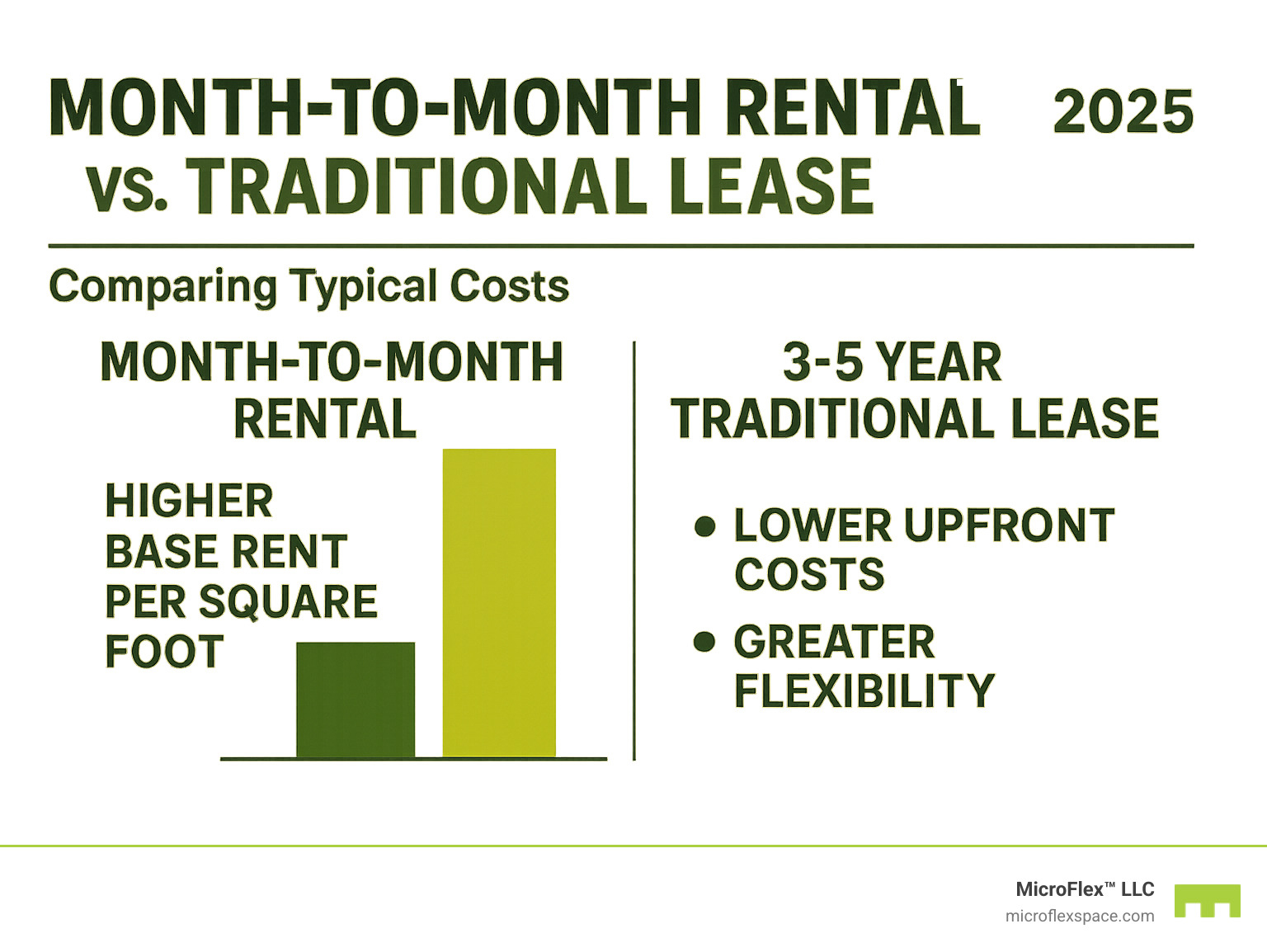
Comparing Rental Costs: Short-Term vs. Traditional Leases
Think of warehouse pricing like buying groceries – you can get bulk discounts with long-term commitments, but flexible options give you the freedom to adjust your “shopping list” based on what you actually need.
Base rent per square foot forms the foundation of your costs. Traditional warehouse leases often hover around $0.85 per square foot monthly, with operating expenses adding another $0.25, bringing the total to roughly $1.10 per square foot. A month to month warehouse rental typically commands a premium above this rate – but here’s where it gets interesting.
NNN (Triple Net) fees can be a budget killer in traditional leases. These cover property taxes, building insurance, and common area maintenance costs that get passed directly to you. Many flexible warehouse providers bundle these expenses into an all-inclusive monthly rate, eliminating surprise bills and making budgeting much simpler.
CAM (Common Area Maintenance) charges cover everything from parking lot repairs to landscaping. In flexible arrangements, these costs are often rolled into your monthly payment, so you won’t get hit with unexpected assessments when the roof needs fixing or the parking lot gets repaved.
The potential premiums for flexibility usually range from 10-20% above traditional lease rates. However, this premium often pays for itself through reduced upfront costs, no personal guarantees, and the ability to scale down during slow periods. You’re essentially paying for insurance against market uncertainty.
Average costs vary dramatically by location. Canadian warehouse cost data shows annual rates from CAD $10 to $22 per square foot, with Toronto and Vancouver commanding premium prices. In the US market, flexible spaces can start under $700 monthly for smaller units (200-1,000 square feet), making them accessible even for startups and small businesses.
The real magic happens when you consider what’s included. Many flexible providers offer utilities, security, maintenance, and even equipment access in their base rate. This transparency eliminates the guesswork and hidden fees that can plague traditional leases.
Key Legal Clauses to Scrutinize
Even short-term agreements deserve careful attention – a few minutes of reading now can save you headaches later. The beauty of month to month warehouse rental contracts is their simplicity, but certain clauses still require your focus.
The termination clause is your escape hatch and deserves the most attention. Most flexible agreements require 30 to 60 days’ notice from either party to end the lease. This works both ways – while you can leave with short notice, the landlord can also ask you to vacate. Make sure you understand exactly how much notice is required and whether there are any exceptions.
Notice period requirements can vary based on local regulations and specific lease terms. Some states require longer notice periods for commercial tenants, so don’t assume 30 days is universal. Always confirm this in writing before signing.
Rent escalation clauses are less common in true month-to-month agreements, but they can still appear. Some landlords include provisions allowing rent increases with proper notice (often 30-60 days). Understanding when and how your rent might change helps with long-term planning.
Maintenance responsibilities can make or break your budget. The best flexible warehouse providers handle most maintenance issues, from HVAC repairs to common area upkeep. However, you’ll typically remain responsible for keeping your space clean and reporting any damage promptly.
Security deposit terms in flexible arrangements are usually more reasonable than traditional leases. Many providers require only first month’s rent as a deposit, with clear guidelines on what constitutes normal wear and tear versus damage that might affect your deposit return.
Use restrictions matter more than you might think. Some facilities prohibit certain activities like automotive work, food storage, or manufacturing processes due to insurance or zoning requirements. Make sure your intended use aligns with the property’s guidelines to avoid conflicts later.
The insurance landscape for month to month warehouse rental agreements is typically straightforward. Most landlords require general liability coverage to protect against accidents, and you’ll want property insurance for your inventory. Many providers can recommend insurance partners familiar with flexible lease arrangements.
For businesses ready to dive deeper into lease negotiations and terms, our Ultimate Storage Warehouse Lease Guide provides comprehensive insights into securing the best possible agreement for your needs.
Understanding these financial and legal elements empowers you to make informed decisions about your warehouse needs. The goal isn’t just finding space – it’s finding the right space at the right price with terms that support your business growth.
Conclusion
The business world moves fast these days, and flexibility isn’t just nice to have—it’s essential for survival. Traditional warehouse leases that lock you into years-long commitments? They’re becoming as outdated as fax machines. Month to month warehouse rental agreements are the future, giving businesses the breathing room they need to pivot, grow, and respond to whatever the market throws their way.
Think about it: we’ve covered how these flexible arrangements give you unparalleled scalability when demand spikes or dips, slash your financial risk by eliminating massive upfront costs, and free you from the anxiety of being stuck in a long-term commitment that might not fit your business six months down the road. Whether you’re an e-commerce entrepreneur riding the waves of seasonal demand or a contractor who needs secure storage between projects, flexible warehouse solutions adapt to your rhythm—not the other way around.
You might pay a bit more per square foot for this flexibility, and yes, there’s less long-term stability than a traditional lease. But when you factor in the money saved during slow periods, the capital freed up for growth, and the peace of mind that comes with knowing you can adjust as needed, the math works out beautifully.
The evolution toward multi-functional spaces makes this even more compelling. Why juggle separate leases for your warehouse, office, and showroom when you can have it all under one flexible roof? These integrated solutions aren’t just convenient—they’re game-changers for how businesses operate.
At MicroFlex™ LLC, we’ve built our entire approach around this philosophy. Our spaces across Auburn Opelika, Birmingham Irondale, Huntsville, and Birmingham Hoover aren’t just storage units—they’re adaptable business solutions designed to grow with you. We get that your needs today might be completely different from your needs next year, and that’s perfectly fine with us.
The commercial real estate landscape is shifting toward flexibility, customization, and genuine partnership between landlords and tenants. The days of one-size-fits-all, take-it-or-leave-it lease terms are numbered. Smart businesses are already making the switch to flexible arrangements that support their ambitions rather than constraining them.
Your business deserves space that works as hard as you do. Don’t let rigid lease terms hold back your potential when flexible solutions are right at your fingertips.
Ready to experience the freedom of flexible space? Explore our short-term warehouse lease options and find how the right space can open up new possibilities for your business.