What Does a Climate Controlled Storage Unit Cost Per Month?
The climate controlled storage unit cost per month is determined by several variables, primarily the size of the unit and the specific needs of your inventory. Whether you require a compact space for sensitive documents or a large area for commercial equipment, the monthly investment reflects the value of maintaining a stable, regulated environment.
Factors such as geographic location, facility amenities, and seasonal demand play a significant role in determining monthly rates. Urban markets with high density often see different rate structures compared to suburban areas.
Choosing climate control represents a strategic investment in asset protection. For businesses and individuals storing high-value or sensitive items, the premium for environmental regulation is a proactive measure against the high cost of replacing damaged goods.
What drives the monthly investment? Location is often the most significant factor, followed by unit size, building specifications, and the time of year — demand typically peaks during the spring and summer months.
This guide explores what influences these costs and why the upgrade to a regulated environment is a smart move for your business.
I’m Chase Carroll — a real estate developer and small business advisor with 12+ years of experience evaluating commercial and storage real estate across the U.S. and international markets, and I’ve helped businesses navigate decisions around climate controlled storage unit cost per month as part of broader operational and space strategies. In the sections ahead, I’ll walk you through everything you need to make a confident, cost-smart decision.
Understanding Your Climate Controlled Storage Unit Cost Per Month

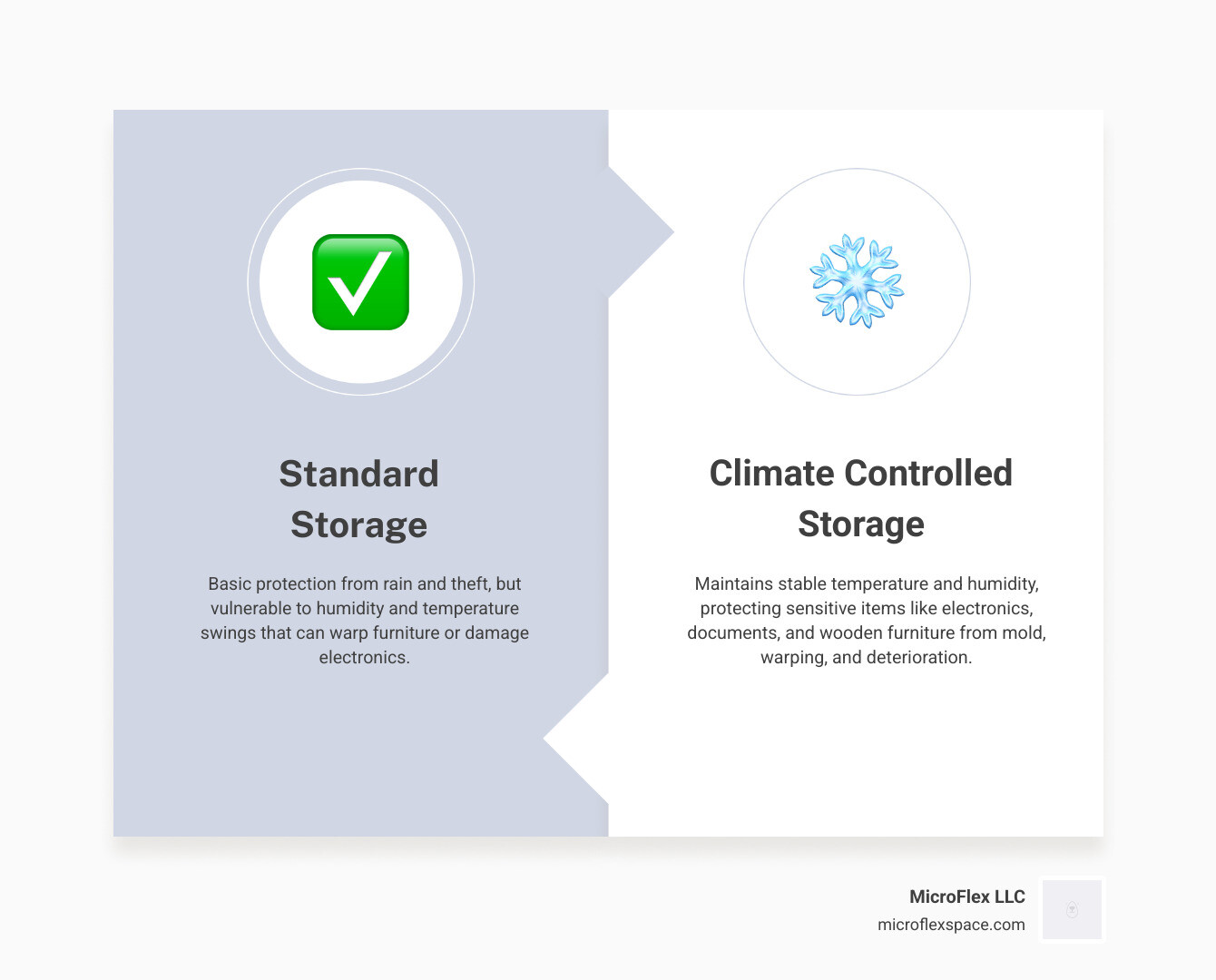
When evaluating the climate controlled storage unit cost per month, it is important to recognize that you are investing in a regulated environment rather than just a simple storage box. In 2026, the national landscape for storage shows that while standard units offer basic protection, only climate-controlled environments mitigate the risks posed by humidity and extreme temperature fluctuations.
The primary driver of your monthly commitment is unit size. Generally, as the square footage increases, the total monthly rate adjusts accordingly, though the value per square foot often becomes more favorable in larger spaces. Beyond size, geographic location is a major factor. If you are seeking space in the Birmingham-Hoover area or the tech-centric market of Huntsville, rates will reflect local demand and real estate values.
Facility amenities also influence the total. Modern facilities featuring advanced security, high-efficiency HVAC systems, and streamlined access will command a premium. For a deeper look at how these factors are analyzed nationally, you can explore the Average Cost of Climate Controlled Storage Units in the US 2026 or read our internal analysis on How Much Does Climate Controlled Storage Actually Cost?.
Factors That Influence Your Climate Controlled Storage Unit Cost Per Month
Why do rates vary? Seasonality is a significant lever. In Alabama, the moving season peaks in the spring and summer, driving up demand and affecting the climate controlled storage unit cost per month. Planning your transition during the winter months can often lead to more favorable introductory terms.
Market demand also plays a role. In growing cities like Auburn or Madison, the influx of new businesses creates a higher demand for quality space. Additionally, security features—such as gated access and 24/7 monitoring—contribute to the facility’s operational value. Finally, energy efficiency is key; buildings with superior insulation and modern climate systems provide a more stable environment, which is a critical factor in the overall value proposition.
Regional Trends and Facility Accessibility
In Alabama, we face specific environmental challenges. Urban demand in the Birmingham area remains consistent, while humidity levels across the state necessitate robust climate control systems. In cities like Irondale and Hoover, facility accessibility—such as ground-floor entry versus elevator access—can also influence the monthly rate. For local insights, see our guide on Climate Controlled Storage Birmingham.
Why Climate Control is Essential for Sensitive Inventory

For business owners and hobbyists, inventory represents a significant investment. Storing high-value assets in a standard unit without environmental regulation can lead to costly damage. Items such as electronics, wooden furniture, and critical documents are particularly vulnerable to the elements.
Wood, for instance, is sensitive to humidity, expanding and contracting as moisture levels change. Without climate control, items like professional desks or vintage stock can warp or crack. Electronics face the threat of internal condensation caused by rapid temperature swings, which can lead to hardware failure. For a practical look at why this protection matters, read Why Your Stuff Needs a Spa Day: A Guide to Climate Controlled Storage in Madison.
Is the Climate Controlled Storage Unit Cost Per Month Worth It for Businesses?
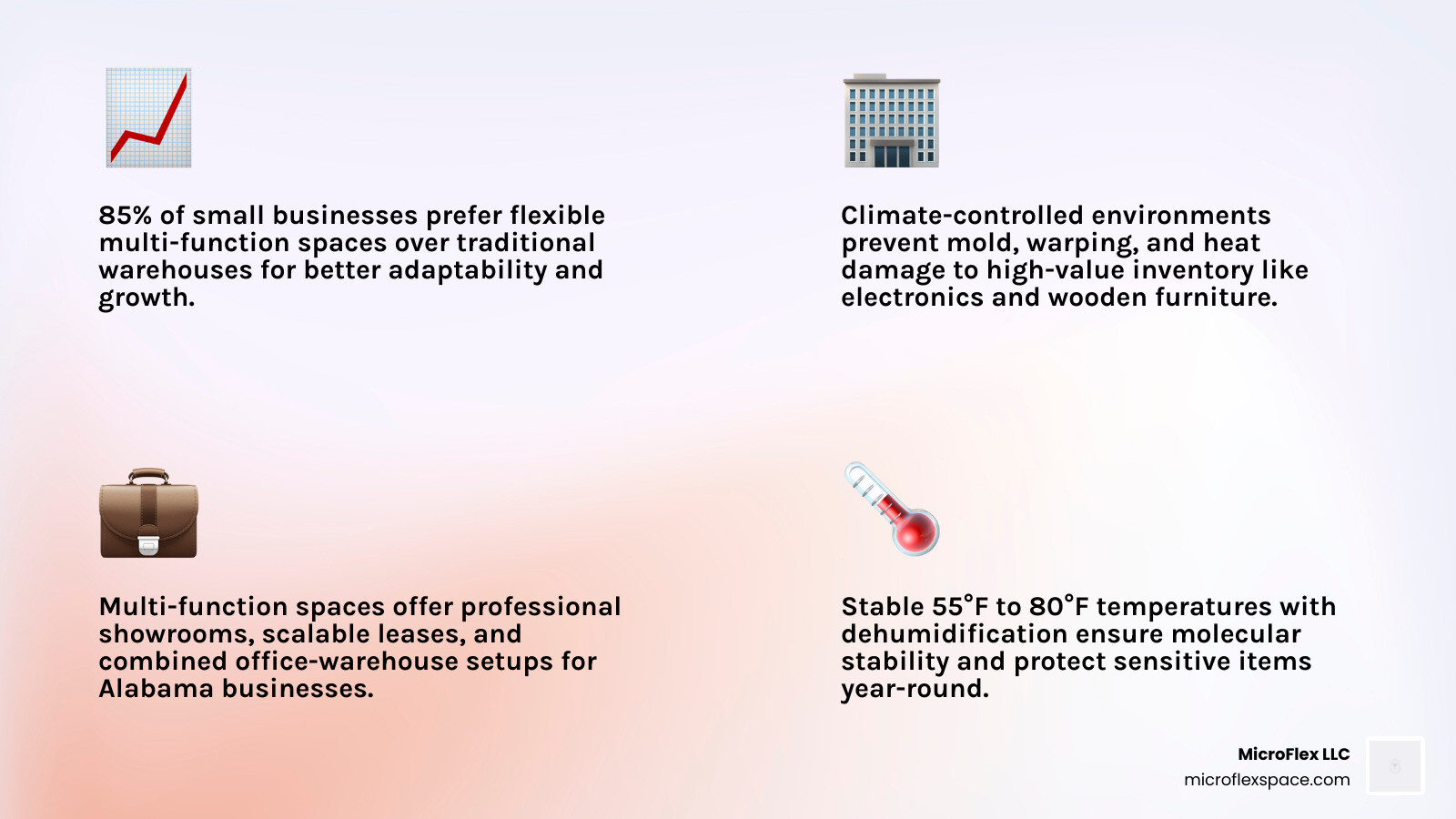
For a small business, the climate controlled storage unit cost per month acts as an essential safeguard for your assets. Asset longevity is the priority. When storing valuable inventory, the small monthly premium for climate regulation is a logical business expense to prevent mold, warping, or degradation.
Inventory preservation also supports professional standards. Delivering products that have been kept in a pristine, climate-controlled environment ensures they remain in “showroom” condition, protecting your brand’s reputation. Learn more about the best options in our area at Chill Out: Top Climate Controlled Storage Options in Irondale.
Protection Against Extreme Temperature Fluctuations
In Alabama, standard storage units can reach extreme internal temperatures during the summer. Our climate-controlled spaces utilize advanced HVAC systems and dehumidification to maintain a stable environment year-round. This stability is vital for the molecular stability of materials like plastics and vinyl and is the most effective method for mold prevention, as it keeps humidity levels below the threshold where spores thrive.
Industry Spotlight: Why Moving Companies Thrive in Flexible Climate-Controlled Spaces
Moving companies are a perfect example of a business that needs more than just a standard storage unit. In the moving industry, client asset safety is the number one priority. When a moving company handles a “staged” move—where furniture needs to be stored for a few weeks between houses—they cannot risk damage to a client’s heirlooms.
Short-term storage needs often fluctuate, and having operational flexibility is key. Moving companies in the Birmingham-Hoover area often use climate-controlled spaces as a “holding hub” for high-end furniture, pianos, and art collections. This allows them to offer a premium service to their clients, knowing the items are protected from the Alabama heat. If you’re looking for the right fit for your moving business, check out how to Find Your Perfect Climate Controlled Storage Unit in Hoover.
Why Flexible Multi-Function Spaces are the Best Alternative for Alabama Businesses
While traditional climate-controlled storage is great for boxes, many modern Alabama businesses need something more. This is where MicroFlex™ LLC changes the game. We offer adaptable multi-function spaces that combine the best of warehouse, office, and climate-controlled storage.
If you are a business owner in Birmingham-Irondale, Birmingham-Hoover, Auburn, or Huntsville/Madison, you might find that a simple storage unit is too restrictive. Our spaces offer:
- Adaptable Configurations: Need a showroom in the front and climate-controlled inventory in the back? We can do that.
- Business Growth: Our flexible lease terms allow you to scale your space as your business grows, without being locked into a rigid, 10-year commercial lease.
- Professional Showroom: Unlike a storage facility where you can’t meet clients, our spaces are designed to be professional environments where you can host meetings and showcase products.
Frequently Asked Questions about Climate Controlled Storage
What temperature range is maintained in these units?
Most climate-controlled units are maintained between 55°F and 80°F. This range is specifically chosen to stay below the threshold where heat damage occurs and above the point where freezing might affect liquids or delicate materials.
Which specific items require humidity regulation?
Items made of natural fibers or organic materials are the most sensitive. This includes wooden furniture, leather goods, musical instruments (especially those made of wood like violins or guitars), wine, and paper archives. Humidity regulation prevents these items from either drying out and cracking or absorbing moisture and growing mold.
How does seasonal demand affect monthly rental availability?
In Alabama, demand for climate-controlled space peaks during the “moving window” of May through August. During this time, availability may be limited, and prices may be slightly higher for new move-ins. Booking your space in the “off-season” (late autumn or winter) is often a smart way to secure your preferred unit size.
Conclusion
Deciding on the right climate controlled storage unit cost per month is about balancing your budget with the value of what you are protecting. Whether you are a resident in Auburn or a business owner in Huntsville, the peace of mind that comes with temperature and humidity regulation is often worth the small monthly premium.
At MicroFlex™ LLC, we believe that Alabama businesses deserve more than just a dark unit. Our multi-function spaces in Irondale, Hoover, Auburn, and Madison provide the professional, climate-controlled environment your business needs to thrive. From flexible lease terms to diverse configurations, we are here to support your growth.
Ready to upgrade your business space? Find your storage units in Birmingham and discover the MicroFlex™ difference today.