Understanding the Cost of Climate Controlled Storage Factors
When we look at the cost of climate controlled storage, it is rarely a “one-size-fits-all” number. Several moving parts dictate what you will see on your monthly invoice. As of April 2026, the market has shifted toward more sophisticated climate management, which means the technology behind these units is better than ever, but it also means the pricing factors have become more nuanced.
Geographic Location
Location is perhaps the most significant driver of price. In high-density urban areas where real estate is at a premium, you can expect to pay significantly more. For instance, a unit in a bustling city center will always command a higher rate than one in a rural setting. According to the Cost of Self Storage – Last Updated March 2026 – Yelp, real-time quotes show that even within the same state, prices can fluctuate by 50% based on the zip code.
Seasonal Demand
Storage is a seasonal business. We often see prices peak during the spring and summer months when people are moving or graduating. If you start a lease in the dead of winter, you might find more aggressive promotions or lower base rates. Conversely, trying to snag a unit in June might mean paying a premium because the facility is at 98% occupancy.
Facility Amenities and Building Insulation
Not all climate control is created equal. Some facilities use basic “temperature-controlled” systems that only prevent freezing or sweltering heat. Higher-end options provide true climate control, which includes dehumidification. The Temperature Controlled Storage Units 2025 Guide & Costs – Target Self Storage notes that modern buildings with R-19 insulation in the walls and roofs are more energy-efficient, which helps stabilize costs for the operator and, ideally, the renter.
Security Features
When you pay for climate control, you are usually also paying for a higher tier of security. These units are almost always located inside a finished building with restricted keypad access, 24/7 video monitoring, and sometimes even individual unit alarms. This added layer of protection is baked into the cost of climate controlled storage.
How Unit Size Impacts the Cost of Climate Controlled Storage
The square footage of your unit is the most direct multiplier of your cost. However, it is important to think about volume, not just floor space. Because climate-controlled units are typically located indoors, they often have standardized ceiling heights (usually 8 to 10 feet), allowing you to stack inventory and maximize your investment.
| Unit Size | Business Storage Capacity | Typical Use Case |
|---|---|---|
| 5×5 | 5-10 Large Boxes | Document archiving, small electronics, samples |
| 5×10 | 15-25 Boxes + Small Shelving | Small office furniture, marketing materials |
| 10×10 | 140-150 Boxes or 2-3 Rooms | Retail inventory, large equipment, furniture |
| 10×20 | 300+ Boxes or 4-5 Rooms | Warehouse overflow, distribution staging |
For small businesses, the 10×10 unit is often the “sweet spot.” It provides enough room for a significant amount of inventory while remaining more affordable than a full-scale warehouse. If you are storing items like pharmaceutical samples or delicate electronics, the 5×5 might be all you need to ensure those high-value assets stay in a stable environment.
Regional Variations and the Cost of Climate Controlled Storage
In Alabama, we have a very specific relationship with the weather. Our summers aren’t just hot; they are incredibly humid. This humidity is the “silent killer” of stored goods. While a facility in a dry desert climate like Phoenix might focus primarily on cooling, our facilities in the Southeast must work overtime to pull moisture out of the air.
In areas like Birmingham and Huntsville, the cost of climate controlled storage reflects the energy required to maintain that 30-50% humidity range. If you are looking for Climate Controlled Storage Birmingham, you’ll find that the premium over standard storage is well worth it to prevent mold and mildew from claiming your office furniture or paper records.
Similarly, if you are trying to Find Your Perfect Climate Controlled Storage Unit In Hoover, you’ll notice that urban premiums apply. Units located near major business hubs or high-end residential areas often carry a higher price tag due to the sheer demand for convenient, climate-secure space.
Why Businesses Invest in Climate-Controlled Environments
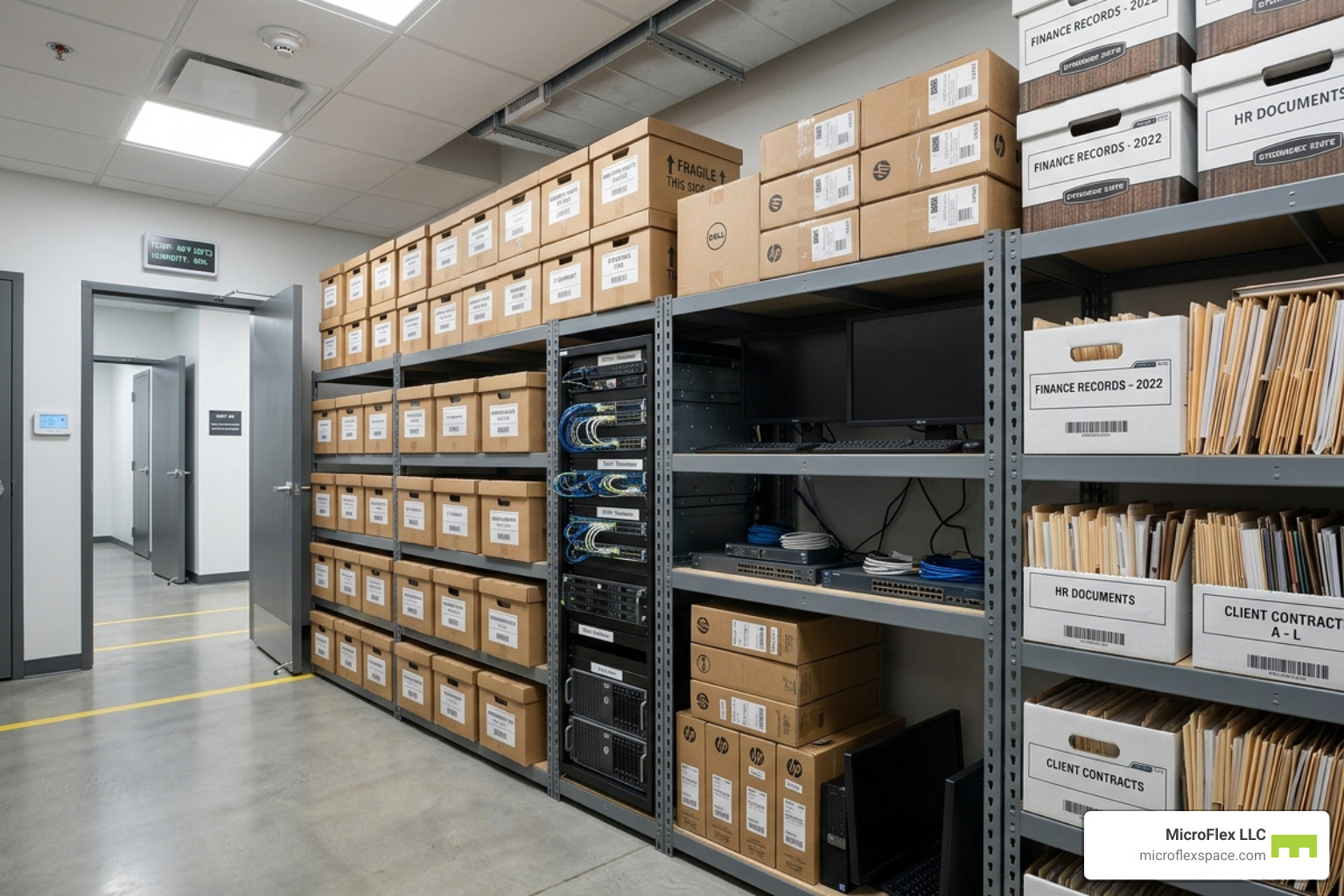
For a business, a storage unit isn’t just a closet; it’s an extension of their operations. Investing in the cost of climate controlled storage is often a strategic move to protect the company’s bottom line.
Electronics Protection
Computers, servers, and specialized medical equipment contain sensitive circuitry that can corrode in high humidity or fail after exposure to extreme heat. If you’re a tech startup or a medical professional, keeping your hardware in a stable 65-85°F environment is non-negotiable.
Document Archiving and Paper Goods
Whether it’s tax records, legal files, or a collection of vintage books, paper is highly susceptible to the elements. High humidity makes paper “soft” and prone to foxing (those brown spots you see on old documents), while extreme dryness can make it brittle. For those in the Madison area, our guide on Why Your Stuff Needs A Spa Day A Guide To Climate Controlled Storage In Madison explains how consistent air quality preserves these vital records for decades.
Inventory Longevity
If you sell apparel, pharmaceuticals, or cosmetics, the environment is everything. Heat can melt lipsticks or ruin the chemical composition of medications. Humidity can lead to “musty” smells in fabrics that are impossible to remove. The How Much Do Climate Controlled Storage Units Cost? research highlights that for items valued over $2,000, the cost of the unit is essentially a very cheap insurance policy.
Furniture and Fabric Care
Wooden furniture expands and contracts with temperature swings, leading to cracks and warped joints. Leather can crack in dry heat or grow mold in damp conditions. By maintaining a steady climate, you ensure that your office assets remain in “like-new” condition, preserving their resale value and utility.
MicroFlex: The Superior Alternative for Alabama Businesses

While traditional storage units serve a purpose, many small business owners find themselves outgrowing a “box” very quickly. This is where MicroFlex LLC enters the picture. We don’t just provide a place to put things; we provide a place to do things.
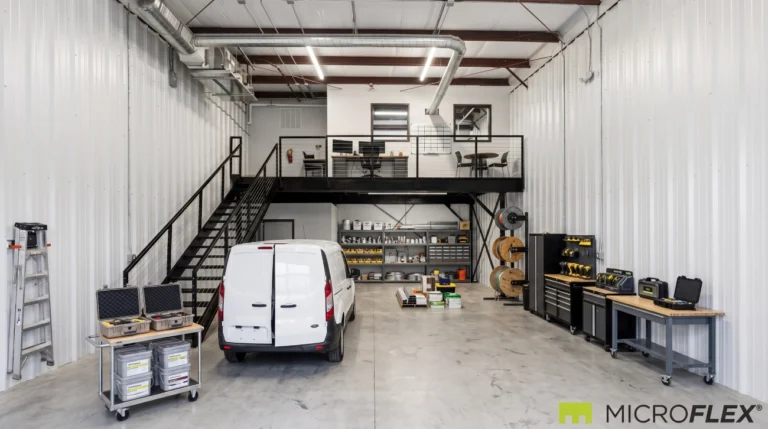
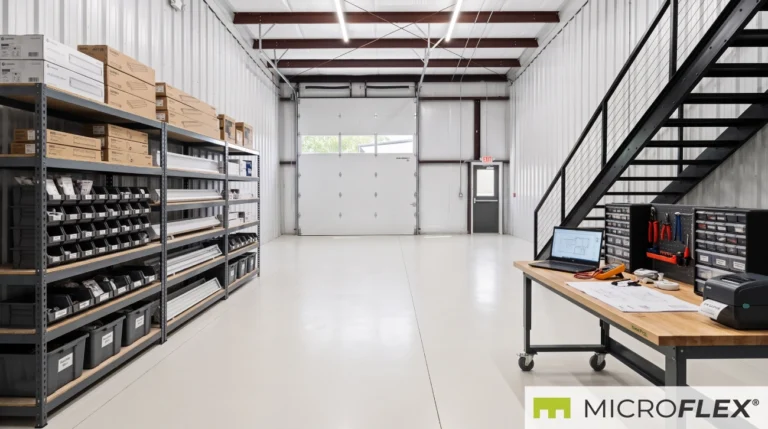
MicroFlex offers adaptable multi-function spaces that combine the best aspects of a warehouse, an office, and a climate-controlled showroom. If you are a business owner in Alabama, we are the premier choice for several reasons:
- More Than Storage: Unlike a standard unit where you might be prohibited from working inside, MicroFlex spaces are designed for activity. You can manage your inventory, set up a small office, and even host clients in a professional environment.
- Flexible Lease Terms: We understand that small businesses need to stay agile. Our lease terms are designed to grow with you, not lock you into a rigid, long-term contract that no longer fits your needs six months down the line.
- Strategic Alabama Locations: We have specifically chosen high-growth areas to support local entrepreneurs.
- Birmingham-Irondale: Perfect for those looking to Chill Out Top Climate Controlled Storage Options In Irondale.
- Birmingham-Hoover: Our Climate Controlled Storage Hoover Guide shows why this is a hub for retail and service businesses.
- Auburn-Opelika: Ideally situated for the tech and academic community.
- Huntsville-Madison: Supporting the “Rocket City” with high-tech flex spaces.
- Value Preservation: Our spaces offer the same high-tier climate control you’d expect from premium storage, but with the added benefit of 3-phase power, high-speed internet capability, and professional storefronts.
For the entrepreneur who needs to store inventory but also needs a home base for their operations, MicroFlex provides a level of scalability that traditional storage simply cannot match.
Frequently Asked Questions about Climate-Controlled Storage
What temperature and humidity ranges are standard for these units?
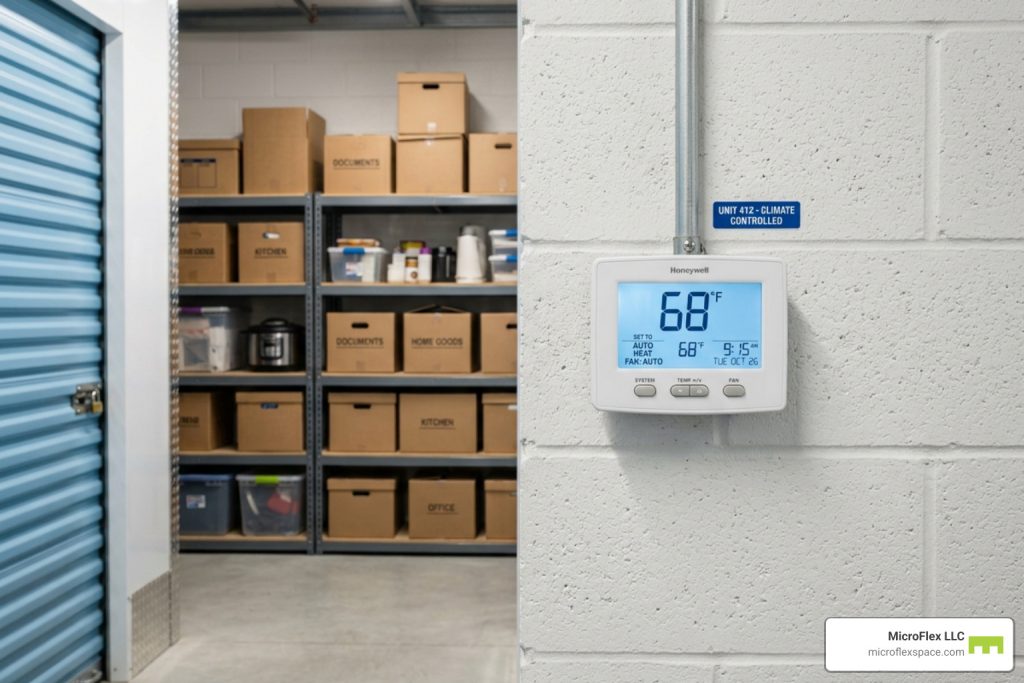
Most professional climate-controlled facilities aim to keep the temperature between 55°F and 85°F year-round. This prevents the “oven effect” of summer and the freezing “brittle effect” of winter. More importantly, humidity is typically kept between 30% and 50%. This range is the “sweet spot” for preventing mold growth and protecting wood and electronics.
Is the extra expense worth it for long-term business storage?
Absolutely. If you are storing items for more than three months in Alabama, the risk of humidity damage increases exponentially. The cost of climate controlled storage is a fraction of the cost of replacing a pallet of ruined inventory or a suite of office furniture. Think of it as an operational necessity rather than a luxury.
Which specific items absolutely require humidity control?
While many items benefit from it, these are the “must-haves”:
- Electronics: Computers, cameras, and audio equipment.
- Media: Vinyl records, CDs, and old photographs.
- Musical Instruments: Especially wooden ones like violins, guitars, and pianos.
- Textiles: Clothing, rugs, and upholstered furniture.
- Metals: Copper and brass can tarnish or corrode in high humidity.
Conclusion
Investing in a climate-controlled environment is a strategic decision for any business owner. While the cost of climate controlled storage may be higher upfront, the long-term protection of your assets and the peace of mind it provides are invaluable. Whether you are archiving decades of records or staging inventory for a growing e-commerce brand, the environment matters.
If you find that a simple storage unit isn’t enough to support your business’s growth, consider the flexibility of a MicroFlex space. With our locations across Alabama, we provide the infrastructure you need to thrive.