


Why Short-Term Warehouse Leasing Is Changing Business Operations
A short term warehouse lease offers businesses the flexibility to rent warehouse space for periods typically ranging from 1 to 12 months, providing an agile alternative to traditional long-term commitments. Here’s what you need to know:
Quick Facts About Short-Term Warehouse Leasing:
- Duration: 1-12 months (some offer month-to-month)
- Cost: 10-30% premium over long-term rates
- Typical Rate: $5-10 per square foot annually for basic space
- Minimum Cost: Can start around $1,000/month
- Setup Time: Often operational within days
- Ideal For: Seasonal businesses, startups, inventory overflow, market testing
The warehouse industry has seen a major shift toward flexibility. Businesses are outsourcing warehouse headaches to specialized providers who handle everything from security to equipment.
Short-term leasing eliminates the stress of long-term commitments while providing rapid access to professional-grade warehouse space. Whether you’re handling seasonal inventory surges, testing new markets, or simply need overflow storage, these flexible arrangements let you scale up or down without penalty fees.
Traditional warehouse leases often span 5-10 years with rigid terms. But today’s fast-moving businesses need space solutions that match their pace. Short-term options provide the perfect testing ground for new locations, seasonal operations, or rapid growth phases.
I’m Sam Zoldock, a commercial real estate investment professional with deep expertise in Alabama’s industrial markets, including short term warehouse lease opportunities across medical, industrial, and multifamily properties. Through my experience with OWN Alabama since 2018, I’ve helped numerous businesses steer flexible leasing solutions that align with their growth strategies.
What Is a Short-Term Warehouse Lease?
A short term warehouse lease is a rental agreement that gives you professional warehouse space without the commitment of traditional leases. These flexible arrangements typically run anywhere from one month to twelve months, with some providers offering month-to-month options.
While traditional warehouse leases often demand 5-10 year commitments, short-term options recognize that modern businesses move fast. You shouldn’t have to predict where your company will be in five years just to get storage space.
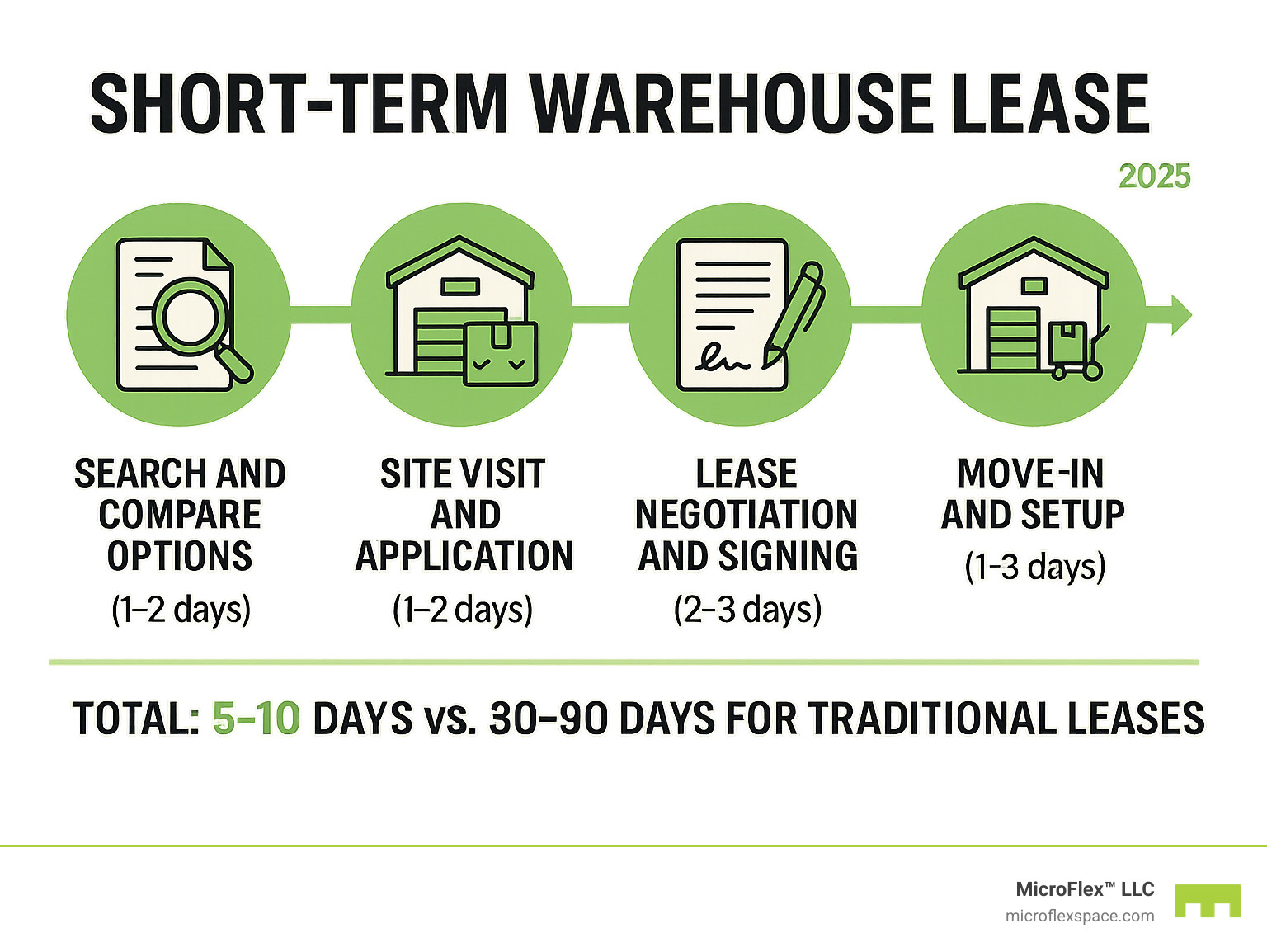
The real game-changer? You can be operational within days rather than months. Many short-term warehouse providers keep spaces ready to go with minimal setup requirements.
Short-term leases also come with lower deposits compared to long-term agreements. While traditional leases might require significant upfront investments, short-term options often need just first month’s rent and a modest security deposit.
Duration & Typical Terms
Short-term warehouse leases come in different options depending on your needs:
Ultra-short terms (1-3 months) work perfectly for seasonal peaks, product launches, or emergency storage needs. These come with the highest per-square-foot rates, but you’re paying for maximum flexibility.
Short terms (3-6 months) are ideal for market testing, temporary overflow, or bridge space while waiting for permanent facilities. Rates typically decrease as duration increases.
Medium-short terms (6-12 months) work best for growing businesses that need time to evaluate long-term needs or companies with predictable seasonal patterns.
Most short-term leases include automatic renewal clauses, allowing you to extend month-to-month after the initial term. Notice periods are typically 30 days, though some arrangements offer as little as 7-day notice for termination.
Amenities Often Included
Modern short-term warehouse spaces come well-equipped with professional-grade facilities.
Loading infrastructure typically includes loading docks, roll-up doors, and truck-level access. Many facilities provide pallet jacks and basic material handling equipment as part of the lease.
Technology amenities usually cover WiFi, security systems, and 24/7 access control. Many facilities also offer inventory management system integration and carrier pickup coordination.
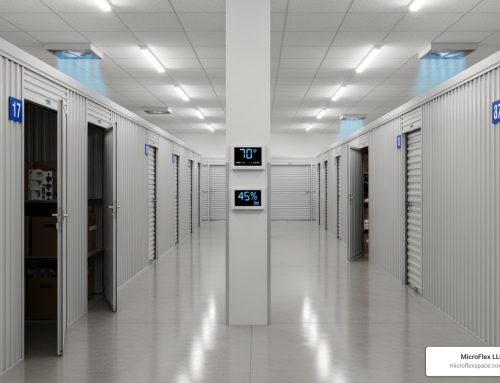
Climate control maintains optimal storage conditions, crucial for sensitive inventory or electronics.
Security features include professional-grade security systems, surveillance cameras, and controlled access. Some facilities provide on-site management during business hours.
Basic utilities like electricity and water are typically included in the rent, eliminating the hassle of setting up separate accounts for short-term stays.
At MicroFlex™ LLC, we’ve designed our spaces to include all these amenities because we understand that short-term doesn’t mean short on service.
Short-Term vs. Long-Term: Key Differences & Cost Breakdown
When weighing a short term warehouse lease against a traditional long-term commitment, the differences go far beyond just contract length.
| Factor | Short-Term (1-12 months) | Long-Term (3-10 years) |
|---|---|---|
| Cost per sq ft | $6-13 annually | $5-8 annually |
| Deposit | 1-2 months rent | 3-6 months rent |
| Setup time | 1-7 days | 30-90 days |
| Flexibility | High – scale up/down easily | Low – locked into space |
| Customization | Limited | Extensive |
| Exit options | 30-day notice typical | Early termination penalties |
| Renewal risk | Higher rates possible | Rate increases capped |
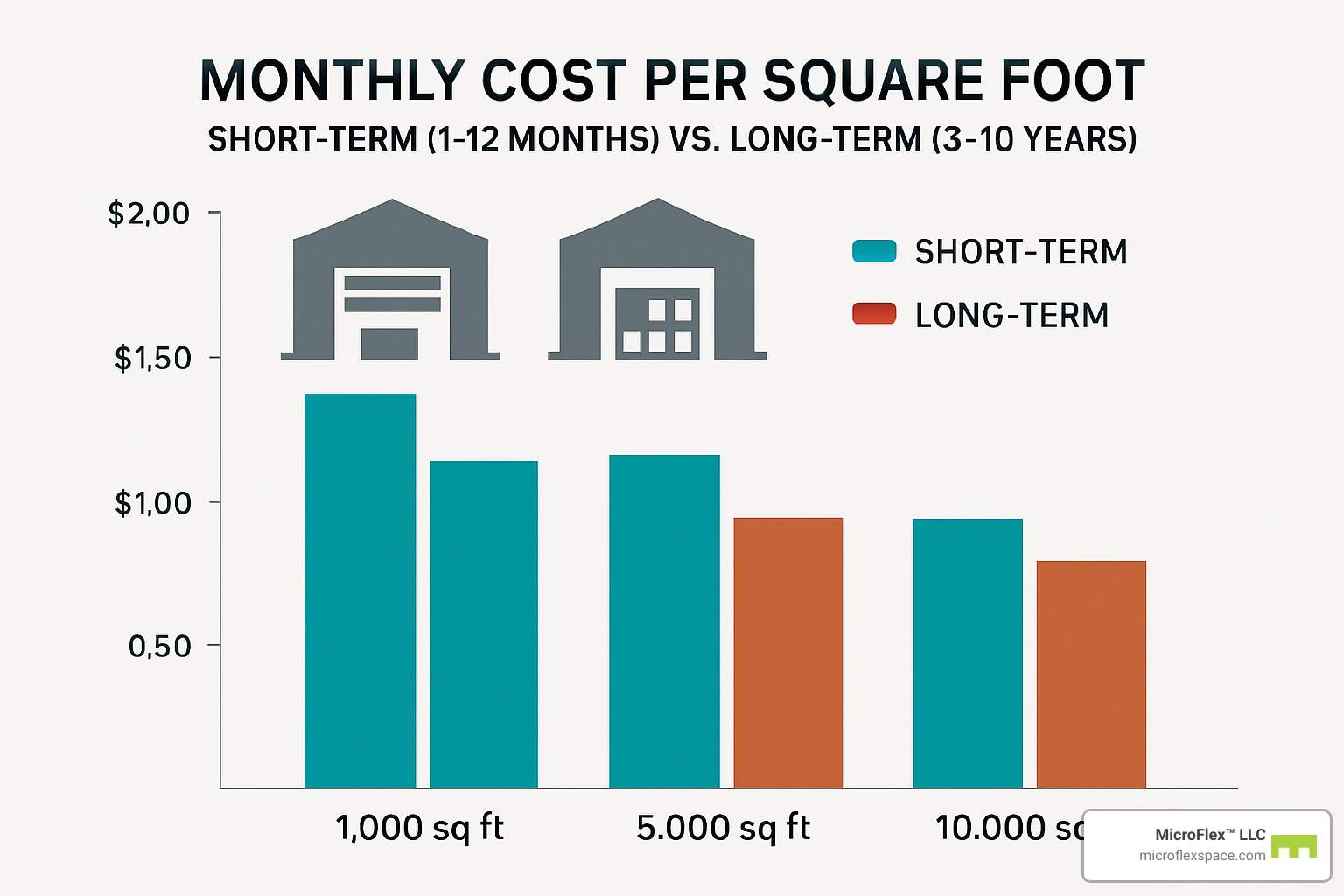
Short term warehouse lease options typically cost 10-30% more per square foot than long-term counterparts. But that premium buys flexibility, reduced risk, and the freedom to pivot when business needs change.
According to the latest CBRE industrial rent data, the flexibility premium has become standard as businesses increasingly value agility over long-term cost savings. When you factor in dramatically lower deposits and lightning-fast setup times, short-term leases often require significantly less upfront capital.
Latest CBRE industrial rent data
Cost Per Square Foot & Hidden Fees
That 10-30% premium for short-term flexibility reflects genuine additional costs that landlords face with shorter commitments – more vacancy risk, tenant turnover, and frequent lease negotiations.
Base rent for short-term spaces typically runs $6-13 per square foot annually compared to $5-8 for long-term agreements. Many short-term leases bundle services that long-term tenants pay for separately.
Utilities are often included in base rent, potentially saving money compared to setting up separate accounts. CAM charges are usually simplified or rolled into rent, eliminating surprise quarterly bills.
Watch for potential extras: setup fees ($100-500), equipment rental charges, and cleaning fees upon move-out. Some facilities charge storage fees if you leave inventory behind.
At MicroFlex™ LLC, we believe in transparent pricing with no surprise fees or hidden charges.
Pros & Cons of a short term warehouse lease
The biggest advantage is agility. When business needs change, you can adapt quickly. Market demand spikes? Scale up. Seasonal lull? Scale down. No penalty fees, no complex negotiations.
Fast scaling is a game-changer for growing businesses. You can test new markets, launch product lines, or handle unexpected growth without massive upfront commitments.
Lower initial investment preserves cash flow. While traditional leases might demand 3-6 months’ rent upfront, short-term options typically require just 1-2 months’ rent as deposit.
But flexibility comes with trade-offs. You’ll miss out on tenant improvement allowances and free rent periods that long-term tenants often negotiate. Your space comes “as-is” with limited customization options.
Renewal risk is real – rates could jump significantly when extending, or space might not be available.
Risk & Exit Clauses
Short-term leases create a different risk profile. You’re protected from market swings over the long haul, but exposed to rapid rent increases if demand heats up.
Termination fees can still apply, typically ranging from one month’s rent to remaining lease balance. Most short-term leases restrict subleasing rights, limiting options if needs change mid-lease.
Ensure you understand exactly what 30-day notice means – does it start from the first of the month or from the day you give notice? Even short-term leases deserve careful legal review.
Who Benefits & Common Use Cases

The beauty of a short term warehouse lease is how it solves real problems for real businesses facing unpredictable growth or seasonal challenges.
Seasonal businesses need flexible storage – retailers requiring three times their normal space from October through January, or agricultural suppliers swamped during harvest season. These businesses used to choose between paying for empty space year-round or scrambling for storage when needed most.
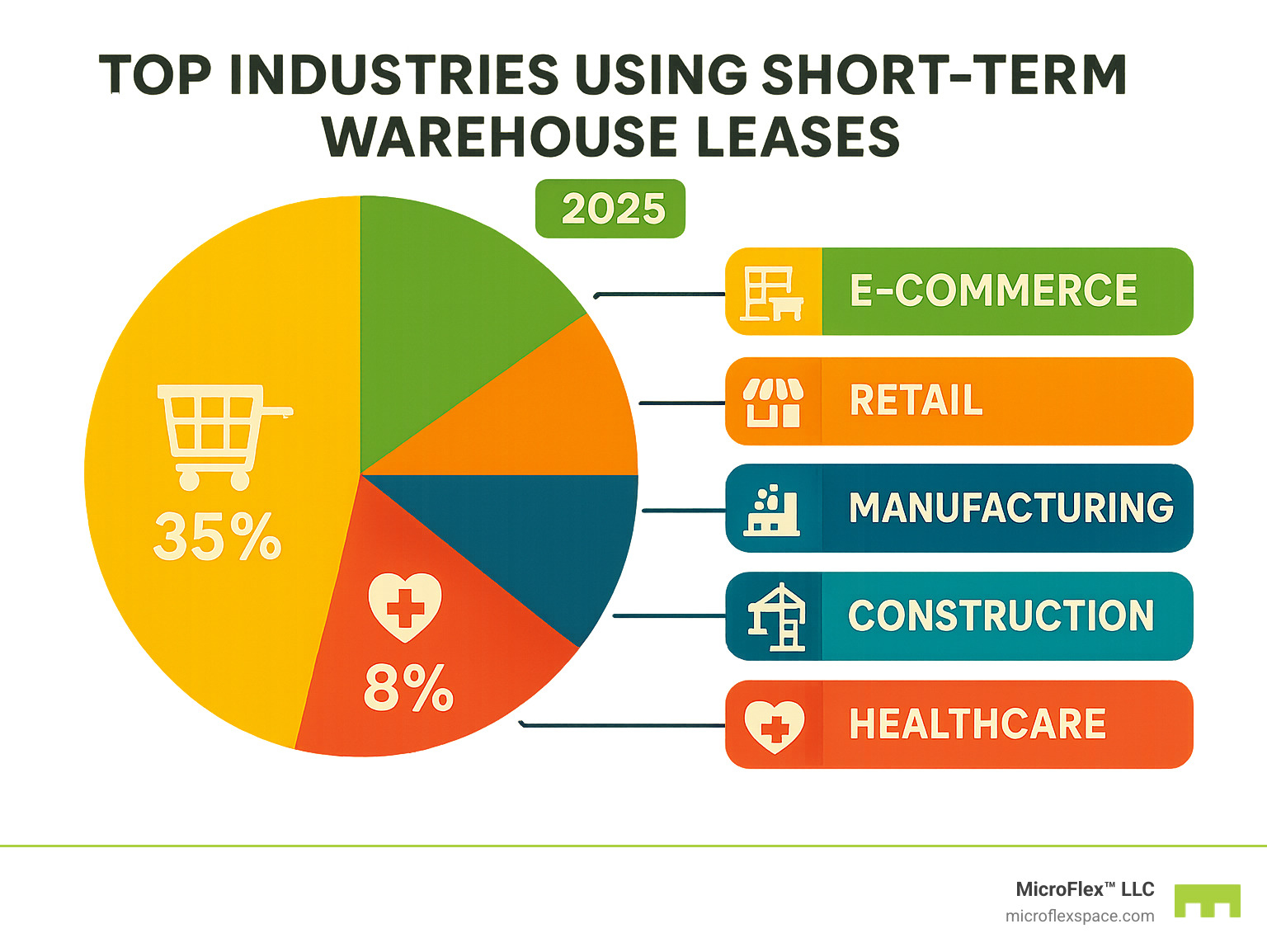
E-commerce companies have become huge users of short-term space. Online retail is notoriously unpredictable – products can go viral overnight, or seasonal trends shift faster than expected. Scaling warehouse space quickly can mean the difference between capitalizing on opportunity and missing out.
Startups experiencing rapid growth often outgrow current space but aren’t sure how much room they’ll need in six months. Short-term leases provide breathing room to figure out long-term needs without getting locked into something that might not fit.
Project-based operations love the flexibility. Construction companies need storage for specific job sites, event planners need space for seasonal work, and contractors have defined project timelines that don’t align with traditional lease terms.
Businesses also use short-term leases for disaster relief situations – when floods or fires force them out of permanent space, they need immediate solutions while rebuilding or relocating.
Seasonal Peaks & Promotions
Seasonal businesses face unique challenges that make short term warehouse lease arrangements particularly valuable. Instead of paying for space you don’t need year-round, you can match storage costs to actual demand.
Holiday retail is the classic example. From October through January, many retailers need three to five times their normal storage capacity. Rather than paying for extra space all year, they lease additional warehouse space just for peak season.
Agricultural operations follow similar patterns. Harvest seasons create massive storage needs that disappear once products are distributed. Food processors, grain elevators, and farming cooperatives can scale storage capacity to match seasonal cycles.
Event merchandise creates predictable patterns. Concert tours, sports events, and festivals need temporary storage for merchandise, equipment, and promotional materials.
Back-to-school suppliers experience predictable seasonal spikes. Educational suppliers and retailers can expand storage capacity just for busy season without carrying cost burden year-round.
The math is simple: why pay for 12 months of space when you only need it for 3-4 months?
Rapid-Growth Startups & Pop-ups
Growing businesses often find themselves caught between outgrowing current space and not being ready for long-term commitments to larger facilities.
Product launches create immediate storage needs, but it’s hard to predict long-term demand. Short-term leases let you test the waters without diving into the deep end.
Market testing is another perfect use case. Companies expanding into new geographic areas can establish temporary distribution points to test demand before committing to permanent facilities.
Crowdfunding fulfillment creates unique challenges. Successful campaigns need immediate warehouse space to fulfill orders, but future demand is uncertain. Short-term leases provide flexibility to handle fulfillment without overcommitting.
Pop-up operations and temporary retail concepts need space matching their operating schedules. Whether seasonal stores, event-based businesses, or temporary retail concepts, short-term leases align perfectly.
Bridge space situations are common. Companies transitioning between permanent facilities can use short-term leases to maintain operations without interruption.
At MicroFlex™ LLC, we’ve worked with numerous startups who started with short-term arrangements and eventually grew into long-term partnerships.
How to Choose and Secure a Short Term Warehouse Lease
Finding the right short term warehouse lease doesn’t have to be overwhelming. Success comes down to preparation and knowing what questions to ask.
The biggest mistake businesses make? Rushing into the first space they find without doing homework. Take time upfront to define your actual needs – not just square footage, but ceiling height requirements, loading dock needs, and whether climate control is essential.
Budget planning goes beyond monthly rent. Factor in utilities (if not included), insurance requirements, and equipment rental fees. A $2,000 monthly lease can quickly become $3,000 when you add insurance, electricity, and forklift rental.
Location matters more than you might think. Being close to customers can save hundreds monthly in delivery costs, while proximity to major highways keeps shipping efficient. Don’t forget about staffing – can you actually staff the facility at reasonable wages?
Insurance requirements often catch businesses off guard. Most landlords require general liability coverage between $1-2 million, plus property insurance for inventory. Get quotes early in your search process.
Nothing beats visiting potential locations in person. What looks perfect online might have hidden issues like poor truck access or noisy neighbors.
Location & Pricing Factors
Location dramatically impacts both operational efficiency and your bottom line.
Last-mile proximity to customers matters more than ever. With rising delivery expectations, being within 30 miles of your customer base can be the difference between profitable and unprofitable operations.
The labor pool in your chosen area affects both staffing ability and wage costs. Areas with established industrial bases typically have experienced warehouse workers available, though wages may be higher than rural locations.
Transportation access shapes daily operations. Direct highway access, proximity to rail lines, and reasonable distance to airports all factor into logistics costs. A facility that’s $2 per square foot cheaper might cost you $5 per square foot in additional transportation expenses.
Pricing varies significantly. Urban centers typically run $8-12 per square foot annually, while suburban areas range from $6-10 per square foot. Rural locations can be as low as $4-8 per square foot, but factor in higher transportation costs and limited labor availability.
Central Alabama Small Warehouse Rental
Negotiating the Agreement
Even short term warehouse lease agreements have room for negotiation.
Deposit size is often the easiest win. While standard deposits range from one to three months’ rent, short-term leases often allow negotiation closer to one month, especially with solid credit or good references.
Extension rights protect you from sudden rent increases if you need to stay longer than planned. Negotiate predetermined rates for extensions rather than leaving yourself at market mercy.
Equipment access can save significant money. Instead of paying separate rental fees for forklifts or pallet jacks, negotiate their use as part of your lease agreement.
Termination clauses deserve careful attention. Understand exactly what notice you need to provide and any penalties for early termination.
Scaling Your Short Term Warehouse Lease Up or Down

The beauty of short term warehouse lease arrangements is their ability to grow and shrink with business needs. Smart planning from day one makes scaling much easier.
Flex-space add-ons are your best friend for unexpected growth. Many providers offer adjacent space that can be added to your lease with minimal notice. This beats scrambling to find entirely new space when demand spikes.
Modular racking systems let you maximize vertical space as inventory levels change. Instead of expanding horizontally, you can often double storage capacity by going up.
Technology integrations happen faster than expected. Modern warehouse management systems can be implemented and scaled quickly, allowing you to optimize operations even in temporary space.
Transition In & Out Best Practices
Smooth transitions separate successful short-term warehouse operations from chaotic ones.
Move-in timeline should be realistic but aggressive. Plan for lease signing and key handover in the first two days, followed by utility setup and system testing through day five. Inventory transfer and staff training typically take another few days, with full operations by day eight to ten.
Inventory mapping protects you during exit inspections and improves daily operations. Document everything that enters the space with photos and detailed lists.
Exit inspection preparation starts 30 days before planned departure. Review lease requirements early and begin planning necessary repairs or cleaning. Schedule exit inspection with your landlord at least two weeks in advance.
Cleaning requirements vary by landlord but typically include removing all inventory and equipment, sweeping and mopping floors, cleaning loading docks and overhead doors, and removing signage or temporary installations.
Proper transition planning prevents disputes and ensures you get your full security deposit back.
Frequently Asked Questions about Short-Term Warehouse Leasing
Let’s tackle the most common questions about short term warehouse lease arrangements.
How long can I rent?
The beauty of short-term warehouse leasing is the range of options available. Most arrangements run from 1 to 12 months, with plenty of flexibility built in.
Ultra-short terms of 1-3 months work perfectly for seasonal peaks like holiday retail rushes or emergency storage needs when regular space floods or needs repairs.
Standard short-term leases of 3-6 months are our most popular option. They give you enough time to test new markets, handle extended seasonal demand, or serve as bridge space while searching for permanent facilities.
For businesses with longer-term flexibility needs, 6-12 month arrangements provide stability while keeping options open. Growing companies often use these to evaluate whether they need permanent space in a particular location.
Most leases include automatic renewal clauses. After your initial term ends, you can typically continue month-to-month. This means you’re never stuck scrambling for space if your project runs longer than expected.
Is the rent higher than long-term?
Yes, short term warehouse lease arrangements do cost more per square foot than long-term deals. Expect to pay 10-30% more than traditional lease rates.
But that premium buys you something incredibly valuable: complete flexibility. You’re paying for the ability to scale up or down without penalty, to test markets without massive commitments, and to respond quickly to changing business needs.
The higher rate often balances out when you consider the full picture. Short-term leases typically require much smaller deposits – often just 1-2 months’ rent compared to 3-6 months for long-term agreements.
Many short-term arrangements also include utilities and services that you’d pay separately in traditional leases. When you add up electricity, water, basic equipment use, and maintenance services, the cost difference shrinks considerably.
What amenities are included?
Short-term warehouse providers really shine here. Since these spaces need to be move-in ready, they typically come loaded with amenities.
Loading docks and roll-up doors are standard, along with truck-level access and adequate maneuvering space.
Technology infrastructure includes WiFi internet access, crucial for modern inventory management systems. Security systems with cameras and 24/7 access control mean your inventory stays safe.
Basic material handling equipment like pallet jacks often comes with the space. Some providers even include forklift access, saving you rental fees that can run hundreds of dollars monthly.
Utilities are typically included – electricity, water, heating, and cooling. This eliminates the hassle of setting up utility accounts for short-term stays.
At MicroFlex™ LLC, we believe short-term doesn’t mean short on service. Our spaces across Auburn Opelika, Birmingham Irondale, Huntsville, and Birmingham Hoover come equipped with everything you need to be operational from day one.
The goal is simple: you should be able to move in and start working immediately, without spending weeks setting up utilities, security systems, or basic infrastructure.
Conclusion
The world of short term warehouse lease arrangements has opened up incredible opportunities for businesses that need space solutions as flexible as their operations. Why should you be stuck paying for space you don’t need, or missing out on growth opportunities because you’re locked into rigid lease terms?
These flexible arrangements typically cost 10-30% more per square foot than traditional long-term leases, but that premium pays for something invaluable: the freedom to match your space to your actual needs. When you factor in the lower deposits, faster setup times, and included amenities, many businesses actually save money overall.
The beauty of short-term leasing lies in its simplicity. You can be operational within days rather than months. You can scale up during busy seasons and scale down during slower periods. You can test new markets without betting your entire business on a single location.
At MicroFlex™ LLC, we’ve built our entire business model around this philosophy. Our spaces across Auburn Opelika, Birmingham Irondale, Huntsville, and Birmingham Hoover aren’t just warehouses – they’re adaptable solutions that grow with your business. We understand that modern businesses need modern solutions, not the rigid lease structures of the past.
Whether you’re handling seasonal inventory surges, launching new products, or simply need breathing room while you plan your next move, short term warehouse lease options give you the flexibility to succeed on your own terms. No more wearing extra hats or stressing about space commitments that don’t match your timeline.
The future belongs to businesses that can adapt quickly to changing market conditions. Don’t let inflexible lease terms slow you down when flexible solutions are readily available. Your business deserves space that works as hard as you do.
Ready to find how flexible warehouse space can transform your operations? Let’s talk about finding the perfect solution for your unique needs.