

Why Now Is the Perfect Time to Start a Printing Business
Entrepreneurs who start printing business ventures are entering a robust industry. The global commercial printing market, valued at over $400 billion, is projected to reach $472 billion by 2026. Here’s a quick guide to get started:
- Choose Your Niche: Focus on a specific area like custom apparel, signage, or promotional products.
- Invest in Equipment: Start with a quality printer ($1,500-$12,000), design software, and finishing tools.
- Budget Smartly: Many home-based businesses launch with under $5,000.
- Select Your Space: Begin at home and plan to scale into a professional workspace as you grow.
- Market Strategically: Build an online presence and use local networking.
The printing industry is experiencing a rebirth, driven by new opportunities in 3D printing, print-on-demand (projected to hit $59.4 billion by 2033), and custom products. Modern digital equipment is more affordable and compact than ever, making it possible to launch from a garage or spare room.
Starting costs typically range from $8,100 to $32,200, with established businesses seeing potential annual revenues of $100,000 to $200,000. The barrier to entry is lower than most manufacturing businesses, and demand for personalized, high-quality printed products continues to grow.
I’m Chase Carroll, and through my work developing MicroFlex spaces, I’ve helped many entrepreneurs launch printing ventures that scale from home operations to thriving commercial enterprises. The key is planning for your workspace needs to evolve as your business grows.
Basic Start printing business glossary:
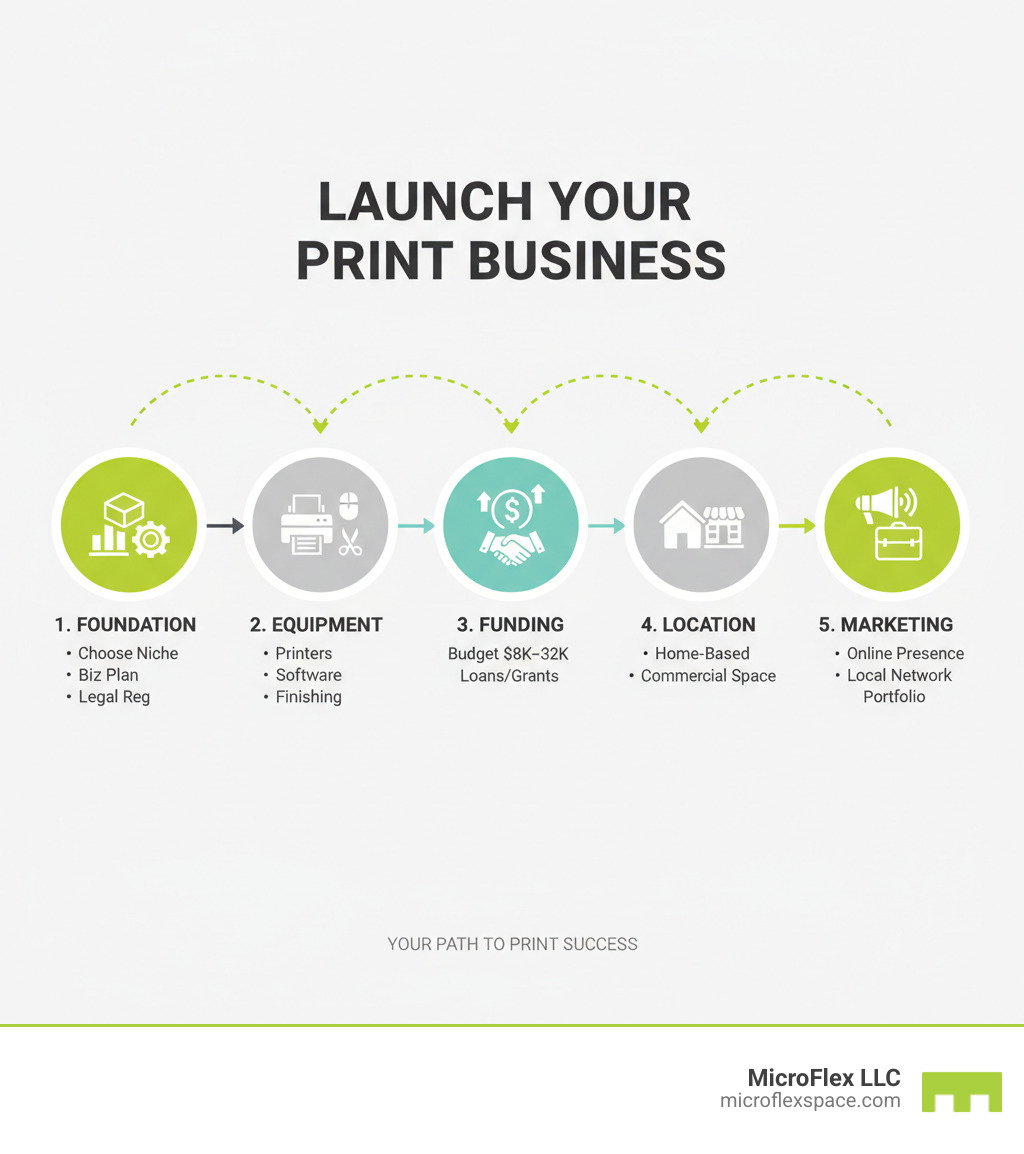
Step 1: Laying the Foundation for Your Print Empire
Before buying equipment, you need a solid foundation. This planning phase involves choosing a profitable niche and handling the legal setup to ensure long-term success.
How to Choose a Profitable Printing Niche
Trying to be everything to everyone is a path to mediocrity. Instead, become a specialist. When you start printing business operations with a focused niche, you position yourself as an expert who can command premium prices.
- Custom Apparel and T-Shirts: This is a great entry point. A direct-to-garment printer can yield an hourly profit of over $216, serving sports teams, schools, and local businesses.
- Large-Format Banners and Signs: Every storefront and event needs signage. Guiding clients to the right product builds trust and repeat business.
- Personalized Gifts and Promotional Products: This niche has exploded. With UV printing, you can customize mugs, phone cases (which can yield $718 per hour), and tumblers, even from a home setup.
- Business and Marketing Materials: Companies always need business cards, flyers, and brochures. Short-run digital printing provides a consistent revenue stream as businesses frequently update their materials.
- Niche Stationery: Weddings and events offer a creative outlet. Invitations, programs, and personalized favors are always in demand.
To find your niche, research trends on Etsy and Pinterest. Use Google Trends to see what’s popular and analyze local competition in Alabama markets like Birmingham and Huntsville to find underserved segments.
Legal and Administrative Setup
Once you have a niche, it’s time to make it official. Getting this right from the start prevents major headaches later.
First, form a legal entity. We recommend a Limited Liability Company (LLC) to protect your personal assets (home, savings) from business liabilities. Services like ZenBusiness can simplify the process.
Next, register for taxes by obtaining a free EIN from the IRS. You’ll need this Employer Identification Number to open a business bank account, hire employees, and file taxes.
Opening a separate business bank account is non-negotiable. Mixing personal and business finances creates accounting nightmares and can compromise your LLC’s protection.
Then, obtain necessary permits and licenses. Check requirements at the local, state, and federal levels. This usually includes a general business license and zoning permits. The SBA guide for state licenses is a good starting point, but always verify specific rules for your Alabama location.
Finally, understand OSHA safety requirements, especially if you’re working with chemicals or machinery. Proper ventilation and safety gear protect you and your business.
A comprehensive business plan ties this all together, outlining your target audience, competitive advantage, and financial projections. This roadmap is crucial, especially if you seek funding.
Step 2: Gearing Up with Essential Equipment and Software
Your equipment will define the services you can offer and the quality of your products. It’s vital to match your tools to your chosen niche and consider the space required for your setup.
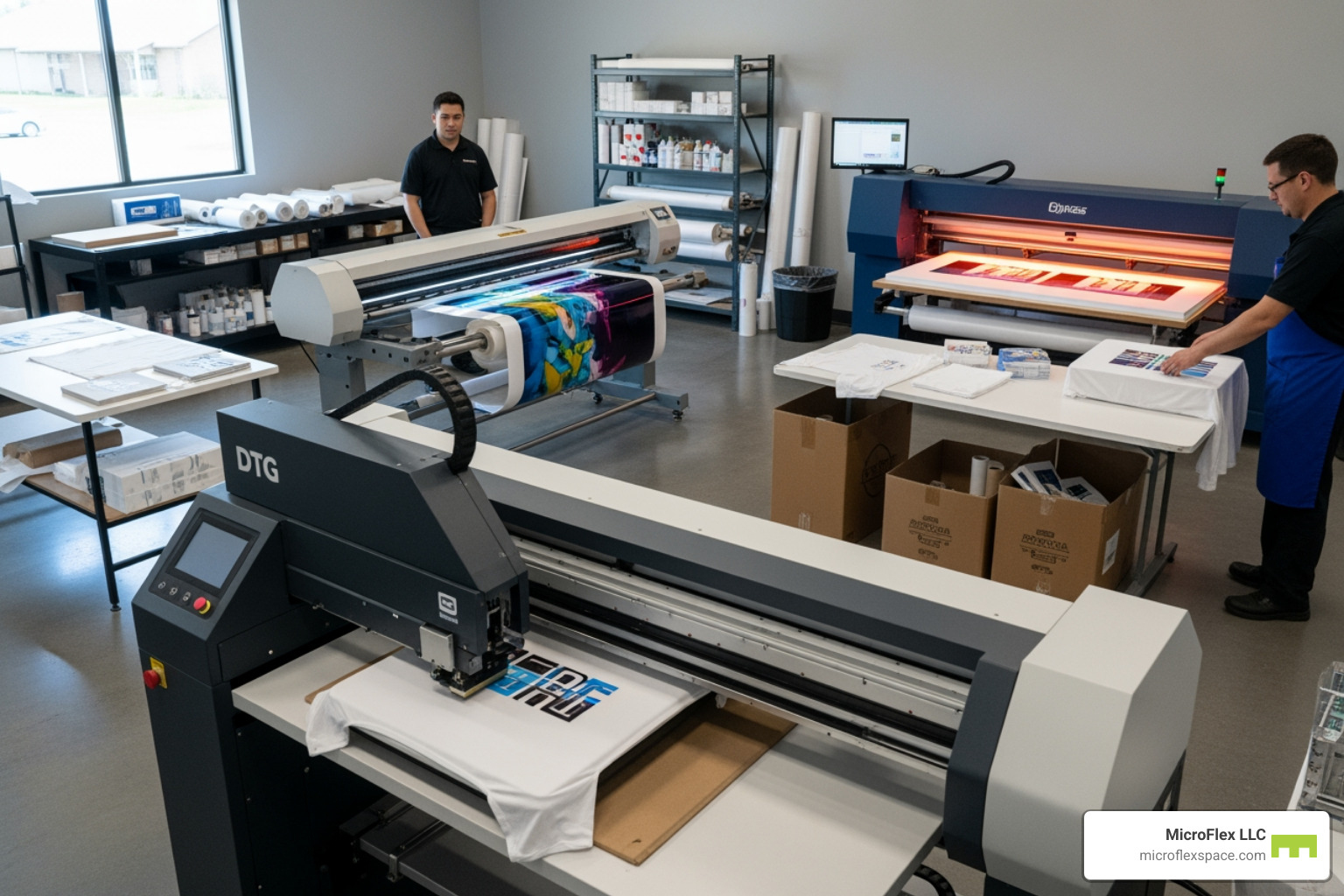
Essential Printing and Finishing Hardware
The modern printing industry offers a wide variety of equipment for specific purposes.
- Professional Laser and Inkjet Printers: These are the workhorses for standard documents, flyers, and brochures. For photo printing, invest in high-quality photo printers for gallery-worthy images.
- Specialty Printers: These open up profitable niches. Direct-to-Garment (DTG) printers are for custom apparel, with some businesses earning over $200 per hour. Dye-sublimation printers are for hard substrates like mugs and phone cases. UV printers are great for personalized gifts, printing on wood, plastic, or metal, with some users seeing hourly profits of $718 on custom phone covers.
- Wide-Format Printers: Essential for banners, posters, and commercial signage. These are larger machines, so plan your workspace accordingly.
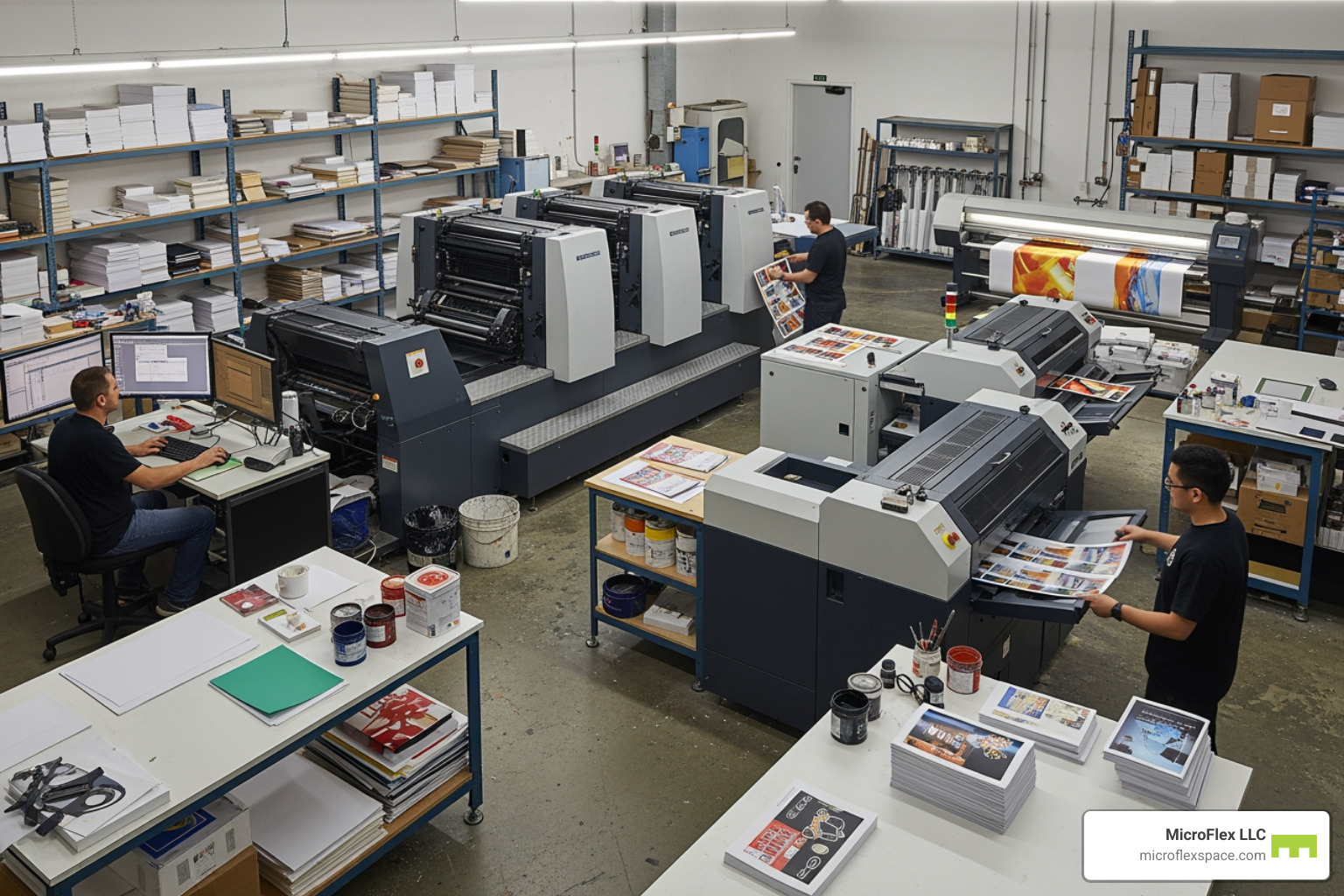
- Finishing Equipment: A good cutting system is vital for professional-looking business cards and flyers. Lamination services add durability for menus and IDs. Binding equipment is necessary for booklets and reports.
As your business grows, you can scale to commercial-grade offset presses for high-volume jobs, but these are a significant investment for a later stage.
Core Software and Technology Tools
Your digital toolkit is just as important as your hardware.
- Design Software: Adobe Creative Suite (Photoshop, Illustrator) is the industry standard. CorelDRAW is another powerful alternative. For large-format jobs, specialized RIP software helps manage color and output.
- Business Management and Accounting Software: Tools like QuickBooks, Freshbooks, or Xero are crucial for tracking finances, inventory, and orders.
- E-commerce Platforms: Sell your products through your own website using Shopify or WooCommerce for brand control, or start on marketplaces like Amazon or Etsy to test the market.
- Web-to-Print Technology: This game-changing software allows customers to design and order products directly from your website. It streamlines the process, reduces errors, and caters to the modern trend of smaller, more frequent orders.
As you invest in equipment, you’ll realize workspace is critical. A spare room may work initially, but adding wide-format printers and finishing tables requires a professional space that can grow with you.
Step 3: The Financial Blueprint: Costs and Funding Your Dream
Starting a printing business requires capital, but it’s one of the more accessible manufacturing ventures. While 44% of home-based businesses start with less than $5,000, a realistic budget helps avoid surprises.
Total startup costs typically range from $8,100 to $32,200, with an average of around $20,150. A home-based, print-on-demand model is at the lower end, while a full-service shop requires more investment.
Here’s a typical cost breakdown:
- Rent & Setup: $4,000 to $12,000 for a commercial shop’s deposit and initial setup.
- Equipment: $1,500 for an entry-level printer up to $12,000+ for a professional DTG or wide-format machine.
- Supplies: $1,000 to $5,000 for initial stock of ink, paper, and substrates.
- Software: $500 to $1,000 annually for subscriptions like Adobe Creative Suite.
- Website: $100 to $200 per year for platforms like WordPress or Shopify.
- Marketing: $500 to $1,000 for initial promotional efforts.
- Insurance & Licensing: $500 to $1,000 for compliance and protection.
So, where does the money come from?
- Personal Savings: The simplest starting point with no interest or equity loss.
- Friends and Family: A common source, but always use written agreements to protect relationships.
- Bank Loans: The SBA-guaranteed loan program can improve your chances of approval by reducing the bank’s risk.
- Government Grants: Explore competitive but free funding options at Grants.gov.
- Crowdfunding: Platforms like Kickstarter or Indiegogo let you raise funds while validating your business idea.
- Venture Capital: An option for businesses with high-growth potential, offering substantial funding in exchange for an ownership stake.
Match your funding strategy to your business model. You can start small with personal savings and reinvest profits to grow—many successful shops began with a single printer in a spare room.
Step 4: Choosing Your Workspace: Home vs. Commercial
Where you set up shop is a critical decision that shapes your workflow and growth potential. The right choice depends on where you are in your business journey.
The Home-Based Start: Your First Step to Start a Printing Business
Starting from home is a smart way to launch. Home-based businesses generate $427 billion annually in the US, and 44% start with less than $5,000. The primary advantages are low overhead (no rent, shared utilities) and flexibility. You also get tax deductions for your home office, saving money you can reinvest.
However, there are challenges. Space limitations can quickly become an issue as you add equipment and inventory. Zoning restrictions in cities like Birmingham and Huntsville may limit commercial activities in residential areas. Projecting a professional image can be difficult if you need to meet clients in person, and separating work from home life requires discipline.
Scaling Up to a Professional Workspace
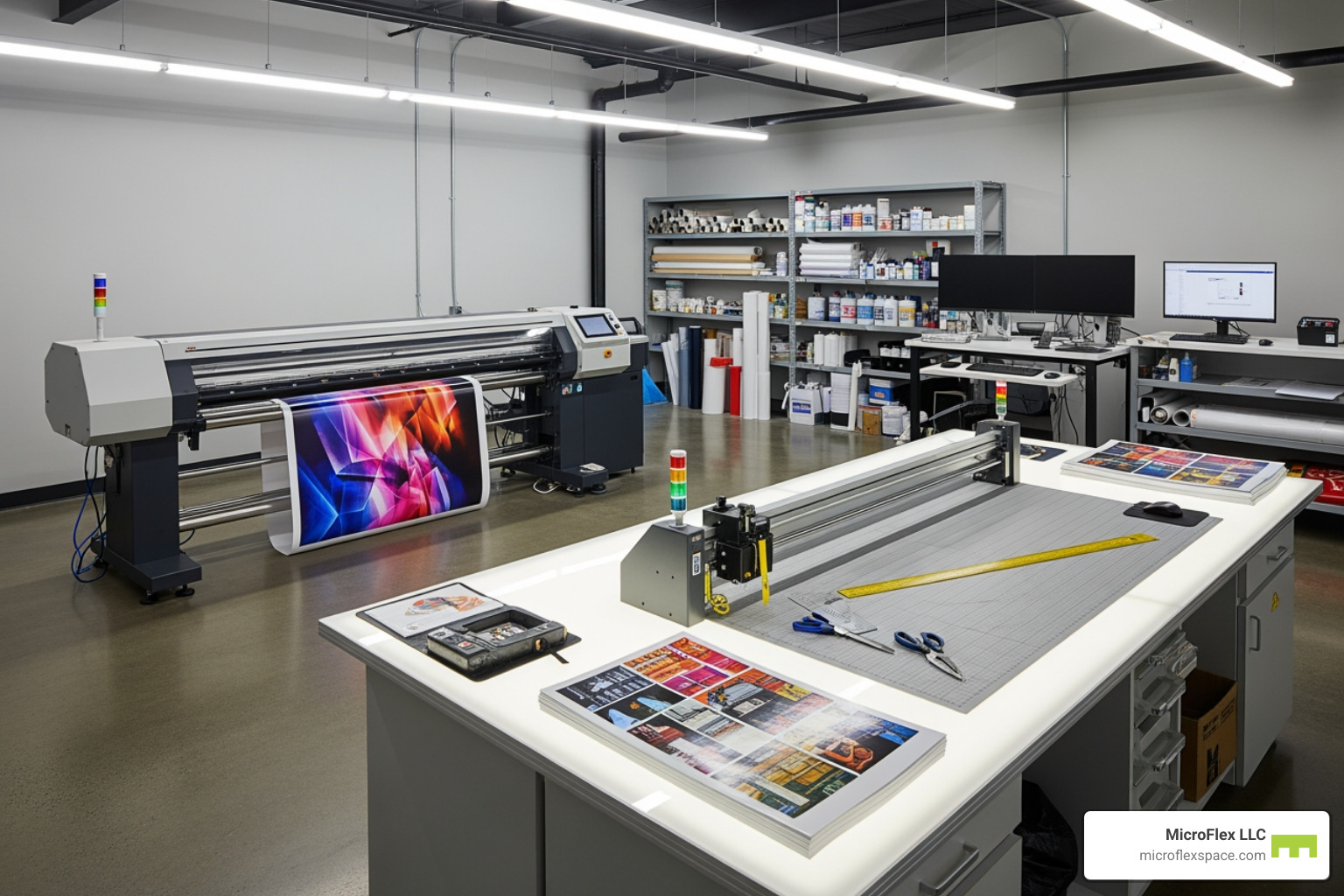
Eventually, a growing business needs more room. The signs are clear: you’re turning down orders due to space constraints, inventory is taking over, or you need to hire staff. Moving into a professional workspace provides room for more equipment, an efficient workflow, and a credible business address that inspires client confidence.
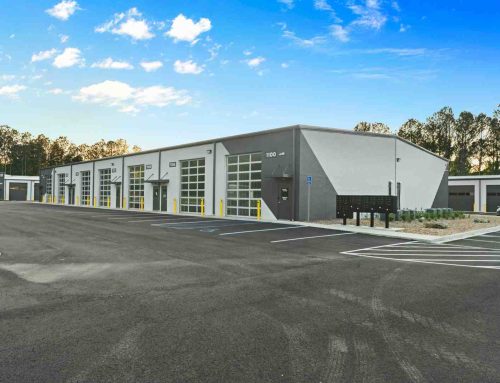
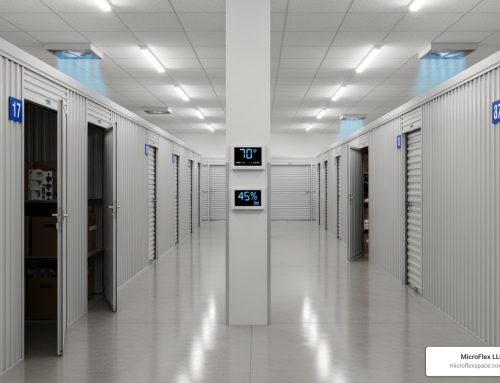
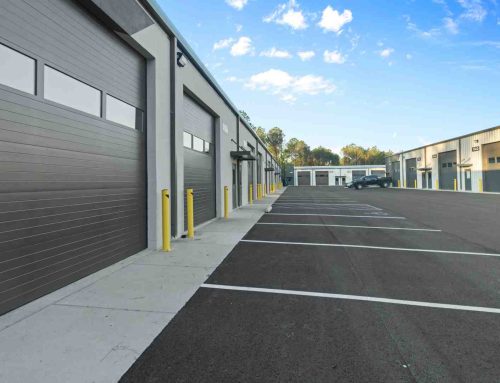
This is where MicroFlex LLC provides the ideal solution for businesses in the Birmingham, AL area. Our adaptable warehouse-office units are designed for growing operations like printing. Instead of getting locked into a rigid, long-term lease, you get the space you need now with the ability to scale.
Our flexible leases eliminate the risk of outgrowing your space or paying for more than you need. Whether you’re in Birmingham Irondale, Hoover, or our other Alabama locations, MicroFlex provides the professional foundation for expansion. You get Small Warehouse Storage combined with office functionality, creating the perfect environment to grow your printing business.
| Feature | Home-Based Printing Business | Commercial Printing Business |
|---|---|---|
| Cost | Low overhead, tax deductions, 44% start with < $5000 | Higher rent, utilities, insurance; Industry leaders spend $146K-$400K |
| Space | Limited, potential for clutter, can restrict growth | Ample room for equipment, inventory, staff; Scalable |
| Scalability | Limited by physical space and zoning | High potential for growth and expansion |
| Professionalism | Can be challenging to project a professional image | Establishes credibility, dedicated client meeting areas |
| Zoning | Potential restrictions, need to check local ordinances | Designed for commercial use, fewer restrictions |
The workspace decision comes down to your current needs and future goals. Starting at home is a low-risk way to prove your concept. When it’s time to scale, flexible commercial space is the key to building something remarkable.
Step 5: Marketing and Growing Your Printing Business
With your equipment ready, it’s time to find customers. Marketing connects you with clients and ensures your business thrives. The best part? Your own marketing materials—brochures, business cards, and flyers—serve as real-world examples of your quality.
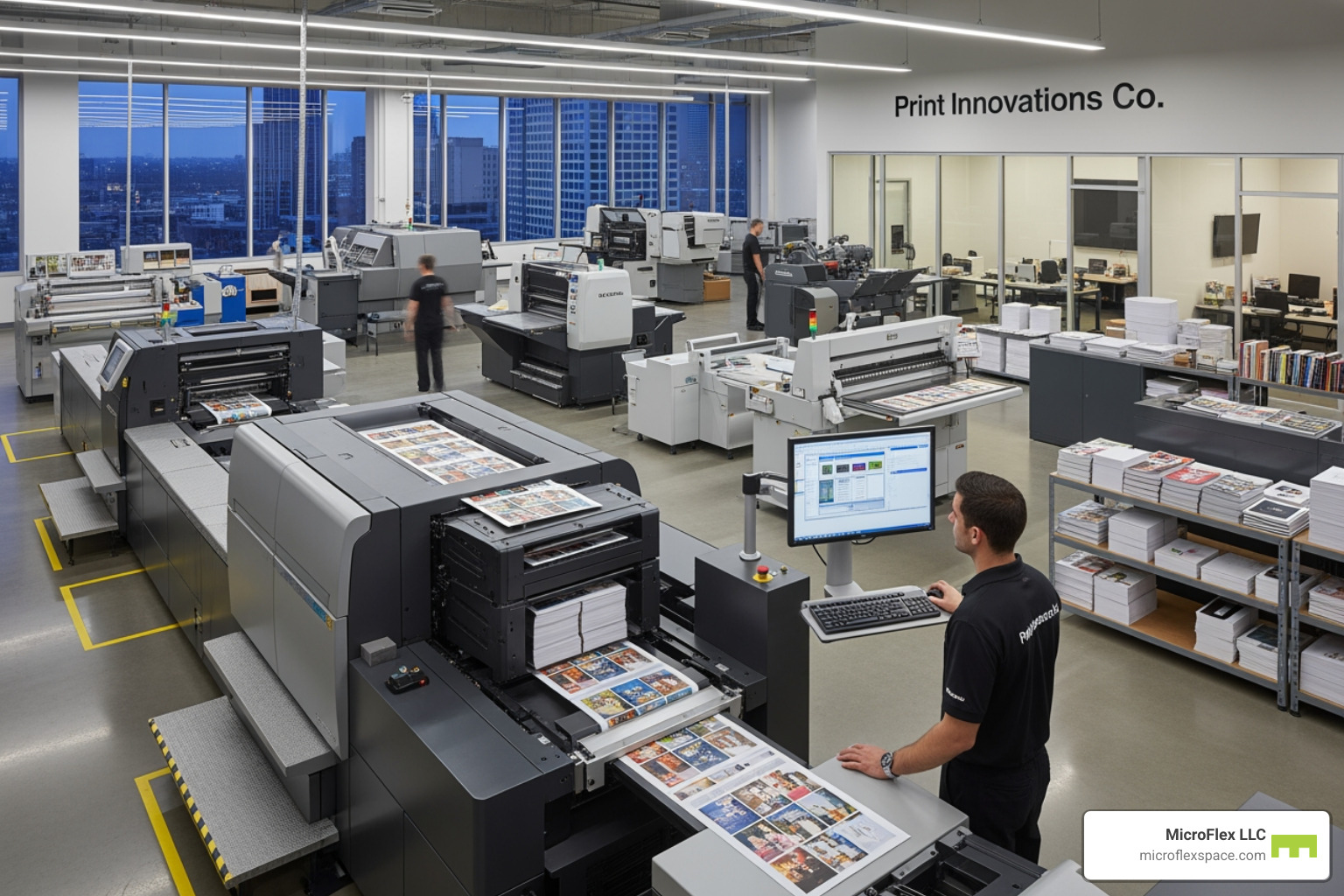
Effective Strategies to Market Your New Venture
- Online Marketing: A strong digital presence is essential. Use SEO with local keywords (e.g., “custom t-shirts Birmingham AL”) so customers can find your website. Use visual social media platforms like Instagram and Facebook to showcase your work. Build relationships through email marketing with targeted promotions and updates.
- Local Marketing: Join local chambers of commerce in Auburn or Huntsville to network. Attend trade shows to meet potential clients. Form partnerships with graphic designers or event planners for referrals. Distribute your own high-quality printed materials to show what you can do.
- Professional Website and Portfolio: Your website is your 24/7 online storefront. It must be clean, easy to steer, and feature a strong portfolio with high-quality photos of your work and client testimonials.
- Promotions: Attract new customers with first-order discounts or loyalty programs to encourage repeat business.
Future-Proofing: Emerging Trends to Help You Start a Printing Business That Lasts
Staying ahead of trends keeps your business relevant and profitable.
- Print-on-Demand (POD): This model lets you sell custom products with no inventory. Items are produced only when ordered, reducing upfront costs. The global POD market is projected to reach $59.4 billion by 2033.
- 3D Printing: This expanding market offers specialized niches for custom prototypes and unique promotional items, with a projected market size of $51 billion by 2028.
- Sustainable Printing: Offering eco-friendly options like recycled paper and soy-based inks can be a powerful selling point for environmentally conscious clients.
- Web-to-Print Technology: These online ordering systems empower customers to design and order directly from your site, streamlining your workflow and increasing order volume.
As these trends create new opportunities, you’ll need space for more equipment and inventory. For entrepreneurs in the Birmingham, AL area, flexible warehouse-office spaces provide the perfect environment to accommodate this growth.
Why MicroFlex is the Best Workspace Solution for Growing Print Businesses
There comes a time when the home garage is no longer enough. You might be turning down large orders or hesitating to share your address with a corporate client. This is when finding the right commercial space becomes critical.
Traditional commercial real estate is often a poor fit for growing businesses, demanding long-term leases of five or ten years for a fixed amount of space. This forces you to predict your needs far into the future—an impossible task for a new venture.
MicroFlex LLC specializes in providing flexible, scalable warehouse-office spaces designed for small business growth. We understand that your needs will change. A business starting with one t-shirt printer may need room for sublimation equipment or a wide-format plotter just a few months later.
Our adaptable units in Birmingham, Birmingham Irondale, Birmingham Hoover, Auburn Opelika, and Huntsville, AL, grow with you. Start with a compact unit and easily scale up as orders increase or you hire staff, without breaking a lease.
Our flexible lease terms eliminate the risk of being locked into a space that no longer fits. You choose the right space for right now, with the freedom to adapt. MicroFlex provides a professional environment with room for specialized equipment, organized inventory, and client meetings, all at a legitimate business address that inspires confidence.
We provide the physical foundation that allows you to focus on what you do best: creating amazing printed products. Think of us as your partner in growth, offering the flexibility your start printing business venture needs to thrive.
Frequently Asked Questions about Starting a Printing Business
Is the printing business still profitable in 2024?
Yes, absolutely. The Global Commercial Printing Market was valued at nearly $412 billion in 2020 and is projected to reach $472.35 billion by 2026. The key to profitability is specialization.
We’re seeing strong returns in niches like custom apparel (with hourly profits over $200), large-format printing, and personalized gifts. The industry is being reborn through digital technology and the booming print-on-demand market, which is expected to hit $59.4 billion by 2033.
What equipment is absolutely essential to start?
To start printing business operations strategically, you need a few core items:
- A high-quality computer capable of running design software smoothly.
- Professional design software like the Adobe suite (Illustrator, Photoshop) for industry compatibility and powerful features.
- A printer suited to your chosen niche. This is your most important investment. A direct-to-garment (DTG) printer for t-shirts, a dye-sublimation printer for mugs, or a wide-format printer for banners.
- A reliable paper cutter for professional finishing on items like business cards and flyers.
You can add other equipment like laminators or binders as your business grows and generates revenue.
Can I start a printing business from home?
Yes, and it’s often the smartest way to launch. An impressive 44% of home businesses start with less than $5,000. Starting from home offers low overhead, flexibility, and tax deductions for your home office.
The home-based model works especially well for print-on-demand or businesses using smaller equipment like UV printers. It allows you to build a client base and generate revenue without the pressure of commercial rent.
Eventually, you will likely outgrow your home setup. When you need space for larger equipment, more inventory, or your first employee, it’s time to scale. That’s where MicroFlex LLC comes in. Instead of jumping into a rigid, long-term lease, you can transition to a flexible warehouse-office space in Birmingham, Auburn Opelika, or Huntsville, AL. Our units grow with you, providing a professional environment without the overwhelming commitment of traditional real estate.
Conclusion
This guide provides your roadmap to start printing business success, from planning and funding to marketing and growth. The printing industry is thriving, with nearly $900 billion in annual revenue and exciting frontiers in print-on-demand (projected to hit $59.4 billion by 2033). With low barriers to entry—44% of home businesses launch with under $5,000—now is an excellent time to enter the market.
You can start small from a spare room and scale as your customer base grows. But as you succeed, your space needs will evolve. The right physical workspace is a critical component of turning a hobby into a thriving commercial enterprise. It’s about professionalism, efficiency, and having room to accommodate bigger and better equipment.
For printing business owners in Alabama ready to take that next step, a flexible Warehouse Office Space for Rent with MicroFlex provides the ideal foundation for future success. Our adaptable units and flexible leases allow you to grow at your own pace, without the stress of traditional commercial real estate. We’re here to help you print your own destiny, one high-quality piece at a time.