Why Working Artists Need a Dedicated Art Studio for Lease
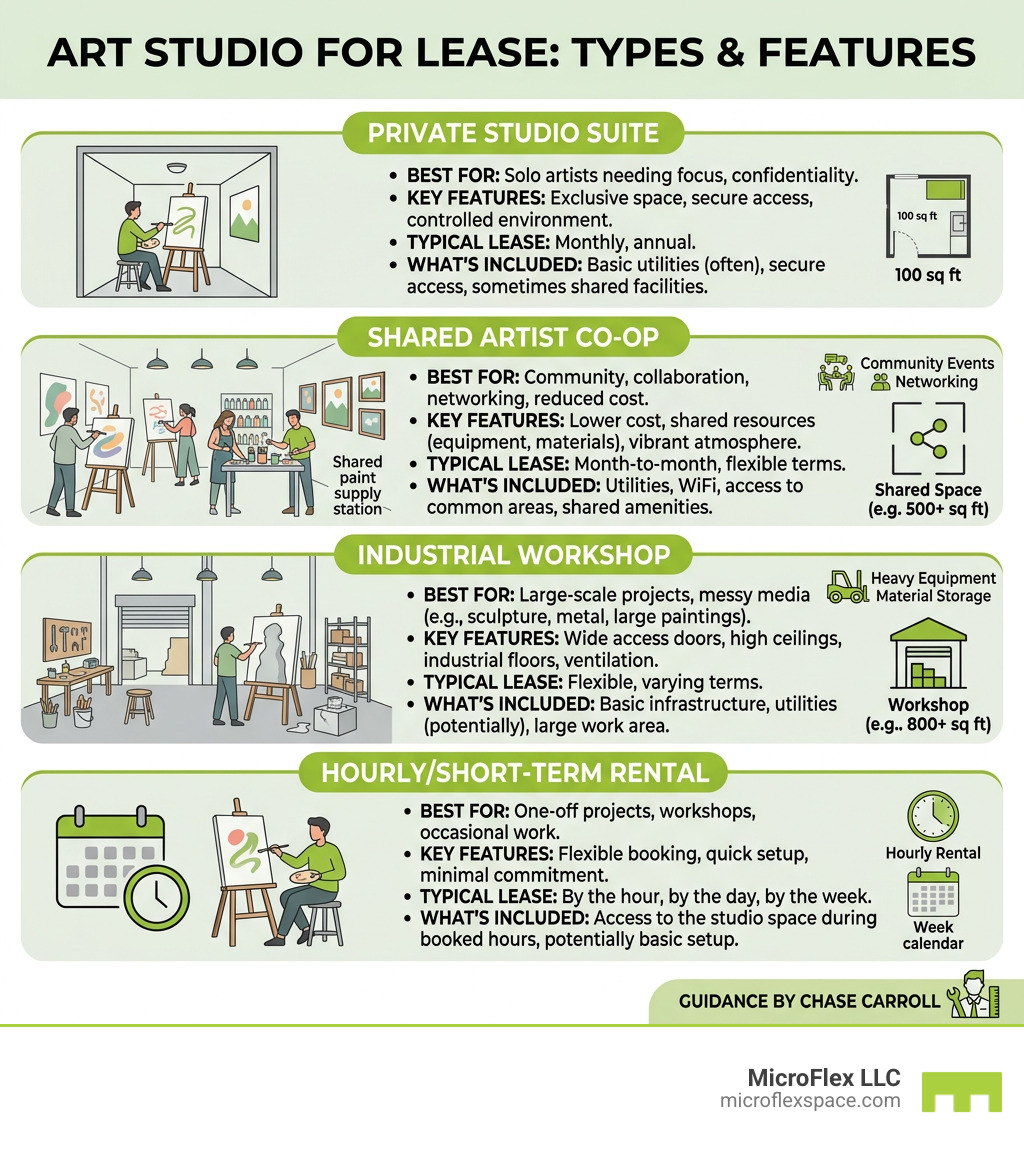
An art studio for lease gives you a professional, dedicated space to create — away from the chaos of home. Here’s a quick look at your main options:
| Studio Type | Best For | Typical Lease Terms |
|---|---|---|
| Private studio suite | Solo artists needing focus | Monthly or annual |
| Shared artist co-op | Community and lower cost | Month-to-month |
| Industrial workshop | Large-scale or messy media | Flexible |
| Hourly/short-term rental | One-off projects or workshops | By the hour or week |
Working from home sounds convenient — until your dining table is buried under paint tubes and your living room smells like turpentine. Most artists hit a wall when their creative space and living space are the same space. Distractions pile up. Storage runs out. And the work suffers.
A leased studio changes that. It gives your practice a real home — with the right lighting, ventilation, and room to actually make things.
Studio options range widely, from small private rooms starting under 100 sq ft to large shared industrial spaces over 800 sq ft. Some include utilities, WiFi, and parking. Others offer community perks like exhibitions and networking events. The right fit depends on your medium, budget, and how much flexibility you need.
I’m Chase Carroll, a real estate developer and investor with over 12 years of experience building adaptable spaces — including MicroFlex developments designed specifically for flexible, affordable creative and business use, making them a strong contender when searching for an art studio for lease. In this guide, I’ll walk you through everything you need to know to find and secure the right studio for your practice.
Quick look at art studio for lease:
Finding the Perfect Art Studio for Lease
Finding the right creative home is about more than just finding four walls and a roof. It is about discovering a space that supports your specific workflow. Whether you are a painter, a digital illustrator, or a sculptor, the environment you work in directly impacts the quality of your output.

When you begin the artist’s quest for studios, you will likely encounter two main philosophies: the private suite and the shared co-op.
A private studio suite offers the ultimate sanctuary. These are often found in renovated industrial buildings or dedicated creative complexes. They allow you to shut the door, leave your mess exactly where it is, and work in total silence. On the other hand, shared artist collectives or co-ops focus on community. You might have a dedicated desk or a partitioned area within a larger room. These are fantastic for networking and staying inspired by fellow creatives, though they require a bit more “neighborly” etiquette.
Essential Features of an Art Studio for Lease
Not every commercial space makes a good art studio. If you’ve ever tried to paint a portrait under a flickering fluorescent bulb in a windowless basement, you know why. Here are the non-negotiables to look for:
- Natural Light and Skylights: This is the gold standard. North-facing windows provide consistent, indirect light that won’t change drastically throughout the day. Skylights are a major bonus, especially in deeper industrial buildings where perimeter windows might be scarce.
- High Ceilings: Many artists find that 12-foot to 20-foot ceilings aren’t just about aesthetics; they allow for large-scale works and better air circulation. High ceilings also provide vertical storage opportunities for canvases and supplies.
- Shared Sinks and Plumbing: Unless you are strictly a digital artist, you need water. Look for studios that offer heavy-duty utility sinks. In many professional art buildings, these are shared in common hallways to keep the individual studio footprints affordable.
- Freight Elevators and Wide Doors: If you work with large canvases, heavy sculpture materials, or bulky equipment, a standard passenger elevator won’t cut it. A freight elevator and wide hallways are essential for getting your work in and out safely.
Steps to Secure an Art Studio for Lease
Securing a spot in a popular art community isn’t always as simple as signing a check. Because these spaces are often in high demand, many landlords and collectives use a vetting process to ensure the community remains vibrant and productive.
- The Jury Process: Some high-end collectives require a “jurying” phase. This means a committee of current members or a curator reviews your work to see if it fits the building’s ethos.
- Digital Portfolio: Always have a clean, professional website or Instagram account ready. Landlords want to see a “robust studio practice”—basically, proof that you are actually going to use the space to create.
- Residency Requirements: In some urban areas, certain studio buildings are reserved for local residents or those who meet specific professional artist criteria.
- Application and Waitlists: Many of the best spots operate on a waitlist. It pays to fill out an application even if there are no current openings.
For more detailed advice on the logistics, check out these commercial studio space tips to help you navigate the paperwork and professional requirements.
Navigating Media Restrictions and Studio Rules
Before you fall in love with a space, you must read the “house rules.” Art making can be messy, loud, and sometimes hazardous, which leads to specific restrictions in many lease agreements.
Media Restrictions Many studios, especially those in historic buildings or shared offices, have strict bans on certain materials. The most common is a ban on oil paints or toxic thinners due to poor ventilation or fire codes. If you are a welder or use kilns, you will likely need an industrial-grade space with specific electrical upgrades and fire suppression systems. Always disclose your medium upfront to avoid a lease violation later.
The “No-Living” Policy It is a common trope for artists to live in their studios, but in the modern commercial real estate world, this is a major legal no-no. Most art studios for lease are strictly for “working” use. Zoning laws and insurance policies usually prohibit overnight stays.
Access and Security Art doesn’t always happen between 9 and 5. Look for studios that offer 24/7 secure access. This allows you to follow your inspiration whenever it strikes. Ensure the building has adequate security, such as gated lots or coded entry, especially if you are leaving expensive equipment or finished pieces on-site.
Why MicroFlex is the Best Alternative for Alabama Artists
If you are looking for an art studio for lease in Alabama, the traditional options can sometimes feel limiting. You either find a tiny, expensive room in a “curated” gallery or a run-down warehouse with no climate control. This is where MicroFlex LLC steps in as the perfect middle ground.
We provide adaptable, multi-function spaces that are built for the modern creative. Whether you are a solo painter or a small creative team, our spaces offer the professional infrastructure you need without the stuffy restrictions of a traditional gallery.
Our locations are strategically placed where Alabama artists live and work:
- Birmingham-Irondale: Perfect for those near the city center.
- Birmingham-Hoover: Convenient for artists in the southern metro area.
- Auburn: Ideal for the local creative community and university-adjacent professionals.
- Huntsville (Madison): Supporting the growing tech and arts scene in North Alabama.
What makes MicroFlex the best choice for an art studio? It’s the flexibility. We offer creative workspace in Birmingham and beyond that combines the best of a warehouse (high ceilings, easy loading) with the best of an office (WiFi, climate control, professional appearance).
With our flexible lease terms, you aren’t locked into a rigid, multi-year contract that doesn’t account for the ebb and flow of an artist’s career. You get a secure, professional environment where you can actually get work done, host clients, and store your inventory safely.
Frequently Asked Questions about Art Studios
Can I rent an art studio for short-term projects?
Yes! While many professional spaces prefer annual leases, there are plenty of flexible options. Some community centers offer hourly rentals for workshops or classes. Others provide 2-week slots for intensive project phases or finishing a gallery show. If you’re traveling, you might even look into studio swaps or sublets, where you trade spaces with another artist for a month or two.
What is typically included in the rental agreement?
A comprehensive lease should cover the basics so you can focus on art. Most modern studios include:
- Utilities: Electricity, heat, AC, and water.
- High-Speed WiFi: Essential for research and digital marketing.
- Parking: Ample free parking for you and your visitors.
- Communal Areas: Shared kitchens, bathrooms, and sometimes even lounge areas for networking.
- Exhibition Opportunities: Some collectives include a free annual solo show as part of your membership.
Do I need a professional portfolio to lease a studio?
It depends on the venue. “Hobbyist” spaces or commercial warehouses like MicroFlex generally don’t require a portfolio—they just want to ensure your activity is safe for the building. However, juried entry studios and artist co-ops often require a portfolio, artist statement, and a CV to ensure you are a “working artist” who will contribute to the community’s professional atmosphere.
Conclusion
Leasing an art studio is a major milestone in an artist’s career. It marks the transition from “doing a hobby in the kitchen” to “running a professional practice.” A dedicated space provides the mental boundaries and physical room necessary for professional growth.
By moving your work into a professional environment, you open the door to a creative community, networking opportunities, and a level of productivity that just isn’t possible at a cluttered dining room table. Whether you need a small private nook or a large industrial suite, the right space is out there.
Ready to take your work to the next level? Find your perfect creative workspace today and see how a professional studio can transform your artistic journey.