

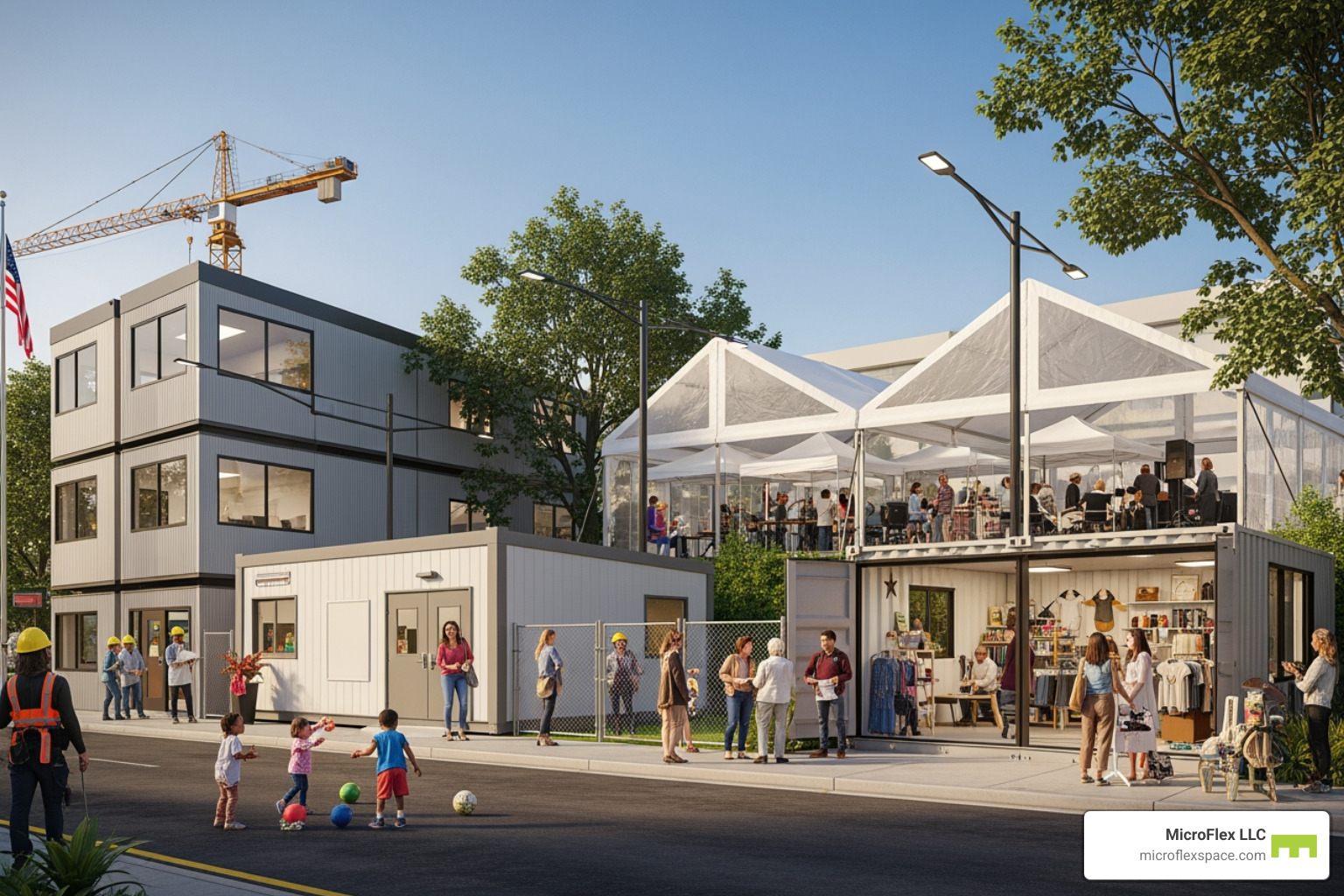
Why Modern Businesses Are Turning to Temporary Buildings
Temporary buildings are prefabricated, modular structures that provide flexible and rapid space solutions. Here’s what makes them a smart choice for modern businesses:
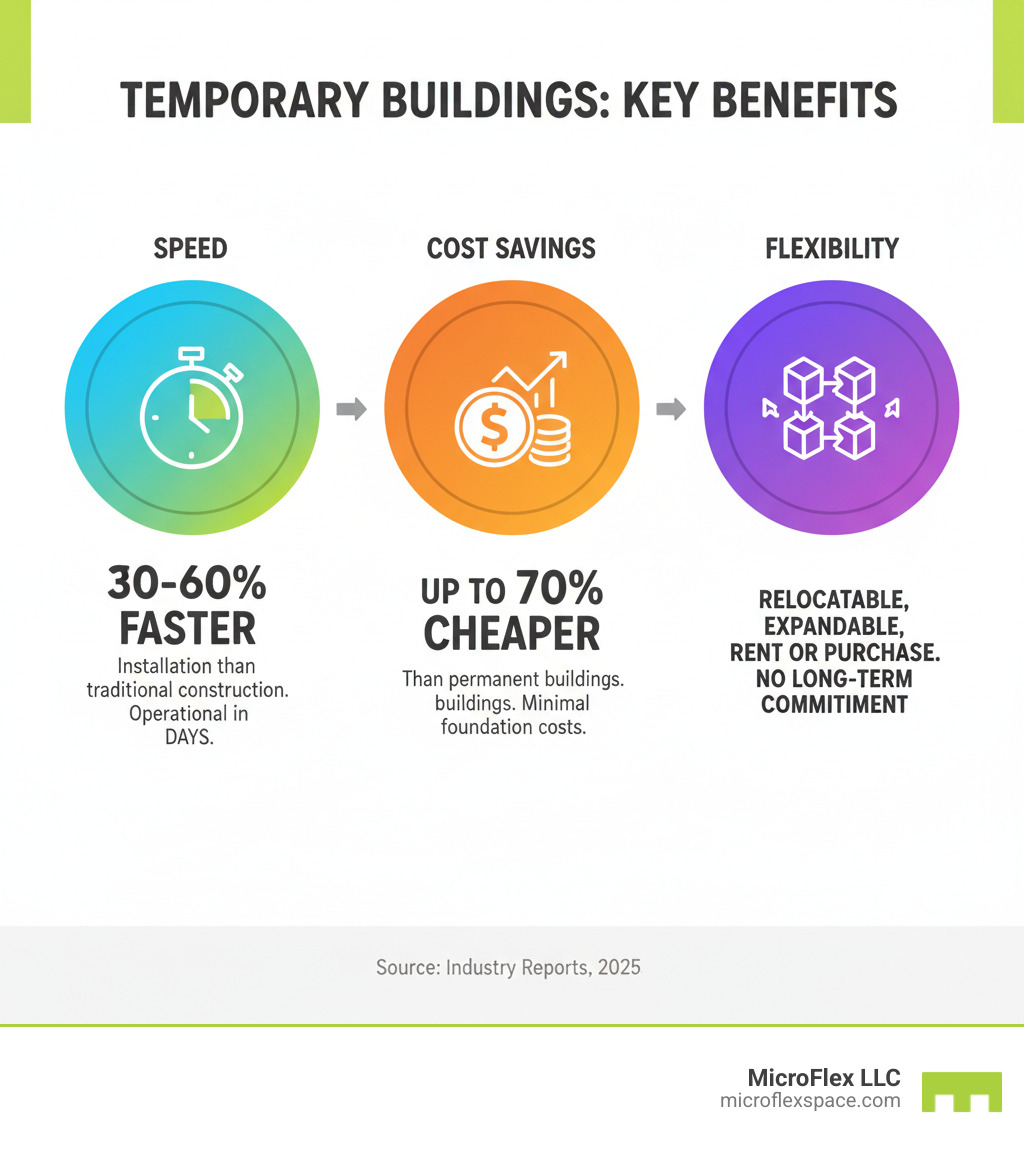
- Speed: Installed 30-60% faster than traditional construction, often in just days or weeks.
- Cost: Up to 70% cheaper than permanent brick-and-mortar buildings.
- Flexibility: Can be relocated, expanded, or reconfigured as business needs change.
- Durability: Engineered to last 20+ years, despite being “temporary.”
- Applications: Offices, warehouses, workshops, retail spaces, and more.
When your business needs space now—for seasonal inventory, a project site office, or expansion—traditional construction can kill momentum. Temporary buildings solve this by delivering functional space in a fraction of the time and budget. A 1,000-square-meter structure can be operational in as little as five days, often installed on existing surfaces like concrete or tarmac with no need for complex foundations.
I’m Chase Carroll, a real estate developer with MicroFlex LLC. With over a decade of experience in adaptable commercial properties, I’ve seen how flexible space solutions like temporary buildings can accelerate business growth without the constraints of traditional real estate.
What Are Temporary Buildings? The Ultimate Flexible Space Solution
When your business needs extra space fast, traditional construction can be a major roadblock. Temporary buildings offer a versatile alternative. Designed for rapid setup and easy adaptation, these structures are built off-site in sections and then quickly assembled where you need them. They prioritize speed, cost-savings, and flexibility, providing solutions that conventional methods can’t match.
The benefits of choosing temporary buildings over traditional construction are compelling, especially for businesses that need to stay nimble.
One of the biggest advantages is the speed of installation. While traditional projects drag on for months, temporary buildings can be operational in days or weeks. These structures can be built 30-60% faster than conventional buildings, with a 1,000 m² structure often installed in about five days. This rapid deployment is a game-changer when you need immediate space.
Next is their cost-effectiveness. A permanent structure requires a huge upfront investment. In contrast, temporary buildings can be up to 70% cheaper than brick-and-mortar options, with total costs sometimes 3 to 4 times lower. This makes them a smart choice for budget-conscious businesses. Savings are further increased by the minimal groundwork and simpler foundations required.
Perhaps the most significant benefit is their incredible flexibility. These modular structures are designed to be disassembled, moved, and reconfigured. This means your business can easily scale its physical space as market demands shift. This adaptability is priceless for modern businesses. If you’re curious about how this can transform your operations, check out our Scalable Business Solutions Complete Guide. A temporary building can be your perfect solution for seasonal needs and then be relocated or repurposed, offering truly Adaptable Business Solutions.
Despite the name, don’t let “temporary” fool you about their lifespan and durability. Modern temporary buildings are engineered to perform for 20+ years, with some semi-permanent options lasting over 30 years. Built with high-grade materials like aluminum and steel frames, they are designed to withstand heavy winds, snow, and rain, often meeting strict industry standards.
Finally, sustainability is an increasingly important factor. Many temporary buildings are designed with a “circular economy” in mind, meaning they are eco-friendly, easy to repair, and can be reused or recycled. Their construction involves less on-site energy, lighter materials, and minimal concrete, helping to lower our collective ecological footprint.
A Roundup of Temporary Building Types and Their Business Applications
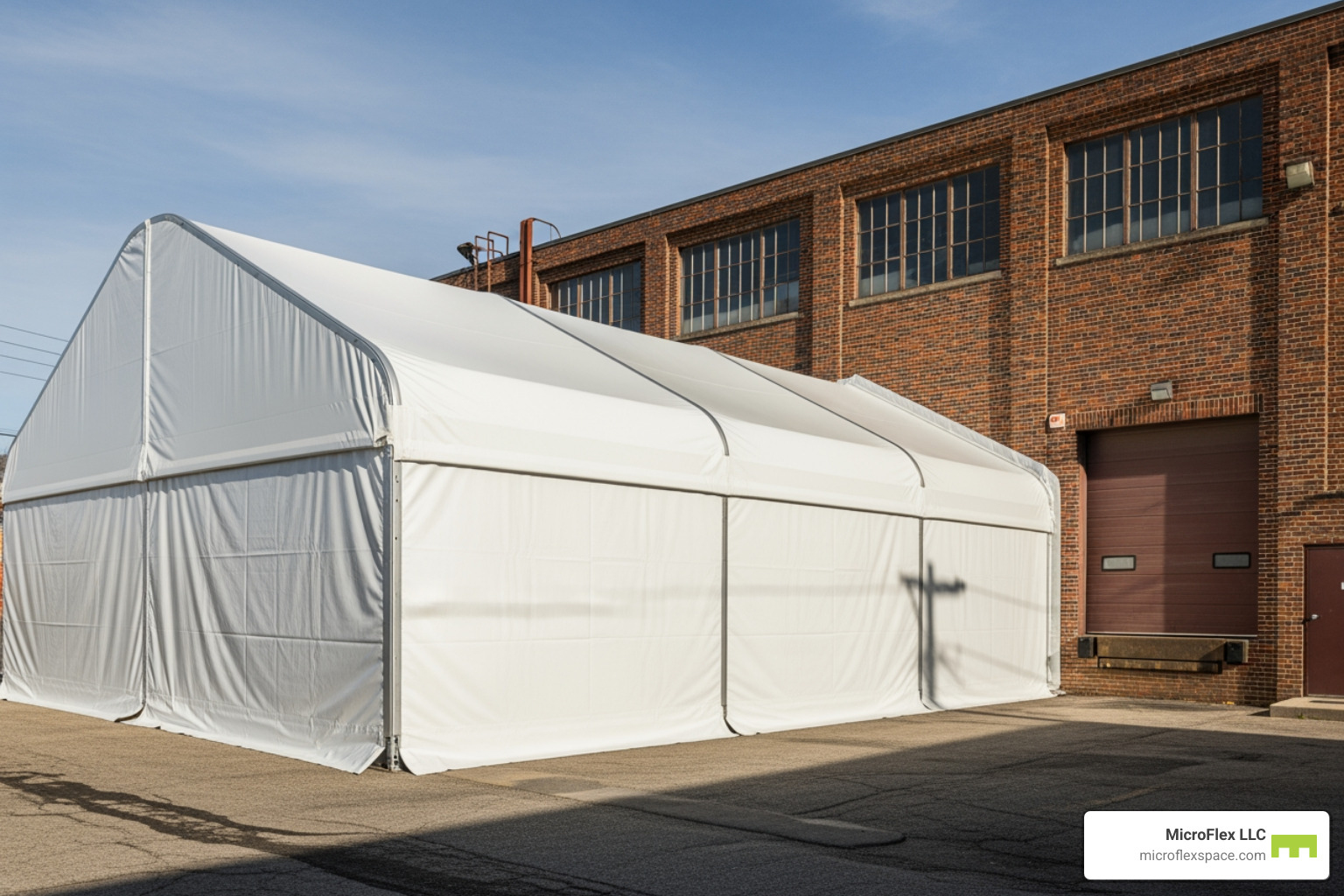
The versatility of temporary buildings is their greatest strength. They can be adapted for nearly any business need, including additional office space, construction site hubs, temporary classrooms, pop-up retail shops, warehouses, workshops, and industrial canopies. From event venues to emergency shelters, the applications are vast.
Modular Offices and Administrative Hubs
When your business is growing or undergoing renovations, you often need office space immediately. Temporary buildings provide comfortable, functional environments without the wait.
Modular offices are common on construction sites, serving as vital administrative and project management hubs. We’ve seen these flexible spaces used to house field offices for developments in Huntsville or provide temporary sales offices for communities in Auburn. They also work perfectly as “swing space” during renovations, ensuring your team remains productive. For a closer look, explore our guides on Temporary Modular Office Buildings and Mobile Offices.
Temporary Warehousing and Storage Structures
Finding enough room for goods and inventory is a common challenge. Temporary buildings offer an immediate, scalable solution for warehousing and storage.
These structures are ideal for seasonal inventory overflow, allowing businesses to stock up without committing to a permanent facility. They also optimize supply chain logistics by providing flexible distribution points. Whether storing extra stock for retailers in Birmingham or housing equipment for contractors in Auburn, temporary warehouses prove their worth. They also serve as secure equipment storage for businesses with valuable assets. Learn more in our articles on Small Warehouse Storage and Short-Term Business Storage.
Pop-Up Retail and Commercial Showrooms
In the dynamic retail world, temporary buildings are perfect for creating engaging showroom experiences and testing new markets.
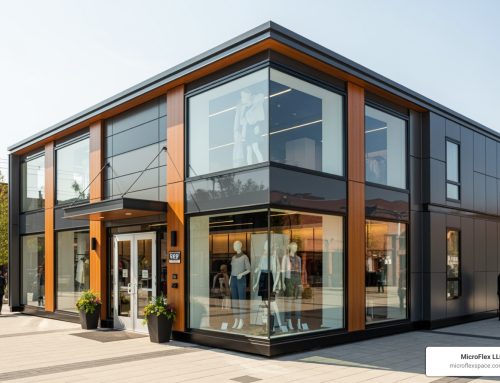
Pop-up retail stores give brands the agility to launch products or test a location without a long-term lease, like a summer boutique in Auburn or a holiday store in Birmingham. These structures are also fantastic for event sales centers and product launch venues. Car showrooms often use them for extra display space during special sales events. If you want to make your products shine, consider a Showroom Space Birmingham that can be set up quickly.
Workshops and Industrial Canopies
For businesses needing specialized work areas, temporary buildings offer practical and robust solutions.
These structures can become fully equipped manufacturing spaces or vehicle maintenance bays, providing covered and secure areas for repairs. We’ve seen them used by HVAC professionals in Auburn for flexible workspaces and by plumbing businesses for crucial Plumbing Parts Storage. Industrial canopies are invaluable for creating covered loading areas, shielding goods and people from the weather. Whether you need a Temporary Workshop Space or a Commercial Workshop For Rent, these structures are a smart choice.
For more comprehensive information about temporary structures and their applications, the Modular Building Institute provides industry standards and best practices that help businesses make informed decisions about their space needs.
Why MicroFlex Spaces Are the Best Choice for Temporary Buildings
While generic temporary buildings promise flexibility, they often create new problems. A basic, single-use shell can leave you dealing with significant site prep, utility hookups, and a confusing permit process. The “temporary” solution quickly becomes a time-consuming project.
This is where MicroFlex LLC offers a superior, hassle-free experience. We turn the concept of flexible space into a reality, not another item on your to-do list.

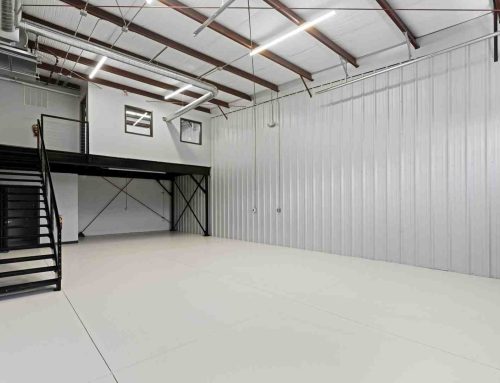
MicroFlex LLC provides a unique solution for businesses in Alabama, including Auburn Opelika, Birmingham Irondale, Huntsville, and Birmingham Hoover. We offer adaptable, multi-functional spaces that blend warehouse, office, storage, and showroom features into one unit. This versatility is invaluable for small businesses needing every square foot to count. Explore our Multi-Functional Spaces Alabama to see how we design for adaptability.
One of our biggest differentiators is our flexible lease terms. Unlike rigid, long-term commercial leases, MicroFlex offers options like a Flexible Lease Warehouse that can grow with your business. This gives you the freedom to adjust your space as your needs change, without being locked into a multi-year commitment.
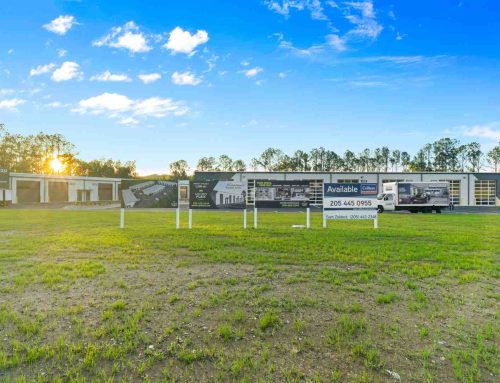
We also develop our locations as professional business parks, providing a secure and well-maintained environment that lifts your business image. Perhaps most appealing, our units are move-in ready. Imagine walking into a clean, functional space with utilities already connected, allowing you to start working from day one. Check out our Move-in Ready Offices to see this convenience firsthand.
Furthermore, MicroFlex spaces include amenities like shared restrooms and common areas, which you’d typically have to arrange yourself with a standalone temporary building.
The absolute game-changer? With MicroFlex, you avoid the permit hassle for the tenant. We’ve already handled the complex world of permitting, zoning, and infrastructure. You don’t need to worry about local building codes, site plans, or inspections. We provide the compliant, ready-to-use infrastructure so you can focus on running your business.
MicroFlex delivers the ultimate “temporary building” experience without the drawbacks. We combine speed, cost-effectiveness, and flexibility with the professionalism and convenience every business owner needs.
Navigating the Logistics: Permits, Costs, and Installation for Temporary Buildings
Even though temporary buildings promise speed and flexibility, there are still logistics to consider. Understanding them upfront will save you headaches later.
Planning Permission and Regulatory Compliance
Do temporary buildings require planning permission? Most of the time, yes, you’ll need some form of approval. Local authorities want to ensure any structure is safe and appropriate.
Generally, if your building is over a certain size (often 100m82) or will be in place for more than a short period (typically 28 days), you’ll need to submit an application. This includes a site plan showing the building’s footprint and details on its intended use. For comprehensive guidance, see the SBA’s resource: Permitting guidance from the SBA.
Local building codes and zoning regulations also apply. While some requirements may be relaxed, you’ll still need to meet standards for fire safety, accessibility, and setbacks from property lines. Inspections are part of the process, leading to a temporary certificate of occupancy upon approval.
This is where MicroFlex shines: when you lease our space, we’ve already handled all this permitting complexity. You get a move-in ready space in an established business park where the regulatory groundwork is done.
Key Considerations for Location and Foundation
Where you place your temporary building matters. The site must be accessible for delivery and installation without disrupting operations or blocking emergency access.
The good news is that temporary buildings have minimal foundation requirements. They can often be installed directly on hard surfaces like concrete, tarmac, or compact hardcore, saving significant time and money. A stable base and anchoring system are used to secure the structure against weather, but this is far less involved than a traditional foundation.
Understanding the Cost Factors
Temporary buildings are highly cost-effective, often 70% cheaper than traditional construction. However, several factors influence the final price:
- Size and Specification: A larger or more customized building with features like HVAC and insulation will cost more than a basic shell.
- Duration: Renting for a few months, leasing for a few years, or purchasing outright each have different cost structures.
- Location and Customization: Site accessibility, local labor rates, and bespoke designs will affect the total expense.
- Groundwork: While typically minimal, any necessary site preparation like grading will add to the cost.
Financing Options for Temporary Buildings
The flexibility of temporary buildings extends to payment. You have three main options:
- Renting: Ideal for short-term needs with low upfront cost and no long-term commitment. It’s an operating expense (OpEx), but you don’t build equity.
- Leasing: A middle ground for semi-permanent needs. It offers predictable payments and often an option to purchase later. It provides more flexibility than buying but more commitment than renting.
- Purchasing: Best for long-term needs. You build equity and have full control, but it requires the highest upfront cost (a capital expense, or CapEx).
At MicroFlex, we offer flexible lease terms that adapt to your business, removing the risk of a rigid, multi-year commitment. This financial flexibility, combined with our permit-free, move-in ready spaces, makes MicroFlex the hassle-free choice. For more details, see our Commercial Spaces Lease Guide 2025.
Frequently Asked Questions about Temporary Buildings
Choosing a temporary building is a big decision. Here are answers to the most common questions we hear from business owners.
How long do temporary buildings last?
Don’t let the name fool you. Modern temporary buildings are engineered to last 20+ years, with some semi-permanent options exceeding 30 years. They are built with high-grade materials like industrial aluminum and steel frames to withstand harsh weather. Their “temporary” nature refers to their ability to be relocated, not a short lifespan. This combination of durability and flexibility makes them a smart long-term investment.
How fast can a temporary building be installed?
The installation speed of temporary buildings is a major advantage. A typical structure can be operational in 3-5 days, and even a large 1,000 m² building can be assembled in about a week. This is possible due to off-site manufacturing and modular construction, which also ensures minimal site disruption. This speed allows your business to respond quickly to opportunities without the long delays and lost revenue associated with traditional construction.
Do temporary buildings need foundations?
This is a key area for time and cost savings. In most cases, temporary buildings do not require the deep, expensive foundations of traditional construction. They can often be installed directly on existing hard surfaces like concrete, tarmac, or compact hardcore. Instead of a full foundation, they use robust anchoring systems to ensure stability. While the ground must be suitable, the requirements are far less extensive, making installation faster and cheaper.
At MicroFlex, our professional business parks have all the necessary infrastructure in place, including proper foundations and utilities. You get the flexibility of a temporary solution without any of the site preparation headaches.
Conclusion
Temporary buildings are more than a quick fix; they are a strategic asset for modern businesses. In a world, they provide the agility and practicality needed to adapt and thrive. They deliver best speed, significant cost-effectiveness, and game-changing flexibility.
And remember, these structures are built to last. Modern temporary buildings are robust, durable, and designed for decades of use, offering long-term value with short-term commitment.
While the logistics of permits and site prep can seem daunting, MicroFlex LLC makes it easy. We’ve taken the benefits of flexible space and created a hassle-free alternative for small business owners in Auburn Opelika, Birmingham Irondale, Huntsville, and Birmingham Hoover.
With MicroFlex, you get a complete solution. Our spaces are multi-functional, blending office, warehouse, and showroom features. Our flexible lease terms let you adapt without being tied down, and our units are move-in ready in professional business parks. We handle the permits, so you can focus on your business.
If you’re ready for a smarter, more agile way of doing business, it’s time to explore the MicroFlex difference. Don’t let your physical space hold you back. Explore flexible multi-use commercial properties that are built to grow with you.