Why Short-Term Warehouse Space is Ideal for Your Pilot Project
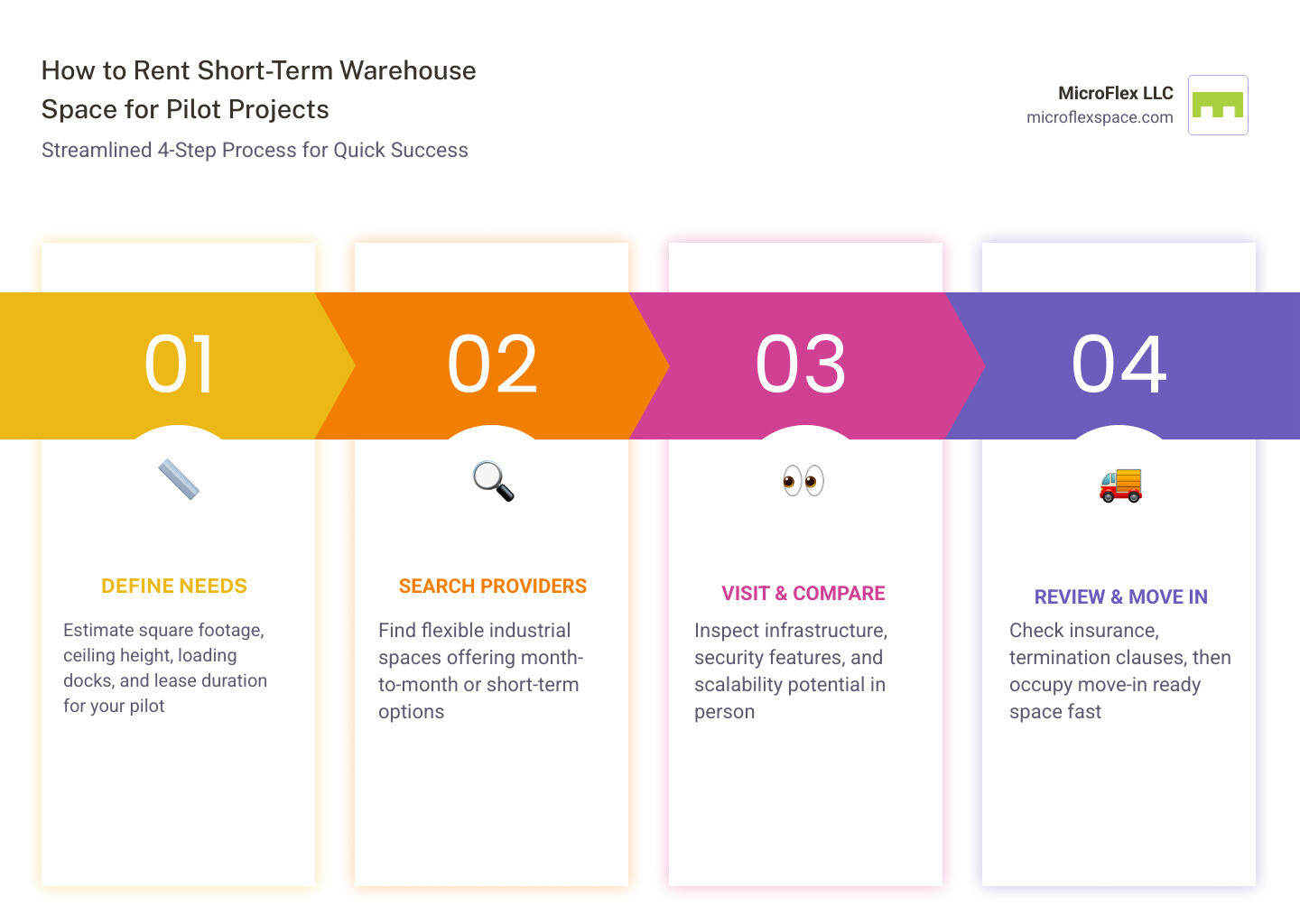
How to rent short-term warehouse space for pilot project is simpler than most business owners think. Here’s a quick overview of the process:
- Define your needs – estimate square footage, ceiling height, loading access, and lease duration
- Search for providers – look for flexible industrial spaces with month-to-month or short-term lease options
- Visit and compare – check infrastructure, security, and scalability in person
- Review the agreement – confirm insurance requirements, termination clauses, and deposit terms
- Move in fast – short-term spaces are often move-in ready within days
Pilot projects move fast. Your real estate should too.
The problem is that most traditional warehouse leases want a 5- to 10-year commitment. That’s a long time to bet on a product that hasn’t launched yet, a market you haven’t tested, or a logistics model you’re still figuring out.
Short-term warehouse rentals solve this. They give you real commercial infrastructure — loading docks, pallet racking, security, and usable square footage — without locking you into years of overhead. As one industry observer put it, it’s the “try before you buy” option in commercial real estate.
The demand for this kind of flexibility has grown fast. E-commerce growth, unpredictable supply chains, and lean startup culture have all pushed businesses toward shorter, smarter commitments. Signing a multi-year lease to test a concept is, simply put, the wrong tool for the job.
I’m Chase Carroll, a real estate developer and small business transaction advisor with 12+ years of experience helping businesses find the right space at the right time — including guiding entrepreneurs through exactly this kind of short-term industrial leasing decision. In this guide, I’ll walk you through how to rent short-term warehouse space for pilot project success, from sizing your space to signing an agreement that doesn’t trap you.
Simple guide to how to rent short-term warehouse space for pilot project:
When you are launching a pilot project—whether it’s a new product line for an e-commerce brand or a localized distribution test for a growing manufacturer—the biggest enemy is high fixed overhead. Traditional industrial leases are rigid. They often require personal guarantees, massive security deposits, and a timeline that stretches into the next decade.
Short-term warehouse space is the strategic antidote to this risk. By opting for a short-term warehouse lease, you gain the ability to “fail fast” or “scale fast” without the financial anchor of a long-term contract. It provides a flexible industrial space that mirrors the agility of your business plan.
In April 2026, the market for industrial space in Alabama is more dynamic than ever. Businesses in the Birmingham-Irondale or Huntsville areas are realizing that they shouldn’t have to predict where their company will be in five years just to get storage space today. Short-term rentals offer rapid deployment—often allowing you to be operational within 24 to 48 hours.
Comparing Your Options: Short-Term vs. Long-Term
To understand why this is the smart move for your pilot, consider the differences in commitment and cost structure. While you might pay a slight “flexibility premium” on the monthly rate, the total cost of ownership is often lower because you aren’t paying for empty space during slow months or after the project concludes.
| Feature | Short-Term Warehouse | Long-Term Industrial Lease |
|---|---|---|
| Contract Length | 1–12 months (or Month-to-Month) | 5–10 years |
| Setup Time | 1–7 days | 30–90 days |
| Security Deposit | 1–2 months rent | 3–6 months rent |
| Exit Options | 30-day notice typical | Subleasing or high penalties |
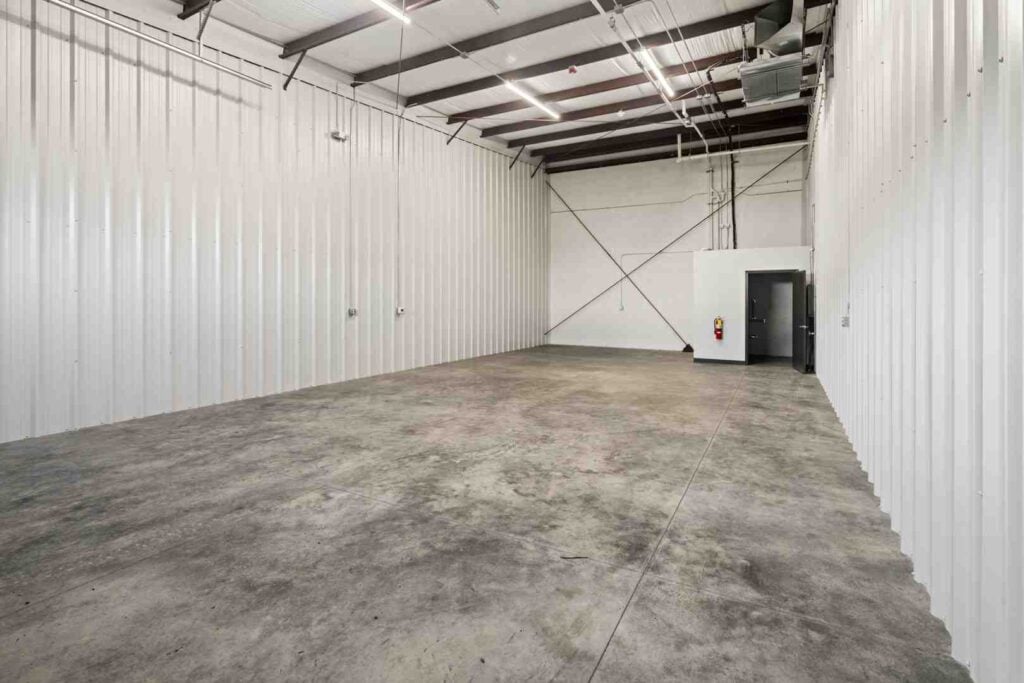
| Infrastructure | Often move-in ready | Usually requires build-out (TI) |
| Scalability | Easy to add/remove bays | Fixed square footage |
For those looking at specific Alabama markets, resources like Auburn Warehouses For Rent & Lease – LoopNet can show you what’s available, but you’ll quickly notice that traditional listings rarely offer the “no-strings-attached” terms a pilot project requires.
How to Rent Short-Term Warehouse Space for Pilot Project Success

The process of securing a short-term warehouse rental is more like booking a professional service than buying a piece of property. Because the timelines are compressed, you need to be precise about your requirements from day one. Using a small warehouse for rent guide can help you stay organized, but the core of the process involves three pillars: size, infrastructure, and access.
For a pilot project, you aren’t just looking for “four walls and a roof.” You are looking for a platform. If you’re a supplement manufacturer in Birmingham-Hoover testing a new fulfillment strategy, you need to know that your couriers can get in and out efficiently. If you’re a graphic designer in Auburn needing space for a large-scale printing installation, you need climate control and high-speed WiFi.
Determining the Right Size for a Short-Term Warehouse Space for Pilot Project
One of the most common mistakes we see is businesses renting too much space “just in case.” In a flexible model, you don’t have to do that. You can start with exactly what you need for your initial pallet count or equipment footprint.
When calculating size, don’t just look at the floor. Look up. Ceiling heights in modern flex spaces typically range from 12 to 20 feet. This allows you to use vertical racking, effectively doubling or tripling your storage capacity without increasing your footprint. For most pilot projects, a small warehouse leasing guide suggests starting between 500 and 2,000 square feet. If your team needs to be on-site for quality control or administration, look for a warehouse office space for rent that combines “dirty” storage with “clean” workspace.
Evaluating Infrastructure for a Short-Term Warehouse Space for Pilot Project
A warehouse is only as good as the work you can do inside it. For a pilot project to succeed, the infrastructure must be “plug-and-play.”
Key features to verify include:
- Loading Access: Do you need a dock-height bay for semi-trucks, or is a grade-level roll-up door sufficient for box trucks and vans?
- Connectivity: High-speed WiFi is no longer optional. You need it for inventory management systems, shipping labels, and team communication.
- Security: Look for 24/7 monitored surveillance, restricted access control, and well-lit perimeters. Your prototypes and inventory are your most valuable assets.
- Material Handling: Does the facility offer shared pallet jacks or forklift access?
If you’re searching for space in North Alabama, Huntsville Warehouses For Rent & Lease – LoopNet can provide a baseline, but the “flex” factor is what you should prioritize. Referencing an ultimate storage warehouse lease guide will help you identify the technical specs that matter for industrial-grade projects.
Legal and Insurance Considerations for Temporary Industrial Leases
Even though a pilot project is temporary, the legal protections should be permanent. Short-term leases are often simpler than their 50-page long-term counterparts, but they still require a careful eye.
The most important document for these arrangements is the month to month warehouse rental guide, which outlines how to handle transitions.
Insurance is non-negotiable. Most landlords will require a general liability policy, typically with $1 million to $2 million in coverage. The good news? If you already have a business policy, you can often add a “certificate of insurance” (COI) for the new location for a nominal fee.
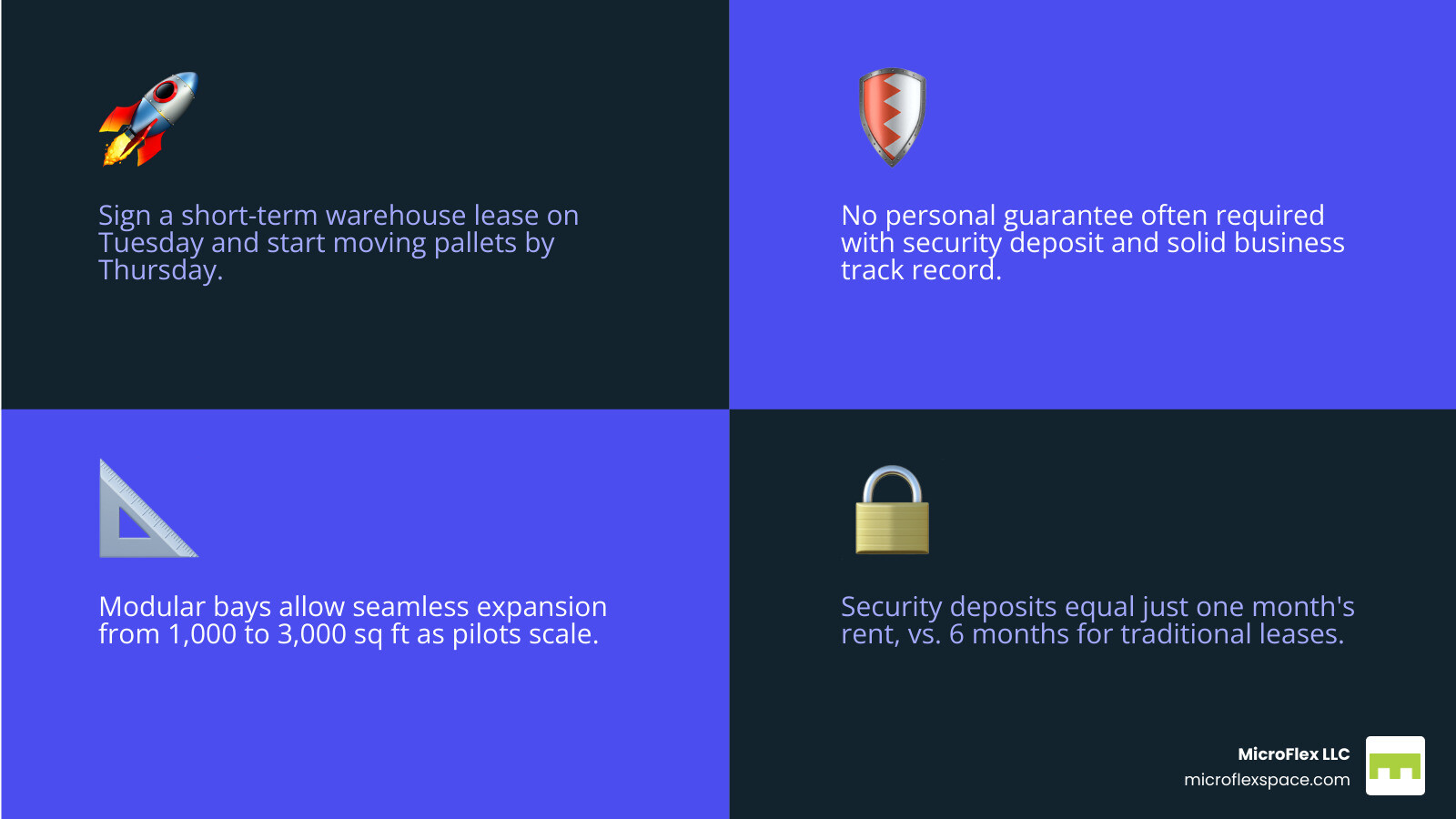
Pay close attention to termination clauses. The beauty of a short-term deal is the exit strategy. Ensure your agreement clearly states the notice period—usually 30 days—and that there are no hidden “restoration fees” as long as you return the space in its original condition. Security deposits for short-term industrial projects are typically equal to one month’s rent, a far cry from the six months of rent often demanded by large commercial brokers.
Frequently Asked Questions about Short-Term Warehousing
How quickly can I move into a short-term warehouse?
Speed is the primary benefit of the short-term model. Unlike traditional commercial real estate, which involves weeks of inspections, lawyer reviews, and build-outs, a short-term warehouse storage guide highlights that you can often sign a lease on a Tuesday and be moving pallets in by Thursday. Most of these spaces are “move-in ready,” meaning the utilities are on, the floors are clean, and the WiFi is active.
Do I need a personal guarantee for a pilot project lease?
In many cases, no. Because the risk to the landlord is lower on a flexible lease warehouse, many providers will waive the requirement for a personal guarantee, especially if the business has a solid track record or provides a standard security deposit. This keeps your personal assets separate from your pilot project’s experimental risks.
Can I upgrade my space if the pilot project scales?
Absolutely. This is the “flex” in flexible space. Modern facilities are often designed with modular bays. If your pilot project in Madison, AL, goes viral and you suddenly need 3,000 square feet instead of 1,000, you can often just “unzip” the wall to the adjacent unit. Consult a small warehouse for rent guide to see how modular configurations work for growing businesses.
Conclusion: The Best Alternative for Alabama Businesses
When it comes to how to rent short-term warehouse space for pilot project success, Alabama businesses have a clear advantage. You don’t have to settle for a dusty self-storage unit that lacks a loading dock, and you don’t have to sign your life away on a ten-year commercial lease.
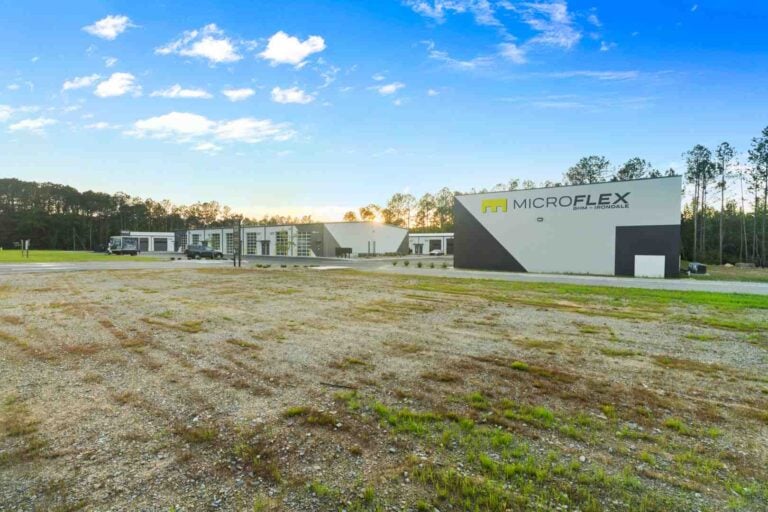
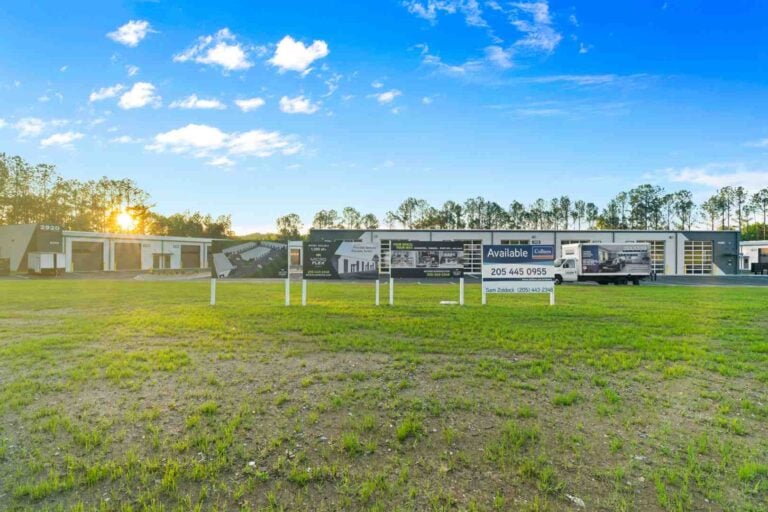
At MicroFlex™ LLC, we’ve built our entire model around the needs of the modern, agile business owner. Whether you are in Irondale, Auburn, Hoover, or Huntsville (Madison), we provide the infrastructure of a major logistics hub with the flexibility of a month-to-month membership.
Our spaces are designed to thrive with businesses like Office Equipment Wholesalers—who might need to stage a large shipment for a month before distribution—or Graphic Designers needing a temporary studio for a massive project. We combine warehouse, office, and showroom features into one adaptable unit, allowing you to run your entire pilot project from a single professional location.
Stop betting your company’s future on long-term real estate commitments for short-term goals. If you’re ready to launch your pilot with the right space, check out our short-term warehouse lease guide or visit our short-term warehouse lease services page to find your perfect fit in Alabama.
Ready to get to work? We have the keys waiting for you.