What Is a Multi Use Space (and Why It Matters for Your Business)
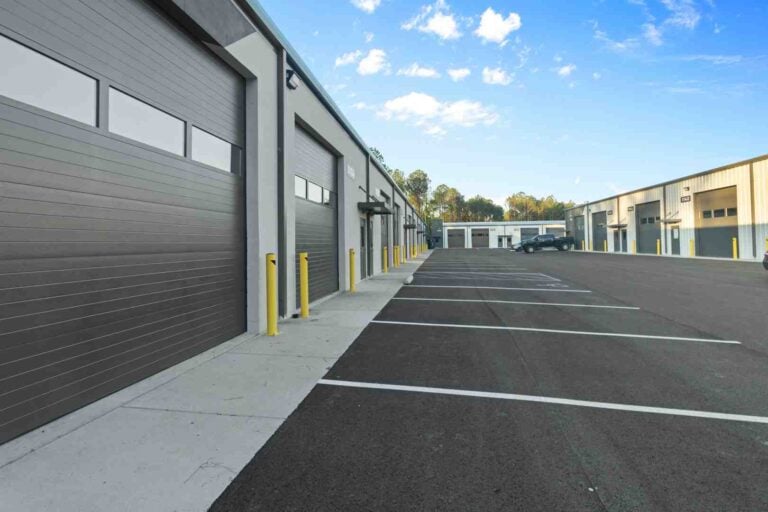
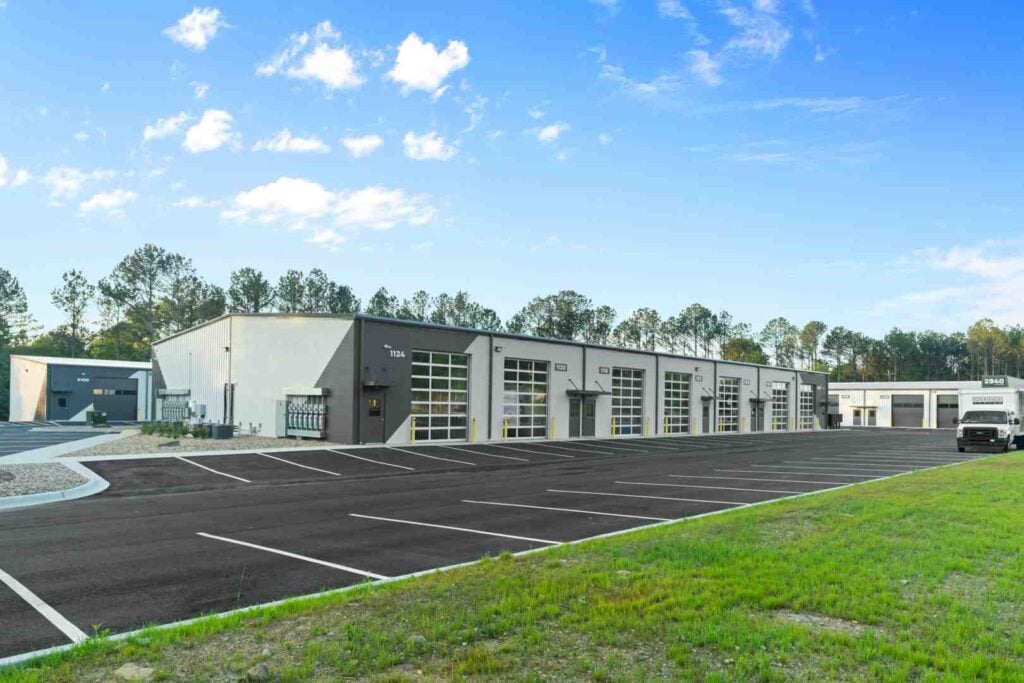
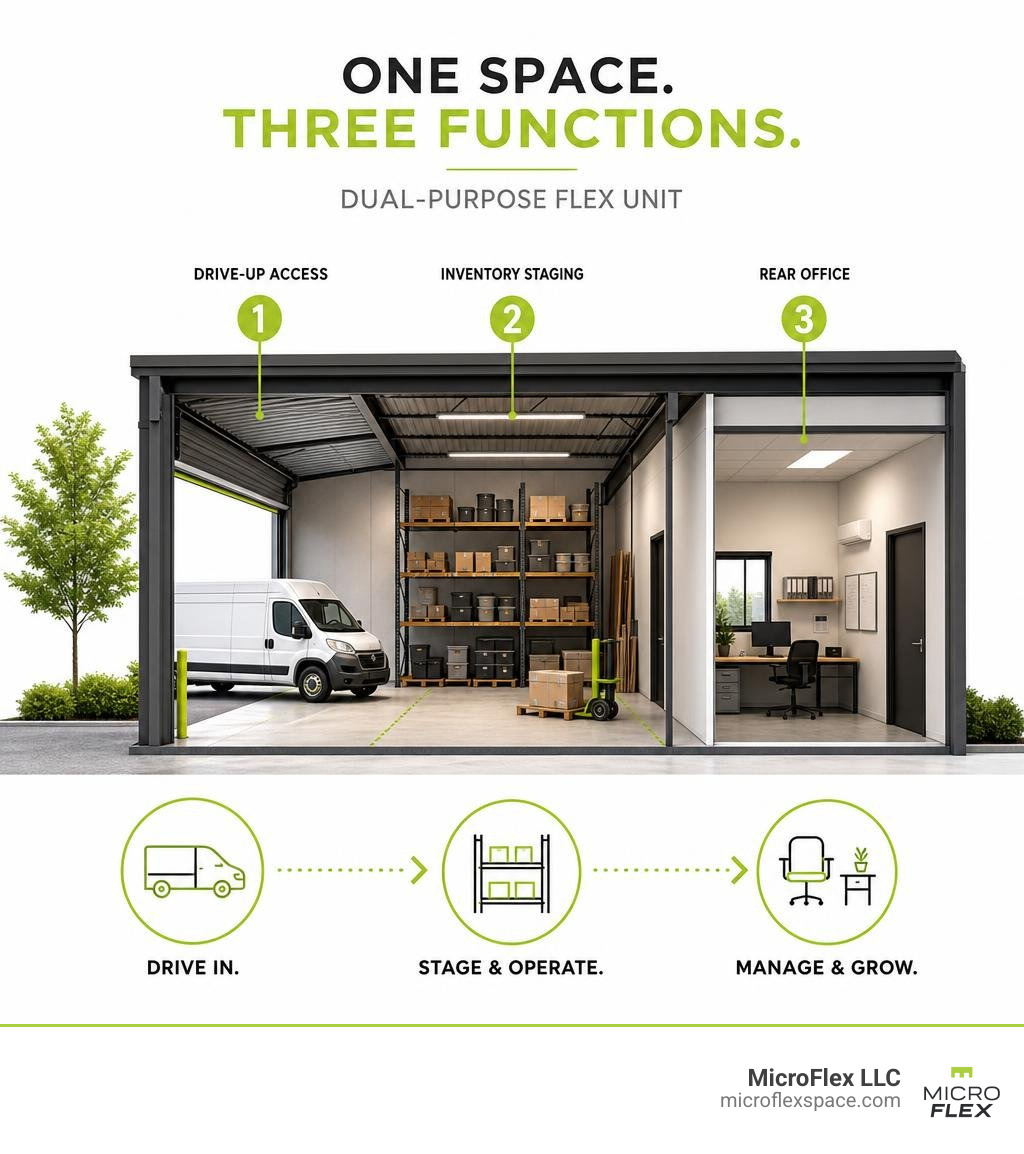
A multi use space is any commercial environment designed to support more than one function within a single footprint, such as combining storage, operations, and administrative work under one roof.
Quick answer for small business operators:
- A multi use space lets you stage inventory, run equipment, and handle paperwork without leasing separate properties
- Purpose-built flex industrial units are one of the most practical forms of multi use space for trade contractors and small operators
- Key features to look for include drive-up roll-up doors, climate control, and an enclosed office area
- Lease structure matters: a one-year modified gross lease keeps operating costs predictable
- Unit size in the 1,000-1,250 SF range suits most solo operators and small crews
The concept is not new. People have been layering functions into single spaces for as long as there have been buildings, from the Roman Colosseum hosting everything from gladiatorial combat to theatrical performances, to 20th-century industrial lofts in SoHo that quietly became studios, workshops, and offices all at once. What has changed is that purpose-built products now exist specifically to deliver that flexibility from day one, without the guesswork of adapting a space never meant for your use.
For a small business owner, the difference between a space that works and one that doesn’t often comes down to layout, access, and whether the lease structure gives you room to operate without unnecessary friction.
I’m Chase Carroll, a real estate developer and investor with over 12 years of experience across residential, industrial, and mixed-use projects, including purpose-built multi use space developments through MicroFlex®. My work building and operating flex industrial properties across the Southeast informs everything in this guide.
Understanding the Shift to Flex Industrial Environments
Traditional commercial real estate often forces businesses into rigid categories. Industrial zoning typically leads to massive distribution warehouses, while commercial zoning results in retail strip centers or high-rise office buildings. For many modern teams, particularly those in the trades or e-commerce, these single-purpose structures do not align with daily operational realities. According to the U.S. Small Business Administration, selecting the appropriate commercial environment is a foundational step for small business operations.
Adaptive reuse projects have shown that older, static structures can be repurposed to meet new demands. However, converting an old retail store or warehouse into a functional trade base often requires significant capital and structural modification. This mismatch has driven the demand for purpose-built flex industrial environments. You can read more about how these dynamics are shifting in our guide on Unlocking Potential: Multi-Use Commercial Properties.
A modern flex industrial unit serves as a physical bridge between administrative tasks and physical labor. Instead of leasing a separate office across town and a self-storage unit for equipment, operators can run their entire business out of a single bay. This integration reduces transit times, simplifies overhead, and keeps teams aligned. For a deeper dive into the structural benefits of these layouts, see our Flexible Commercial Space: Ultimate Guide.
The Utility of Small-Bay Configurations
Small-bay configurations are the building blocks of efficient flex industrial design. At MicroFlex® locations, these bays typically range from 1,000 to 1,250 square feet, with standard dimensions of 25 by 40 feet or 25 by 50 feet.
These proportions are intentional. A 25-foot width provides ample room for a drive-up roll-up door while leaving space for a standard entry door. The depth of 40 or 50 feet allows for a natural division of space, letting operators establish distinct zones for inventory, tools, and administrative work. To explore how these configurations support business operations, view our article on Multi-Use Commercial Property.
Regional Demand Drivers in the Southeast
In the Southeast, and specifically across Alabama markets, the demand for small-bay flex space has grown as service industries and trade businesses expand. In the Birmingham metro, which includes our Irondale and Hoover properties, local service providers require central hubs to dispatch crews and store equipment.
The Huntsville market, home to our Slaughter Rd. and South Memorial properties, has seen similar demand driven by rapid economic growth and defense-related support services. Additionally, our rebranded location in Auburn-Opelika serves a diverse mix of local service businesses. To understand how these regional dynamics shape commercial real estate options, see our resource on Multi-Functional Spaces Alabama.
Designing a Multi Use Space for Trade Contractors
Trade contractors, such as HVAC specialists, plumbers, and electrical teams, face unique spatial challenges. They must coordinate field technicians, manage incoming inventory, stage bulky equipment, and handle billing and customer service. A poorly organized space leads to lost time, misplaced tools, and administrative bottlenecks.
When designing a layout for a trade business, the primary goal is to minimize friction between the office and the warehouse floor. For insights on optimizing these layouts, read about Designing the Perfect Multi-Function Business Space for Growth and explore our Adaptable Business Solutions.
Operational Efficiency in a Multi Use Space
For a trade business, operational efficiency starts at the threshold of the unit. Drive-up access and high-clearance roll-up doors allow service vans to back directly up to the inventory area. This setup simplifies the morning routine, enabling crews to load heavy equipment, copper piping, or replacement units without transport delays. To learn more about how accessible entryways improve daily workflows, refer to our guide on Flexible Workspace Solutions.
Key Layout Strategies for a Multi Use Space
Maximizing a small-bay unit requires thinking vertically. High ceilings allow for the installation of heavy-duty pallet racking, keeping the main floor clear for active staging.
Another effective strategy is the use of mezzanine levels. In our FLEX Premium and FLEX Ultimate configurations, a built-in mezzanine adds a second level of usable space. This upper level is ideal for light inventory storage, leaving the ground floor dedicated to heavy equipment and vehicle access. For a detailed look at how vertical space can improve your bottom line, see The Flexible Future: Renting Flex Space for Business Growth.
Spatial Configurations for HVAC Operations
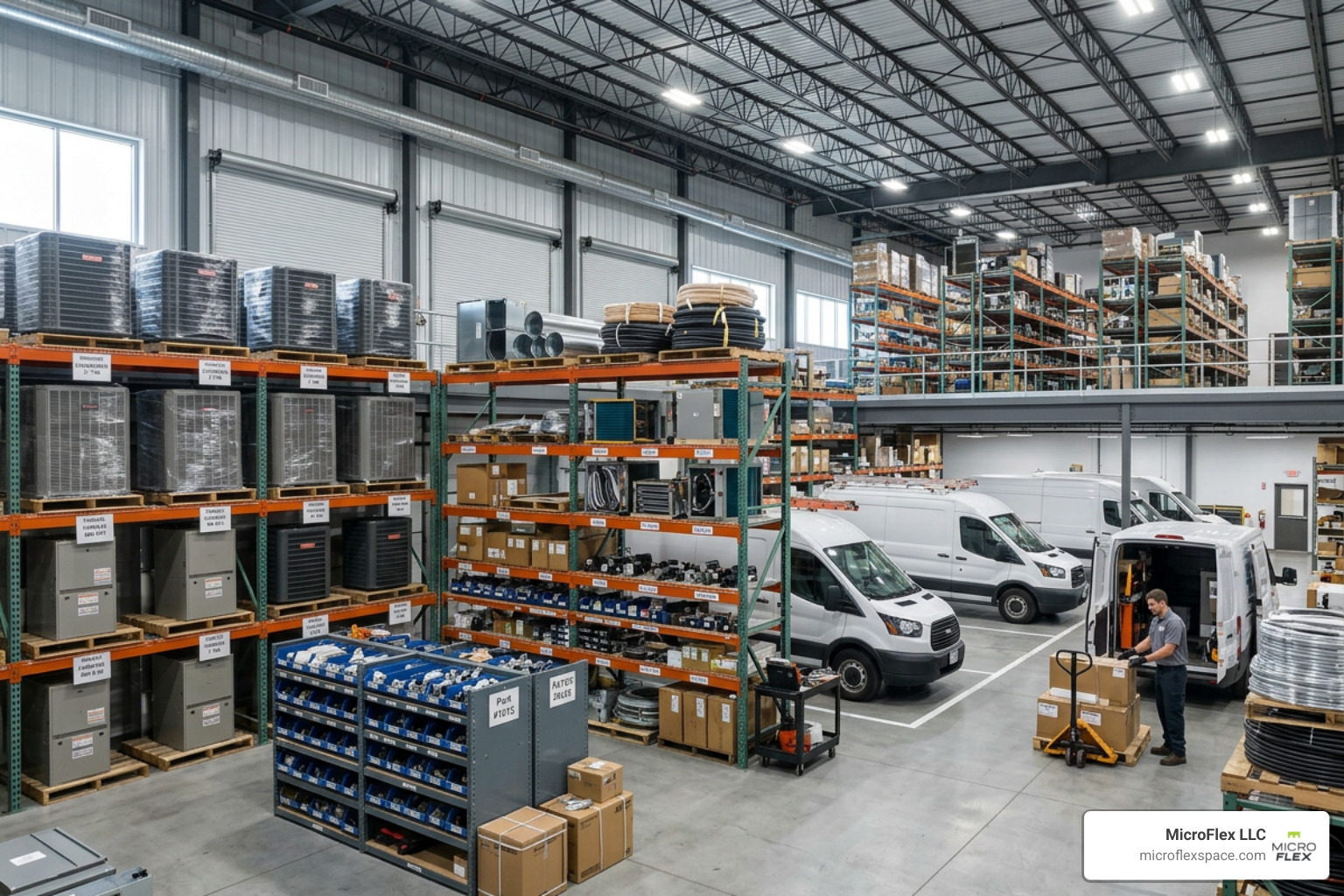
An HVAC contractor operating out of a standard flex unit provides an excellent case study in spatial efficiency. Their daily operations involve handling large, heavy items like outdoor condenser units, furnaces, and coils, alongside smaller parts like thermostats, filters, and copper fittings.
A typical workflow might involve receiving bulk shipments on pallets, sorting those shipments into specific job kits, and loading those kits into service vans each morning. To support this flow, the unit should be divided into clear zones:
- A receiving zone near the roll-up door for unloading pallets
- A kitting zone with workbenches for preparing parts for specific service calls
- A vertical storage zone for bulk inventory, sheet metal, and recovery tanks
- An administrative zone for dispatch and billing
For more details on industrial layouts, read our overview of Flexible Industrial Space.
Integrating Administrative and Field Operations
An HVAC business cannot run on field labor alone. Dispatchers must coordinate schedules, estimators must draft bids, and office managers must handle invoicing.
In a FLEX+ unit, an enclosed rear office provides a dedicated administrative environment. This layout keeps office personnel separated from the noise and dust of the warehouse bay, while remaining close enough to coordinate with field crews as they load up for the day. To learn about leasing options that support both office and field teams, view our guide on Flexible Leasing Spaces.
Managing Climate-Sensitive Equipment and Parts
Many HVAC components, including electronic thermostats, smart home controls, and specialized adhesives, are sensitive to extreme temperatures. Storing these items in an unconditioned warehouse can lead to premature failure or product degradation.
This is why climate control is a standard feature in purpose-built MicroFlex units. Having active heating and air conditioning throughout the entire bay ensures that sensitive inventory remains stable year-round.
It is important to note that features can vary by location. For example, our Auburn-Opelika property is a rebranded, rather than purpose-built, facility. At Auburn-Opelika, climate control varies by unit (some have HVAC, some do not), mezzanines are not present, and unit sizes do not start at 1,000 square feet, though they do include drive-up doors and private restrooms. Conversely, our purpose-built locations in the Birmingham metro (Irondale and Hoover) and Huntsville feature full climate control, private restrooms, and LED lighting in every unit.
Frequently Asked Questions About Flex Industrial Layouts
What are the standard dimensions of a small-bay flex unit?
At our purpose-built locations, standard bays are typically 25 feet wide by 40 feet deep, or 25 feet wide by 50 feet deep, yielding 1,000 to 1,250 square feet of floor space. These dimensions are selected to provide a balanced, rectangular footprint that is easy to organize. The 25-foot width accommodates a standard drive-up roll-up door and a separate pedestrian entry door, while the depth allows for distinct front-to-back zoning.
How does a modified gross lease work for trade businesses?
A modified gross lease is a straightforward agreement where the tenant pays a base rent that includes most of the operating expenses associated with the property, such as building insurance, common area maintenance, and property taxes. This lease structure provides predictability, as you do not have to worry about fluctuating triple-net (NNN) charges each month.
At MicroFlex, we utilize a standard one-year modified gross lease across our portfolio. This annual lease term provides stability for your business operations while keeping your monthly real estate costs clear and predictable.
Can a flex unit accommodate both office and warehouse needs?
Yes. The dual-purpose layout is the primary benefit of a flex industrial unit. In configurations like our FLEX+ or FLEX Premium tiers, the ground floor serves as your warehouse, staging area, and workshop, while the enclosed rear office or mezzanine level provides a quiet, professional space for administrative work, customer meetings, and dispatch coordination. This setup eliminates the need to lease, utility-manage, and travel between two separate properties.
Conclusion
Managing a modern trade or service business requires a physical space that can keep up with your daily operations. A purpose-built multi use space provides the practical foundation your team needs to organize inventory, dispatch crews, and handle administrative work efficiently.
At MicroFlex, we design and operate small-bay flex industrial spaces tailored to these exact operational needs. With locations across the Birmingham metro (Irondale and Hoover), Huntsville (Slaughter Rd. and South Memorial), and our rebranded facility in Auburn-Opelika, we provide local businesses with functional, climate-conditioned spaces. We are also looking forward to expanding our footprint with new locations coming soon to North Carolina and Georgia.
To learn more about our available configurations or to schedule a walk-through of a unit, visit MicroFlex to connect with our local leasing team.
Sources
- U.S. Small Business Administration, “Choose a business location,” https://www.sba.gov/
This article is published by Founders Investment Properties, LLC, owner and operator of MicroFlex®. Content is provided for general informational and educational purposes only. Nothing in this article constitutes legal advice, tax advice, financial advice, investment advice, insurance advice, real estate brokerage advice, or any other form of professional advice. Readers should consult their own attorneys, accountants, tax professionals, insurance brokers, and licensed real estate professionals before making decisions based on the topics discussed.
MicroFlex® is a registered trademark of Founders Investment Properties, LLC. Photos may be representative and may not reflect a specific location. Product configurations, features, lease terms, pricing, and availability are subject to change. Current information is available at microflexspace.com or by contacting the leasing team directly.
Real estate transactional: Real estate transactions involve legal, financial, and regulatory complexity. Consult a licensed real estate professional in your state before making real estate decisions.