

Why Commercial Space for Recording Studio Is Essential for Your Creative Business

Commercial space for recording studio operations is more than just four walls—it’s the foundation of your professional audio business. Whether you’re a music producer, podcaster, or audio engineer, the right space can make or break your success.
Quick Answer: What to Look for in Commercial Space for Recording Studio:
- Location – Easy client access, low ambient noise, ample parking
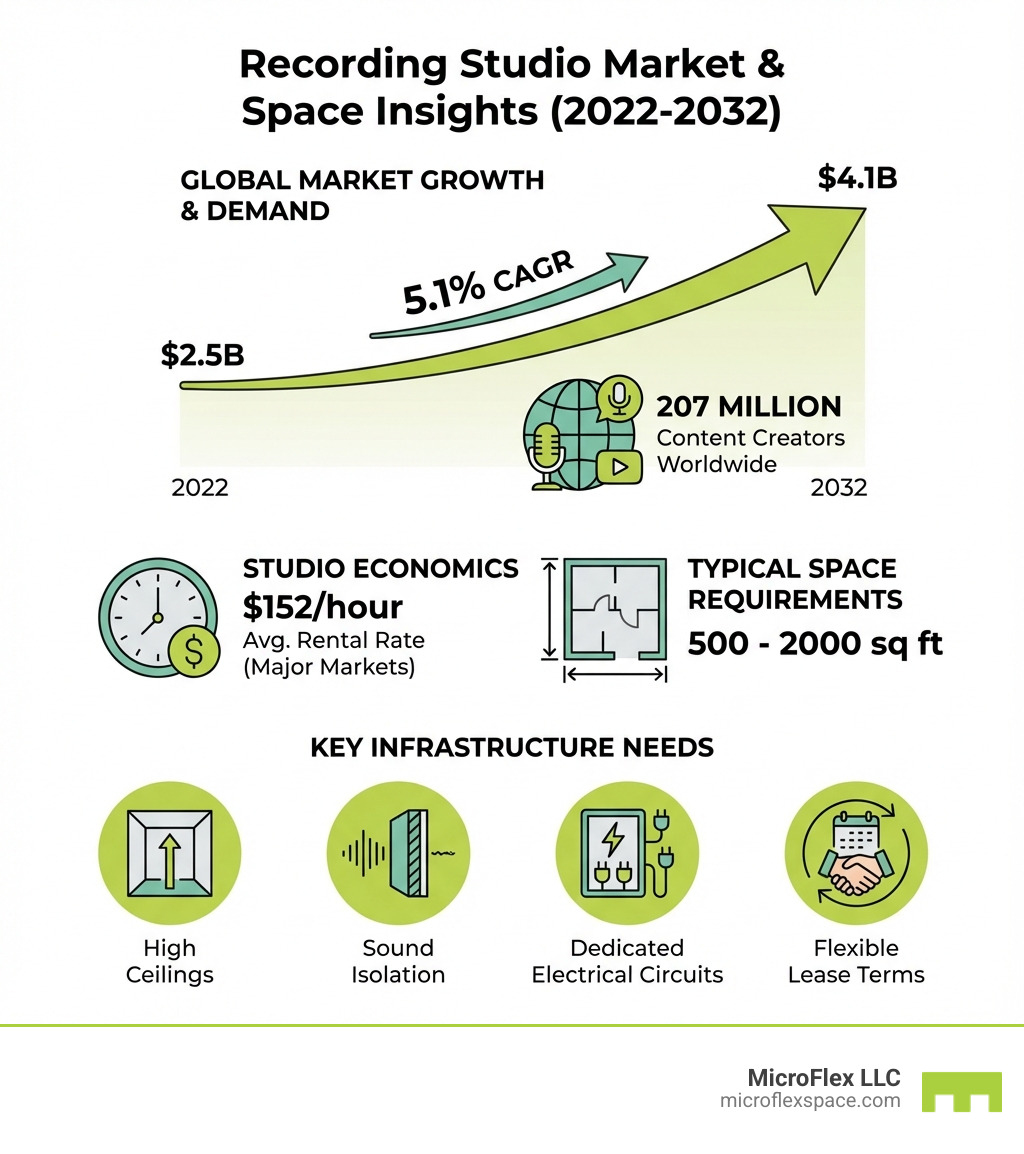
- Size & Layout – 500-2,000 sq ft minimum for control room, live room, and isolation booth
- Infrastructure – High ceilings (10-14 ft), solid construction, dedicated electrical circuits
- Acoustics – Sound isolation potential, minimal HVAC noise
- Flexibility – Adaptable lease terms, room for growth
- Zoning – Commercial or light industrial zoning that permits studio use
The global recording studio market is projected to grow from $2.5 billion in 2022 to $4.1 billion by 2032. With an estimated 207 million content creators worldwide, demand for professional recording spaces has never been higher. Yet many studio owners struggle with rigid lease terms, expensive build-outs, and spaces that don’t adapt to their evolving needs.
Traditional commercial leases lock you into long-term commitments, while home studios limit your professional image and growth potential. You need a flexible solution that grows with your business.
At MicroFlex LLC, we’ve spent over a decade helping entrepreneurs find and transform commercial space for recording studio ventures. We specialize in flexible, adaptable spaces designed for creative businesses, combining the professionalism of commercial real estate with the flexibility small business owners need to thrive.
Why Choose a Commercial Space Over a Home Studio?

A professional commercial space lifts your studio’s image, offers superior acoustics and sound isolation, and provides a clear separation between work and home life. It also enables scalability and attracts more clients. Home studios often lack these advantages and can limit your business growth. When you’re ready to take your craft seriously, investing in a dedicated commercial space is a significant step. It signals professionalism and commitment, which can be a major draw for clients. For a deeper dive into versatile spaces, check out our Flexible Commercial Space Ultimate Guide.
Advantages of a Dedicated Commercial Space
Choosing a dedicated commercial space for recording studio operations comes with benefits that directly impact your business’s success:
- Improved credibility and professional image: A dedicated commercial studio instantly lifts your brand, attracting established artists and corporate clients who associate professional spaces with higher quality.
- Focused, distraction-free environment: A commercial space provides a clear boundary between your personal and professional life, fostering the concentration needed for creative work.
- Access to robust infrastructure: Commercial buildings offer more substantial electrical systems, better HVAC, and higher-speed internet critical for running power-hungry audio equipment.
- Networking and collaboration opportunities: Being in a commercial hub with other creative businesses opens doors for collaboration with producers, videographers, and designers.
- Room for business expansion: A commercial space offers the potential to expand. As your business grows, you can add more isolation rooms, a larger live room, or co-working spaces.
Potential Challenges to Consider
While the advantages are clear, it’s important to be realistic about the challenges:
- Higher overhead costs: Rent, utilities, and insurance for a commercial property are generally higher, requiring a solid business plan to cover expenses.
- Lease commitments (flexible options available with MicroFlex): Traditional leases often lock you into long-term agreements (3-5 years). Flexible spaces, like those from MicroFlex, reduce this risk with shorter, adaptable contracts. Explore our Short-Term Commercial Rentals for solutions.
- Commuting: A daily commute to your studio’s site adds time and expense to your workday.
- Build-out expenses: Converting a raw commercial space into a sound-treated studio can be a significant investment, requiring careful planning and budgeting for acoustic treatment and specialized wiring.
Key Factors for Choosing Your Commercial Space for a Recording Studio

Selecting the right commercial space for recording studio operations is akin to choosing the perfect instrument—it needs to resonate with your vision and capabilities. You’ll need to consider location, size, layout, infrastructure, zoning, and legal requirements. These elements will dictate the success and efficiency of your creative hub.
Location, Accessibility, and Neighborhood
The old adage “location, location, location” holds true for recording studios, even if you’re aiming for a quiet, isolated vibe.
- Client convenience and accessibility: Your clients need to easily find and get to your studio. Proximity to major roads and public transport in places like Auburn Opelika, Birmingham, or Huntsville, Alabama, is a big plus.
- Ample parking: This is often overlooked but crucial. Clients and artists with gear need reliable parking, which can deter repeat business if it’s a hassle.
- Low ambient noise: A studio next to a busy highway or industrial complex will require more expensive soundproofing. Look for areas with minimal external noise.
- Proximity to creative and business hubs: Being near other creative businesses, music venues, or universities can foster collaboration and provide a stream of potential clients. Our Commercial Property Birmingham Ultimate Guide can help you steer local options.
- Safety and security: You and your clients need to feel safe, especially during late-night sessions. Consider the neighborhood’s reputation and the building’s security.
Finding the Right Size and Layout
The dimensions and configuration of your commercial space for recording studio are paramount. An 8×10 foot room is generally too small for a functional studio. You need space to create and accommodate your gear.
- Control room and live room dimensions: A professional setup needs a separate control room and a live room. The live room should have high ceilings (10-14 feet) and enough space for instruments and performers.
- Isolation booth needs: Vocal booths are essential for clean vocal tracks. Plan for one or more and integrate them into your layout.
- Reception and lounge areas: A comfortable waiting area and lounge improve the client experience, providing a space for artists to relax and prepare.
- Storage solutions: Studios accumulate a lot of gear. Adequate storage is vital for organization and protecting equipment. Our Office Space with Storage solutions can provide the perfect blend of workspace and secure storage.
- Scalability for future growth: Choose a space that can adapt as you expand your services or add equipment. Flexible layouts are key.
Essential Infrastructure and Acoustics
Even the most beautiful space is useless if it can’t support your recording needs.
- High ceilings and solid construction: High ceilings improve acoustics, while solid construction (concrete or brick) provides a good base for sound isolation.
- HVAC system noise control: A noisy air conditioning unit can ruin a take. Look for spaces with quiet HVAC systems or plan for modifications. Our Microflex Spaces HVAC Ultimate Guide offers insights into managing climate control.
- Sufficient electrical capacity: Studios require dedicated circuits and clean power to run equipment without issues. This is non-negotiable for professional audio.
- Reliable internet connectivity: High-speed internet is crucial for cloud backups, software updates, and online collaboration. Ensure the building has robust broadband access.
Changing Your Space: Planning for Studio-Ready Environments
Once you’ve identified a promising commercial space for recording studio, the real work begins: changing it into an acoustically optimized, inspiring environment. When changing a commercial space, consider sound isolation, acoustic treatment, and budgeting for improvements. MicroFlex spaces are designed to be easily adapted for creative uses, minimizing build-out time and costs so you can focus on your art.
Sound Isolation and Acoustic Considerations
Sound is both your medium and your biggest challenge. Proper sound isolation and acoustic treatment are what separate a professional studio from a glorified garage.
- Solid construction for sound containment: Thick walls, concrete floors, and minimal windows are ideal starting points to prevent noise from entering or escaping.
- Adaptable layouts for control and live rooms: True isolation often requires building “room within a room” structures with decoupled walls and ceilings. MicroFlex spaces offer the flexibility to implement these modifications more easily. For specialized needs, explore our Sound Stage Rental options.
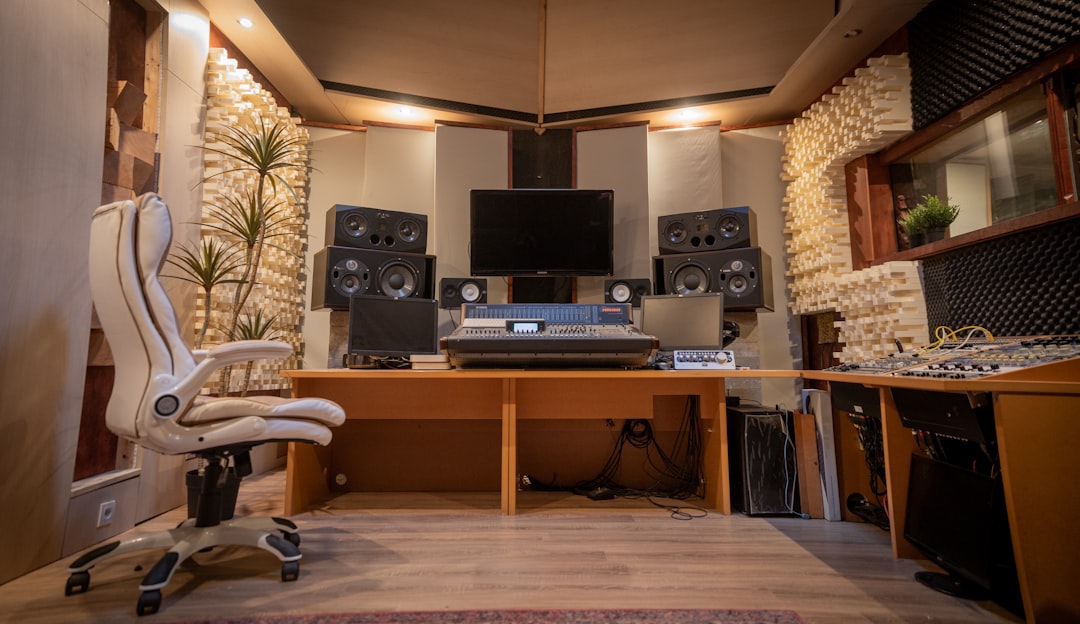
- Options for additional acoustic treatment: Once sound is contained, manage its behavior inside with acoustic panels, bass traps, and diffusers. This controls reflections and creates a balanced sound. Different rooms require different treatments, from heavy absorption in booths to diffusion in live rooms.
Creating an Inspiring and Functional Studio Environment
Beyond the technical aspects, the vibe of your studio is incredibly important. Artists perform better in a space that feels welcoming and inspiring.
- Comfortable lounge and reception areas: A clean, well-designed lounge sets a positive tone and gives artists a place to relax between takes.
- Flexible workspace for collaboration: Modern studios are collaborative hubs. Designate areas where artists, producers, and engineers can work together. Our Creative Workspace Complete Guide offers ideas for fostering collaboration.
- Professional atmosphere to attract clients: A professional environment, from cleanliness to decor, helps justify your rates and encourages repeat business. You want to provide a “sense of calm and ease” so clients can focus on their creative work.
Why MicroFlex is the Best Choice for Recording Studios
When it comes to finding the ideal commercial space for recording studio operations, MicroFlex LLC stands out as the ultimate partner for creative entrepreneurs in Alabama. We offer a modern alternative to traditional leases, with flexible terms, scalable solutions, and spaces specifically designed to adapt to diverse business needs, including yours.
Here’s why MicroFlex is the smart choice for your recording studio:
- Flexible lease terms to reduce risk: Traditional commercial leases often demand multi-year commitments, which can be a huge burden for new or growing businesses. We understand that your needs can change. MicroFlex offers flexible leasing options, including short-term agreements and month-to-month contracts, allowing you to test the waters, scale up, or pivot without being tied down by rigid long-term obligations. This flexibility significantly de-risks your venture.
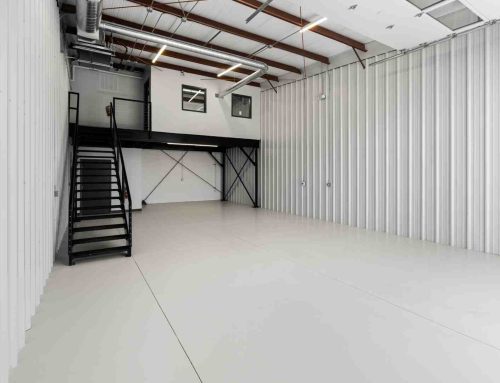
- Combined office, warehouse, and studio options: Many recording studios need more than just a soundproof room. You might require office space for administration, a warehouse area for equipment storage, or a showroom for displaying your work or merchandise. Our multi-functional spaces effortlessly blend these needs, providing a seamless environment where you can manage your business, store your gear, and produce your art all under one roof. Whether you’re in Birmingham, Huntsville, or Auburn Opelika, we have configurations that work.
- Cost-effective, move-in ready solutions: Building out a raw commercial space into a recording studio can be incredibly expensive and time-consuming. MicroFlex provides spaces that are often move-in ready or require minimal modifications for creative use. This reduces your upfront capital expenditure and gets you up and running faster, allowing you to start generating revenue sooner. We focus on providing efficient, adaptable shells that you can customize without breaking the bank.
- Support for business growth and changing needs: Your recording studio won’t be static. As you grow, you might need more space, different configurations, or even an additional location. MicroFlex is designed with scalability in mind. Our portfolio of spaces across Alabama—from Birmingham Irondale to Huntsville and Birmingham Hoover—means we can offer solutions that adapt as your business evolves. Whether you’re expanding your client base, adding new services, or experimenting with co-working models for creators, our Flexible Workspace Solutions are built to support your journey. For specific inquiries in Huntsville, check out our Commercial Property Huntsville resources.
We believe that your space should empower your creativity and business, not restrict it. MicroFlex offers the infrastructure, flexibility, and support you need to build a thriving recording studio business in Alabama.
Running a Profitable Studio: Business, Gear, and Client Experience
A successful studio is more than just a space—it’s a business. Your success lies in your business model, the equipment you offer, and the experience you provide. MicroFlex spaces help you create a professional environment that impresses clients and supports your business model, ensuring you have the foundation to thrive.
Structuring Your Business for Profitability
To ensure your commercial space for recording studio is a profitable venture, you need a smart business model. Average hourly rates in major markets are around $152/hr, showing clear potential for strong revenue.
- Hourly, daily, and block booking options: Offer varied booking structures. Hourly rates suit short sessions, while daily and discounted block bookings encourage longer commitments.
- Membership and package models: Tiered memberships or packages can provide a stable, recurring revenue stream, especially for a coworking studio model.
- Diversified revenue streams: Beyond studio time, offer services like mixing, mastering, production assistance, equipment rental, or hosting workshops. Our Business Rental Solutions can help you explore income-generating activities in your space.
Planning for Essential Equipment in a Commercial Space for a Recording Studio
The right equipment is the heart of any recording studio. When planning your commercial space for recording studio, ensure you have the infrastructure and space to operate efficiently.
- Space for core components: Ensure your control room has ergonomic space for your digital audio workstation (DAW), audio interface, monitors, and mixing console. The live room needs space for microphones and instruments.
- Infrastructure for outboard gear and cabling: If you use analog outboard gear, plan for rack space, proper ventilation, and organized cabling to maintain signal integrity.
- Storage for equipment and client needs: You’ll need secure storage for backup equipment, instruments, and client projects. MicroFlex spaces can provide dedicated storage areas. Consider our Commercial Workshop for Rent for spaces that accommodate both creative work and equipment storage.
Marketing and Ensuring a Positive Client Experience
Even with the best space and gear, a studio won’t succeed without clients. Effective marketing and an exceptional client experience are paramount.
- Build an online portfolio and social presence: A professional website showcasing your studio and past projects is non-negotiable. Use social media to share behind-the-scenes content and engage with the creative community.
- Network with local artists and businesses: Get involved in your local music scene in Alabama. Attend events and partner with music schools, local bands, or other creative businesses to offer bundled services.
- Create a welcoming, professional atmosphere: Every detail contributes to the client experience. A clean, organized, and comfortable studio encourages repeat business and glowing reviews. For more tips on nurturing your business, check out our Small Business Office Solutions.
Frequently Asked Questions about Commercial Studio Spaces
What are the typical costs of renting commercial space for a recording studio?
The costs for a commercial space for recording studio vary significantly by location, size, and amenities.
- Base rent per square foot: This primary cost varies widely by market, such as in Birmingham, Alabama, where rates depend on the neighborhood.
- Lease types (flexible options with MicroFlex): Traditional “triple net” (NNN) leases add taxes, insurance, and maintenance to your rent. MicroFlex simplifies this with flexible options for more predictable costs, a key benefit for small businesses.
- Build-out and improvement costs: Converting a raw space is expensive. Budget for structural work, HVAC adjustments, electrical upgrades, and acoustic treatment.
- Utilities and insurance: Plan for electricity, water, internet, and commercial liability insurance, which is typically required by landlords.
For a deeper understanding of costs, our Affordable Studio Space guide can provide more context.
What legal permits and licenses are required?
Operating a commercial space for recording studio involves several legal requirements to ensure compliance.
- Business license: You’ll need a general business license from your city or county (e.g., Birmingham, Huntsville) to operate legally.
- Building permits for improvements: Significant modifications involving structural, electrical, or plumbing work will require building permits to ensure they meet safety codes.
- Certificate of Occupancy: After a major build-out, you’ll need a new Certificate of Occupancy to certify the space is safe for use as a studio.
- Compliance with local noise ordinances: You must ensure your studio’s operations do not violate local noise regulations. Proper soundproofing is your best defense.
Navigating these requirements can be complex. Our Commercial Spaces Lease Guide 2025 offers general insights into commercial leasing regulations.
Can I operate a studio in a shared or multi-tenant commercial building?
Yes, operating a commercial space for recording studio in a shared building is common, but requires special attention to noise.
- Yes, with proper sound isolation and adherence to building rules: The main concern is noise bleed. Excellent sound isolation is non-negotiable to avoid disturbing neighbors and to protect your recordings. You must also follow the building’s rules on noise levels and operating hours.
- MicroFlex offers spaces designed for mixed-use and creative businesses: Our flexible industrial spaces are ideal for this scenario. They feature robust construction, providing a better starting point for sound isolation than standard offices. Our adaptable layouts make it easier to configure your studio for optimal acoustics while coexisting with other tenants. Explore our Flexible Industrial Space options for suitable solutions.
Conclusion
Finding and changing the perfect commercial space for recording studio operations is a significant undertaking, but it’s a crucial step toward building a successful and professional audio business. We’ve explored the advantages of a dedicated commercial space over a home setup, the key factors in choosing your ideal location, and the critical steps for planning studio-ready environments.
The right space offers more than just square footage—it provides credibility, a distraction-free environment, robust infrastructure, and the potential for growth. While challenges like higher overhead and build-out costs exist, flexible commercial real estate solutions are changing the game for creative entrepreneurs.
MicroFlex LLC is committed to empowering your creative vision. Our flexible lease terms, combined office, warehouse, and studio options, and cost-effective, adaptable spaces are specifically designed to de-risk your business and set you up for growth. We offer the infrastructure and support you need to thrive in a professional, inspiring environment across our Alabama locations.
Ready to find the perfect creative hub for your recording studio? Explore our Creative Workspace for Rent and start your journey today.