Climate control is part of the standard purpose-built MicroFlex® product. Purpose-built units include HVAC along with a drive-up roll-up door, private restroom, LED lighting, and a pre-built flex industrial configuration.
For an operator, the practical question is not simply whether HVAC is present. It is how a conditioned interior fits with the inventory, equipment, work areas, packing activity, and other day-to-day functions taking place inside the unit.
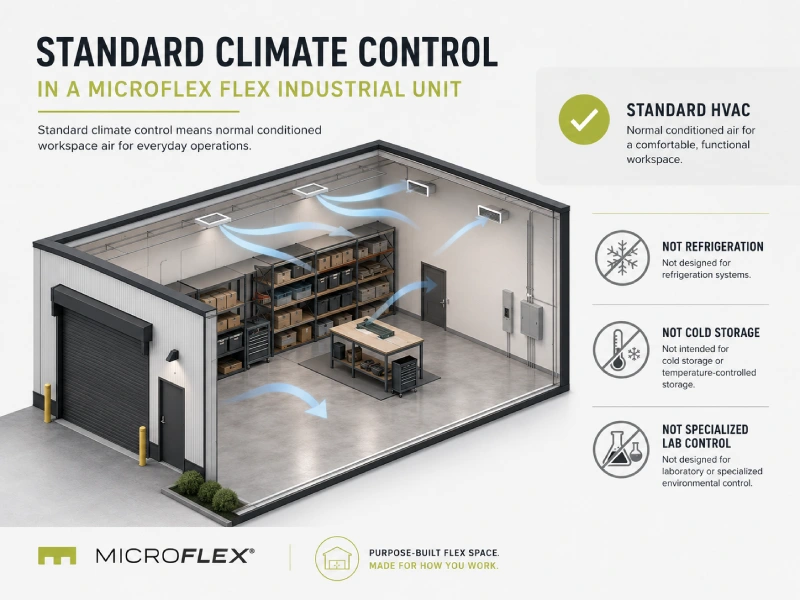
Climate control should also be understood within its limits. Standard HVAC does not by itself establish specialized temperature, humidity, refrigeration, clean-room, or product-specific storage conditions. Businesses with defined environmental requirements should evaluate those requirements separately for their own operation and the specific available unit.
Climate Control in Flex Industrial Space at a Glance
At purpose-built MicroFlex locations, HVAC is part of the base physical product rather than a feature limited to a particular FLEX configuration.
| Question | MicroFlex Product Reference |
|---|---|
| Is HVAC part of purpose-built MicroFlex units? | Yes. Climate control is a verified feature at purpose-built locations. |
| Is HVAC limited to FLEX+ or higher configurations? | No. It is part of the purpose-built base product. |
| Does climate control mean specialized environmental storage? | No specialized temperature, humidity, refrigeration, or product-specific standard should be assumed. |
| Does the same HVAC statement apply to Auburn-Opelika? | No. Climate control varies by unit at Auburn-Opelika. |
In This Article
- What climate control means in the MicroFlex product
- How HVAC relates to daily operations
- How operators can think about inventory
- How equipment fits into the planning process
- How climate control relates to active work areas
- Where standard HVAC stops and specialized requirements begin
- How climate control relates to MicroFlex configurations
- Why Auburn-Opelika is different
- Frequently asked questions
What Does Climate Control Mean in a Purpose-Built MicroFlex Unit?
Purpose-built MicroFlex units include HVAC throughout the unit. In practical product terms, that means the operational bay is a conditioned interior rather than a basic unconditioned industrial shell.
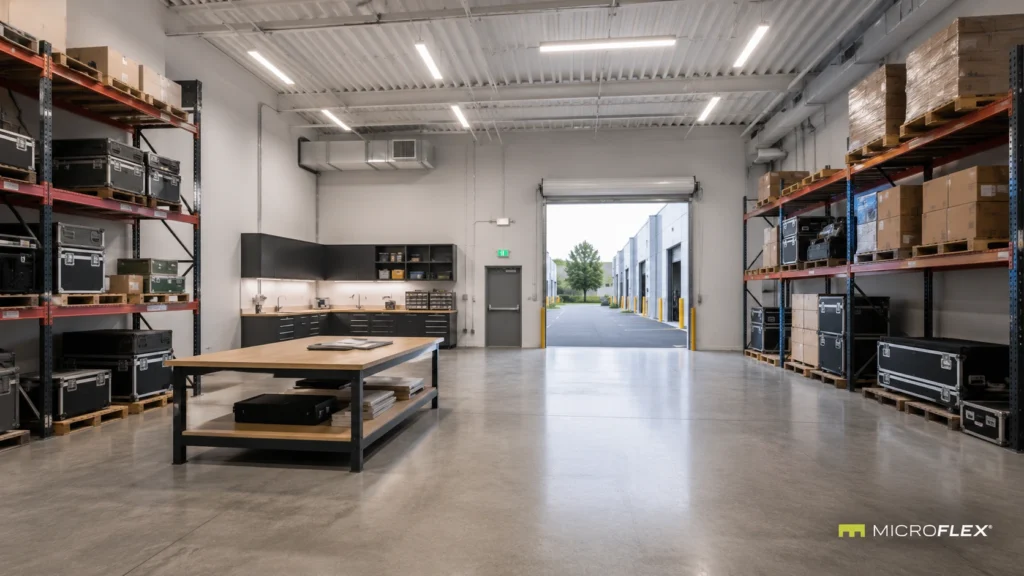
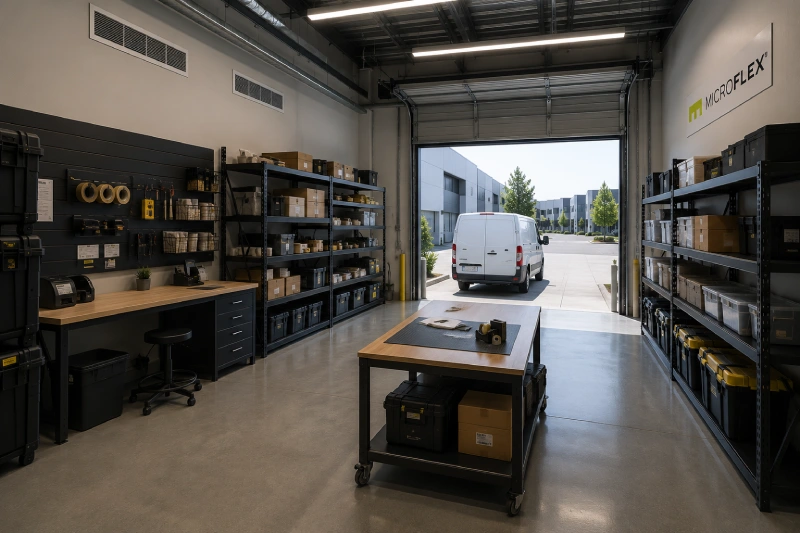
That distinction can matter for businesses using the unit for more than passive storage. A MicroFlex unit may contain inventory shelving, equipment, worktables, packing areas, job staging, or administrative functions depending on the operation and configuration.
Climate control becomes one part of that operating environment alongside lighting, drive-up access, the restroom, floor layout, and the selected configuration.
It should not, however, be interpreted as a guarantee that a particular product, material, or piece of equipment will remain within manufacturer-required environmental specifications.
How Does Climate Control Relate to Daily Operations?
The relevance of HVAC depends on what actually happens inside the unit.
Consider an e-commerce operator that uses part of the bay for inventory and another part for packing. The same interior is supporting stored goods, active picking, packing stations, and outbound preparation.
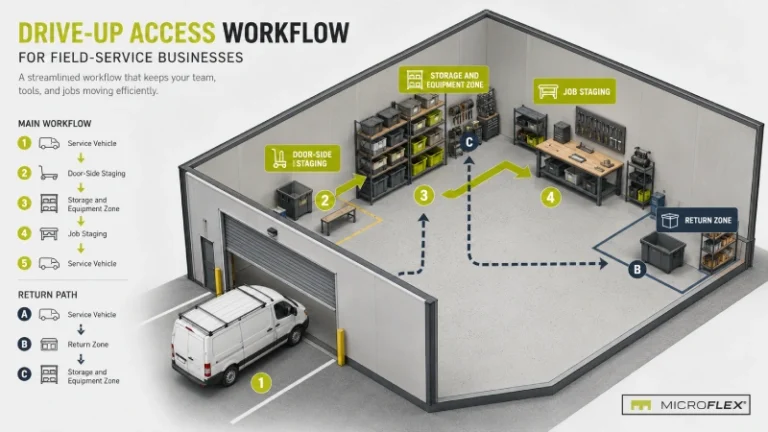
A contractor may use the unit differently, with tools and equipment stored along the walls, job materials staged in dedicated areas, and bench work occurring elsewhere in the bay.
In both examples, climate control is part of the overall working environment rather than a standalone storage service.
This is one reason the feature is relevant to small-bay flex industrial use. The unit can function as an active operating base, not merely as a place where items remain untouched between visits.
How Should an Operator Think About Inventory in a Climate-Controlled Unit?
Inventory requirements vary considerably by product.
For general operational planning, it can be useful to separate inventory into categories based on how the business actually handles it:
- frequently picked inventory
- reserve inventory
- finished goods awaiting outbound movement
- packaging and operating supplies
- items with manufacturer-defined environmental requirements
The first four categories mainly affect workflow and storage layout. The final category introduces a separate question: whether the environmental requirements of the product are compatible with the conditions available in the specific unit.
An operator handling goods with defined temperature or humidity specifications should not treat the general term “climate controlled” as confirmation that those requirements are satisfied.
What About Tools and Equipment?
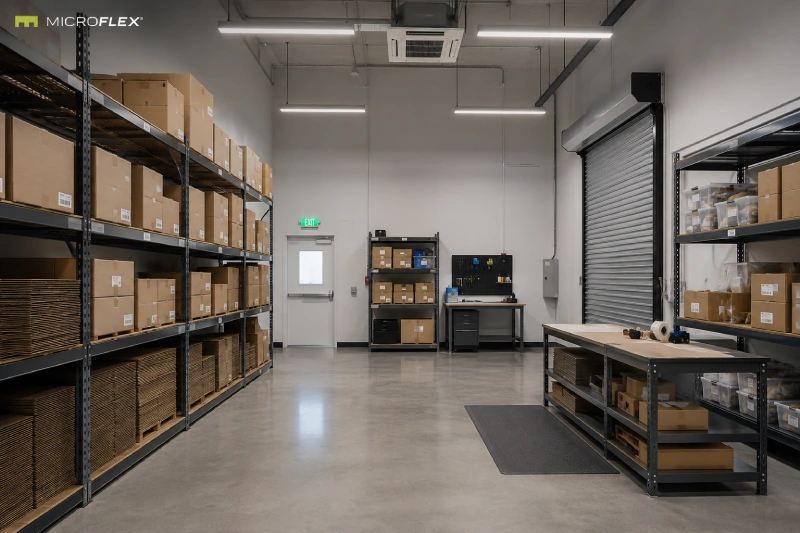
Equipment-dependent businesses may also consider the environment in which tools and equipment are stored, prepared, or used.
A service business might keep daily-use equipment close to the primary movement path while specialty equipment remains in a separate storage zone. A light-assembly operation may combine shelving with compatible worktables and equipment areas.
HVAC is part of the interior environment in purpose-built units, but equipment-specific requirements still belong to the equipment itself. Manufacturer instructions, operating limitations, ventilation requirements, electrical requirements, and other technical considerations should be evaluated independently where they apply.
The distinction keeps the role of the building clear: MicroFlex provides the flex industrial unit and its verified physical features. The operator determines whether those conditions are appropriate for the specific equipment and business activity.
How Does Climate Control Fit With Active Work Areas?
Small-bay flex space often combines storage and active operational functions inside the same bay.
Depending on the business, those functions may include:
- packing and order preparation
- compatible bench work
- tool and equipment preparation
- inventory handling
- job staging
- desk-based administrative activity in an available office configuration
Because HVAC is part of the purpose-built product, operators do not need to think of climate control as belonging only to an office portion of the unit.
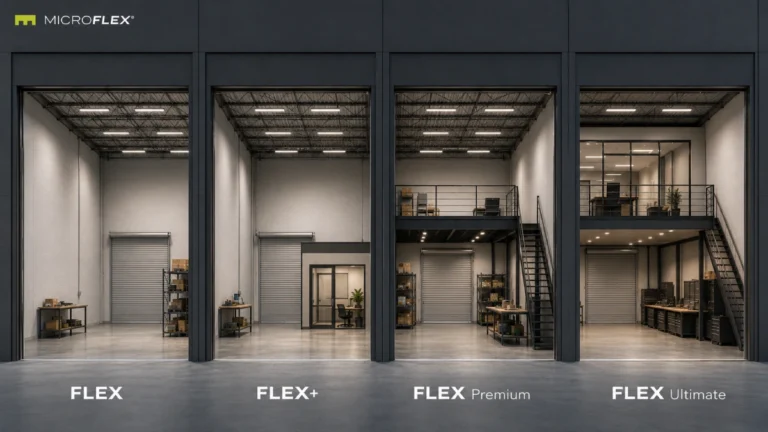
The specific configuration instead determines how the usable areas are divided. FLEX emphasizes the open bay, FLEX+ adds an enclosed rear office, FLEX Premium adds a mezzanine, and FLEX Ultimate is defined by a full mezzanine plus premium finish.
Climate Control Is Not the Same as Specialized Environmental Control
This distinction is particularly important when evaluating inventory or equipment with defined environmental requirements.
| Term or Requirement | What Should Be Assumed? |
|---|---|
| Standard HVAC / climate control | A verified feature of purpose-built MicroFlex units. |
| Exact temperature range | Do not assume a specific range unless confirmed for the individual unit. |
| Humidity-controlled environment | Do not assume specialized humidity control. |
| Refrigerated or cold storage | Do not infer refrigeration from standard HVAC. |
| Product-specific storage compliance | The operator should evaluate the requirements of the specific product or activity. |
This approach is especially relevant for inventory, materials, or equipment whose manufacturers specify operating or storage conditions.
The presence of HVAC is a product fact. Whether those conditions meet a specialized business requirement is a separate operational question.
Does Climate Control Change Between the Four MicroFlex Configurations?
At purpose-built locations, climate control is not what distinguishes FLEX, FLEX+, FLEX Premium, and FLEX Ultimate.
The configuration differences relate primarily to how the interior is arranged:
- FLEX is the open-bay base configuration.
- FLEX+ adds an enclosed rear office.
- FLEX Premium adds a mezzanine.
- FLEX Ultimate includes a full mezzanine plus premium finish.
The operator can therefore evaluate configuration and climate control as two different aspects of the same unit. HVAC describes part of the physical environment, while the configuration describes how the interior space is structured.
See
What Flex Industrial Space Is and How MicroFlex Is Configured
for a broader explanation of the product.
Why Is Auburn-Opelika Different?
Auburn-Opelika needs to be treated separately from the purpose-built MicroFlex product.
The property is a rebranded MicroFlex location rather than a purpose-built development. Climate control therefore varies by unit. Some Auburn-Opelika units have HVAC, and some do not.
Auburn-Opelika units also do not begin at 1,000 square feet, and mezzanine configurations are not available there. Units do include drive-up roll-up doors and private restrooms.
Anyone considering that location should confirm the HVAC status and other physical details of the specific available unit rather than relying on the standard purpose-built description.
Think About Climate Control as One Part of the Operating Layout
Climate control tends to be most useful as a planning factor when it is considered alongside the rest of the workflow.
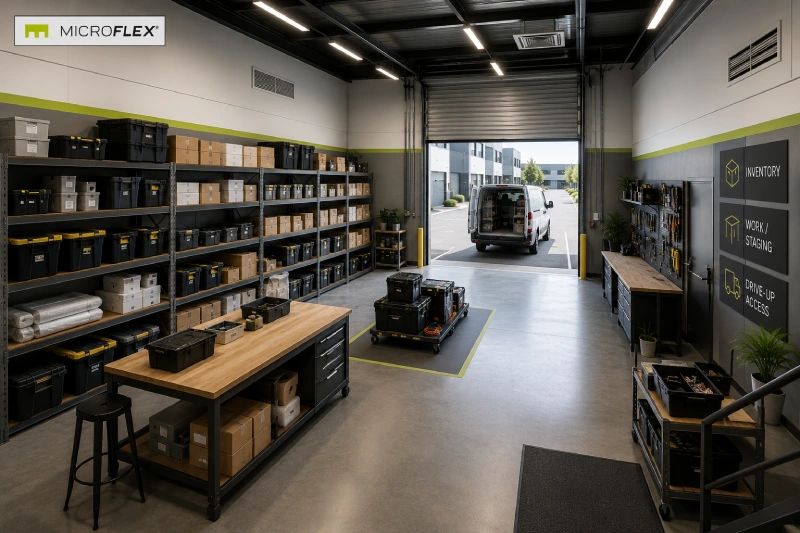
An operator can map the unit around questions such as where inventory will sit, where frequently handled items need to remain accessible, where active work occurs, where incoming materials are received, and which activities belong in an office or mezzanine configuration when available.
That produces a more useful picture than treating HVAC as an isolated amenity.
For an example of broader operational planning, see
How Small-Bay Flex Space Supports Daily Business Operations
.
Frequently Asked Questions About Climate Control in Flex Industrial Space
Do Purpose-Built MicroFlex Units Include HVAC?
Yes. Climate control through HVAC is a verified feature of purpose-built MicroFlex units.
Is Climate Control Available Only in Certain MicroFlex Configurations?
No. At purpose-built locations, HVAC is part of the base product rather than a feature limited to FLEX+, FLEX Premium, or FLEX Ultimate.
Does MicroFlex Guarantee a Specific Interior Temperature?
No specific temperature range is established by the general product description. Businesses with defined environmental requirements should confirm whether the conditions of the individual unit fit their operational needs.
Does Climate Control Mean the Unit Has Specialized Humidity Control?
No specialized humidity-control capability should be inferred from the standard HVAC description.
Is a Climate-Controlled Unit the Same as Refrigerated Storage?
No. Standard HVAC should not be interpreted as refrigeration or cold-storage capability.
Can Climate-Controlled Flex Space Be Used for Inventory?
Inventory-driven operations are an approved MicroFlex use-case category, but the suitability of the interior conditions depends on the requirements of the specific inventory and the permitted use of the unit.
Are All Auburn-Opelika Units Climate Controlled?
No. Climate control varies by unit at Auburn-Opelika. The HVAC status of an individual available unit should be confirmed directly.
How Can I Confirm Current Features and Availability?
Review the current MicroFlex location information and contact the leasing team to confirm the features, configuration, and availability of the specific unit being considered.
Related MicroFlex Resources
What Flex Industrial Space Is and How MicroFlex Is Configured
How Small-Bay Flex Space Supports Daily Business Operations
How Residential Contractors Organize a 1,000 to 1,250 SF Flex Unit
Explore Current MicroFlex Locations
Climate control is one component of the purpose-built MicroFlex product. The relevant unit decision also depends on configuration, size, workflow, permitted activity, and current location-specific availability.
View Current MicroFlex Locations
Important Information
This article is published by Founders Investment Properties, LLC, owner and operator of MicroFlex®. Content is provided for general informational and educational purposes only. Nothing in this article constitutes legal advice, tax advice, financial advice, investment advice, insurance advice, real estate brokerage advice, or any other form of professional advice. Readers should consult their own attorneys, accountants, tax professionals, insurance brokers, and licensed real estate professionals before making decisions based on the topics discussed.
MicroFlex® is a registered trademark of Founders Investment Properties, LLC. Photos may be representative and may not reflect a specific location. Product configurations, features, lease terms, pricing, and availability are subject to change. Current information is available at microflexspace.com or by contacting the leasing team directly.