For some of these operators, the practical requirement is relatively straightforward: a private working space where materials can arrive, tools or inventory can be organized, active work can take place, and vehicles can access the unit directly.
That operating pattern is where small-bay flex industrial space becomes relevant. Local economic data does not mean that every small business needs flex space, but it does show a substantial base of businesses and occupations connected to construction, field service, material movement, distribution, and other physical operations.
Birmingham Has a Substantial Owner-Operator Business Base
One useful way to understand the local business environment is to look beyond companies with large employee counts.
The U.S. Census Bureau reports approximately 58,835 nonemployer establishments in Jefferson County for 2024. In Shelby County, the latest QuickFacts business data lists approximately 21,294 nonemployer establishments for 2023.
A nonemployer establishment generally represents a business with no paid employees, including many sole proprietors and owner-operated businesses. These figures are not a direct measure of flex-space demand, and many of these businesses will never need dedicated operational space.
They do, however, illustrate the scale of the owner-operator economy around the Birmingham metro. Within that broader business base are contractors, field-service operators, specialty sellers, equipment-dependent businesses, and small product companies whose workspace requirements can become more structured as the operation develops.
For those businesses, the workspace question is often less about conventional office occupancy and more about establishing a repeatable operating base.
Contractors and Physical Operations Remain Part of the Local Economy
The Birmingham-Hoover metropolitan area had approximately 571,000 nonfarm jobs in August 2026, according to the U.S. Bureau of Labor Statistics.
Within that employment base, construction represented approximately 31,000 jobs, while trade, transportation, and utilities represented approximately 112,000 jobs.
Separate BLS occupational data for May 2025 shows transportation and material-moving occupations accounting for 9.3% of Birmingham-area employment. Construction and extraction represented 4.5%, while installation, maintenance, and repair accounted for 4.7%.
These categories are broader than the MicroFlex tenant profile, so they should not be interpreted as a count of prospective tenants. They provide useful context because they show that a meaningful portion of the Birmingham economy involves physical work, equipment, materials, transportation, maintenance, and field operations.
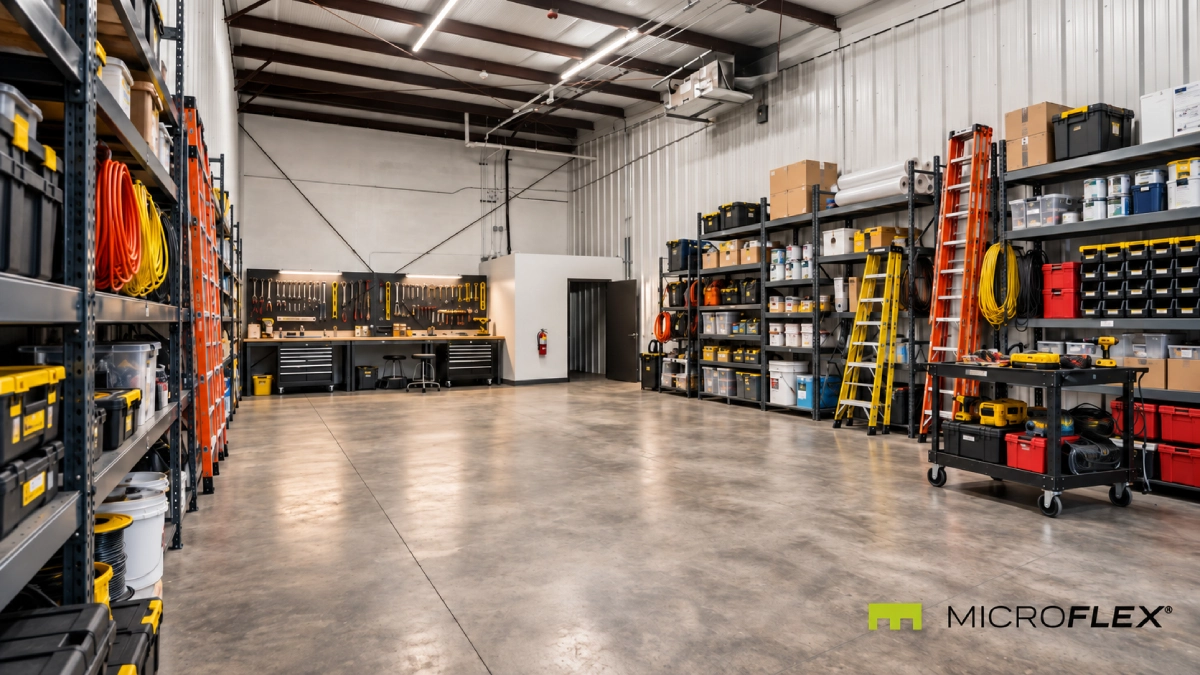
A residential contractor, for example, may need a base for organizing tools, staging materials, preparing equipment, and handling administrative work before crews leave for project sites.
For a service business that operates primarily in the field, the unit may function as the point where equipment is stored, supplies are replenished, vehicles are loaded, and the next day’s work is prepared.
In those situations, the value of small-bay flex comes from how the space supports the operating workflow rather than from storage capacity alone.
A related example is covered in
How Drive-Up Access Supports Daily Operations for Service Businesses
Birmingham’s Broader Industrial Market Provides Useful Context
The broader industrial market also helps put local operating activity into context, although conventional industrial statistics should not be treated as a direct measurement of demand for small-bay units.
Cushman & Wakefield reported an overall Birmingham industrial vacancy rate of 8.7% in Q2 2026. Overall net absorption was negative 80,287 square feet for the quarter, an improvement from negative 485,530 square feet in Q1.
Leasing activity increased nearly 50% quarter over quarter to approximately 255,656 square feet during Q2. The report characterized the market as showing signs of stabilization following the supply-driven slowdown earlier in the year.
Those statistics cover a much broader industrial inventory that includes warehouse, distribution, manufacturing, service-center, and office-warehouse properties. They do not isolate the smaller purpose-built flex units offered by MicroFlex.
For that reason, Birmingham-wide vacancy, absorption, or leasing volume should not be presented as proof of small-bay demand. They are market context.
The more relevant question for MicroFlex is whether the Birmingham metro contains businesses whose daily workflow requires a smaller private operating unit, direct vehicle access, organized storage, and space for active work.
What Small-Bay Flex Supports at the Operating Level
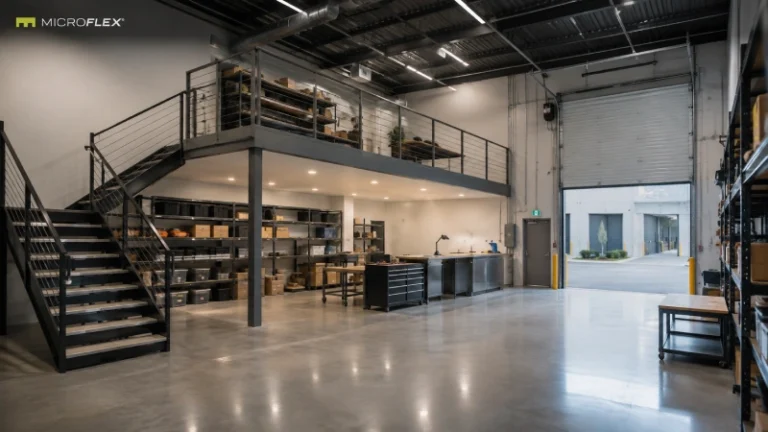
MicroFlex® operates purpose-built small-bay flex industrial space for businesses that need a private working unit at a manageable scale.
Typical purpose-built units are approximately 1,000 to 1,250 square feet. Purpose-built MicroFlex locations include drive-up roll-up doors, private restrooms, climate control, LED lighting, and pre-built configurations. MicroFlex uses one-year modified gross leases.
Unit sizes, configurations, and availability vary by property and unit, so current location information should be confirmed through the relevant location page and leasing team.
Contractors and Field-Service Businesses
A contractor may organize the unit around tools, materials, equipment, work surfaces, and preparation for upcoming jobs. A field-service operator may use the same space as the point where equipment returns after a job and is prepared for the next one.
For a more detailed contractor workflow, see
How Residential Contractors Organize a 1,000 to 1,250 SF Flex Unit
E-Commerce and Inventory-Driven Businesses
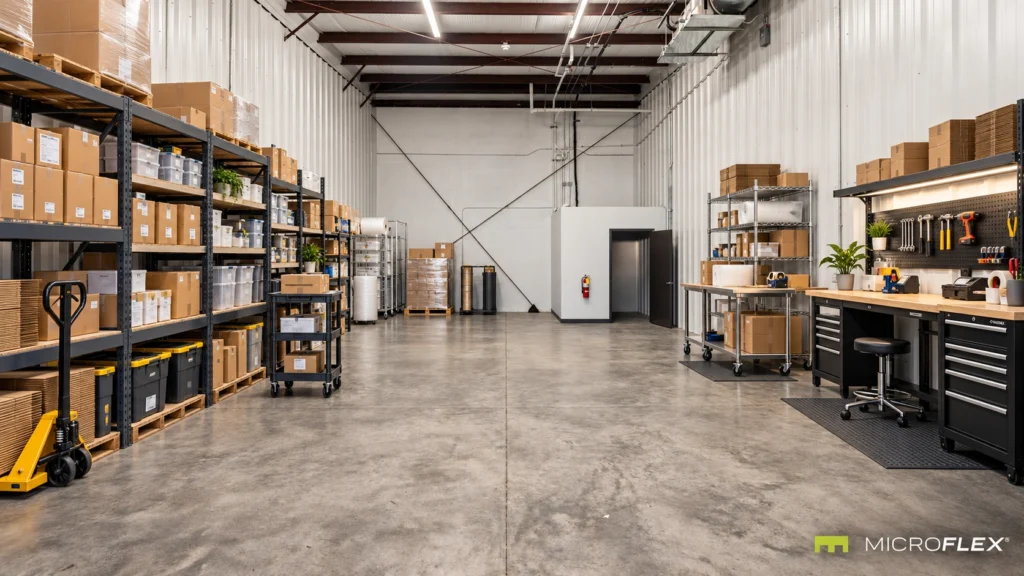
A small e-commerce operation may divide the unit into receiving, inventory storage, picking, packing, quality-check, and outbound areas.
The objective is not to fill the unit with inventory. A practical layout keeps frequently handled products accessible, maintains clear movement paths, and gives packing and outbound work defined areas.
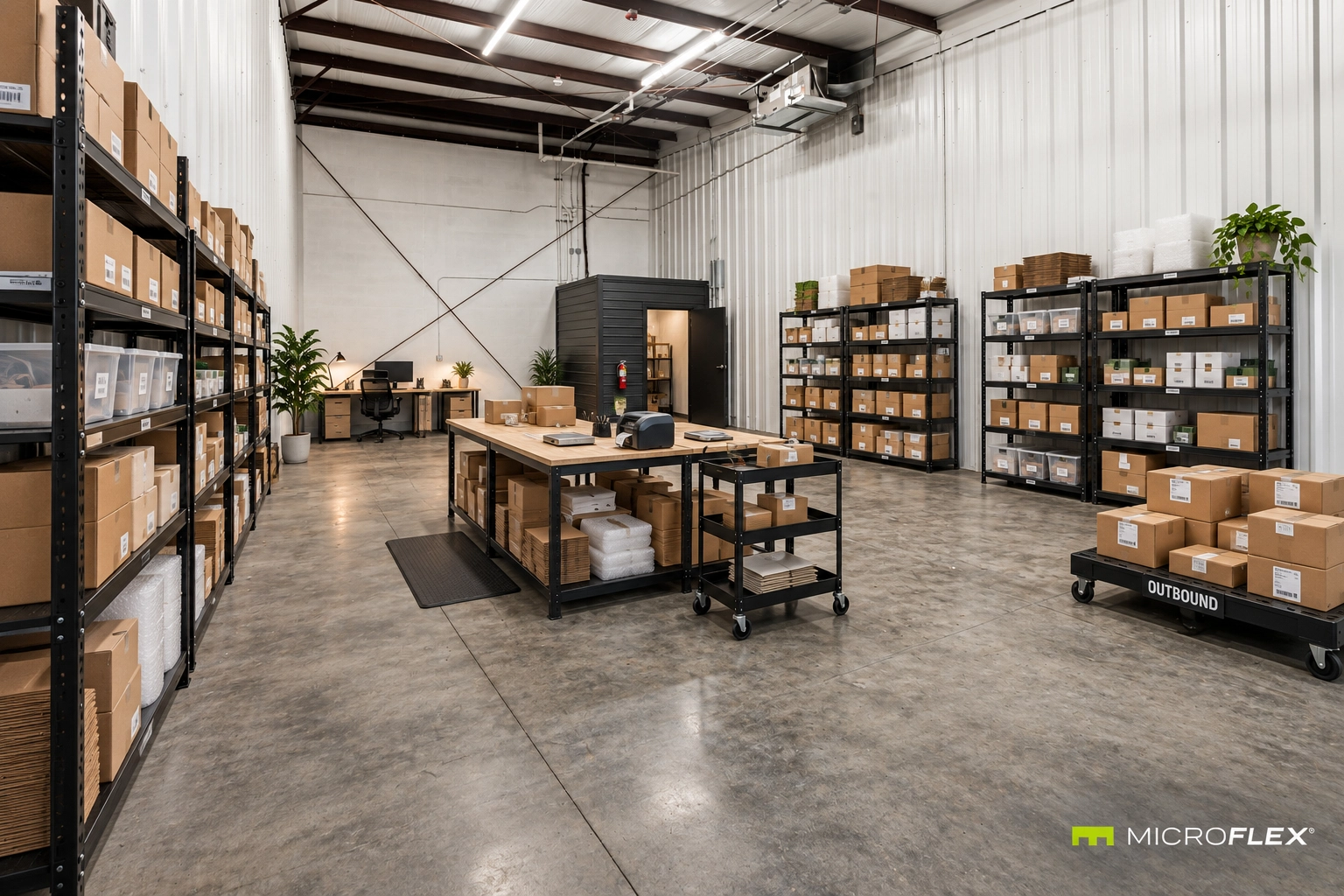
As order activity becomes more consistent, a defined operating sequence can help separate incoming inventory from items being picked, packed, checked, and prepared for shipment.
See
How to Set Up an E-Commerce Fulfillment Workflow in a Flex Unit
for a closer look at that operating model.
Kitting and Light Operational Work
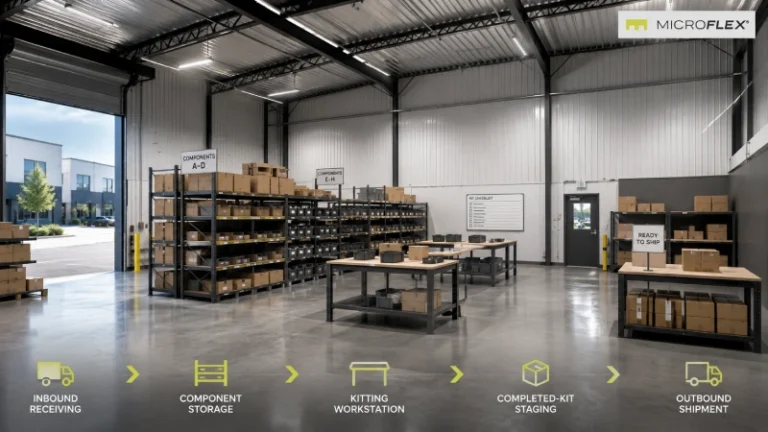
Businesses performing permitted kitting, packaging, light assembly, or similar work may organize a unit around receiving, component storage, workstations, quality review, and outbound staging.
The exact activity, equipment, materials, and workflow still need to be compatible with the property and selected unit.
Owner-Operated Service Businesses
Some businesses spend most of the working day away from their facility but still need a consistent physical base.
Equipment, supplies, inventory, administrative tasks, and vehicle preparation may originate from one unit even when most customer-facing work occurs elsewhere.
Small-Bay Demand Is Ultimately an Operational Question
The Birmingham metro’s economic and industrial data provides useful context, but the case for small-bay flex should not be reduced to a vacancy percentage, employment figure, or single market statistic.
Demand develops at the business level.
An operator may reach a point where tools, materials, inventory, equipment, or daily workflow require a more structured environment. The amount of space may still be relatively modest, but that space needs to perform several functions during a normal working day.
That is the operating problem small-bay flex is intended to address.
For MicroFlex, the relevant audience is not the entire industrial market. It is the subset of operators whose workflow can realistically fit the product.
MicroFlex in the Birmingham Metro
MicroFlex serves the Birmingham metro through
Birmingham-Irondale
and
Birmingham-Hoover
Both are part of the Birmingham metro, but they should be treated as separate properties. Individual unit sizes, configurations, features, and current availability can vary.
The broader Birmingham economy includes a substantial owner-operator base, significant construction and material-moving employment, and an active industrial market. Those conditions provide a relevant operating environment for businesses that need more functionality than passive storage but do not require a large conventional industrial footprint.
Review the
Birmingham-Irondale location
and
Birmingham-Hoover location
for current property information, then contact the leasing team to confirm configuration, permitted use, and availability for the selected unit.
Sources
- U.S. Bureau of Labor Statistics, Birmingham-Hoover, AL Economy at a Glance
, August 2026 data. - U.S. Bureau of Labor Statistics, Occupational Employment and Wages in Birmingham, AL
, May 2025 estimates published July 2026. - U.S. Census Bureau QuickFacts, Jefferson County, Alabama
. - U.S. Census Bureau QuickFacts, Shelby County, Alabama
. - Cushman & Wakefield, Birmingham Industrial MarketBeat
, Q2 2026.
Disclosure
This article is published by Founders Investment Properties, LLC, owner and operator of MicroFlex®. Content is provided for general informational and educational purposes only. Nothing in this article constitutes legal advice, tax advice, financial advice, investment advice, insurance advice, real estate brokerage advice, or any other form of professional advice. Readers should consult their own attorneys, accountants, tax professionals, insurance brokers, and licensed real estate professionals before making decisions based on the topics discussed.
MicroFlex® is a registered trademark of Founders Investment Properties, LLC. Photos may be representative and may not reflect a specific location. Product configurations, features, lease terms, pricing, and availability are subject to change. Current information is available at microflexspace.com or by contacting the leasing team directly.